TLP:CLEAR · Disclosure is not limited.
Jordan's Syria Strikes: Target and Coordination Claims Remain Unverified
Time window: Last 1 day · Audience: General analyst · Type: Situation report · DTG: 2026-11-05 09:36Z · Overall confidence: LOW
BLUF
Amman said its forces struck Islamic State positions in Syria on 26 October in response to the Karak church attack and in coordination with Damascus. The account was read only in an article summary, and the supplied reporting does not independently verify the targets, strike details or coordination.
Executive summary
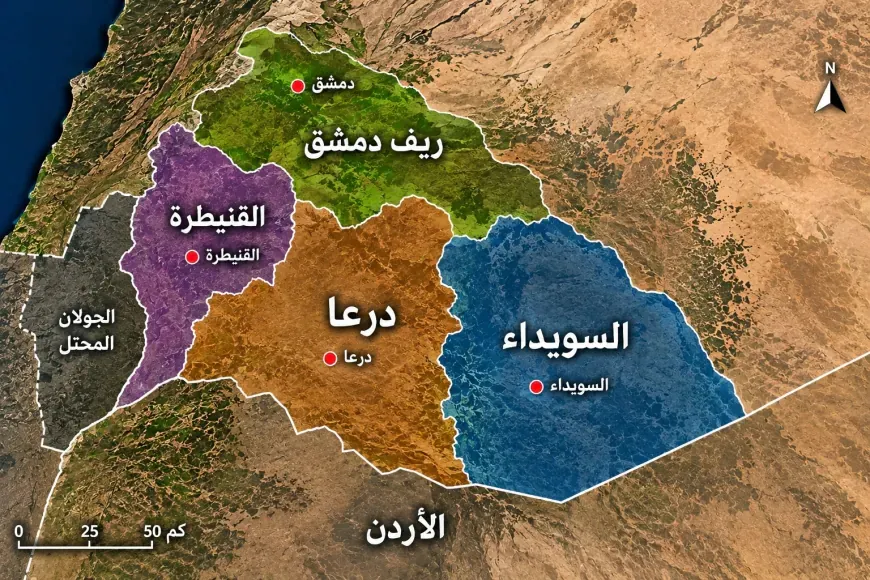
The current reporting repeats Amman's account of the 26 October strikes but does not establish where they occurred, who or what they hit, or whether Damascus was notified beforehand. Historical reporting on ISIS control in the Yarmouk Basin does not confirm an ISIS presence at a 2026 strike site. Separate, low-reliability reports about charges and trial proceedings do not establish whether they concern the same defendants or incident. No new casualty figures are provided in the current claims.
Change from previous assessment
There is no substantive change to the prior assessment that the target identity and Jordan-Syria coordination remain unresolved. The current material restates Amman's account of the strikes but adds no independent verification, new strike-site detail or casualty figure. A new account of southern Syria's military history provides context on past ISIS control in the Yarmouk Basin, but does not establish a current ISIS presence at the strike site.
Key judgments
- Amman said Jordanian forces struck Islamic State positions in Syria on 26 October in response to the Karak church attack and in coordination with Damascus. The account was available only in an article summary, so the supplied reporting does not independently confirm that the strikes occurred as described. (Confidence: low · REPORTED)
- I&W: A full Jordanian Armed Forces statement or independent, geolocated reporting confirms the strike date and location. (0-14 days)
- I&W: Amman corrects or retracts its account of an airstrike on 26 October. (0-14 days)
- It is unlikely that the supplied reporting establishes that the 26 October targets were ISIS positions or were linked to the Karak church attackers. Amman's target claim was read only in summary. Other reporting describes the Khalid ibn al-Walid Army's historical control of parts of the Yarmouk Basin and the end of ISIS control there in August 2018, not a current ISIS presence at the strike site. (Confidence: low · ASSESSED)
- I&W: Jordanian or Syrian authorities publish target names, coordinates or evidence linking a targeted cell to the Karak defendants. (0-30 days)
- I&W: Independent reporting identifies a different target or provides evidence that the strike site was not an ISIS position. (0-30 days)
- Coordination between Amman and Damascus remains unverified in the current reporting. The previous brief recorded a Syrian denial, but the current claims add no Syrian confirmation or denial; the Jordanian account was read only in summary. (Confidence: low · ASSESSED)
- I&W: A Jordanian or Syrian official statement explicitly confirms advance notice or approval for the strikes. (0-14 days)
- I&W: Damascus issues a further official statement expressly denying advance notice or coordination. (0-14 days)
- The available reports do not establish whether the three men reportedly charged over the deadly church attack are the same defendants described in a separate report as beginning trial over the Karak attack. The reports describe different procedural stages and provide too little reliable detail to link the cases. (Confidence: low · ASSESSED)
- I&W: A Jordanian court filing identifies the defendants and connects the charges to the church attack. (0-30 days)
- I&W: A court record identifies the Karak trial as involving a separate incident or different defendants. (0-30 days)
- An ISIS attack inside Jordan is a very unlikely but high-impact wildcard on the supplied evidence. The only explicit warning of heightened ISIS risk to Jordan is a low-confidence social-media claim, without corroborating operational reporting. (Confidence: low · ASSESSED)
- I&W: Jordanian authorities publish a specific warning naming an ISIS-linked plot, suspect or location inside Jordan. (0-30 days)
- I&W: Jordanian authorities report an attack inside Jordan and publicly attribute it to ISIS. (0-3 months)
Outlook & scenarios
No repeat strike in the near term (55%)
Likely: the 26 October operation remains a one-off over the next month, with no further Jordanian strike publicly reported. This is the base case because the supplied claims contain no report of a follow-on operation.
Jordan conducts another strike in Syria (20%)
Unlikely: Amman orders another strike if it assesses a specific ISIS threat connected to the Karak attack. The current material does not establish a current ISIS presence at the strike site or an imminent follow-up operation.
Jordan-Syria coordination dispute persists (20%)
Unlikely: Jordan repeats that Damascus was notified while Syrian officials maintain the denial recorded in the previous brief. The disagreement continues to obscure whether the strikes involved prior coordination.
ISIS attack inside Jordan (5%)
Very unlikely, high impact: ISIS carries out an attack inside Jordan. The supplied material offers only a low-confidence social-media warning and no corroborated operational indication.
Recommendations
- Treat the strike, target and coordination details as Jordanian claims rather than independently verified facts in any downstream assessment.
- Seek the full text behind the summary-only account and obtain dated statements from the Jordanian Armed Forces and Syrian authorities on strike locations, targets, casualties and advance notification.
- Keep the church-attack charges and the reported Karak trial proceedings separate until court filings identify the defendants and incidents.
- Monitor Jordanian and Syrian official statements and independent reporting for evidence linking any strike target to the Karak attackers.
Confidence & uncertainty
Overall confidence is low because the central strike account is from a major-media article read only in summary, while the supplied non-summary reporting concerns historical military control in southern Syria rather than the 2026 operation. The legal claims rely on low-reliability or summary-only reporting, and the ISIS warning comes from social media. The strike location, target identity, casualty total and level of Jordan-Syria coordination remain unresolved.
Alternative analysis (red cell)
The reporting does not establish that the strikes targeted ISIS, but historical evidence that ISIS control ended in 2018 is insufficient to weigh strongly against Jordan's current attribution. The target identity and its connection to the Karak attackers therefore remain indeterminate rather than specifically unlikely. Likewise, the available material shows an uncorroborated warning of ISIS risk to Jordan but does not support the more precise estimate that an attack is very unlikely.
Intelligence gaps
- [EEI 1.1 · UNCOVERED] Jordanian Armed Forces aircraft, drones, artillery, or ground units identified operating near or across the Jordan-Syria border after the initial strikes. Recommended collection: military activity/satellite imagery
- [EEI 1.2 · PARTIAL] Changes in Jordanian force posture, border closures, air-defense deployments, or military alert levels along the Syria border. Recommended collection: official statements/local reporting
- [EEI 1.3 · PARTIAL] Jordanian government statements defining red lines, attribution standards, or conditions for additional strikes. Recommended collection: government statements
- [EEI 1.4 · UNCOVERED] New attacks on Jordanian territory, border personnel, security forces, or religious sites attributed to ISIS or Syria-based actors. Recommended collection: incident reporting/security services
- [EEI 2.1 · UNCOVERED] ISIS claims of responsibility, threats, operational instructions, or propaganda referencing the church attack, Jordan, or the retaliatory airstrikes. Recommended collection: militant communications
- [EEI 2.2 · UNCOVERED] Evidence of ISIS casualty, leadership, weapons, logistics, or command-and-control losses at the reported strike locations. Recommended collection: satellite imagery/intelligence reporting
- [EEI 2.3 · PARTIAL] Arrests, weapons seizures, disrupted plots, or identified ISIS cells in Jordan following the church attack. Recommended collection: Jordanian security reporting
- [EEI 2.4 · UNCOVERED] Attempts to move ISIS personnel, weapons, or facilitators across the Jordan-Syria border after the strikes. Recommended collection: border security reporting
- [EEI 3.1 · UNCOVERED] Syrian government condemnation, military alerts, air-defense activity, or announced retaliatory measures against Jordan. Recommended collection: Syrian official statements/military reporting
- [EEI 3.2 · PARTIAL] Military movements or operational changes by Syrian forces, Iran-aligned groups, or other armed actors near southern Syria and the Jordanian border. Recommended collection: satellite imagery/local security reporting
- [EEI 3.3 · UNCOVERED] Public or private diplomatic interventions by the United States, Russia, Gulf states, Israel, or Arab League members concerning the strikes. Recommended collection: diplomatic statements
- [EEI 3.4 · PARTIAL] New cross-border incidents, airspace violations, rocket or drone launches, or attacks on Jordanian, Syrian, or coalition-linked positions. Recommended collection: military incident reporting
- [EEI 4.1 · UNCOVERED] Additional attacks, sectarian threats, protests, communal violence, or mobilization linked to the church attack or the airstrikes. Recommended collection: local media/social media
- [EEI 4.2 · UNCOVERED] Changes in border-crossing operations, refugee movements, commercial traffic, or humanitarian access between Jordan and Syria. Recommended collection: border authorities/humanitarian reporting
- [EEI 4.3 · UNCOVERED] Changes in travel advisories, embassy security measures, foreign force protection, or warnings concerning Jordan and southern Syria. Recommended collection: government advisories
- [EEI 4.4 · UNCOVERED] Evidence of civilian casualties, displacement, infrastructure damage, or disputed target identification resulting from the Jordanian strikes. Recommended collection: local reporting/satellite imagery
Red cell review: PARTIAL DISSENT
TLP:CLEAR