TLP:CLEAR · Disclosure is not limited.
Jordanian Strikes in Syria: Casualties and Coordination Disputed
Time window: Last 1 day · Audience: General analyst · Type: Situation report · DTG: 2026-10-30 08:36Z · Overall confidence: HIGH
BLUF
The Royal Jordanian Air Force almost certainly struck targets in Daraa and Suwayda on 26 October, following the 23 October attack on St George’s Greek Orthodox Church in Hamoud, Karak. Jordan’s claim of more than 20 ISIS deaths remains unverified and separate from Syria’s report of seven civilian deaths; Amman and Damascus also disagree over prior coordination.
Executive summary
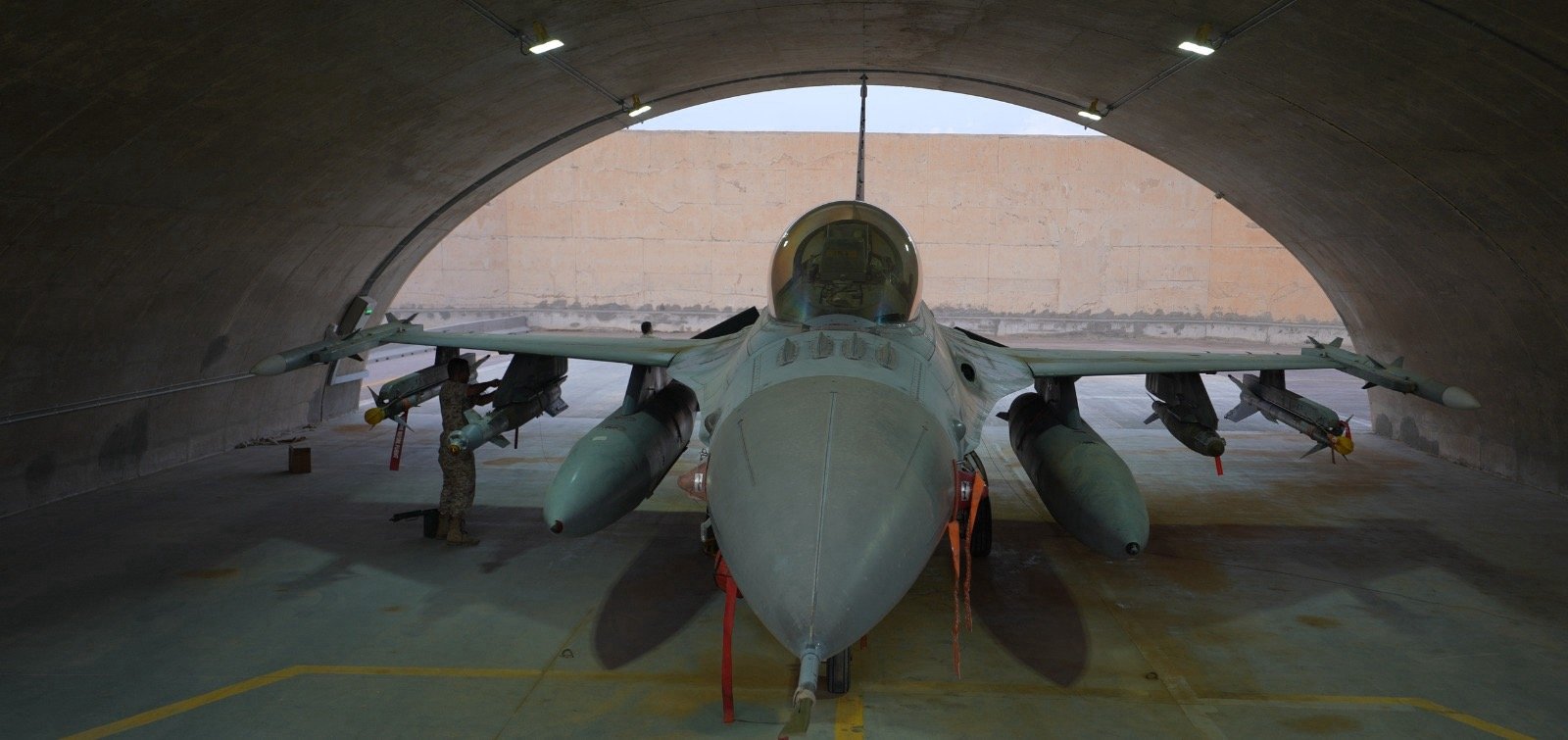
Three gunmen attacked a funeral at St George’s Greek Orthodox Church in Hamoud, Karak governorate, on 23 October, killing nine people and wounding 34. The Royal Jordanian Air Force struck sites in rural Daraa and Suwayda on the evening of 26 October in an operation Jordan called Jordanian Deterrence - Hamoud. Jordanian officials claimed more than 20 ISIS members were killed and a weapons depot destroyed. Syria’s Health Ministry reported seven civilian deaths in Daraa, including three children. The casualty accounts have not been independently reconciled. Jordan said the operation was coordinated with Damascus; Syrian officials said Jordan gave no prior notice, protested the strikes and opened an investigation. The Nassib-Jaber crossing reopened, and the two countries agreed to establish a joint security committee.
Change from previous assessment
Since the 29 October prior brief, the reported strike, casualty dispute, conflicting accounts of coordination, crossing reopening and security committee agreement remain broadly unchanged. Additional reporting specifies that Syria summoned Jordanian ambassador Sufian al-Qudah and opened an investigation, while a SITE Intelligence report says ISIS promoted the church attack without claiming responsibility. These details reinforce the active diplomatic dispute and add an unverified indication of ISIS engagement, but do not resolve either Syrian approval of the strikes or ISIS direction of the attack.
Key judgments
- The Royal Jordanian Air Force almost certainly conducted multiple strikes in rural Daraa and Suwayda on the evening of 26 October. Jordan described the operation, Jordanian Deterrence - Hamoud, as retaliation for the attack on St George’s Greek Orthodox Church in Hamoud, Karak. (Confidence: high · REPORTED)
- I&W: Jordanian Armed Forces issue a further account identifying strike locations in Daraa or Suwayda, confirming the reported geography. (0-14 days)
- I&W: An official Jordanian account or Syrian investigation identifies a different date or says strikes did not occur in one of the reported governorates, challenging the reported operation details. (0-30 days)
- The casualty picture remains unresolved. Jordanian officials claimed more than 20 ISIS members were killed, while Syria’s Health Ministry reported seven civilian deaths in Daraa, including three children; the available reporting does not independently verify either toll or establish whether the accounts overlap. (Confidence: medium · REPORTED)
- I&W: A Syrian investigation or other documented casualty accounting identifies seven civilian victims, including three children, at the Daraa strike sites, corroborating Syria’s reported toll. (0-30 days)
- I&W: Jordan publishes verifiable strike and casualty details substantiating its claim of more than 20 ISIS deaths and clarifying whether civilian deaths also occurred. (0-30 days)
- ISIS responsibility for the 23 October church attack remains unconfirmed. The online statement invoking ISIS is unauthenticated, and SITE Intelligence reported that ISIS promoted the attack without claiming responsibility; the Jordanian Armed Forces’ reported claim that the attackers were tied to groups struck in Syria does not by itself establish ISIS direction. (Confidence: low · ASSESSED)
- I&W: An ISIS official outlet claims responsibility for the Hamoud church attack or releases specific evidence identifying the perpetrators, strengthening the case for ISIS involvement. (0-30 days)
- I&W: Jordanian authorities publish investigation findings that substantiate or reject a link between the three gunmen and ISIS or the groups struck in Syria. (0-3 months)
- Whether Damascus had prior notice or approved the 26 October strikes remains unresolved. Jordan said the operation was coordinated with Syrian authorities; Damascus said it had not been consulted, summoned Jordanian ambassador Sufian al-Qudah and delivered a protest memo. (Confidence: medium · REPORTED)
- I&W: A joint Syrian-Jordanian statement or committee record explicitly confirms or denies advance notification and approval. (0-30 days)
- I&W: Syrian officials issue further formal protests or investigation findings stating that Jordan acted without prior notice, reinforcing Damascus’s account. (0-30 days)
- Jordan and Syria are likely to keep the immediate dispute in diplomatic and security channels over the next one to three months rather than resume military action. The Nassib-Jaber crossing reopened, and the foreign ministers agreed to establish a joint security committee, although Syria’s protest and investigation show that the dispute remains active. (Confidence: medium · ASSESSED)
- I&W: The joint security committee holds a meeting or issues agreed procedures for cross-border security coordination, supporting continued diplomatic management. (0-3 months)
- I&W: Syrian authorities close Nassib-Jaber again or Jordan conducts another strike inside Syria, breaking the expectation of containment. (0-3 months)
Outlook & scenarios
Diplomatic containment (65%)
The joint security committee begins work, the Nassib-Jaber crossing remains open and the governments continue to dispute consultation and casualties without another Jordanian strike. This is the most likely course given the reported committee agreement and reopening of the crossing, despite Syria’s formal protest and investigation.
Prolonged diplomatic and border friction (25%)
Damascus continues its investigation and public protest, while Amman maintains its account of coordination and the strike results. The committee does not resolve the dispute promptly, and the crossing faces another temporary interruption, but neither government resumes military action.
Renewed cross-border escalation (10%)
A further Jordanian strike or a new cross-border security incident prompts Syrian retaliation through additional restrictions or stronger official action. This is a low-probability, high-impact outcome; the unresolved consultation dispute and contested civilian toll are the clearest reported sources of friction.
Recommendations
- Keep Jordan’s claimed ISIS casualty toll and Syria’s reported civilian toll as separate, attributed figures. Do not combine them or treat either as independently verified.
- Track official Syrian investigation findings and Jordanian Armed Forces statements for named victims, strike locations and evidence about the weapons depot or claimed ISIS deaths.
- Monitor announcements and meeting readouts from the joint security committee for evidence that Amman and Damascus have agreed procedures for advance notification and cross-border action.
- Track Nassib-Jaber operating notices and any renewed closure, and treat another Jordanian strike in Syria as a tripwire for reassessing the containment outlook.
- Keep the ISIS attribution assessment low confidence until official ISIS material or Jordanian investigation findings provide verifiable evidence of direction or operational links.
Confidence & uncertainty
Overall confidence is high for the core sequence: the church attack, Jordanian strikes in southern Syria, the opposing casualty accounts, and the subsequent diplomatic response are reported across multiple reporting streams, including major media, think-tank reporting and official statements. Confidence is lower on the casualty totals, prior Syrian coordination and ISIS involvement because the claims conflict or remain unverified. The high headline rating applies to the occurrence and broad sequence of events, not to those disputed details.
Alternative analysis (red cell)
Jordanian-Syrian engagement may be an effort to manage the consequences of a continuing security confrontation rather than evidence that further military action is unlikely. The crossing's reopening and proposed committee show a desire to preserve practical channels, but Syria's protest and investigation indicate that the underlying dispute remains unresolved. On the available evidence, diplomatic and security mechanisms are likely to coexist with a non-trivial risk of renewed strikes or other coercive action.
Intelligence gaps
- [EEI 1.1 · PARTIAL] Jordanian Armed Forces aircraft, drones, artillery, or ground units identified operating near or across the Jordan-Syria border after the initial strikes. Recommended collection: military activity/satellite imagery
- [EEI 1.2 · UNCOVERED] Changes in Jordanian force posture, border closures, air-defense deployments, or military alert levels along the Syria border. Recommended collection: official statements/local reporting
- [EEI 1.3 · PARTIAL] Jordanian government statements defining red lines, attribution standards, or conditions for additional strikes. Recommended collection: government statements
- [EEI 2.4 · UNCOVERED] Attempts to move ISIS personnel, weapons, or facilitators across the Jordan-Syria border after the strikes. Recommended collection: border security reporting
- [EEI 3.2 · UNCOVERED] Military movements or operational changes by Syrian forces, Iran-aligned groups, or other armed actors near southern Syria and the Jordanian border. Recommended collection: satellite imagery/local security reporting
- [EEI 3.3 · UNCOVERED] Public or private diplomatic interventions by the United States, Russia, Gulf states, Israel, or Arab League members concerning the strikes. Recommended collection: diplomatic statements
- [EEI 3.4 · PARTIAL] New cross-border incidents, airspace violations, rocket or drone launches, or attacks on Jordanian, Syrian, or coalition-linked positions. Recommended collection: military incident reporting
- [EEI 4.1 · UNCOVERED] Additional attacks, sectarian threats, protests, communal violence, or mobilization linked to the church attack or the airstrikes. Recommended collection: local media/social media
- [EEI 4.3 · UNCOVERED] Changes in travel advisories, embassy security measures, foreign force protection, or warnings concerning Jordan and southern Syria. Recommended collection: government advisories
Red cell review: PARTIAL DISSENT
TLP:CLEAR