TLP:CLEAR · Disclosure is not limited.
Korean Peninsula: Missile Activity Amid Exercise Dispute and Outreach
Time window: Last 7 days · Audience: General analyst · Type: Situation report · DTG: 2026-08-21 00:20Z · Overall confidence: LOW
BLUF
North Korea is very likely to sustain missile testing and coercive messaging over the next 14 days as US-South Korean exercises are reduced. The exercise reduction and competing diplomatic initiatives create a roughly even chance of renewed US-North Korea contact, but North Korea's dismissal of the reduction and reported rejection of Lee Jae Myung's engagement offers leave near-term de-escalation unlikely.
Executive summary
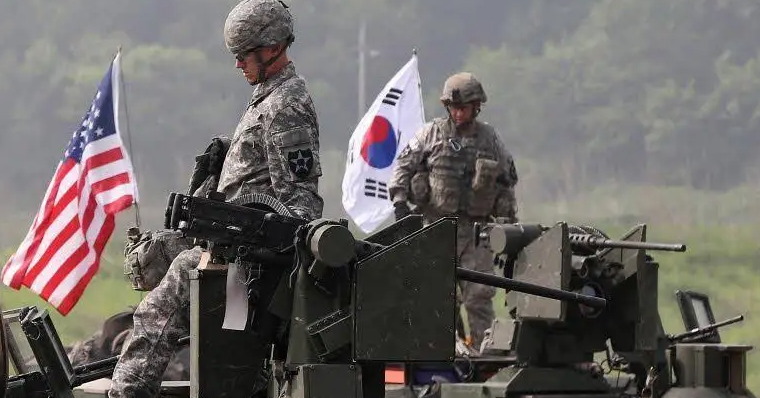
Reporting from 14 to 21 August 2026 indicates sustained North Korean missile activity and hostile messaging around US-South Korean military exercises. North Korea launched or was reported to have launched ballistic missiles in early and mid-August, threatened unspecified stern steps on 16 August, and described the exercises as a war rehearsal. President Donald Trump ordered or announced reductions to the exercises, while other reporting says the exercise began as scheduled and field manoeuvres fell from 44 to 14. Lee Jae Myung has pursued talks and confidence-building measures, but North Korea has rebuffed his offers. China has also expanded high-level engagement with Seoul and called for dialogue. Confidence remains low because the reporting contains conflicting dates, missile counts and accounts of US-North Korea communications.
Key judgments
- North Korea is very likely to conduct additional missile activity or issue further coercive threats over the next 14 days. North Korea fired a short-range ballistic missile on 6 August and a second ballistic missile on 12 August, while separate reporting described two launches off its east coast, approximately 10 short-range launches on the day of the exercise-reduction announcement, and a further suspected ballistic missile launch. North Korea also threatened stern steps on 16 August and suggested that more missile tests were forthcoming. Conflicting launch dates and counts reduce confidence in the precise tempo of activity. (Confidence: medium · ASSESSED)
- I&W: The South Korean military reports another North Korean missile launch from the Pyongyang area or the east coast, or North Korea issues another threat of stern steps through its Foreign Ministry or Kim Yo Jong. (0-14 days)
- I&W: No further North Korean launch is reported and no new threat statement is issued during the next 14 days. (0-14 days)
- The reduction in US-South Korean exercises is likely to increase near-term uncertainty over alliance readiness and coordination, but the operational effect is insufficiently established. President Donald Trump ordered or announced reductions on 16 and 17 August, reporting says the exercise was cut in half, and South Korean media reported that field manoeuvres fell from 44 last year to 14. Expert reporting warns that reduced exercises can affect readiness, alliance coordination and deterrence. The exact scope and implementation remain contested because other claims state that the exercise began as scheduled and that the US Department of Defense would end it early. (Confidence: medium · ASSESSED)
- I&W: The US Department of Defense and the South Korean Joint Chiefs of Staff confirm an early end, further reductions or a field-manoeuvre schedule of 14 events. (0-14 days)
- I&W: The US Department of Defense and the South Korean Joint Chiefs of Staff confirm that the exercise continues without an early end or additional reduction. (0-14 days)
- A US-North Korea leader-level diplomatic opening before the end of 2026 has a roughly even chance, while near-term de-escalation is unlikely. Donald Trump has said he plans to meet Kim Jong Un later this year and has reportedly urged aides to facilitate a meeting as early as autumn. Kim Jong Un was reported to have responded to Trump's dialogue proposal, and Lee Jae Myung and China have backed dialogue. Against this, Kim Yo Jong said she was unaware of recent Washington-Pyongyang communications, dismissed the exercise reduction as unattractive, and North Korea has rebuffed Lee's engagement offers. The assessment is low confidence because the communications reporting is thin and internally inconsistent. (Confidence: low · ASSESSED)
- I&W: Donald Trump and Kim Jong Un publicly confirm a meeting date, direct communication or a preparatory channel. (1-3 months)
- I&W: Kim Yo Jong or the North Korean Foreign Ministry again denies communications or rejects the exercise reduction and Lee Jae Myung's offer without naming talks. (0-14 days)
- China is likely to use its high-level engagement with South Korea to press for dialogue and a less aligned posture, but this is unlikely to produce a North Korean concession within 1-3 months. Wang Yi met South Korean officials in Seoul, advocated peaceful coexistence and a constructive Chinese role on the peninsula, and urged Seoul to pursue strategic autonomy. The available reporting shows no corresponding North Korean acceptance of Lee Jae Myung's proposals or of the exercise reduction. (Confidence: medium · ASSESSED)
- I&W: Wang Yi or another senior Chinese official conducts further high-level engagement with Seoul and publicly backs dialogue or strategic autonomy. (1-3 months)
- I&W: North Korea publicly accepts talks proposed by Lee Jae Myung or endorses a Chinese-sponsored confidence-building measure. (1-3 months)
- An unplanned military incident along the DMZ is unlikely but would have a high impact on escalation risk. The South Korean military previously fired warning shots after North Korean troops crossed the military demarcation line, and Lee Jae Myung has proposed a multi-layered security system to prevent DMZ flare-ups. This is a low-confidence wildcard based mainly on historical reporting rather than a confirmed incident in the current reporting period. (Confidence: low · ASSESSED)
- I&W: The South Korean military reports North Korean troops crossing the military demarcation line and responds with warning shots. (0-14 days)
- I&W: The exercise period ends without a reported military demarcation line crossing, warning shots or new DMZ security measure. (0-14 days)
Outlook & scenarios
Continued calibrated pressure (55%)
North Korea continues missile launches and hostile statements while US-South Korean exercises remain reduced. South Korea and the US avoid responding with additional military measures, and no direct exchange occurs.
Limited diplomatic opening (30%)
Donald Trump and Kim Jong Un establish direct contact or announce preparations for a meeting. Lee Jae Myung and China support the opening, but North Korean missile activity continues while the parties test the limits of dialogue.
Alliance friction and readiness concern (10%)
Washington implements further exercise reductions, prompting South Korea to accelerate its focus on national defence responsibility and wartime operational control. North Korea treats the changes as evidence that pressure is producing results and sustains coercive activity.
DMZ incident and rapid escalation (5%)
North Korean troops cross the military demarcation line during a period of heightened military activity, and the South Korean military fires warning shots. The incident triggers a rapid exchange of threats and emergency consultations before either side restores restraint.
Recommendations
- Maintain a 0-14 day launch and rhetoric watch that records the date, launch location, missile count, reported range and official attribution for every North Korean event. Reconcile the 6 August and 12 August launch reports with the separate accounts of approximately 10 and more than 10 short-range missiles before using them to estimate tempo.
- Request a single authoritative timeline from the US Department of Defense and the South Korean Joint Chiefs of Staff covering the exercise start date, early-end decision, number of field manoeuvres and any activities removed from the programme. Separate confirmed operational changes from presidential statements and media interpretation.
- Prioritise collection on direct US-North Korea communication. Treat a publicly confirmed meeting date or channel involving Donald Trump and Kim Jong Un as the strongest indicator of diplomatic movement. Treat renewed denials by Kim Yo Jong or the North Korean Foreign Ministry as evidence against an opening.
- Track Wang Yi's engagements with Lee Jae Myung and South Korean security officials for concrete proposals on dialogue, strategic autonomy or peninsula confidence-building. Do not treat general statements on peaceful coexistence as evidence that North Korea has accepted talks.
- Prepare a rapid incident template for any report of North Korean troops crossing the military demarcation line. The template should capture the location, South Korean warning-shot response, North Korean movement back across the line and subsequent official statements within the first 24 hours.
- Keep the readiness assessment separate from the political assessment. Review whether the reported reduction from 44 to 14 field manoeuvres changes training coverage and coordination, while preserving the uncertainty created by conflicting exercise dates and descriptions.
Confidence & uncertainty
Overall confidence is low. The core pattern is supported by several high-reliability sources, including AP, BBC, NPR, Al Jazeera and official government reporting, but many claims carry medium confidence and several assessments rely on single-source major-media or think-tank reporting. The timeline for Trump's exercise decisions is inconsistent, with claims placing the order or announcement on 16, 17 and 20 August, while other records refer to exercises in 2023, 2025 or 2017. Missile counts also vary from two launches in a week to approximately 10 or more than 10 launches. Reporting on US-North Korea communications conflicts with Kim Yo Jong's statement that she was unaware of recent contact.
Cited sources
[1] Council on Foreign Relations · North Korea Crisis (B) · sha256:239520a510bd [2] Associated Press · North Korea slams US-South Korea military drills and threatens strong response (A) · sha256:9ddb1dfc6e81 [3] 德国之声 · 特朗普称年内会金正恩 罕见评估朝鲜核武 (B) · sha256:e8ffb92228b8 [4] moderndiplomacy.eu · Why Is China Urging South Korea to Stay Neutral Between Beijing and Washington? (B) · sha256:d76901a1fae0 [5] npr.org · Trump orders Pentagon to scale back joint exercises with South Korea (A) · sha256:598aaeb50c93 [6] BBC News 中文 · 韩美联合军演乙支自由护盾:特朗普称将缩减规模 - BBC News 中文 (A) · sha256:0d96937619b2 [7] 新华网客户端 · 美国“缩减”美韩联合军演规模暴露政策挫败感 - 新华网客户端 (A) · sha256:ea25b8a60062 [8] cnn.com · Trump wants South Korea to defend itself. His overtures to Kim Jong Un could delay that. | CNN (A) · sha256:8afcc41e8b72 [9] The New York Times · 朝鲜回应特朗普缩减美韩军演规模:“对我们毫无吸引力” (A) · sha256:20fe124fcabe [10] voachinese.com · 特朗普下令削减与韩国联合军演的规模 专家:这是与朝鲜重启谈判的信号 (B) · sha256:26794bb26e08 [11] 韩联社 · 陷入“伊朗战争泥潭”的特朗普向盟友发泄怒火……“韩国是最令人意外的牺牲品” (B) · sha256:0752a6b872cf [12] 新华网 · 美韩联合军演日程减半 特朗普被曝想今秋会金正恩-新华网 (A) · sha256:eea245e3140f [13] theguardian.com · South Korea’s Lee urges talks with North Korea about finally ending Korean war (A) · sha256:312ee8565ee9 [14] cn.chinadiplomacy.org.cn · 王毅同韩国外长赵显会谈_习近平外交思想和新时代中国外交 (A) · sha256:c118569ed7fc [15] 新华网 · 王毅与韩国国家安保室长魏圣洛举行战略对话 - 新华网客户端 (A) · sha256:8d11846f18ea [16] BBC · South Korea proposes talks to officially end war with North (A) · sha256:4193489f180f
Source content hashes were computed at collection time; the cited text is preserved unmodified for the life of this product.
TLP:CLEAR