TLP:CLEAR · Disclosure is not limited.
Lebanon ceasefire takes effect amid sporadic fire; Gaza heat detections persist; Hormuz shipping restarts as US, Iran talks slip
Time window: Last 7 days · Audience: General analyst · Type: Situation report · DTG: 2026-06-19 14:38Z · Overall confidence: MEDIUM
BLUF
Israel and Hezbollah accepted a ceasefire on 19 June, but same‑day fatalities and mutual violation claims point to a fragile truce. NASA logged 85 thermal detections in Gaza over 18-19 June, indicating likely ongoing conflict conditions. US, Iran talks were postponed as Gulf shipping restarts unevenly.
Executive summary
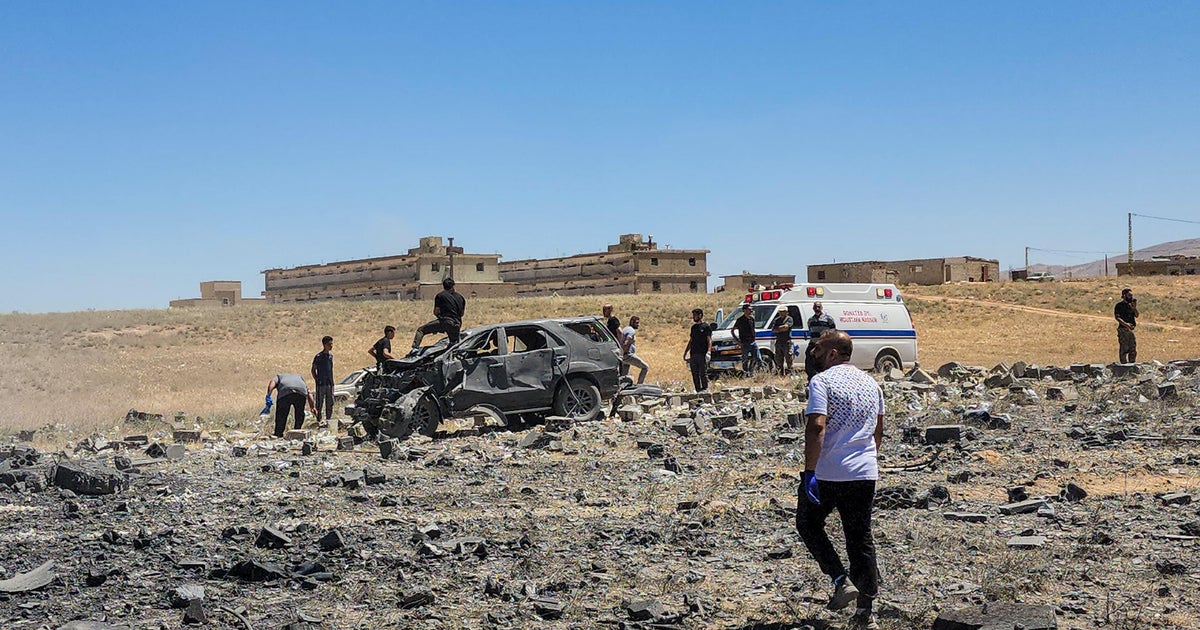
A ceasefire in Lebanon was announced to take effect at 1600 local on 19 June and Hezbollah said it implemented the truce immediately. Hours around the announcement saw heavy fire: at least 18 people were reported killed in air strikes and four Israel Defense Forces (IDF) soldiers died when a tank was hit near Nabatiyeh, as the IDF and Hezbollah traded accusations of ceasefire violations. In Gaza, NASA recorded 85 thermal detections over 18-19 June, consistent with likely ongoing combat or fires. US, Iran negotiations planned for 19 June were called off, with Iranian officials declining to travel until fighting in Lebanon stops, even as shipping through Hormuz shows early signs of recovery: 25 vessels transited on Thursday and seven supertankers departed Chabahar, while no non‑Iranian tankers were seen outbound from the Persian Gulf that morning. Humanitarian needs remain acute: nearly 1,000 Palestinians have been killed since the nominal Gaza ceasefire took hold in 2025, most Gazans remain displaced; Lebanon’s Health Ministry reported at least 21 dead from the latest fighting; and about 96,000 people have left homes in northern Israel.
Change from previous assessment
Since the prior brief earlier on 19 June, the Lebanon ceasefire moved from announcement to declared implementation at 1600 local, while lethal incidents the same day and mutual violation claims reinforced our view of a fragile truce. US, Iran talks planned for 19 June were called off and postponed, tightening the link between Blue Line calm and negotiation timelines. Maritime indicators improved with reports of 25 transits through Hormuz and seven supertankers departing Chabahar, but outbound non‑Iranian tanker movements remained thin that morning, so our view on uneven recovery stands. NASA recorded 85 Gaza heat detections over 18-19 June, consistent with our prior assessment of likely ongoing activity. We add a judgment on constrained civilian returns in southern Lebanon, supported by displacement figures and documented damage. Initial assessment of this topic’s expanded humanitarian detail on Lebanon returns and displacement.
Key judgments
- The 19 June Israel, Hezbollah ceasefire is fragile and hostilities are very likely to persist at a low tempo with sporadic violations despite the truce. (Confidence: medium · ASSESSED)
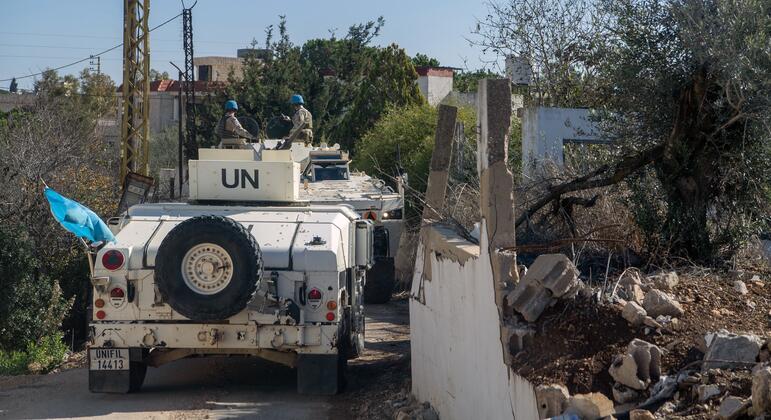
- I&W: UNIFIL daily reporting records fewer than five projectile trajectories per day along the Blue Line for 14 consecutive days. (0-14 days)
- I&W: Publicly acknowledged multi‑site air strikes in southern Lebanon or a day with 100+ projectile trajectories recorded by UNIFIL. (0-14 days)
- Combat activity in Gaza is likely ongoing, indicated by 85 NASA thermal detections over 18-19 June, noting these signatures capture heat events and not cause. (Confidence: medium · ASSESSED)
- I&W: Sustained daily VIIRS detections in Gaza at or above 50 per 24 hours for at least a week. (0-14 days)
- I&W: Three consecutive days with near‑zero detections across Gaza. (0-14 days)
- Implementation of the US, Iran interim deal is likely to remain uneven in the near term, with negotiations tied to calm in Lebanon even as Hormuz traffic restarts. (Confidence: medium · ASSESSED)
- I&W: Public confirmation that US, Iran talks in Switzerland have resumed with a published agenda. (1-3 months)
- I&W: Another postponement of US, Iran talks explicitly linked to incidents on the Israel, Lebanon front. (0-14 days)
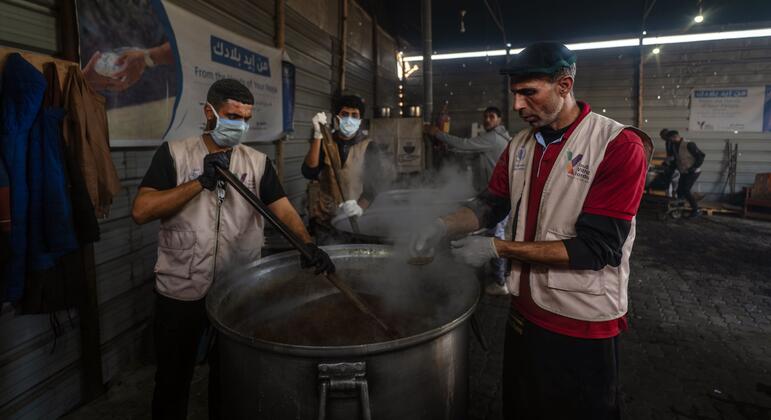
- Humanitarian conditions remain acute across the theatre: nearly 1,000 Palestinians have been killed since the 2025 Gaza ceasefire and most Gazans remain displaced; in Lebanon at least 18-21 people were reported killed on 19 June; and about 96,000 people have left homes in northern Israel. (Confidence: high · REPORTED)
- I&W: Lebanon’s Health Ministry issues updated fatality totals exceeding prior 19 June figures. (0-14 days)
- I&W: Announcement of an authorised civilian exit route from Gaza by relevant authorities. (0-14 days)
- Large‑scale civilian return to southern Lebanon is unlikely in the near term due to extensive damage and ongoing security constraints, despite reported returns in Nabatieh and South governorates. (Confidence: medium · ASSESSED)
- I&W: OCHA reports an additional 100,000+ returns to Nabatieh and South governorates over one month with services restored in key towns. (1-3 months)
- I&W: Official confirmation of an IDF drawdown from the declared security zone in southern Lebanon. (1-3 months)
Outlook & scenarios
Fragile truce with sporadic exchanges (60%)
The Lebanon ceasefire largely holds but with intermittent rocket, missile, and drone incidents along the Blue Line. US, Iran talks resume on a delayed schedule as Tehran judges the truce sufficiently robust, and Hormuz traffic continues normalising from the reported 25‑ship day and outbound Iranian supertanker departures. Gaza shows recurring heat detections consistent with a low‑intensity fight.
Ceasefire collapses and cross‑border escalation resumes (35%)
A high‑casualty incident or targeted strike leads to rapid breakdown of the Lebanon truce. UNIFIL records triple‑digit daily trajectories again, US, Iran talks remain suspended, and non‑Iranian tanker movements out of the Persian Gulf thin. Gaza anomaly counts remain elevated and humanitarian pressures rise in Lebanon and Gaza.
Consolidated de‑escalation (15%)
Sustained adherence to the Lebanon truce with negligible daily fire allows gradual repairs and organised civilian returns in the south. US, Iran negotiations move ahead and Gulf shipping patterns normalise beyond the initial restart. Gaza heat detections trend to near zero alongside stabilisation measures.
Recommendations
- Maintain a Blue Line watch using UNIFIL daily public reporting to quantify projectile trajectories against the new truce, and log any outliers above low single‑digits per day.
- Fuse NASA FIRMS detections for Gaza with time‑stamped local reporting and imagery to separate combat‑related heat from industrial or wildfire signatures before escalating assessments.
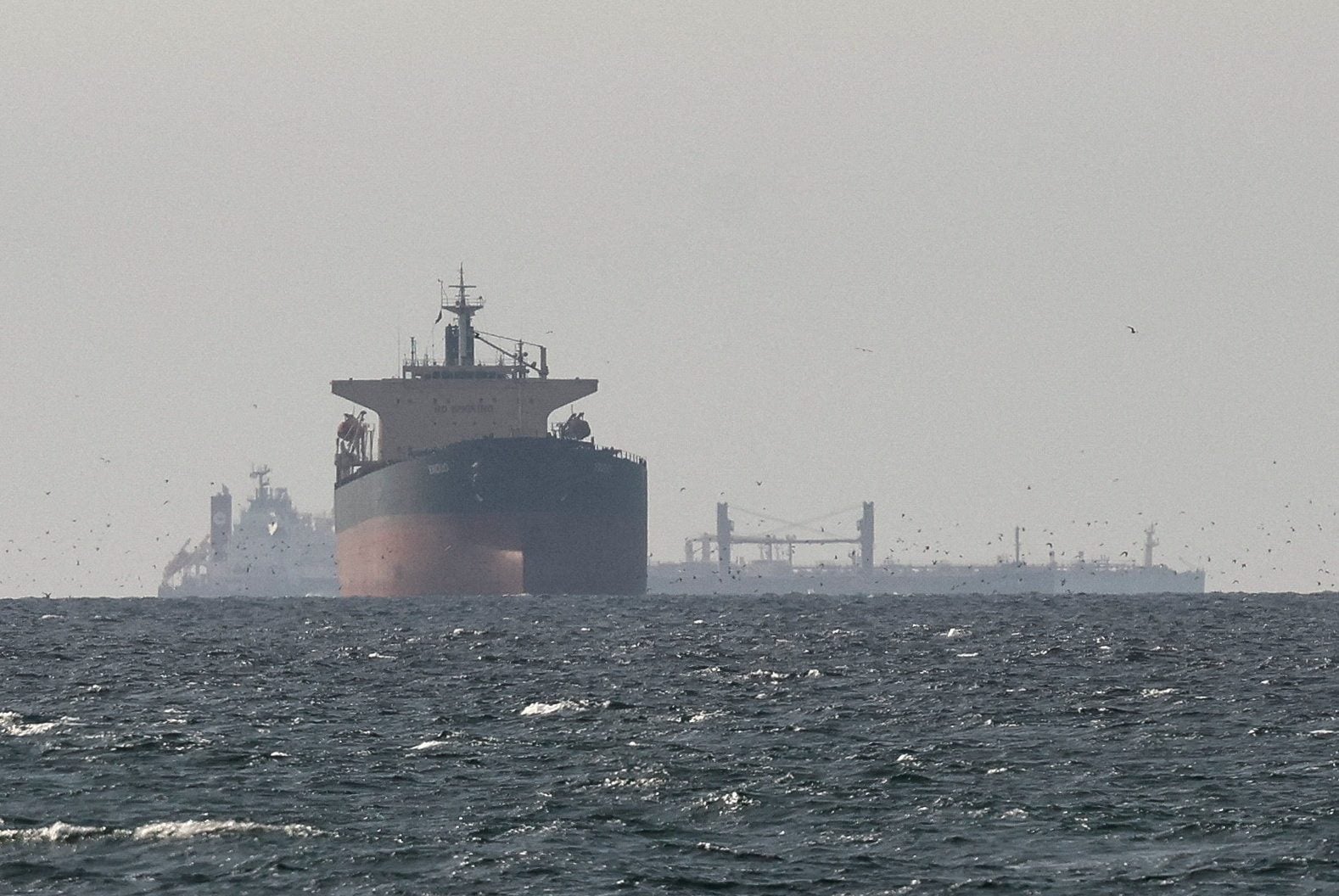
- Track Strait of Hormuz flows daily via AIS and port calls, specifically Iranian‑flagged departures from Chabahar and non‑Iranian outbound traffic from the Persian Gulf, to gauge whether the restart broadens or stalls.
- Set alerting on official notices about US, Iran talks rescheduling in Switzerland and statements linking progress to calm in Lebanon to anticipate shifts in maritime risk.
- Monitor OCHA and Lebanese Health Ministry updates on fatalities, displacement, and returns in Nabatieh and South governorates; task periodic imagery checks on named towns within the IDF ‘Yellow Line’ to validate habitability.
- Keep traveller‑risk products current: reflect the continued FCDO ‘no travel’ advisory for Gaza and the lack of independent exit routes, and note US guidance on limited consular capacity in Lebanon.
Confidence & uncertainty
Overall confidence is medium. Several core developments are corroborated by multiple reliable sources: the Lebanon ceasefire timing and implementation, same‑day fatalities, and the postponement of US, Iran talks are covered by wire services and major media. NASA’s thermal detections are authoritative but do not establish causation, which limits confidence on Gaza combat intensity. Shipping indicators point to a restart yet include partial contradictions on outbound patterns. Assessments on returns in southern Lebanon draw on a mix of multilateral reporting and open‑source analysis of destruction imagery, with some medium‑reliability sourcing, keeping confidence below high.
Alternative analysis (red cell)
Reporting in the ledger is internally inconsistent and several operational implementation claims rely on lower‑admiralty sources (e.g., 992ef706 A6; cb3dcabf A6) or single‑origin reports. A plausible alternative interpretation is that the 19 June ceasefire produced rapid, uneven effects: some sectors appear to be holding and enabling localized returns and maritime movements, while isolated incidents and reporting lags create the appearance of persistent low‑tempo hostilities. Resolving whether this is generalized fragility or localized noise requires time‑stamped, multi‑source operational verification (IMINT, UNIFIL logs, diplomatic communiqués, and ground confirmation).
Intelligence gaps
- [EEI 1.1 · PARTIAL] Number, type and geolocated coordinates of projectiles (rockets, mortars, anti-tank guided missiles) fired from Lebanon into Israel in the last 24/72 hours, including time-stamped launch and impact locations. Recommended collection: signals/intel
- [EEI 1.2 · UNCOVERED] Satellite or aerial imagery showing movement, concentration, or forward displacement of Hezbollah-associated military assets (armored vehicles, artillery pieces, mobile rocket launchers, logistics convoys) to positions within 0–10 km of the Israel-Lebanon border. Recommended collection: satellite/imagery
- [EEI 1.3 · UNCOVERED] Intercepted or captured Hezbollah command-and-control communications or orders explicitly directing cross-border operations or coordinated strikes with Palestinian groups (time-stamped messages, unit identifiers, orders to fire/move). Recommended collection: signals/intel
- [EEI 1.4 · PARTIAL] Observable changes in Israeli northern-front posture within Israel (numbers and types of reinforcements deployed to northern brigades, activation of reserves, air defense redeployments, evacuation orders or shelter alerts in northern towns), including timestamps and unit IDs where available. Recommended collection: human/intel
- [EEI 2.1 · UNCOVERED] Official or corroborated reports of IDF reservist mobilization and unit-level deployment orders (number of reservists called, named brigades/units ordered to deploy, deployment timelines). Recommended collection: open-source/media
- [EEI 2.2 · UNCOVERED] Satellite or ground imagery showing concentrations of IDF heavy equipment (tanks, infantry fighting vehicles, engineering vehicles), staging areas, field hospitals or forward supply dumps within X km of the Gaza border and at known crossing points. Recommended collection: satellite/imagery
- [EEI 2.3 · PARTIAL] Change in strike patterns consistent with pre-ground-attack shaping: sustained high-frequency airstrikes on tunnel networks, command nodes, coastal launch sites, and known insurgent concentrations (strike counts, munition types, locations, times). Recommended collection: open-source/media
- [EEI 2.4 · UNCOVERED] Logistics indicators: verified convoys of fuel/ammunition entering staging areas, establishment of forward logistics or medical bases, or documented requisitioning orders for bulk combat supplies with timestamps and quantities. Recommended collection: human/intel
- [EEI 3.2 · UNCOVERED] Public statements, press releases or verified communiqués from Hamas and other Gaza armed groups specifying acceptance, rejection, or conditions for a ceasefire (explicit conditions such as prisoner release lists, withdrawal terms, lifting of blockades), with timestamps and speaker attribution. Recommended collection: open-source/media
- [EEI 3.3 · PARTIAL] Humanitarian indicators relevant to ceasefire: establishment and operation of agreed humanitarian corridors/checkpoints, number of aid deliveries admitted, civilian evacuations completed, and NGO/hospital reports of access denials or safe-passage violations. Recommended collection: humanitarian/NGO reports
- [EEI 3.4 · PARTIAL] Operational evidence of a de facto pause: verified sustained reduction (e.g., ≥12 hours) in strikes or launches from either side in specific sectors, supported by strike/impact logs, radar tracks and incident reports. Recommended collection: open-source/media
Cited sources
[1] nypost.com · Lebanon cease-fire agreed to, US official says after US-Iran talks in Switzerland get scrapped (B) · sha256:b1bacd0f5ebe [2] haaretz.com · Israel, Hezbollah agree to cease-fire in Lebanon, Israeli official says (A) · sha256:cef624d58d8d [3] ynetnews.com · 'Frustrated by this terrible agreement': Israel pounds Lebanon as Iran deal alarms troop families (B) · sha256:e1dc8dc21605 [4] Associated Press · Talks between the US and Iran are called off because of fighting in Lebanon, officials say (A) · sha256:676c73bc1ed1 [5] United Nations · UN upholds freedom of movement for peacekeepers in Lebanon (A) · sha256:3f457a20cd3a [6] NASA · NASA FIRMS thermal detections — Gaza (2d) (A) · sha256:2fba8d766192 [7] gcaptain.com · Iran Oil Surges as Seven Supertankers Sail After Blockade Lifts (A) · sha256:965be16980d2 [8] cbsnews.com · Iran Latest: Israel and Hezbollah agree to Lebanon truce, officials say, as fighting delays U.S.-Iran talks (A) · sha256:32db8c8f9625 [9] United Nations · Security Council LIVE: Gaza in the spotlight as dire conditions continue (A) · sha256:90608389018d [10] Wikipedia · Hezbollah–Israel conflict (2023–present) (B) · sha256:c6e4152ce51a [11] Foreign, Commonwealth & Development Office (FCDO) · Israel travel advice (A) · sha256:dc910e274d20 [12] bellingcat.com · Satellite Imagery Shows Ongoing Demolitions Across Southern Lebanon - bellingcat (D) · sha256:052733cd55f8 [13] The Jerusalem Post · Israel, Hezbollah agree to ceasefire starting on Friday, Israeli source tells 'Post' (A) · sha256:2590711b6681
Source content hashes were computed at collection time; the cited text is preserved unmodified for the life of this product.
Red cell review: PARTIAL DISSENT
TLP:CLEAR