TLP:CLEAR · Disclosure is not limited.
Lebanon front flares despite ceasefire call; Gaza heat signatures persist; Hormuz reopening under watch
Time window: Last 7 days · Audience: General analyst · Type: Situation report · DTG: 2026-06-19 13:36Z · Overall confidence: MEDIUM
BLUF
Cross-border fighting between the IDF and Hezbollah is very likely to continue despite a new ceasefire announcement and US mediation, while satellite thermal detections show likely ongoing combat activity in Gaza. The US, Iran memorandum has reopened Hormuz and started to move oil, but mine-clearance, postponed talks and governance questions keep maritime risk moderate.
Executive summary
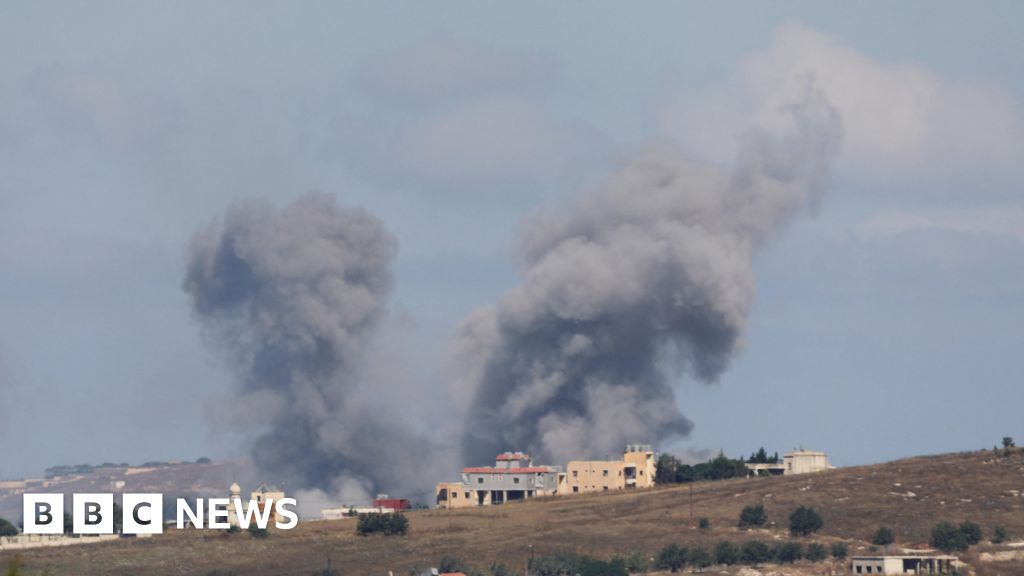
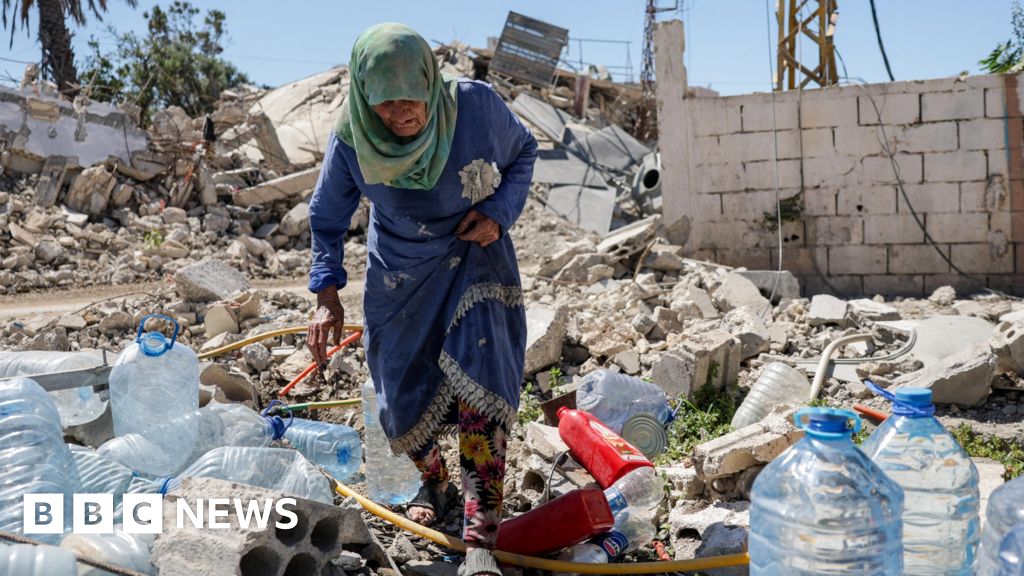
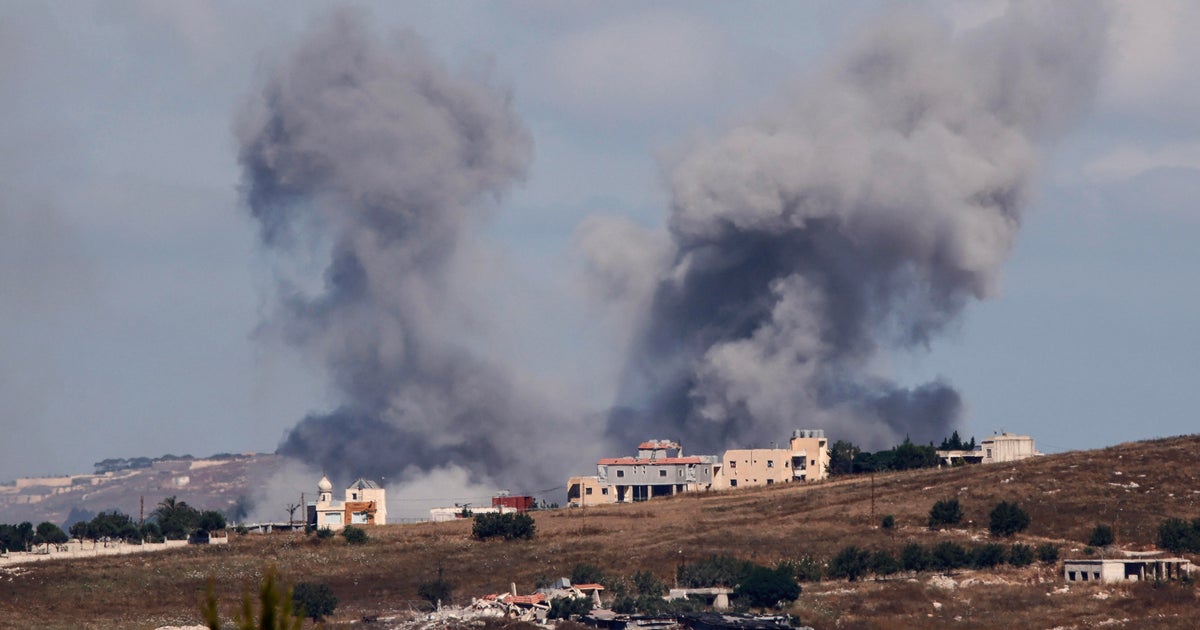
Israeli strikes on southern Lebanon, including at least 80 Hezbollah-linked targets, reportedly killed at least 18 people as the IDF acknowledged four soldiers killed, pointing to continued hostilities despite an announced ceasefire and a mandated 60‑day halt to fighting. Prime Minister Benjamin Netanyahu signalled IDF troops will remain in a cross‑border buffer zone. In Gaza, NASA VIIRS registered 85 thermal anomalies from 18-19 June, consistent with ongoing combat activity. At sea, Washington and Tehran signed a memorandum ending the US maritime blockade of Iranian ports, tankers began exiting the Strait of Hormuz and Iran pledged 60 days of charge‑free maritime services, but mine‑clearance is still under way and technical talks were postponed after the Lebanon strikes. Humanitarian impacts in Lebanon remain severe with extensive damage south of the Litani and large-scale displacement.
Change from previous assessment
Hostilities on the Israel, Lebanon front persisted with heavy Israeli strikes on at least 80 Hezbollah‑linked targets and at least 18 reported fatalities, while the IDF acknowledged four soldiers killed. A new ceasefire start was announced for 19 June alongside a 60‑day halt mandate, but planned US, Iran technical talks were postponed following the strikes. NASA recorded 85 thermal anomalies over Gaza on 18-19 June, reinforcing prior assessments of ongoing combat activity. In the maritime domain, the US formally ended enforcement of its blockade, tankers began exiting Hormuz and Iran pledged 60 days of charge‑free maritime services, but mine‑clearance advisories kept risk at a moderate level. Initial assessment of this topic was that fighting would likely persist, Gaza operations were ongoing and Hormuz risk would improve from a reduced baseline; these judgments are reaffirmed with fresh reporting and overhead indicators.
Key judgments
- Cross-border hostilities between the IDF and Hezbollah are very likely to persist at an elevated tempo despite the newly announced ceasefire. (Confidence: high · ASSESSED)
- I&W: IDF and Hezbollah issue daily claims of strikes and counterstrikes for seven consecutive days, including near Nabatieh and across southern Lebanon. (0-14 days)
- I&W: A verified monitoring mechanism publicly confirms a sustained cessation of cross-border fire for at least seven days under the 60‑day halt. (0-1 month)
- IDF combat activity in Gaza is likely ongoing, indicated by 85 NASA‑detected thermal anomalies on 18-19 June. (Confidence: medium · ASSESSED)
- I&W: Official IDF communiqués or verified imagery confirming new strikes or ground operations in Gaza. (0-14 days)
- I&W: A week-long period with near‑zero FIRMS/VIIRS thermal detections across Gaza. (0-1 month)
- Maritime risk in the Strait of Hormuz is likely to remain moderate but improving as traffic resumes under the US, Iran memorandum while mine‑clearance and governance issues are resolved. (Confidence: medium · ASSESSED)
- I&W: JMIC advisories confirm the main Traffic Separation Scheme is cleared of mines and fully reopened. (0-1 month)
- I&W: Fresh security advisories warn of new attacks or a raised maritime threat level in the Strait. (0-1 month)
- Large‑scale civilian returns to southern Lebanon are unlikely in the near term due to extensive destruction, ongoing demolitions, evacuation orders south of the Litani and Zahrani, and stated IDF intent to hold a buffer zone. (Confidence: high · ASSESSED)
- I&W: Continuation of IDF evacuation orders and public statements affirming a buffer‑zone posture. (1-3 months)
- I&W: Verified IDF, LAF handovers of areas and formal rescission of evacuation orders enabling civilian return. (1-3 months)
- Implementation of the US, Iran memorandum is likely to be uneven and vulnerable to Israeli, Hezbollah fighting, as technical talks have been postponed and Iran has tied participation to visible implementation. (Confidence: medium · ASSESSED)
- I&W: Burgenstock technical talks are rescheduled and conclude with a joint communiqué detailing next steps. (0-1 month)
- I&W: Further cancellations of talks or formal Iranian statements suspending participation pending Lebanon ceasefire compliance. (0-1 month)
- At least 18 people were killed in southern Lebanon following overnight Israeli air strikes on 18-19 June, and the IDF reported four soldiers, including a battalion commander, killed in the fighting. (Confidence: high · REPORTED)
- I&W: Lebanon’s health ministry issues updated fatality lists for the 18-19 June strikes. (0-14 days)
- I&W: IDF casualty notifications and unit communiqués confirm the identities and ranks of the four fallen soldiers. (0-14 days)
Outlook & scenarios
Ceasefire in name only: rolling violations continue (65%)
Israel continues strikes on Hezbollah targets and Hezbollah conducts retaliatory fire and ambushes despite the announced ceasefire and the 60‑day halt. Cross‑border incidents persist near key southern Lebanese localities, and Israeli leadership sustains a buffer‑zone posture. Diplomatic pressure contains but does not halt exchanges.
Shaky truce consolidates for several weeks (35%)
Under US mediation and regional pressure, the announced ceasefire gains partial adherence. Violations drop to sporadic incidents, limited IDF, LAF area handovers occur, and rhetorical escalation cools. The environment remains fragile and contingent on developments in Gaza.
Escalation derails the US, Iran memorandum and slows Hormuz normalisation (20%)
A surge in Israeli, Hezbollah fighting triggers further postponement of US, Iran talks, sharper Iranian accusations and reduced cooperation on mine‑clearance. Industry advisories hold the threat level at moderate or higher, major liners delay transits and oil flows recover more slowly than anticipated.
Recommendations
- Maintain a daily cross‑border incident ledger for southern Lebanon that cross‑references IDF communiqués, Hezbollah claims and geolocated imagery to quantify ceasefire adherence.
- Task GEOINT to update a damage and access map of the IDF ‘Yellow Line’ area using recent satellite products, prioritising Qantara and other heavily demolished locales to assess return feasibility and potential routes for LAF re‑entry.
- Exploit NASA FIRMS/VIIRS for Gaza heat signatures and correlate with time‑stamped reporting and commercial SAR to distinguish combat activity from non‑combat fires.
- Stand up a maritime watch function to ingest JMIC advisories, mine‑clearance notices and AIS tracks through Hormuz, flagging completion of TSS clearance and the pace of laden tanker departures.
- Track rescheduling of the Burgenstock technical talks and compile agreed deliverables on maritime services, charges and Oman’s role to assess implementation risk to the 60‑day window.
- Monitor Israeli leadership statements on buffer‑zone duration and IDF posture, and Hezbollah statements linking front activity to Gaza operations, as constraints on de‑escalation pathways.
- Coordinate with UK, French and Qatari channels to map incoming humanitarian support to Lebanon and identify logistics corridors that would enable eventual civilian returns when security conditions permit.
- Prepare contingency briefs on consular and NGO risk in Lebanon drawing on current US travel posture, kidnapping and strike warnings, to inform posture and movement control.
Confidence & uncertainty
Multiple high‑reliability sources and official statements corroborate continued Israeli, Hezbollah fighting, the announced ceasefire framework, and movement toward reopening the Strait of Hormuz. NASA’s FIRMS/VIIRS data reliably show recent heat signatures over Gaza, although they record heat rather than cause, which lowers confidence on attribution. Maritime reporting is broadly consistent on the blockade ending and initial tanker movements, but mine‑clearance status and governance arrangements remain partly reported and partly inferred. Casualty figures in Lebanon are reported by health authorities but vary across outlets, and ceasefire timing and adherence are contested. Taken together, the evidence supports medium overall confidence.
Alternative analysis (red cell)
The available reporting contains credible incident and political statements, but it is internally inconsistent and reliant in places on low-admiralty or uncorroborated items. An alternate, defensible assessment is that the ceasefire and US–Iran memorandum introduce plausible constraints on escalation and shipping risk, but both are fragile and conditional: isolated violations, ambiguous remote‑sensing signatures, and postponed technical talks mean operational outcomes will likely be uneven and remain contingent on verification. More granular, time‑sequenced ISR, independent casualty and damage assessments, and direct verification of maritime operations are required to resolve these competing readings.
Intelligence gaps
- [EEI 1.1 · UNCOVERED] Number, type and geolocated coordinates of projectiles (rockets, mortars, anti-tank guided missiles) fired from Lebanon into Israel in the last 24/72 hours, including time-stamped launch and impact locations. Recommended collection: signals/intel
- [EEI 1.2 · UNCOVERED] Satellite or aerial imagery showing movement, concentration, or forward displacement of Hezbollah-associated military assets (armored vehicles, artillery pieces, mobile rocket launchers, logistics convoys) to positions within 0–10 km of the Israel-Lebanon border. Recommended collection: satellite/imagery
- [EEI 1.3 · UNCOVERED] Intercepted or captured Hezbollah command-and-control communications or orders explicitly directing cross-border operations or coordinated strikes with Palestinian groups (time-stamped messages, unit identifiers, orders to fire/move). Recommended collection: signals/intel
- [EEI 1.4 · UNCOVERED] Observable changes in Israeli northern-front posture within Israel (numbers and types of reinforcements deployed to northern brigades, activation of reserves, air defense redeployments, evacuation orders or shelter alerts in northern towns), including timestamps and unit IDs where available. Recommended collection: human/intel
- [EEI 2.1 · UNCOVERED] Official or corroborated reports of IDF reservist mobilization and unit-level deployment orders (number of reservists called, named brigades/units ordered to deploy, deployment timelines). Recommended collection: open-source/media
- [EEI 2.2 · UNCOVERED] Satellite or ground imagery showing concentrations of IDF heavy equipment (tanks, infantry fighting vehicles, engineering vehicles), staging areas, field hospitals or forward supply dumps within X km of the Gaza border and at known crossing points. Recommended collection: satellite/imagery
- [EEI 2.3 · UNCOVERED] Change in strike patterns consistent with pre-ground-attack shaping: sustained high-frequency airstrikes on tunnel networks, command nodes, coastal launch sites, and known insurgent concentrations (strike counts, munition types, locations, times). Recommended collection: open-source/media
- [EEI 2.4 · UNCOVERED] Logistics indicators: verified convoys of fuel/ammunition entering staging areas, establishment of forward logistics or medical bases, or documented requisitioning orders for bulk combat supplies with timestamps and quantities. Recommended collection: human/intel
- [EEI 3.1 · PARTIAL] Number, participants and content of diplomatic contacts or negotiation sessions in the last 48 hours involving mediators (Egypt, Qatar, US, UN), including any proposed ceasefire text, prisoner/exchange lists, timelines or verification mechanisms. Recommended collection: diplomatic
- [EEI 3.2 · UNCOVERED] Public statements, press releases or verified communiqués from Hamas and other Gaza armed groups specifying acceptance, rejection, or conditions for a ceasefire (explicit conditions such as prisoner release lists, withdrawal terms, lifting of blockades), with timestamps and speaker attribution. Recommended collection: open-source/media
- [EEI 3.3 · PARTIAL] Humanitarian indicators relevant to ceasefire: establishment and operation of agreed humanitarian corridors/checkpoints, number of aid deliveries admitted, civilian evacuations completed, and NGO/hospital reports of access denials or safe-passage violations. Recommended collection: humanitarian/NGO reports
- [EEI 3.4 · PARTIAL] Operational evidence of a de facto pause: verified sustained reduction (e.g., ≥12 hours) in strikes or launches from either side in specific sectors, supported by strike/impact logs, radar tracks and incident reports. Recommended collection: open-source/media
Cited sources
[1] CBS News · U.S.-Iran Latest: Israel-Hezbollah fighting intensifies in Lebanon as next-phase talks delayed (A) · sha256:a72db84a51c8 [2] bbc.com · Lebanon says Israeli strikes kill 18 as Israel says four soldiers killed by Hezbollah (A) · sha256:ecdb4f99d48f [3] bbc.com · US-Iran talks postponed as Israel launches deadly strikes in Lebanon (A) · sha256:e0f2585ff390 [4] Al Jazeera · Israeli strikes kill at least 18 amid intense fighting in southern Lebanon (A) · sha256:447095c6741a [5] The Jerusalem Post · Live Updates: Latest from Israel, Iran, and Middle East | The Jerusalem Post (A) · sha256:38dd21c54c55 [6] Wikipedia · 2024 Israel–Lebanon ceasefire agreement (B) · sha256:62a3e9b94d0c [7] Wikipedia · 2026 Israel–Lebanon ceasefire (B) · sha256:fe14d83e13f9 [8] ynetnews.com · 'Frustrated by this terrible agreement': Israel pounds Lebanon as Iran deal alarms troop families (B) · sha256:e1dc8dc21605 [9] NASA · NASA FIRMS thermal detections — Gaza (2d) (A) · sha256:2fba8d766192 [10] gcaptain.com · Iran Deal Opens Door to Hormuz Reopening, But Shipping Industry Warns of Long Road Ahead (B) · sha256:c7b2ef0c120c [11] thenationalnews.com · Iran war latest: Netanyahu says Israel will hit Hezbollah with force (B) · sha256:3e03c6638f5c [12] gcaptain.com · U.S. Officially Ends Maritime Blockade of Iran and Declares Hormuz Open (A) · sha256:bde568f4f392 [13] aljazeera.com · Oil prices rise as Lebanon fighting erupts and Hormuz traffic still slow (A) · sha256:5b82efde2cea [14] gcaptain.com · Iran Deal Raises Serious Questions Over Future Management of the Strait of Hormuz (B) · sha256:eae0284210cb [15] bellingcat.com · Satellite Imagery Shows Ongoing Demolitions Across Southern Lebanon - bellingcat (B) · sha256:052733cd55f8 [16] Al Jazeera · Fears for US-Iran deal as talks delayed by Israeli strikes on Lebanon (A) · sha256:75bedba54eec [17] Al Jazeera · Can US-Iran peace ‘deal’ survive Israeli bombing of Lebanon? (A) · sha256:1eaab5599e07 [18] TrueLine News · Iran Warns Israel After Deadly Lebanon Strikes | Tensions Rise In Southern Lebanon (B) · sha256:58d296c30db4 [19] gcaptain.com · U.S. Downplays Possibility of Hormuz Tolls as Negotiations Restart (B) · sha256:d4210524880f
Source content hashes were computed at collection time; the cited text is preserved unmodified for the life of this product.
Red cell review: PARTIAL DISSENT
TLP:CLEAR