TLP:CLEAR · Disclosure is not limited.
Limited brief: Libya activity does not substantiate a West Africa crisis
Time window: Last 1 day · Audience: General analyst · Type: Situation report · DTG: 2026-09-18 01:33Z · Overall confidence: LOW
BLUF
This limited brief does not substantiate the stated West Africa or Sahel crisis. The available reporting instead concerns Russian logistics activity linked to Tobruk, attacks on shipping off Libya, and a disputed Ukrainian drone detachment at Misrata.
Executive summary
Only two usable sources were available, and the supplied claims do not provide fresh evidence of jihadist attacks or military responses in West Africa. The reporting instead describes a Russian convoy moving from Baltiysk to Tobruk, the loading and escort of cargo vessels with military-cargo histories, attacks involving the Lady Mariia and Qendil off Libya, and a contested report of a Ukrainian drone detachment at Misrata Air Base. Overall confidence is low because the event reporting is concentrated in one trade publication and includes unresolved attribution and corroboration gaps.
Change from previous assessment
The 17 September prior brief assessed jihadist violence in Burkina Faso, Mali and Niger. This run provides no new evidence on those states, so it does not materially update that assessment. It adds reported Russian maritime logistics linked to Tobruk, attacks on Qendil and Lady Mariia off Libya, and a disputed Ukrainian drone presence at Misrata. Confidence is lower for the new Libya material because the current source set is limited and largely single-source.
Key judgments
- The supplied reporting is insufficient to establish a rise in jihadist attacks in West Africa or a related military response by local governments. The available military-support claim concerns Russia's Africa Corps and government forces in six Central African countries, while the remaining claims concern Libya, the Mediterranean Sea, and the Suez Canal. This is a reporting gap rather than evidence that the prior West Africa assessment has been disproved. (Confidence: insufficient · ASSESSED)
- I&W: Confirm the reporting gap if the next 0-14 days produce no dated, location-specific reporting on a named jihadist group attacking a named West African state or on that state's military response. (0-14 days)
- I&W: Break the assessment if two independent sources provide dated reporting on a jihadist attack in a named West African state together with a documented local-government military response. (0-14 days)
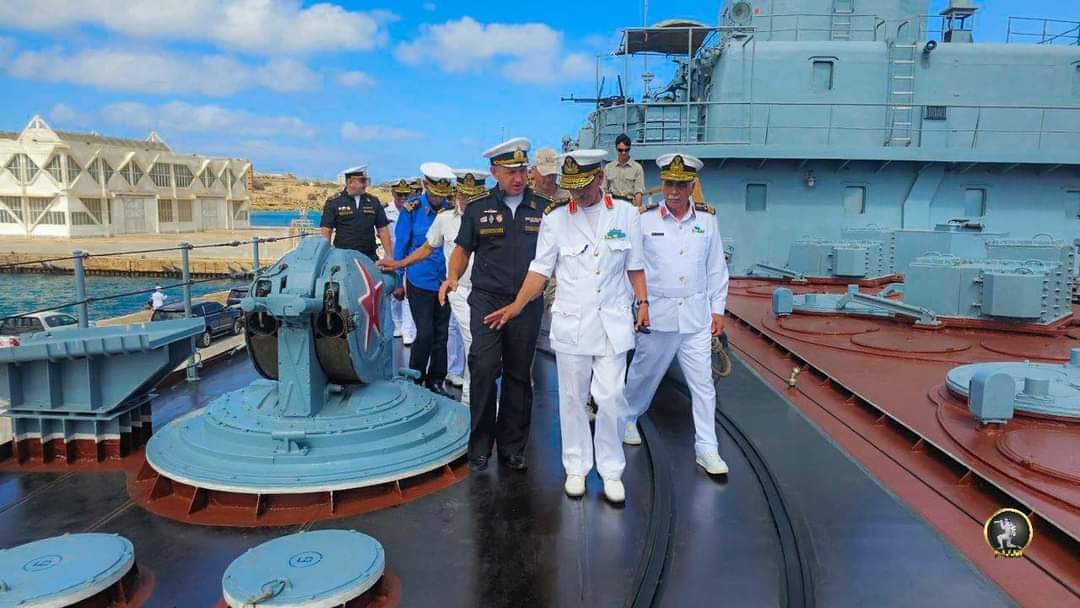
- Russian logistics activity into Eastern Libya is likely. The Russian landing ship Aleksandr Shabalin and the cargo vessels Anastasiia and Yuriy Arshenevskiy were reportedly tracked from Baltiysk to Tobruk, escorted between Sicily and Tunisia on 10 September, and associated with Ural trucks and armoured vehicles loaded at Baltiysk. The two cargo vessels are also reported to be sanctioned and to have histories of moving military cargo. This inference rests on multiple claims from one trade-publication source, so confidence is medium. (Confidence: medium · ASSESSED)
- I&W: Confirm the assessment if independent geospatial imagery or vessel tracking shows Aleksandr Shabalin, Anastasiia or Yuriy Arshenevskiy at Tobruk and identifies unloading or onward movement of Ural trucks or armoured vehicles. (0-14 days)
- I&W: Break the assessment if independent tracking shows that the convoy did not reach Tobruk or that the cargo vessels carried no military-related equipment. (0-14 days)
- Ukraine-acknowledged attacks using bomb-dropping hexacopter drones reportedly hit the Omani-flagged Aframax Qendil, IMO 9310525, in December of the previous year and the Russian military cargo vessel Lady Mariia, IMO 9220641, on 7 September off Libya. Lady Mariia was still at anchor at the northern end of the Suez Canal on 17 September. The account comes from a trade-publication source without independent corroboration in the supplied material, so confidence is medium. (Confidence: medium · REPORTED)
- I&W: Confirm the reported maritime incidents if independent imagery, vessel tracking or official reporting verifies Lady Mariia's position or movement after 17 September and links damage to the 7 September attack. (0-14 days)
- I&W: Break the reported attribution if independent evidence assigns either incident to another actor or shows that the vessels were not attacked with bomb-dropping hexacopter drones. (0-14 days)
- The Ukrainian drone detachment at Misrata Air Base is likely present, but confidence is low. CNN and RFI reportedly substantiated the detachment's presence through interviews with Ukrainian personnel, while a Libyan Observer report denied it. The claim is carried by a trade-publication source and remains unresolved by independent evidence. (Confidence: low · ASSESSED)
- I&W: Confirm the assessment if independent imagery or on-record Libyan or Ukrainian reporting identifies the detachment at Misrata Air Base. (0-14 days)
- I&W: Break the assessment if independent verification finds no Ukrainian detachment at Misrata or confirms the Libyan Observer denial. (0-14 days)
Outlook & scenarios
Russian logistics through Tobruk continues (45%)
The reported movement of Aleksandr Shabalin, Anastasiia and Yuriy Arshenevskiy is followed by continued Russian-linked maritime logistics at Tobruk. This is a likely near-term path if independent tracking confirms the vessels' arrival and cargo activity.
Concurrent Russian and Ukrainian-linked activity around Libya (35%)
Russian maritime activity linked to Tobruk and the reported Ukrainian drone presence at Misrata remain concurrent, while the attribution and operational purpose of each remain contested. This scenario preserves the current low-confidence picture without establishing a wider regional trend.
Current reporting is revised downward (20%)
Independent checks fail to confirm the Misrata detachment or the military-cargo interpretation of the Tobruk movement. Analysts then retain the reported ship attacks and Lady Mariia's Suez anchorage as the better-supported elements of the current picture.
Further drone attack on shipping off Libya (10%)
A low-probability, high-impact outcome is another bomb-dropping hexacopter attack on a Russian-linked or commercial vessel in the Mediterranean off Libya, followed by fresh disruption around the Suez route.
Recommendations
- Reframe this run as a Libya and Mediterranean maritime brief. Do not use it as fresh evidence for the prior assessment of jihadist violence in Burkina Faso, Mali and Niger.
- Seek independent, time-stamped confirmation of the Tobruk movement by monitoring Aleksandr Shabalin, Anastasiia and Yuriy Arshenevskiy, their port locations, and any unloading of Ural trucks or armoured vehicles.
- Maintain a 0-14 day watch on Lady Mariia's position and status at the Suez Canal, and reconcile new maritime reporting with the reported attacks off Libya.
- Verify the Misrata allegation through independent imagery and on-record statements that distinguish the presence of a Ukrainian drone detachment from any operational activity.
- Keep the Libya-related judgments separate from the West Africa assessment in analytic products, and retain low overall confidence until the current trade-publication reporting receives independent corroboration.
Confidence & uncertainty
Overall confidence is low because only two usable sources were available. One is a Google News aggregator with an unknown original publisher, while the identifiable source is a medium-reliability trade publication. The current claims are concentrated in that trade publication, the West Africa topic lacks supporting evidence in this run, and the Misrata reporting contains a direct denial. Several claims also lack publication dates or independent corroboration.
Intelligence gaps
- [EEI 1.1 · UNCOVERED] Recent jihadist attack incidents in the last 72 hours: exact locations (GPS or nearest town), date/time, target type (market, military base, convoy, village, border post), weapon systems used, and reported casualty counts. Recommended collection: open source/social_media
- [EEI 1.2 · UNCOVERED] Observed jihadist force movements and posture within 100 km of major towns or critical infrastructure: convoy sightings, checkpoints established/removed, concentrations of fighters, and annotated route preparations. Recommended collection: aerial ISR/imagery
- [EEI 1.3 · UNCOVERED] Host-nation and partner military defensive measures near population centers and key infrastructure: troop redeployments, new checkpoints/curfews, roadblocks, air sortie launches, and activation of rapid reaction units (locations and unit IDs if available). Recommended collection: military liaison/satellite
- [EEI 1.4 · UNCOVERED] Humanitarian indicators of imminent threat to civilians: sudden internal displacement flows or mass movements within 72 hours, shelter/IDP site openings, and major road closures affecting civilian evacuation routes. Recommended collection: humanitarian/NGO
- [EEI 2.1 · PARTIAL] Reports or imagery confirming weapons and materiel holdings: number and types of heavy weapons observed or seized (mortars, artillery, technicals, IED caches, MANPADS), locations of caches, and recent rearmament deliveries. Recommended collection: imagery/HUMINT
- [EEI 2.2 · UNCOVERED] Active recruitment and propaganda indicators: new recruitment messages/accounts, numbers of claimed/new recruits by region, youth/ethnic group targeting, and physical recruitment events or forced conscriptions. Recommended collection: social_media/HUMINT
- [EEI 2.3 · PARTIAL] Cross-border operational indicators: seizures or sightings of convoys crossing borders, capture/abandonment of border posts, patterns of fighters moving between neighboring countries, and use of transnational smuggling routes. Recommended collection: border_patrol/satellite
- [EEI 2.4 · PARTIAL] Financing and logistics flows that sustain operations: recent seizures of cash/drugs/minerals, transactions or remittances linked to identified networks, and commercial transport companies or ports repeatedly used for shipments to insurgent-held areas. Recommended collection: financial/customs
- [EEI 3.1 · PARTIAL] Force posture and sustainment: foreign and host-nation troop deployments (unit types, strength estimates, bases used), changes in airbase activity (sortie rates, aircraft types, times), and frequency of logistics convoys or resupply flights. Recommended collection: diplomatic/military_reporting/satellite
- [EEI 3.2 · UNCOVERED] Combat effectiveness indicators from recent engagements: verified casualty and equipment loss counts for state forces and jihadist units, territory regained or lost after operations, and number of operations meeting objectives versus failures. Recommended collection: open source/military_reports
- [EEI 3.3 · UNCOVERED] Critical sustainment vulnerabilities: reported ammunition/fuel shortages, road/bridge interdictions affecting supply lines, strikes on logistics hubs, and closure rates of key supply routes. Recommended collection: logistics/imagery
- [EEI 3.4 · UNCOVERED] Political and legal decisions influencing operations: government decrees (states of emergency, mobilization orders), approved cross-border operations or foreign troop agreements, and public statements altering rules of engagement. Recommended collection: diplomatic/government
Cited sources
[1] The Maritime Executive · A Divided Libya Supports Both Ukrainian and Russian Naval Operations (C) · sha256:ae07aa8e0f81
Source content hashes were computed at collection time; the cited text is preserved unmodified for the life of this product.
Red cell review: CONCUR WITH COMMENT
TLP:CLEAR