TLP:CLEAR · Disclosure is not limited.
Mali: Dawn raids across five towns signal renewed coordinated campaign
Time window: Last 7 days · Audience: General analyst · Type: Situation report · DTG: 2026-07-07 06:16Z · Overall confidence: HIGH
BLUF
Armed groups very likely executed coordinated pre-dawn attacks across Mali on 4 July 2026, hitting Aguelhok, Anefis, Gao, Sévaré and Kenieroba. The army says it repelled the assaults and reported 26 militants killed, while the Azawad Liberation Front and JNIM claim participation and seizures, pointing to a contested battlespace and rising spillover risk.
Executive summary
Coordinated attacks struck Aguelhok, Anefis, Gao, Sévaré and the Kenieroba prison at about 0500 local time on 4 July 2026, with explosions reported in Sévaré. The Malian armed forces state they repelled the raids, killed 20 attackers in Sévaré and six in Gao, and have the situation under control. Tuareg-led Azawad Liberation Front figures confirm involvement at Anefis, and JNIM claims a series of operations and the seizure of at least three positions, echoing its April nationwide actions that included the killing of Defence Minister Sadio Camara in Kati. Recent analysis points to a shift by armed groups toward flexible war-of-attrition raids designed to stretch security forces and pressure Bamako’s supply lines, with reporting of bottlenecks and a fuel blockade in recent weeks. The operating environment for civilians and foreign personnel remains high-risk nationwide, with U.S. employees barred from travel outside Bamako and civil aviation constrained; regional capitals are on alert as JNIM also claims responsibility for a deadly 2 July attack in Niamey.
Key judgments
- Armed groups very likely conducted coordinated, multi‑site attacks across Mali at dawn on 4 July 2026, striking Aguelhok, Anefis, Gao, Sévaré and Kenieroba, with explosions reported around 0500 local time; the army says it repelled the assaults and reported 26 militants killed in Sévaré and Gao combined. (Confidence: high · REPORTED)
- I&W: Independent imagery or video geolocated to Aguelhok, Anefis, Gao or Sévaré within 0-14 days showing battle damage consistent with pre‑dawn assaults. (0-14 days)
- I&W: No additional multi‑location dawn raids reported by major outlets for at least 30 consecutive days. (1-3 months)
- The Azawad Liberation Front was very likely involved in the 4 July operation, including at Anefis, and JNIM likely coordinated or exploited the attacks, claiming multiple actions and the seizure of at least three positions. (Confidence: medium · ASSESSED)
- I&W: Official FLA or JNIM media releases with verifiable, geolocated footage from the named posts within two weeks. (0-14 days)
- I&W: Malian forces present captured materiel and detainees clearly linked to JNIM in the towns attacked, contradicting claims of control by armed groups. (0-14 days)
- There is a roughly even chance that attackers temporarily overran one or more military positions during the 4 July assaults, but enduring control remains contested given simultaneous government claims of repelling attacks and insurgent claims of seizures, alongside an FLA claim of control at Anfif. (Confidence: low · ASSESSED)
- I&W: Third‑party satellite or open‑source geolocated imagery showing non‑state flags or checkpoints inside a named garrison for more than 24 hours. (0-14 days)
- I&W: Escorted press or independent field reporting from Anefis or Anfif documenting uninterrupted state presence. (0-14 days)
- The attack pattern likely reflects a shift toward flexible war‑of‑attrition tactics intended to stretch security forces and threaten Bamako’s supply corridors, with reported bottlenecks and a fuel blockade amplifying pressure in recent weeks and attacks extending to Kenieroba on the capital’s approach. (Confidence: medium · ASSESSED)
- I&W: Two or more short‑duration raids across at least three regions within a seven‑day window, paired with public reports of reduced fuel or goods deliveries into Bamako. (1-3 months)
- I&W: Sustained convoy traffic into Bamako reported for two consecutive weeks without incident and public statements on normalised fuel distribution. (1-3 months)
- The threat environment for civilians and foreign personnel is very likely to remain elevated nationwide, with persistent violent crime and kidnapping risks, U.S. government restrictions on official travel outside Bamako, and civil aviation limitations in effect. (Confidence: high · REPORTED)
- I&W: Continuation or tightening of U.S. travel restrictions for official personnel in Mali and extension of the FAA NOTAM. (1-3 months)
- I&W: Downgrading of advisory levels or lifting of restrictions on official travel outside Bamako. (3-6 months)
- Mali’s instability is likely to feed regional spillover in the near term, with neighbouring capitals on alert and JNIM claiming responsibility for the 2 July attack on Niamey’s airport and airbase that killed security personnel. (Confidence: medium · ASSESSED)
- I&W: Additional JNIM‑claimed or verified attacks against security facilities in Niger, Burkina Faso or Mauritania tied to actors operating from Mali. (1-3 months)
- I&W: Absence of cross‑border claims paired with visible reinforcement of border garrisons and no major incidents for 60 days. (1-3 months)
Outlook & scenarios
Rolling multi‑front raids persist (60%)
Armed groups sustain a campaign of short, coordinated strikes across northern, central and southern axes, probing garrisons and infrastructure while avoiding decisive engagements. Government forces continue to report tactical repulses and militant casualties, but outposts face repeated pressure and intermittent temporary overruns. Logistics into Bamako remain fragile amid sporadic fuel or goods shortfalls.
State regains the initiative (30%)
The Malian armed forces, drawing on reinforced units, stabilise the affected garrisons, disrupt armed group staging areas and reduce the tempo of multi‑site raids to background levels. Claims of insurgent seizures fade, and convoys into Bamako run more regularly with fewer disruptions.
Bamako’s periphery under stress (25%)
Attackers concentrate on targets within striking distance of the capital, such as prisons or checkpoints on approach routes, while intensifying pressure on fuel and goods deliveries. Urban anxiety rises and observers openly question the security of key corridors into Bamako.
Regional spillover widens (15%)
JNIM‑linked cells mount further high‑profile operations in neighbouring states, building on the Niamey attack. Border‑adjacent garrisons cycle between defence and rapid response, and regional capitals maintain elevated alert levels.
Recommendations
- Prioritise verification of control at Anefis, Aguelhok, Gao and Sévaré through geolocated imagery and cross‑checking of official and insurgent communiqués; flag any sustained non‑state presence over 24 hours.
- Establish a standing watch on Bamako’s approach routes, tracking open‑source reporting of convoy movements, reported roadblocks and fuel delivery patterns to detect renewed bottlenecks early.
- Catalogue and compare all FLA and JNIM claims tied to 4 July, including dates, locations and imagery, to assess the degree of coordination between groups and identify repeat tactics and targets.
- Maintain heightened duty‑of‑care assumptions: keep official travel restricted to Bamako per existing guidance, and route any necessary air movements under the prevailing FAA NOTAM constraints.
- Expand cross‑border monitoring with partners in Niger, Burkina Faso and Mauritania, using the Niamey attack as a baseline to watch for replication attempts against airports, bases or prisons.
- Task collection on armed group logistics, especially fuel interdiction activity and any indications of planned blockades affecting the capital’s energy and food supplies.
- Track Malian military casualty and battle‑damage reporting against independent visuals to gauge the credibility of official claims of control and attrition rates.
Confidence & uncertainty
Overall confidence is high because the 4 July attacks are corroborated by multiple independent major‑media reports specifying timing, locations and army casualty claims, alongside direct statements on involvement by named actors. The broader risk environment is supported by official U.S. advisories and aviation notices. Key uncertainties remain around the true extent and duration of any insurgent seizures, given competing claims by the army, the Azawad Liberation Front and JNIM, and around reported supply bottlenecks and fuel blockades that rely on analytical and single‑source reporting; these issues temper confidence in judgments about control and logistics while not undermining the core finding of coordinated raids.
Alternative analysis (red cell)
The reporting documents multiple, early‑morning incidents and competing claims, but the corpus is dominated by partisan government and insurgent statements without independent, time‑sequenced verification. A reasonable alternative is that the 4 July events were a series of largely local, opportunistic assaults with contested outcomes rather than a coordinated, multi‑axis strategic campaign jointly executed by the FLA and JNIM to threaten Bamako’s lifelines. Independent battlefield verification, geolocated imagery, and SIGINT/HUMINT linking actors are necessary before elevating attribution, seizure claims, or a doctrinal shift above plausible hypothesis.
Cited sources
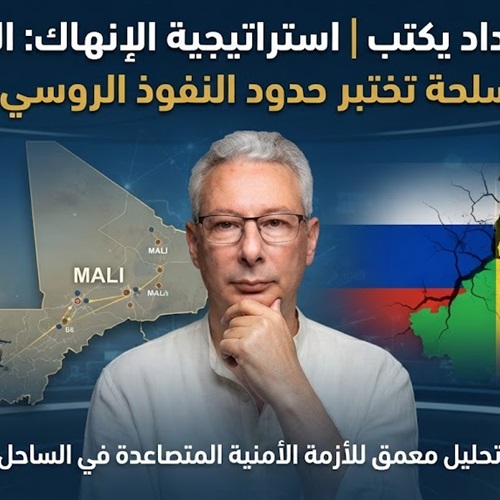
[1] Wikipedia · 2026 Mali offensives (B) · sha256:d0727c9a8bb9 [2] Al Jazeera · Mali’s army says rebels launch new attacks on towns and cities (A) · sha256:b36b8d602831 [3] NBC News · Insurgents stage attacks across Mali, army says situation ‘under control’ (A) · sha256:257c108027c7 [4] Jerusalem Post · Al-Qaeda affiliate claims responsibility for attacks on military sites in Mali (B) · sha256:bbb339e166e2 [5] islamist-movements.com · استراتيجية الإنهاك: الجماعات المسلحة تختبر حدود النفوذ الروسي في مالي (C) · sha256:8ec0cca13de1 [6] U.S. Department of State · Mali Travel Advisory | Travel.State.gov (A) · sha256:f88171157722
Source content hashes were computed at collection time; the cited text is preserved unmodified for the life of this product.
Red cell review: PARTIAL DISSENT
TLP:CLEAR