TLP:CLEAR · Disclosure is not limited.
Mali’s unresolved disappearances and Sahel security outlook
Time window: Last 7 days · Audience: General analyst · Type: Situation report · DTG: 2026-11-03 13:22Z · Overall confidence: MEDIUM
BLUF
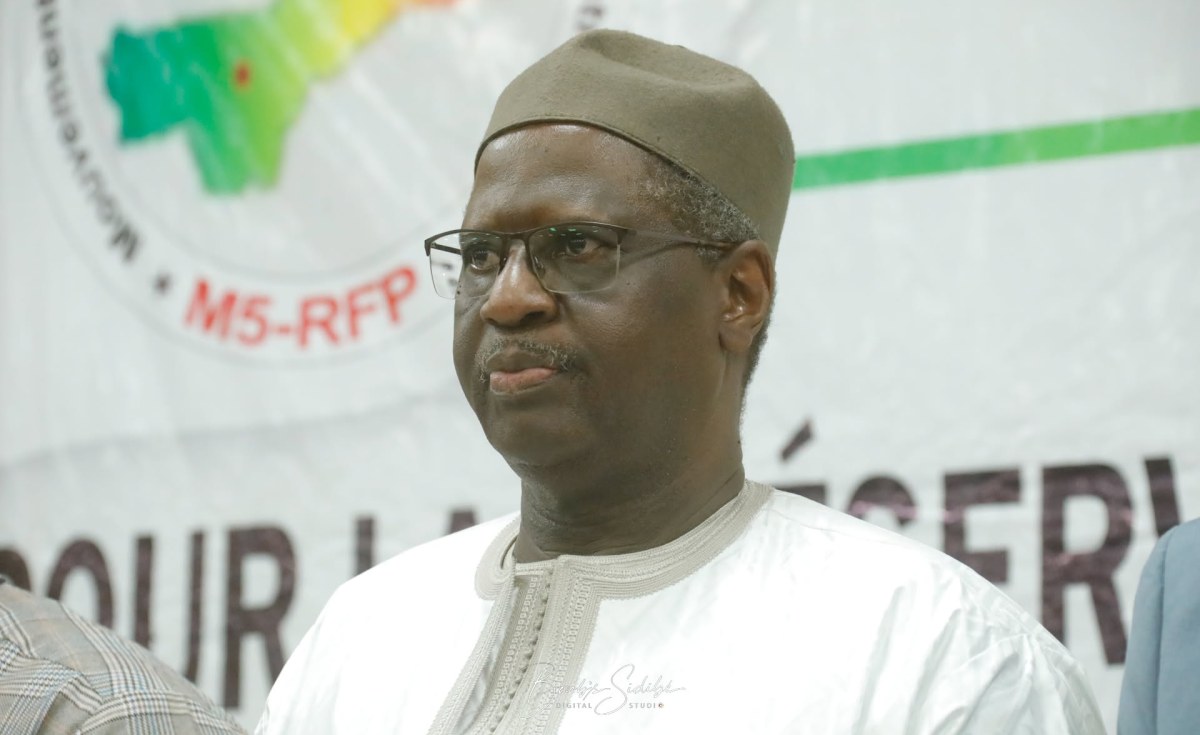
The clearest new development is Amnesty International’s account that Mountaga Tall and his son Cheick Mamadou Tall remain unaccounted for, with neither officially charged or brought before a court by 3 November. The reporting also adds detail on the 25 April attacks in Mali and Russia’s proposed security accord with ECOWAS, but does not establish a new armed incident during the 27 October to 3 November reporting window.
Executive summary
The latest material centres on the unresolved disappearance of Mountaga Tall and Cheick Mamadou Tall, and on the legal treatment of other political figures in Mali. Amnesty International reports a systematic practice of enforced disappearances by agents of Mali’s State Security Agency, but the supplied reporting does not establish that the agency ordered the Tall family disappearances. Historical security reporting describes JNIM and the Azawad Liberation Front attacking Bamako and five other Malian cities on 25 April 2026, alongside reported gains in northern Mali; the geographic scope remains unsettled. Russia’s proposed security accord with ECOWAS suggests a diplomatic channel beyond the Alliance of Sahel States, but no signed accord or resulting deployment is reported. NASA FIRMS recorded 29 thermal detections in Mali over the two days through 2 November, none classified as high-confidence; the data do not identify their cause.
Change from previous assessment
Since the prior brief on 3 November, this assessment adds Amnesty International reporting on the Tall family and the charges against Youssouf Daba Diawara and Moussa Djiré, along with the Russia-ECOWAS security proposal. The prior brief’s dispute over whether the 25 April attacks reached all major cities remains unresolved; the current material adds an account naming Bamako and five other cities but does not settle the competing geographic scope. The supplied claims provide no follow-up on the 1 November Algeria fuel delivery or the 2 November Russia-Burkina Faso ratification, so those earlier assessments are unchanged. No prior judgment is retired.
Key judgments
- Mountaga Tall and Cheick Mamadou Tall remain unaccounted for in the available reporting. Amnesty International reports that Mountaga was abducted from his home in Bamako on 3 May 2026 and that Cheick disappeared on 16 May; neither had been officially charged or brought before a court by 3 November. The UN Committee on Enforced Disappearances called on Malian authorities to search for and protect them in July. Amnesty also describes a systematic practice of enforced disappearances by agents of the State Security Agency, but the supplied record does not directly attribute the Tall family disappearances to that agency. The disappearance account is chiefly from one Amnesty report, with the UN committee appeal providing corroboration that the family was being sought. (Confidence: medium · ASSESSED)
- I&W: An official custody record or court filing for either Mountaga Tall or Cheick Mamadou Tall would break the reported absence of formal charges or court proceedings. (0-30 days)
- I&W: Independently verified evidence establishing the location or release of both men would break the assessment that they remain unaccounted for. (0-30 days)
- The legal record for political figures named in reporting on the April attacks is mixed, and the supplied material does not establish guilt or responsibility for the attacks. Youssouf Daba Diawara and Moussa Djiré were charged on 20 October and placed in pretrial detention in Bamako, while Mountaga Tall and Cheick Mamadou Tall had not been charged or brought before a court by 3 November. A former soldier accused Mountaga of involvement in the attacks in a video, but the supplied account does not independently substantiate that accusation. (Confidence: medium · ASSESSED)
- I&W: A published court record detailing charges, evidence and hearing dates for the named political figures would clarify whether the current difference in legal treatment is changing. (0-30 days)
- I&W: Independent verification of the former soldier’s identity, custody status and circumstances of the video would strengthen or weaken the accusation against Mountaga Tall. (1-3 months)
- The supplied reporting supports broad but bounded claims about the 25 April 2026 attacks: JNIM and the Azawad Liberation Front attacked Bamako and five other Malian cities, and a separate account says they seized parts of northern Mali. The reports do not establish whether those areas remain under their control. The previous brief recorded a competing account that described attacks in all major cities; the present material does not resolve that geographic discrepancy. (Confidence: low · ASSESSED)
- I&W: An independently geolocated account identifying attacks in Bamako and the five other reported cities, with additional verified locations, would clarify the disputed geographic scope. (0-30 days)
- I&W: Verified reporting that Malian forces have retaken the northern areas described as seized would break any inference that those reported gains persist. (0-30 days)
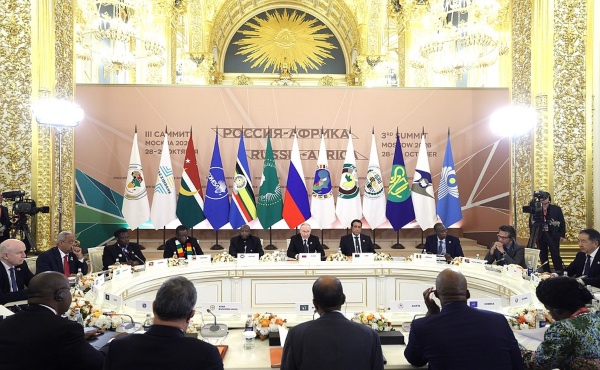
- Russia is likely pursuing an ECOWAS security channel while retaining ties with the military governments of Mali, Burkina Faso and Niger. Reporting says Moscow has armed those regimes and proposed a security accord with ECOWAS; it does not show that ECOWAS has accepted or signed the proposal, or that it has produced new deployments. This assessment rests on one major-media account. (Confidence: medium · ASSESSED)
- I&W: A published agreement text or an announced Russia-ECOWAS negotiation would confirm that the proposal has advanced beyond public advocacy. (1-3 months)
- I&W: A public announcement of a new Russian security delivery or deployment involving Mali, Burkina Faso or Niger would confirm continued engagement with the Sahel military governments. (1-3 months)
- NASA FIRMS recorded 29 VIIRS thermal detections in Mali over the two days through 2 November 2026, within the reported bounding box from 13.87,-4.79 to 18.87,0.21; none was classified as high-confidence. These detections do not establish armed activity or responsibility. NASA FIRMS states that thermal signatures record heat, not cause. (Confidence: high · REPORTED)
- I&W: Independent geolocated reporting that matches a detection to a named armed incident would support a military link for that specific anomaly. (0-14 days)
- I&W: A documented wildfire or industrial source at a detection location would support a non-military explanation for that anomaly. (0-14 days)
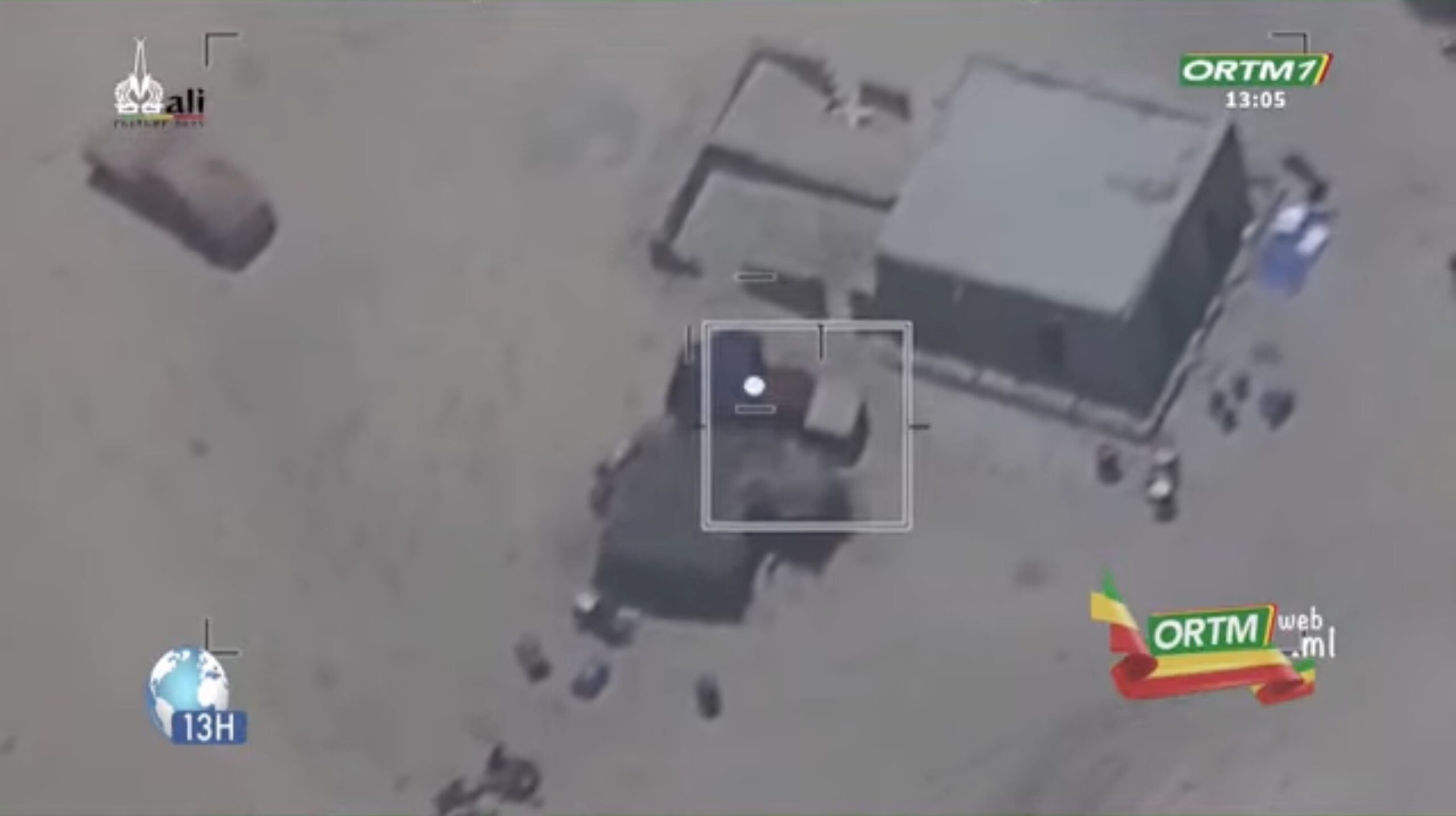
- Reporting on Mali’s drone strikes remains contested on civilian harm and target interpretation. FAMa presented the 8 July 2025 strike at Zouera as an operation against a terrorist supply vehicle, while Médecins Sans Frontières reported four deaths, including three young girls, and five injured. For the March 2024 Amasrakad strikes, accounts report 13 deaths but disagree on whether that figure applies to the second strike alone or to the strikes overall. These older reports do not establish a drone incident during the current reporting window. (Confidence: low · ASSESSED)
- I&W: An independent investigation or named casualty record that reconciles the Amasrakad death toll would reduce uncertainty over the reported figure and its scope. (1-3 months)
- I&W: Independently verified imagery or reporting identifying the Zouera strike’s target and casualties would clarify the competing accounts of its outcome. (1-3 months)
Outlook & scenarios
The Tall family cases remain unresolved (55%)
Over the next one to three months, the most likely course is that the status of Mountaga Tall and Cheick Mamadou Tall remains unclear, without a public court record or independently verified account of their whereabouts. This would leave the reported difference between their cases and the charges against Youssouf Daba Diawara and Moussa Djiré unresolved.
Russia advances a channel with ECOWAS (25%)
A less likely outcome is that Russia and ECOWAS announce negotiations or publish terms for the proposed security accord. That would indicate diplomatic outreach beyond the Alliance of Sahel States, but would not by itself show a change in Russian deployments or operations.
Coordinated attacks renew pressure in Mali (15%)
A renewed, independently verified JNIM and Azawad Liberation Front attack in Bamako or multiple other Malian cities would be a low-probability, high-impact development. It would raise the importance of resolving the competing accounts of the 25 April attacks, whose reported geographic scope remains unsettled.
Africa Corps allegation gains corroboration (5%)
There is almost no chance, on the present evidence, that the low-reliability social-media allegation linking Russia’s Africa Corps to a drone strike and container cells is substantiated in the near term. Independent evidence would nevertheless make this a high-impact development for scrutiny of Russia’s role in Mali; the current allegation provides no operational detail or corroboration.
Recommendations
- Track the custody and court status of Mountaga Tall, Cheick Mamadou Tall, Youssouf Daba Diawara and Moussa Djiré separately. Seek confirmation from court records and statements by the UN Committee on Enforced Disappearances before attributing responsibility for any disappearance.
- Maintain a location-by-location timeline of the 25 April attacks. Separate confirmed attack sites from claims of territorial control, and seek independent geolocation before using the broadest geographic description.
- Treat the Russia-ECOWAS accord as a proposal until a text, negotiation or signed agreement is reported. Track any announced security deliveries or deployments involving Mali, Burkina Faso or Niger as separate indicators.
- Use NASA FIRMS detections as screening data only. Require independent incident reporting or geolocated evidence before assessing a thermal anomaly as an armed strike.
- Keep historical civilian-harm reports from Zouera and Amasrakad distinct from current operations. Seek casualty and target details that reconcile the conflicting accounts before using the figures in assessments.
- Treat social-media claims about Africa Corps operations or fighting between armed groups in Burkina Faso as leads for verification, not as established events.
Confidence & uncertainty
Overall confidence is medium. NASA FIRMS provides reliable evidence for the number and confidence classification of thermal detections, while the principal reporting on disappearances and Russia’s ECOWAS proposal comes from a limited number of sources. The disappearance account has a UN committee reference but no independent confirmation here of who ordered the abductions. The geographic scope of the April attacks remains disputed, and drone-casualty reporting conflicts on the scope of the Amasrakad toll. Low-reliability social-media claims are not treated as established operations.
Intelligence gaps
- [EEI 1.1 · PARTIAL] Number, location, and scale of attacks (IEDs, ambushes, complex attacks) per week against towns, military bases, police posts, or convoys, with casualty and equipment-loss counts. Recommended collection: ground/HUMINT
- [EEI 1.2 · UNCOVERED] Observed movement and size of armed columns (vehicle counts, heavy weapons present) along approach routes to population centers or borders documented by imagery, local reporting, or border guards. Recommended collection: imagery/SATCOM
- [EEI 1.3 · PARTIAL] Reports of occupation, administration, or imposition of checkpoints/taxes by armed groups in named towns, villages, markets, or on specified road segments. Recommended collection: OSINT (local media/social)
- [EEI 1.4 · UNCOVERED] Seizure or acquisition of heavy weapons or air-defense systems (mortars >81mm, artillery, armored vehicles, MANPADS) attributed to specific groups as evidenced by photos, captured weapons inventories, or weapons interdictions. Recommended collection: forensics/field reporting
- [EEI 2.1 · UNCOVERED] Internal security force movements: redeployment of army units, garrison withdrawals, or mass troop movements toward/away from capitals and regional command posts. Recommended collection: imagery/SATCOM
- [EEI 2.2 · UNCOVERED] Detentions, public dismissals, resignations, or public statements by senior military, police, or government officials indicating factional splits (named individuals, ranks, units). Recommended collection: diplomatic/OSINT
- [EEI 2.3 · PARTIAL] Changes in foreign military footprints or security agreements: arrival/departure of foreign troops, opening/closure of foreign bases, visible presence of private military contractors (identified personnel/vehicles). Recommended collection: OSINT/imagery
- [EEI 2.4 · PARTIAL] Targeted external support actions: sanctions, suspension of aid, delivery of weapons or logistics from foreign state or non-state actors (documented shipments, bank transfers, public announcements). Recommended collection: financial/diplomatic
- [EEI 3.1 · UNCOVERED] Interdictions or seizures at borders/markets of weapons, ammunition, fuel, or contraband (type/quantity, seizure location, alleged origin/destination). Recommended collection: border/customs
- [EEI 3.2 · UNCOVERED] Recorded movements of known smuggling routes and convoy volumes: counts of commercial/privately registered vehicles and informal river crossings on specific cross-border corridors. Recommended collection: ground/HUMINT
- [EEI 3.3 · UNCOVERED] Monitored financial flows linked to illicit trade: large cash movements, changes in declared gold exports at named mines/ports, or arrests of money couriers with amounts and origins. Recommended collection: financial/forensics
- [EEI 3.4 · UNCOVERED] Observed changes at border security posts: closures, reductions in personnel, destroyed checkpoints, or documented agreements allowing free movement at named crossings. Recommended collection: imagery/OSINT
Red cell review: CONCUR WITH COMMENT
TLP:CLEAR