TLP:CLEAR · Disclosure is not limited.
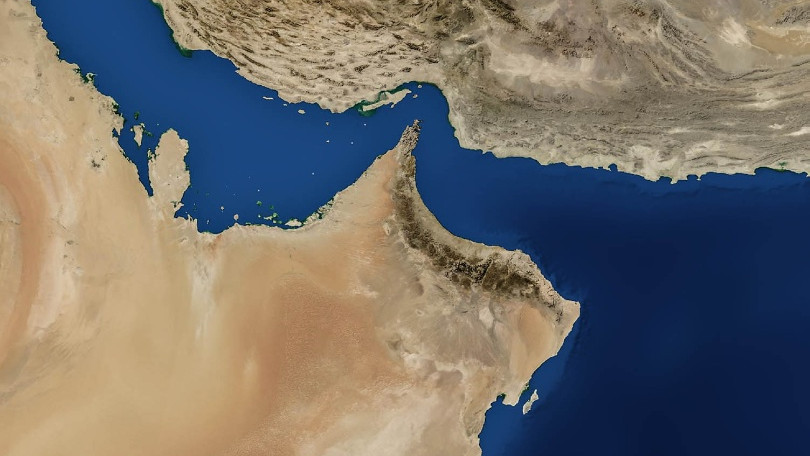
Maritime Chokepoint Risk: Hormuz Under Pressure, Wider Closure Unproven
Time window: Last 1 day · Audience: General analyst · Type: Situation report · DTG: 2026-10-26 10:13Z · Overall confidence: HIGH
BLUF
The reporting supports elevated danger and impaired shipping in the Strait of Hormuz, but does not establish a commercial blockade at Bab-el-Mandeb or disruption at four of five key straits. It also does not verify Brent at $108: the EIA reported Brent at $115.22 and WTI at $107.89 per barrel on 20 October.
Executive summary
Reporting describes repeated attacks on vessels in the Strait of Hormuz, ships transiting without AIS signals, and uncertainty among Omani maritime authorities about which vessels are passing. Published October oil-flow estimates conflict, so the scale and direction of the change remain unsettled. A report that the Houthis seized Yemeni coastline near Bab-el-Mandeb does not provide transit counts or identify commercial vessels stopped there. Separately, the Saudi-led coalition reported intercepting missiles aimed at Saudi Arabia, while Houthi statements claimed attacks on Riyadh airport and Saudi oil infrastructure. Saudi Arabia, Turkiye and Pakistan sent senior delegations to Tehran on 26 October for talks with Iranian officials. The supplied price data are dated 20 October and do not substantiate Brent at $108.
Change from previous assessment
Initial assessment of this topic. No earlier brief on this topic was provided.
Key judgments
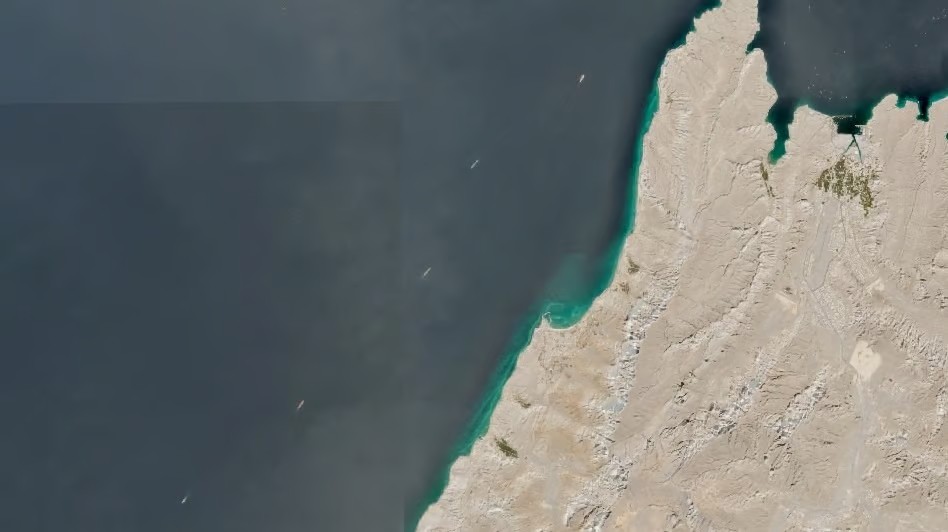
- The Strait of Hormuz is likely hazardous and its shipping picture is impaired, but the reporting does not establish a full commercial closure. Trade reporting cites at least 18 tanker attacks over roughly two weeks and at least 25 ships hit in the first 20 days of October, while a higher estimate of 40 to 50 vessels is unverified. Merchant ships are reported transiting dark, and Omani naval control authorities are reported to lack visibility when vessels disable Channel 16 hailing. Kpler October flow estimates conflict: one gives an average of 11.7 million barrels per day through Hormuz, another reports at least 10.1 million barrels per day in early October, and a third gives 8.5 million barrels per day for Persian Gulf outflows. The figures do not support a single reliable estimate of current flow. (Confidence: medium · ASSESSED)
- I&W: Confirm: new UKMTO or independently corroborated reports identify further vessel strikes in the Strait of Hormuz, alongside published evidence of continued dark transits. (0-14 days)
- I&W: Break: published vessel-tracking and port data show sustained, normally reported transits through Hormuz and no new vessel strikes. (0-14 days)
- It is unlikely that the supplied reporting establishes a commercial blockade at Bab-el-Mandeb or disruption at four of five key straits. A major-media report says the Houthis seized Yemeni coastline in September and strengthened their position near Bab-el-Mandeb, but the reporting provides no Bab-el-Mandeb transit counts or named commercial vessels stopped there. Shipping figures for Greater Odesa concern Black Sea port traffic, not evidence that four maritime straits are disrupted. (Confidence: low · ASSESSED)
- I&W: Confirm: published Bab-el-Mandeb transit data or vessel reports identify commercial ships turned back, stopped or rerouted at the strait. (0-14 days)
- I&W: Break: published Bab-el-Mandeb transit counts show commercial traffic continuing without reported interceptions or vessel turnbacks. (0-14 days)
- The supplied evidence does not verify Brent at $108 per barrel on 25 or 26 October. The EIA reports Brent spot at $115.22 and WTI spot at $107.89 per barrel on 20 October, making a WTI-to-Brent mislabelling likely; the available figures do not establish the benchmark price for the current reporting dates. (Confidence: medium · ASSESSED)
- I&W: Confirm: a dated exchange or official price series reports Brent at $108 per barrel for 25 or 26 October. (0-14 days)
- I&W: Break: the dated benchmark record identifies $108 as WTI, or reports a different Brent price for those dates. (0-14 days)
- War-risk costs and shipping constraints are reported, but the evidence does not establish a market-wide Persian Gulf insurance spike. The Financial Times reported Black Sea war-risk premiums reaching as high as 15 per cent of a vessel's hull value, nearly twice the Persian Gulf rate, and reported that some operators withdrew from Black Sea routes. Separate trade reporting says ship-to-ship transfers have pushed freight rates to record highs and that tanker availability is tightening off Oman; it supplies no fleet count or direct premium quotes for Gulf routes. (Confidence: medium · ASSESSED)
- I&W: Confirm: insurers publish route-specific Persian Gulf premium quotes and tanker operators report reduced available capacity off Oman. (0-14 days)
- I&W: Break: insurer quotes show no increase for Persian Gulf routes and operators report tanker availability recovering off Oman. (1-3 months)
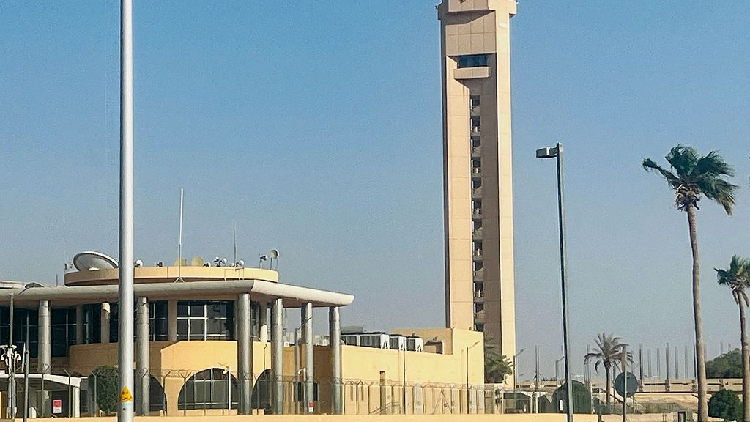
- Houthi missile and drone pressure on Saudi targets very likely continued on 25 and 26 October, but the reported projectile totals and some claimed targets remain disputed. The Saudi-led coalition reported intercepting 10 ballistic missiles aimed at southern Saudi Arabia, while Houthi statements claimed attacks on King Khalid International Airport in Riyadh and the East-West crude oil pipeline pumping stations. Saudi Civil Defence reported two people injured and damage to three buildings and seven vehicles from missile debris. Riyadh airport partially resumed operations on 25 October. (Confidence: medium · ASSESSED)
- I&W: Confirm: Saudi Civil Defence reports further injuries or damage from intercepted projectiles, or Saudi authorities announce renewed restrictions at King Khalid International Airport. (0-14 days)
- I&W: Break: Saudi authorities report uninterrupted airport operations and no further projectile interceptions or debris damage. (0-14 days)
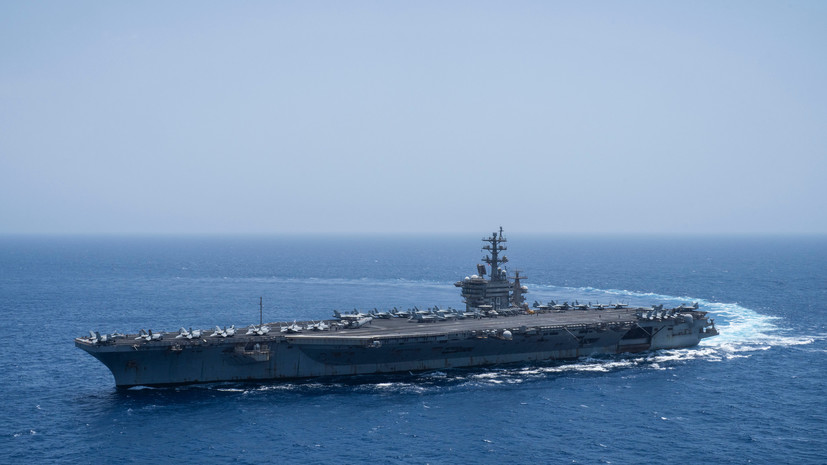
- It is unlikely that the available reporting establishes that Donald Trump has ordered a new strike on Iran. A report attributed to CNN says US forces are ready to begin operations within 96 hours of an order and that military leaders are developing target options, but the same reporting says Trump has not made a final decision. Saudi, Turkish and Pakistani officials are meeting Iranian counterparts in Tehran on 26 October; the readiness report has weaker source provenance than the meeting reports. (Confidence: low · ASSESSED)
- I&W: Confirm: the White House or US military publicly announces an order for new operations against Iran, or reports a new US strike. (0-14 days)
- I&W: Break: the Tehran meetings produce a publicly announced agreement or continued diplomatic process, with no US strike order reported. (0-14 days)
Outlook & scenarios
Hormuz remains dangerous but open (50%)
This is the most likely near-term course. Vessel attacks and dark transits continue to complicate commercial passage through the Strait of Hormuz, while oil continues to move and the reported evidence does not establish a full closure. Houthi control of Yemeni coastline does not translate into a verified commercial blockade at Bab-el-Mandeb.
Regional attacks widen and shipping risk rises (25%)
Further Houthi attacks on Saudi targets, combined with a US order for operations against Iran and Iranian retaliation, would raise the risk of additional shipping incidents in the Gulf. In this scenario, insurers and tanker operators report more route-specific restrictions, and commercial traffic through Hormuz falls.
Tehran talks contain immediate escalation (20%)
The Saudi, Turkish and Pakistani meetings with Iranian officials sustain a diplomatic channel. A near-term pause in US military action is likely if the talks produce an announced process acceptable to Tehran and Washington. Houthi-Saudi attacks could continue without a verified Bab-el-Mandeb blockade.
Wildcard: concurrent Hormuz closure and Bab-el-Mandeb interdiction (5%)
A US-Iran strike exchange overlaps with direct Houthi interdiction of commercial vessels at Bab-el-Mandeb. This low-probability, high-impact scenario would turn the current reported Hormuz danger and Houthi coastal position into verified disruption at two major routes. The supplied reporting does not establish that this is occurring.
Recommendations
- Maintain a daily route-level tracker that separates Hormuz vessel strikes, transits and oil-flow estimates from Bab-el-Mandeb transit counts. Record each figure's date, geographic scope and source, and flag AIS or GNSS limitations before using it in a headline assessment.
- Require a dated benchmark and source for every crude-price update. Keep EIA Brent and WTI figures distinct, and do not describe $108 as Brent without a price record tied to that benchmark and date.
- Request route-specific war-risk quotes and tanker availability figures for the Persian Gulf, the Omani coast and the Black Sea. Do not treat the reported Black Sea premium of up to 15 per cent of hull value as a Persian Gulf quote.
- Monitor Saudi Civil Defence and airport updates for new debris damage, injuries or operating restrictions at King Khalid International Airport. Track any independent confirmation of damage to East-West pipeline pumping stations separately from Houthi claims.
- Track the 26 October Tehran meeting readouts alongside any confirmed US strike order or operation. Keep the low-provenance force-readiness report separate from confirmed US military action.
Confidence & uncertainty
Overall confidence is high in the central assessment that the supplied reporting does not substantiate the headline of four disrupted straits or Brent at $108. The price comparison rests on official EIA data, while separate major-media and maritime-industry reporting documents vessel attacks, dark transits and shipping constraints. Confidence is lower on the scale of Hormuz disruption because Kpler flow estimates conflict and AIS reporting is impaired; Bab-el-Mandeb reporting lacks transit data, and the Oman tanker shortage is not quantified.
Intelligence gaps
- [EEI 1.1 · PARTIAL] Changes in IRGC Navy, Houthi, and affiliated maritime unit deployments, patrol patterns, missile-drone activity, mine-laying indicators, or boarding attempts near the two straits. Recommended collection: maritime/ISR-AIS
- [EEI 1.3 · PARTIAL] Daily vessel-transit volume, AIS dark activity, anchorage buildup, and rerouting rates at Hormuz and Bab-el-Mandeb compared with pre-crisis levels. Recommended collection: maritime/AIS
- [EEI 1.4 · UNCOVERED] Public or private warnings from the US Fifth Fleet, regional naval forces, port authorities, or shipping companies identifying specific routes or vessel categories as unsafe. Recommended collection: official-statements/shipping-notices
- [EEI 2.1 · PARTIAL] US, coalition, Iranian, Saudi, Omani, and other naval force posture changes, including escorts, convoy schedules, mine-countermeasure deployments, air patrols, and rules-of-engagement announcements. Recommended collection: maritime/defense-reporting
- [EEI 2.2 · UNCOVERED] Tanker and container-ship rerouting through the Cape of Good Hope or other alternatives, including added sailing days, fuel consumption, and available vessel capacity. Recommended collection: shipping-industry/AIS
- [EEI 2.3 · PARTIAL] War-risk insurance premium, deductible, coverage-exclusion, and voyage-approval changes for Hormuz, Bab-el-Mandeb, Red Sea, Gulf of Aden, and adjacent waters. Recommended collection: insurance-market
- [EEI 2.4 · PARTIAL] Operational status and export-loading changes at Saudi, UAE, Omani, Iranian, Djiboutian, and Red Sea ports, terminals, pipelines, and storage facilities. Recommended collection: port-operator/energy-infrastructure
- [EEI 3.1 · PARTIAL] Brent and Dubai crude price movements, futures-curve shifts, volatility, and the spread between regional and global crude benchmarks. Recommended collection: commodity-markets
- [EEI 3.3 · UNCOVERED] Fertilizer shipment delays, canceled or redirected cargoes, regional price increases for urea and ammonia, and reported inventory levels in import-dependent markets. Recommended collection: commodity-trade/port-data
- [EEI 3.4 · PARTIAL] Container freight rates, vessel charter rates, bunker costs, port congestion, and manufacturing or retail supply disruptions attributable to the chokepoint crisis. Recommended collection: shipping-and-logistics-markets
- [EEI 4.2 · PARTIAL] Diplomatic commitments, deconfliction arrangements, prisoner or vessel releases, and publicly announced conditions for reopening commercial transit. Recommended collection: diplomatic-reporting
- [EEI 4.3 · UNCOVERED] Shipping-company decisions to resume, suspend, or expand transits and corresponding changes in insurer voyage approvals and war-risk premiums. Recommended collection: shipping-and-insurance-industry
Red cell review: CONCUR WITH COMMENT
TLP:CLEAR