TLP:CLEAR · Disclosure is not limited.
Maritime chokepoints: Hormuz attacks rise, four-strait disruption unproven
Time window: Last 1 day · Audience: General analyst · Type: Situation report · DTG: 2026-11-20 20:12Z · Overall confidence: HIGH
BLUF
Commercial shipping through the Strait of Hormuz faces repeated attacks, but reports conflict on whether oil volumes have recovered to pre-war levels. The supplied evidence does not establish disruption at four of five key straits, and Brent was reported at $91.31 per barrel on 20 November, not $108.
Executive summary
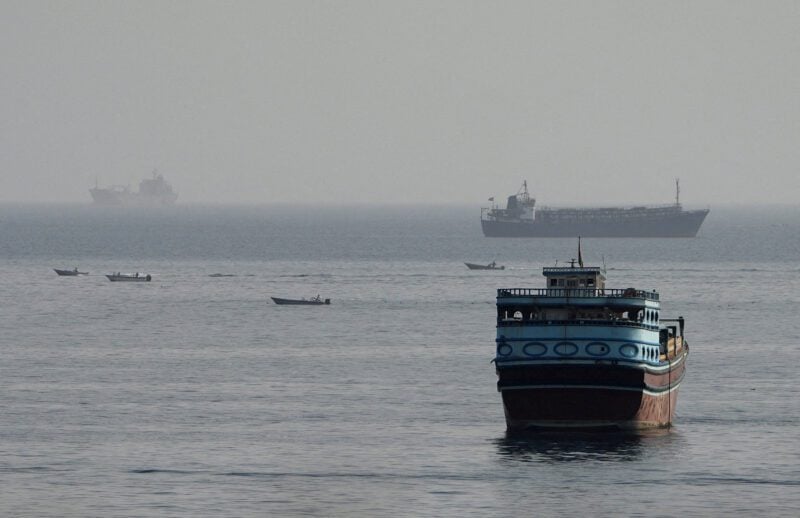
UKMTO reported 263 inbound and outbound transits through the Strait of Hormuz in the seven days to 20 November, about 65 per cent below pre-conflict levels, and six confirmed tanker strikes in the latest seven-day period. Separate reports say crude volumes have returned to roughly pre-war levels, with about 8 million barrels per day exiting under US naval escort. These measures conflict, although vessel counts and oil volumes are not identical measures. The Saudi-led coalition said it struck Hodeidah on 20 November; the Houthis threatened Saudi Red Sea ports and warned airlines away from Saudi airspace. Reports of Houthi positions near Bab-el-Mandeb do not establish a blockade or current traffic disruption there. Brent prices reported during 20 November were well below $108 and were headed for a weekly decline.
Change from previous assessment
Since the 19 November brief, reporting adds UKMTO's seven-day count of 263 Hormuz transits, still about 65 per cent below pre-conflict levels, and six confirmed tanker strikes in the past week. Separate same-day reports say crude shipments have returned to roughly pre-war levels, creating a new conflict between vessel counts and cargo-volume estimates. The 20 November Hodeidah strike and Houthi threats against Saudi Red Sea ports add a new near-term escalation risk. Reports of Houthi positions overlooking Bab-el-Mandeb add detail but do not establish a blockade or four-str ait disruption. Brent remains far below $108, with the latest supplied figure at $91.31. The prior brief's conclusion that the $108 figure was unsupported remains unchanged.
Key judgments
- Likely, commercial passage through the Strait of Hormuz remains severely disrupted but is not fully closed. UKMTO counted 115 outbound and 148 inbound transits in the seven days to 20 November, about 65 per cent below pre-conflict levels. Other reporting put crude shipments at roughly pre-war levels and oil exports at about 8 million barrels per day under US naval escort. The difference may reflect distinct measures of vessel traffic and cargo volume, but it leaves the current throughput level unresolved. (Confidence: medium · ASSESSED)
- I&W: Confirm if UKMTO's next seven-day count remains materially below pre-conflict levels while independently reported crude volumes remain near pre-war levels. (0-14 days)
- I&W: Break if UKMTO reports sustained pre-conflict transit counts and comparable cargo-volume reporting confirms normal throughput. (0-30 days)
- Likely, the immediate threat to commercial tankers in and near the Strait of Hormuz remains high. UKMTO reported six confirmed tanker strikes in the past seven days; separate maritime reporting described seven strikes involving six vessels and four tankers hit within 13 nautical miles of Khasab over three days. The 20 November tanker fire north of Khasab is reported as a projectile strike by UKMTO, while Iran's Revolutionary Guards attributed a tanker fire to a mine. The incidents are corroborated, but the causes and responsibility remain disputed. (Confidence: medium · ASSESSED)
- I&W: Confirm if UKMTO records further confirmed tanker strikes near Hormuz or Khasab in its next weekly update. (0-7 days)
- I&W: Break if UKMTO reports no confirmed strikes in the next two weekly reporting periods and JMIC downgrades its threat assessment. (0-14 days)
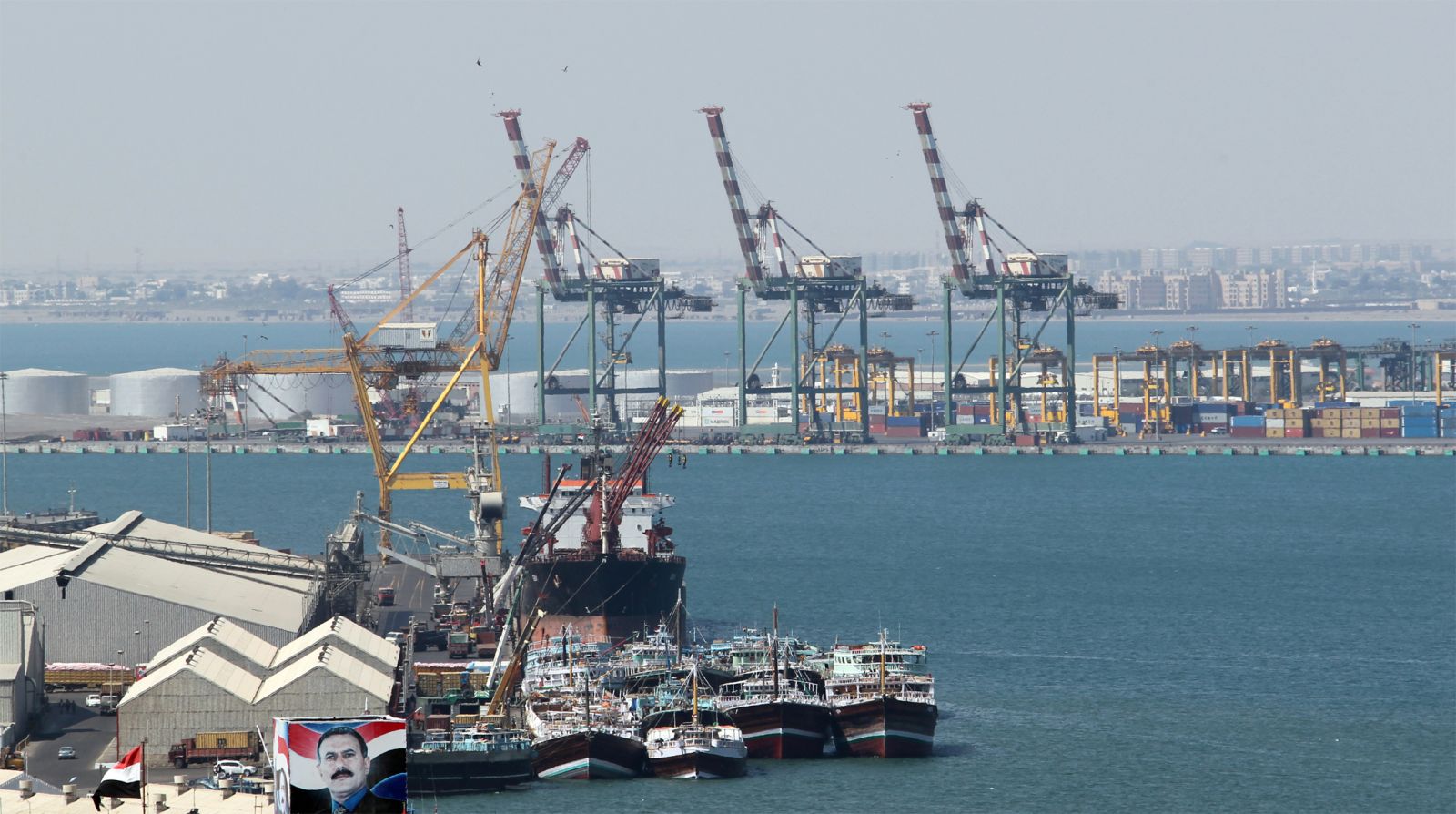
- Likely, the Saudi-led coalition's 20 November strike on Hodeidah has raised the near-term risk to Saudi Red Sea port operations. Houthi spokesperson Yahya Saree threatened attacks on Saudi Red Sea ports and urged shipping companies to evacuate vessels after the coalition struck Hodeidah. The warnings are directly reported, but the supplied reporting does not confirm a Houthi attack on a Saudi port or a resulting port closure. Yemen's Information Minister said Hodeidah remained operational, leaving its post-strike status contested. (Confidence: medium · ASSESSED)
- I&W: Confirm if a Houthi attack is reported at Jeddah, Yanbu or Jizan, or operators report suspending calls at those ports. (0-14 days)
- I&W: Break if Houthi spokespeople withdraw the evacuation warning and port operators report continued normal calls without further attacks. (0-30 days)
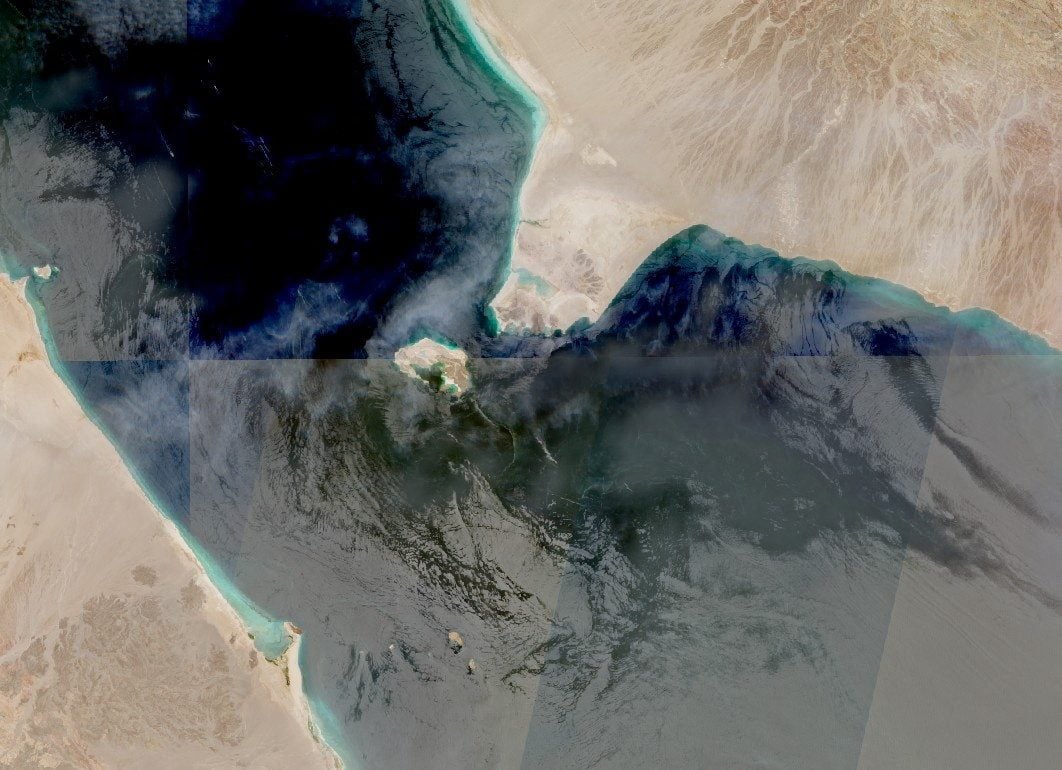
- Unlikely, the available reporting establishes active disruption at four of five key maritime straits. The claims describe Houthi positions at Ras Menhali and Perim Island overlooking Bab-el-Mandeb, but other reporting assigns control of parts of Yemen's coast to opposing forces. No current Bab-el-Mandeb transit count is provided, and the supplied claims offer no comparable current disruption measures for three other straits. This is an assessment of evidence coverage, not evidence that those routes are unaffected. (Confidence: low · ASSESSED)
- I&W: Confirm if a dated, independently sourced Bab-el-Mandeb transit series shows a sustained decline and identifies specific vessel or cargo disruption. (0-30 days)
- I&W: Break if verified transit data show normal passage and independent reporting confirms that Houthi forces do not control the positions overlooking the strait. (0-30 days)
- Very unlikely, Brent crude was $108 per barrel on 20 November. Reports put Brent at $92.57 at 0720 GMT and $91.31 at 1414 GMT; the later report said Brent was on course for a weekly decline approaching 5 per cent. The intraday figures differ, but both are far below $108. (Confidence: high · REPORTED)
- I&W: Confirm the assessment if a dated benchmark record for 20 November continues to place Brent near the reported $91 to $93 range. (0-7 days)
- I&W: Break if an exchange or wire-service record verifies a Brent trade at or above $108 on 20 November. (0-7 days)
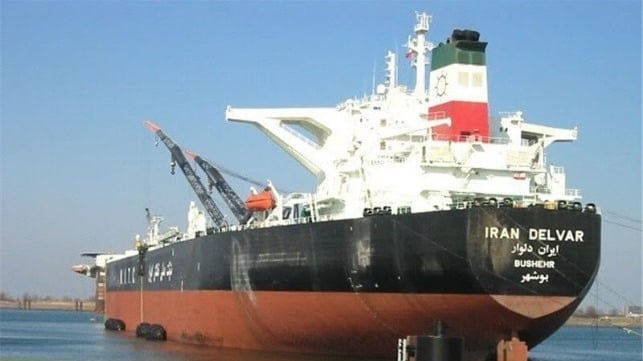
- Likely, some Iranian crude continued to move through ship-to-ship transfers despite the US blockade, but the reported transfer does not establish that the oil completed an export voyage. Reporting describes the sanctioned Suezmax Olym transferring about 200,000 barrels to Hao Fan in the Persian Gulf on 17 November, with transponders off during the operation. This conflicts with Scott Bessent's claim that no Iranian crude was on the water; October's reported absence of loadings is not by itself evidence that no cargo moved in November. (Confidence: medium · ASSESSED)
- I&W: Confirm if independent vessel tracking or port data document another Iranian crude transfer or an onward voyage by Olym or Hao Fan. (0-30 days)
- I&W: Break if vessel tracking and cargo records show the reported transfer did not occur or the cargo was not Iranian crude. (0-30 days)
Outlook & scenarios
Hormuz remains dangerous, with partial oil flows (55%)
Likely, Hormuz shipping remains below normal vessel traffic levels while some oil continues to move. Further tanker incidents sustain security concerns even as reported crude volumes and benchmark prices fail to match the crisis headline.
Saudi-Houthi retaliation extends to Red Sea ports (25%)
Likely, the Hodeidah strike and Houthi threats lead operators to suspend or divert some calls at Jeddah, Yanbu or Jizan. A confirmed attack or port closure would mark a material expansion beyond the threats reported so far.
Cargo volumes recover while security risk persists (15%)
Likely, crude flows through Hormuz remain near pre-war volumes, as some reporting already indicates, while vessel counts and tanker security remain impaired. This scenario would widen the gap between energy-volume reporting and measures of normal commercial passage.
Wildcard: Houthi advance brings Bab-el-Mandeb into the crisis (5%)
A low-probability, high-impact scenario is a Houthi capture of Aden followed by coordinated disruption at Bab-el-Mandeb and Hormuz. The supplied reporting presents this as a risk assessment, not an established plan or current blockade.
Recommendations
- Track UKMTO's weekly transit count separately from crude-volume estimates. Record the measurement period, whether figures cover vessel transits or cargo, and whether AIS observations are independently verified.
- Maintain an incident log for Hormuz and the approaches to Khasab that separates confirmed strikes from reported incidents. Do not attribute the 20 November tanker fire to a projectile, mine or named actor until investigations resolve the conflicting accounts.
- Monitor port-call notices and vessel movements at Jeddah, Yanbu and Jizan, alongside Houthi statements and further coalition action at Hodeidah. Treat evacuation warnings as indicators of risk, not proof of a blockade.
- Require a dated benchmark source before repeating the $108 Brent figure. Keep intraday prices and weekly price direction distinct in subsequent reporting.
- Verify the reported Olym-Hao Fan transfer against vessel-tracking and cargo records, and distinguish a ship-to-ship transfer from a completed export voyage.
- Request current, comparable transit data for Bab-el-Mandeb and the other straits named in the four-of-five claim before assessing the number of disrupted chokepoints.
- Track access to Taiz, including the main truck routes and reported health-service capacity, as a separate humanitarian line of effort from maritime disruption.
Confidence & uncertainty
Confidence is high in the core reported events: UKMTO's transit and strike reporting, the reported 20 November tanker incident, the coalition's statement that it struck Hodeidah, and contemporaneous Brent prices. Reporting from wire services, major media and maritime trade publications provides corroboration, although some articles republish the same underlying reports and should not be counted as independent confirmation. Confidence is lower on current Hormuz throughput, responsibility for tanker incidents, Hodeidah's operational status and control around Bab-el-Mandeb. The high headline confidence applies to the corroborated events, not to the unsupported claims of four disrupted straits or Brent at $108.
Intelligence gaps
- [EEI 2.1 · PARTIAL] US, coalition, Iranian, Saudi, Omani, and other naval force posture changes, including escorts, convoy schedules, mine-countermeasure deployments, air patrols, and rules-of-engagement announcements. Recommended collection: maritime/defense-reporting
- [EEI 2.2 · UNCOVERED] Tanker and container-ship rerouting through the Cape of Good Hope or other alternatives, including added sailing days, fuel consumption, and available vessel capacity. Recommended collection: shipping-industry/AIS
- [EEI 2.3 · UNCOVERED] War-risk insurance premium, deductible, coverage-exclusion, and voyage-approval changes for Hormuz, Bab-el-Mandeb, Red Sea, Gulf of Aden, and adjacent waters. Recommended collection: insurance-market
- [EEI 2.4 · PARTIAL] Operational status and export-loading changes at Saudi, UAE, Omani, Iranian, Djiboutian, and Red Sea ports, terminals, pipelines, and storage facilities. Recommended collection: port-operator/energy-infrastructure
- [EEI 3.1 · UNCOVERED] Brent and Dubai crude price movements, futures-curve shifts, volatility, and the spread between regional and global crude benchmarks. Recommended collection: commodity-markets
- [EEI 3.2 · PARTIAL] Changes in crude, refined-product, LNG, and LPG volumes transiting the straits and in announced production cuts, strategic-stock releases, or emergency cargo substitutions. Recommended collection: energy-trade/AIS
- [EEI 3.3 · UNCOVERED] Fertilizer shipment delays, canceled or redirected cargoes, regional price increases for urea and ammonia, and reported inventory levels in import-dependent markets. Recommended collection: commodity-trade/port-data
- [EEI 3.4 · UNCOVERED] Container freight rates, vessel charter rates, bunker costs, port congestion, and manufacturing or retail supply disruptions attributable to the chokepoint crisis. Recommended collection: shipping-and-logistics-markets
- [EEI 4.2 · PARTIAL] Diplomatic commitments, deconfliction arrangements, prisoner or vessel releases, and publicly announced conditions for reopening commercial transit. Recommended collection: diplomatic-reporting
- [EEI 4.3 · UNCOVERED] Shipping-company decisions to resume, suspend, or expand transits and corresponding changes in insurer voyage approvals and war-risk premiums. Recommended collection: shipping-and-insurance-industry
- [EEI 4.4 · PARTIAL] New incidents, military alerts, vessel diversions, or port restrictions at other critical chokepoints indicating geographic spread beyond Hormuz and Bab-el-Mandeb. Recommended collection: maritime/AIS-official-notices
Red cell review: CONCUR WITH COMMENT
TLP:CLEAR