TLP:CLEAR · Disclosure is not limited.
Maritime chokepoints: Hormuz constrained, Bab al-Mandab at risk
Time window: Last 1 day · Audience: General analyst · Type: Situation report · DTG: 2026-11-18 19:17Z · Overall confidence: HIGH
BLUF
Likely, commercial traffic through the Strait of Hormuz remains severely constrained, while Houthi advances have increased the threat near Bab al-Mandab; the supplied reporting does not establish a complete blockade of either waterway. Brent was reported near $92 on 18 November, not $108. CENTCOM has broadened enforcement of its Iran blockade to include some ship-to-ship cargo transfers.
Executive summary
Hormuz shipping remains hazardous and well below pre-war traffic levels, although smaller tankers and ship-to-ship transfers are sustaining some exports. The 17 November attack on an ADNOC vessel left one crew member missing and 11 injured. In Yemen, Houthi advances in Lahj and withdrawals by Saudi-backed forces have increased pressure near Bab al-Mandab, but reporting does not establish a complete maritime blockade there. CENTCOM’s new advisory expands the stated reach of its blockade enforcement to some vessels receiving Iranian cargo at sea. Current Brent price reports contradict the $108 headline, and the reported $64 million insurance cost per transit is disputed.
Change from previous assessment
Since the 17 November brief, reporting now describes Houthi advances in Lahj, withdrawals by Saudi-backed forces from areas overlooking Bab al-Mandab, and intensifying Houthi blockade efforts. CENTCOM has also issued a new advisory covering at-sea transfers of Iranian cargo, a development not assessed in the prior brief. The prior judgement that a Bab al-Mandab blockade was not established remains valid: the new claims increase concern but do not supply comparable transit counts or establish complete closure. The $108 Brent claim remains unsupported by the latest reported prices, which are near $92. Evidence for tighter tanker availability has strengthened, but current insurance costs remain disputed. The four-of-five straits claim is still not established by the supplied reporting.
Key judgments
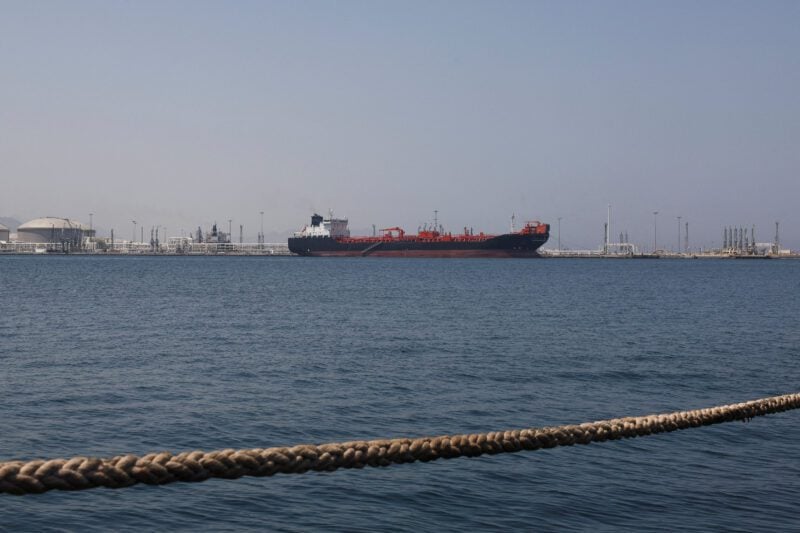
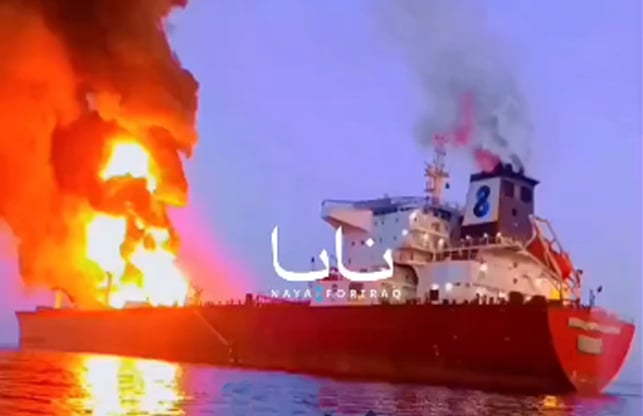
- Likely, commercial passage through the Strait of Hormuz remains severely constrained but is not fully closed. UKMTO recorded 308 crossings in the seven days ending 11 November, about 65 per cent below pre-war levels. Separate reporting said October oil exports through the strait reached 11.4 million barrels per day, a different measure and period. ADNOC confirmed an attack on one of its vessels on 17 November; reporting placed MT Navig8 Messi about 13 nautical miles north of Khasab and said one crew member was missing and 11 were injured. (Confidence: medium · REPORTED)
- I&W: UKMTO's next weekly report records crossings near or below 308, confirming continued low traffic; a recovery towards pre-war levels would weaken this judgement. (0-14 days)
- I&W: ADNOC or UKMTO reports another attack, fire, or crew evacuation involving a named vessel near Hormuz, confirming continuing passage risk; a sustained period without reported incidents would weaken it. (0-14 days)
- Likely, Houthi advances in Lahj and the withdrawal of Saudi-backed government forces have increased the threat to shipping near Bab al-Mandab. Reporting describes Houthi control of the strait and intensifying blockade efforts, but the supplied claims do not establish a complete closure or provide current transit counts there. (Confidence: medium · ASSESSED)
- I&W: UKMTO or named ship operators report an attack, attempted boarding, or diversion explicitly near Bab al-Mandab, confirming an active threat to passage. (0-14 days)
- I&W: Current transit data show regular commercial crossings through Bab al-Mandab without reported Houthi interdiction, weakening the assessment of increased maritime threat. (0-14 days)
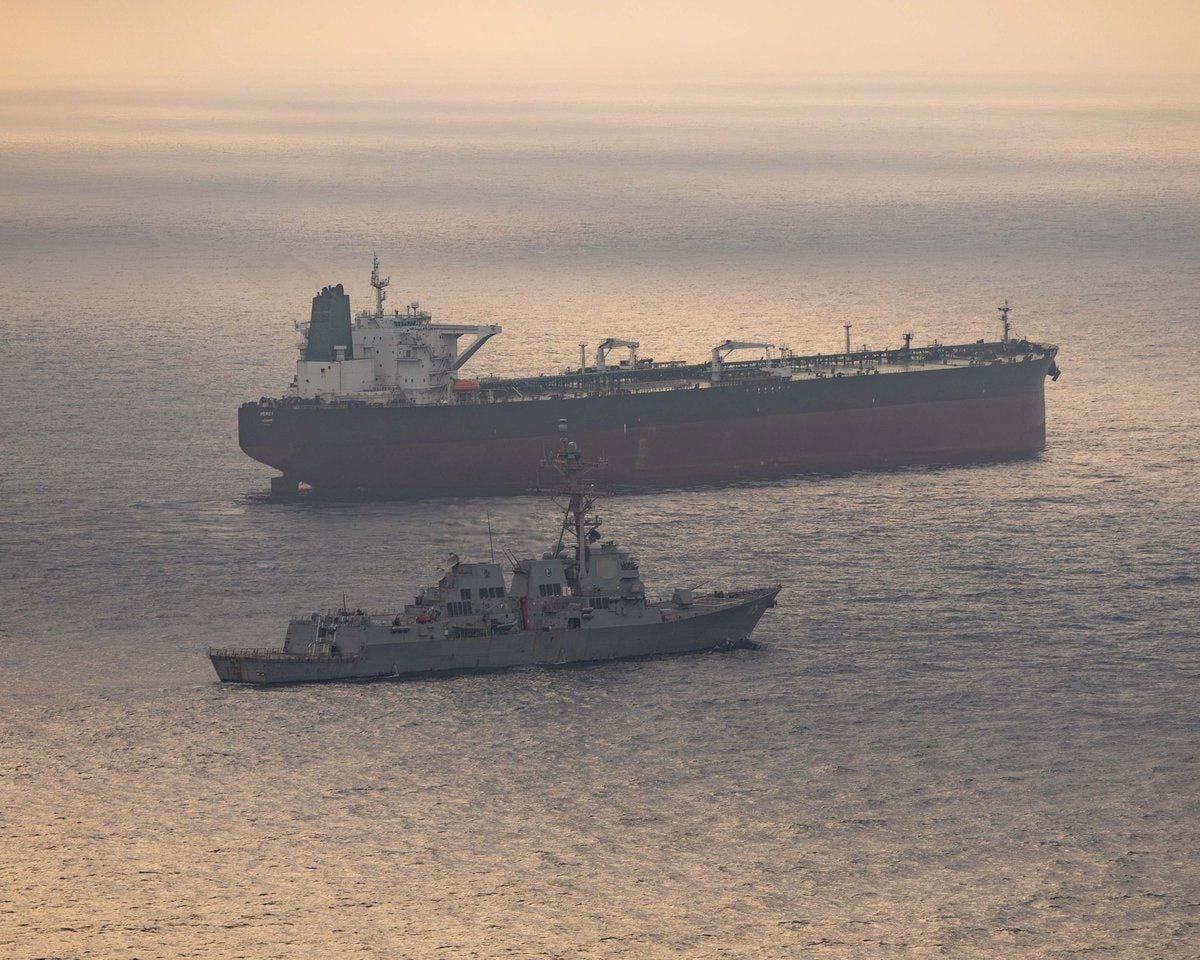
- Very likely, CENTCOM's 18 November advisory broadened the stated scope of US blockade enforcement to include vessels receiving at-sea transfers from ships carrying cargo loaded at Iranian ports or coastlines. CENTCOM listed stopping, boarding, diverting or capturing such vessels as possible enforcement actions, while stating that neutral transit to or from non-Iranian destinations would not be impeded. (Confidence: medium · REPORTED)
- I&W: CENTCOM reports an interception, boarding, diversion or seizure of a vessel linked to an at-sea transfer of Iranian cargo, confirming implementation of the expanded advisory. (0-14 days)
- I&W: CENTCOM rescinds or materially narrows the transfer provision, weakening the assessment that enforcement scope has broadened. (0-14 days)
- Very unlikely, Brent stood at $108 per barrel on 18 November. A wire-service report put it at $91.69 that day, another report gave $92, and a separate account placed Brent at $117 in late October. (Confidence: high · REPORTED)
- I&W: A dated Brent market report or settlement for 18 November confirms a price near $92, reinforcing that the $108 figure is not current. (0-24 hours)
- I&W: A timestamped Brent observation for 18 November records $108, breaking this judgement and requiring reconciliation with the lower reported prices. (0-24 hours)
- Likely, the supply of empty tankers heading to the Persian Gulf has tightened, while smaller vessels and shuttle transfers are sustaining some cargo movement. Tankertrackers.com reported a roughly 40 per cent decline in empty VLCC and Suezmax capacity since late August and a shortage of vacant tankers. Other reporting describes increased use of smaller vessels and says tanker rates have fallen from recent record levels, leaving the net effect on export capacity uncertain. (Confidence: medium · ASSESSED)
- I&W: A new Tankertrackers.com estimate shows empty VLCC and Suezmax capacity continuing to fall from its late-August level, confirming tighter availability. (1-3 months)
- I&W: Ship-tracking reports show rising empty tanker arrivals and a sustained recovery in tanker rates and Gulf export volumes, weakening the tight-capacity assessment. (1-3 months)
- Unlikely, the supplied reporting establishes a current war-risk insurance cost of $64 million per Hormuz transit. Reports describe premiums of up to 10 per cent of hull value, while another estimate puts the cost for a large tanker at up to $20 million. The $64 million figure is attributed to the Acting US Navy Secretary and is not reconciled with those estimates; the available evidence supports elevated premiums more clearly than a current spike to that amount. (Confidence: low · ASSESSED)
- I&W: Current broker quotations for a named vessel and transit show premiums consistent with a $64 million charge, confirming the reported figure. (0-30 days)
- I&W: Insurer or broker quotations place comparable large-tanker transit costs near the reported estimate of up to $20 million, weakening the $64 million claim. (0-30 days)
- Unlikely, the supplied reporting establishes disruption at four of five key maritime straits. It documents reduced traffic through Hormuz and Houthi blockade efforts near Bab al-Mandab, but does not provide comparable current transit measures for five named straits. (Confidence: low · ASSESSED)
- I&W: Current reporting identifies five named straits and provides comparable transit data showing disruption at four, confirming the four-of-five claim. (0-14 days)
- I&W: Comparable current data show disruption at no more than two of the five named straits, breaking the four-of-five claim. (0-14 days)
Outlook & scenarios
Constrained Hormuz passage continues (58%)
Likely, Hormuz traffic remains below pre-war levels while smaller tankers and ship-to-ship transfers sustain some exports. Houthi pressure near Bab al-Mandab keeps route risk elevated, but reporting does not establish a complete closure of either waterway.
Houthi maritime pressure expands (22%)
Unlikely, Houthi forces convert their advances near Lahj and Bab al-Mandab into repeated attacks or interdictions. Ship operators respond with diversions, increasing transit times and adding pressure to already constrained tanker availability.
Negotiated easing reduces shipping risk (15%)
Unlikely, diplomatic engagement involving Iran and Oman, alongside Qatar's reported mediation effort, produces steps that reduce attacks or relax passage restrictions. UKMTO crossings rise and fewer operators divert cargoes.
High-impact escalation across both corridors (5%)
Very unlikely, a high-casualty vessel attack or a new exchange of US-Iran strikes prompts wider military action and repeated Houthi interdictions. Hormuz passage falls further and commercial operators divert from Bab al-Mandab, compounding disruption across both corridors.
Recommendations
- Maintain a daily tracker separating UKMTO vessel-crossing counts from oil-export volumes. Record each measure's reporting period and source before drawing conclusions about the scale of Hormuz disruption.
- Request current, vessel-specific war-risk quotations from brokers and reconcile hull-value percentages with quoted dollar costs before using the $64 million figure in market or policy analysis.
- Track CENTCOM advisories and reported enforcement actions against vessels receiving Iranian cargo at sea. Record vessel identity, cargo origin, transfer location and any stated exemption.
- For Bab al-Mandab, distinguish Houthi control claims and blockade threats from verified attacks, diversions and transit changes. Seek dated UKMTO or operator reports for each incident.
- Do not use the four-of-five straits claim or the $108 Brent figure in a situation update without current, comparable transit data or a timestamped price observation.
Confidence & uncertainty
Overall confidence is high for the core reported developments because UKMTO, ADNOC, CENTCOM and major wire and media reporting provide corroboration on the Hormuz vessel incident, reduced crossings, the expanded blockade advisory and the 18 November Brent price. This confidence does not extend equally to every headline claim. The extent of Houthi control over maritime passage, the number of disrupted straits and the $64 million insurance figure remain uncertain or contested.
Intelligence gaps
- [EEI 1.3 · PARTIAL] Daily vessel-transit volume, AIS dark activity, anchorage buildup, and rerouting rates at Hormuz and Bab-el-Mandeb compared with pre-crisis levels. Recommended collection: maritime/AIS
- [EEI 2.1 · PARTIAL] US, coalition, Iranian, Saudi, Omani, and other naval force posture changes, including escorts, convoy schedules, mine-countermeasure deployments, air patrols, and rules-of-engagement announcements. Recommended collection: maritime/defense-reporting
- [EEI 2.2 · PARTIAL] Tanker and container-ship rerouting through the Cape of Good Hope or other alternatives, including added sailing days, fuel consumption, and available vessel capacity. Recommended collection: shipping-industry/AIS
- [EEI 2.4 · UNCOVERED] Operational status and export-loading changes at Saudi, UAE, Omani, Iranian, Djiboutian, and Red Sea ports, terminals, pipelines, and storage facilities. Recommended collection: port-operator/energy-infrastructure
- [EEI 3.1 · UNCOVERED] Brent and Dubai crude price movements, futures-curve shifts, volatility, and the spread between regional and global crude benchmarks. Recommended collection: commodity-markets
- [EEI 3.2 · PARTIAL] Changes in crude, refined-product, LNG, and LPG volumes transiting the straits and in announced production cuts, strategic-stock releases, or emergency cargo substitutions. Recommended collection: energy-trade/AIS
- [EEI 3.3 · UNCOVERED] Fertilizer shipment delays, canceled or redirected cargoes, regional price increases for urea and ammonia, and reported inventory levels in import-dependent markets. Recommended collection: commodity-trade/port-data
- [EEI 3.4 · PARTIAL] Container freight rates, vessel charter rates, bunker costs, port congestion, and manufacturing or retail supply disruptions attributable to the chokepoint crisis. Recommended collection: shipping-and-logistics-markets
- [EEI 4.2 · PARTIAL] Diplomatic commitments, deconfliction arrangements, prisoner or vessel releases, and publicly announced conditions for reopening commercial transit. Recommended collection: diplomatic-reporting
- [EEI 4.4 · PARTIAL] New incidents, military alerts, vessel diversions, or port restrictions at other critical chokepoints indicating geographic spread beyond Hormuz and Bab-el-Mandeb. Recommended collection: maritime/AIS-official-notices
Red cell review: CONCUR WITH COMMENT
TLP:CLEAR