TLP:CLEAR · Disclosure is not limited.
Maritime chokepoints: Hormuz constrained, wider closure unproven
Time window: Last 1 day · Audience: General analyst · Type: Situation report · DTG: 2026-10-29 11:45Z · Overall confidence: HIGH
BLUF
Commercial passage through the Strait of Hormuz is likely severely constrained, but the supplied evidence does not establish a complete closure or disruption at four of five key straits. A tanker fire off Oman and reported damage at Ras Tanura raise near-term shipping and supply risks; the latest supplied Brent figures do not support a price of $108 per barrel.
Executive summary
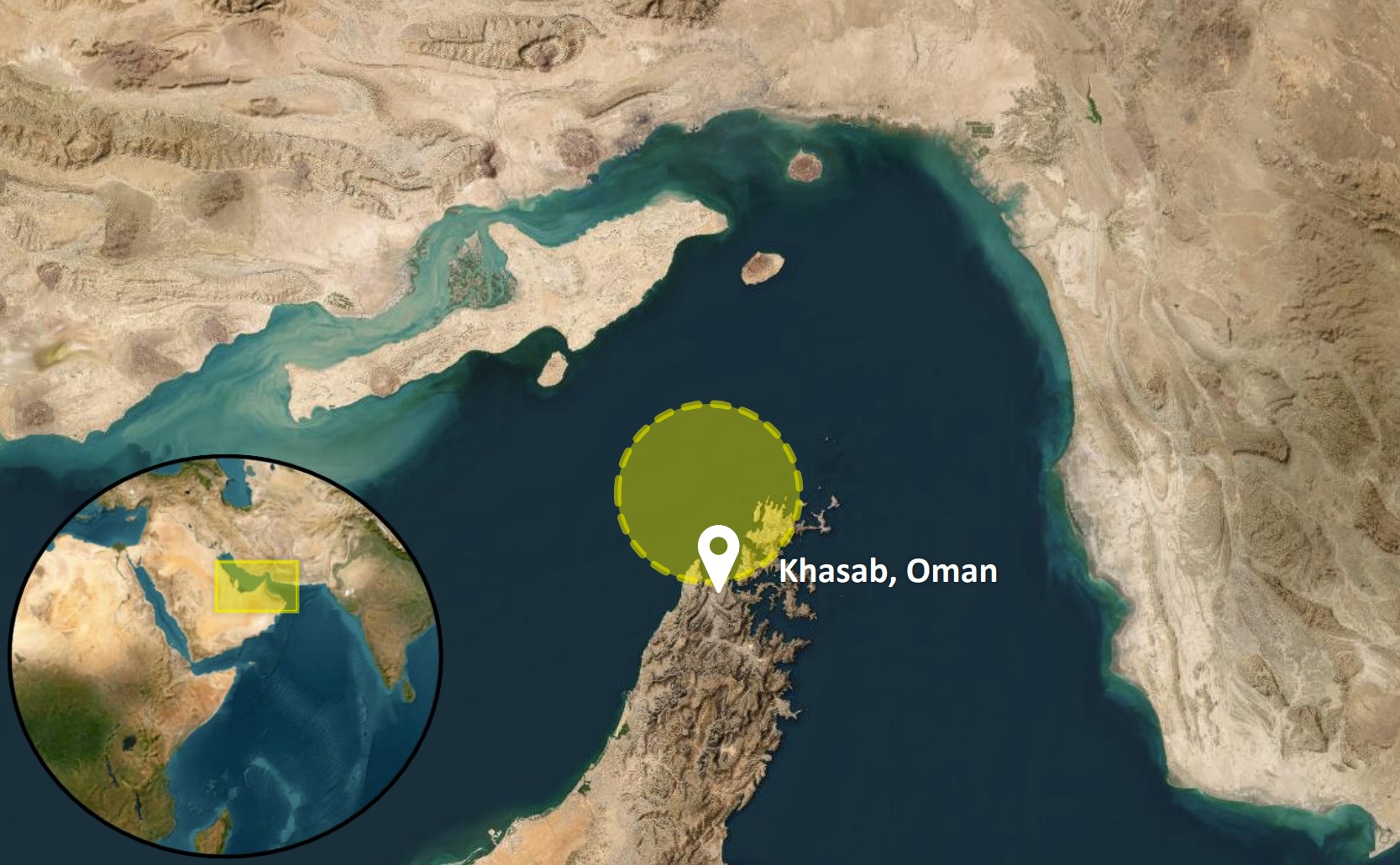
On 29 October, UKMTO and a passing vessel reported a ship on fire about nine nautical miles north of Khasab, Oman. Iran's IRGC Navy said three tankers had hit mines, but the number of vessels and cause remain unresolved. Hormuz traffic reporting conflicts: Windward counted 18 transits on 26 October, about one fifth of its pre-crisis daily average, while trade reporting described Gulf oil flows near pre-war levels and Kpler reported exports falling again. Satellite-based reporting indicates damage to a processing unit at Ras Tanura, although reports also show crude loading continuing at Ras Tanura and Juaymah. Qatar and Oman are pursuing mediation, but Iran has rejected reported draft terms while its foreign minister says contacts with mediators continue. The supplied reporting supports pressure on tanker availability and insurance conditions, but does not establish a Bab-el-Mandeb commercial blockade.
Change from previous assessment
Since the 28 October brief, reporting has added a UKMTO-reported fire near Khasab and an IRGC Navy claim that three tankers hit mines; the cause and number of vessels remain unresolved. Satellite-based reporting now supports damage to a Ras Tanura processing unit, while reports of continued VLCC loading and recovered Aramco crude exports argue against assuming a sustained export stoppage. Kpler's report of falling Hormuz exports adds to the conflict with near-pre-war flow claims. New mediation reporting records Iranian rejection of draft terms alongside continued contact with intermediaries. The supplied Brent observations still do not support $108 per barrel. Initial assessment of Bab-el-Mandeb remains low confidence because the new reporting does not provide strait-specific commercial transit evidence.
Key judgments
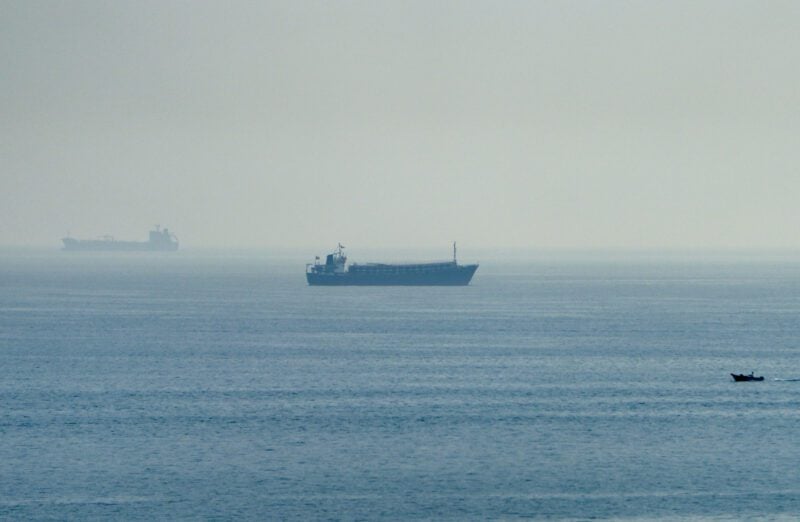
- Commercial passage through the Strait of Hormuz is likely severely constrained rather than fully closed. Windward logged 18 transits on 26 October, about one fifth of its pre-crisis daily average; trade reporting said tanker activity had helped restore Gulf oil flows near pre-war levels, while Kpler reported that Hormuz oil exports fell again last week. These figures measure different activity and periods, and the Windward count is a two-day-old snapshot. Reporting on vessels switching off location signals adds uncertainty to traffic estimates. (Confidence: medium · ASSESSED)
- I&W: Windward records fewer than 44 daily transits on at least five of the next seven days, which would support continued severe constraint against the reported pre-crisis average of about 88. (0-14 days)
- I&W: Windward records at least 70 daily transits on five consecutive days, which would weaken the assessment of severe constraint. (0-14 days)
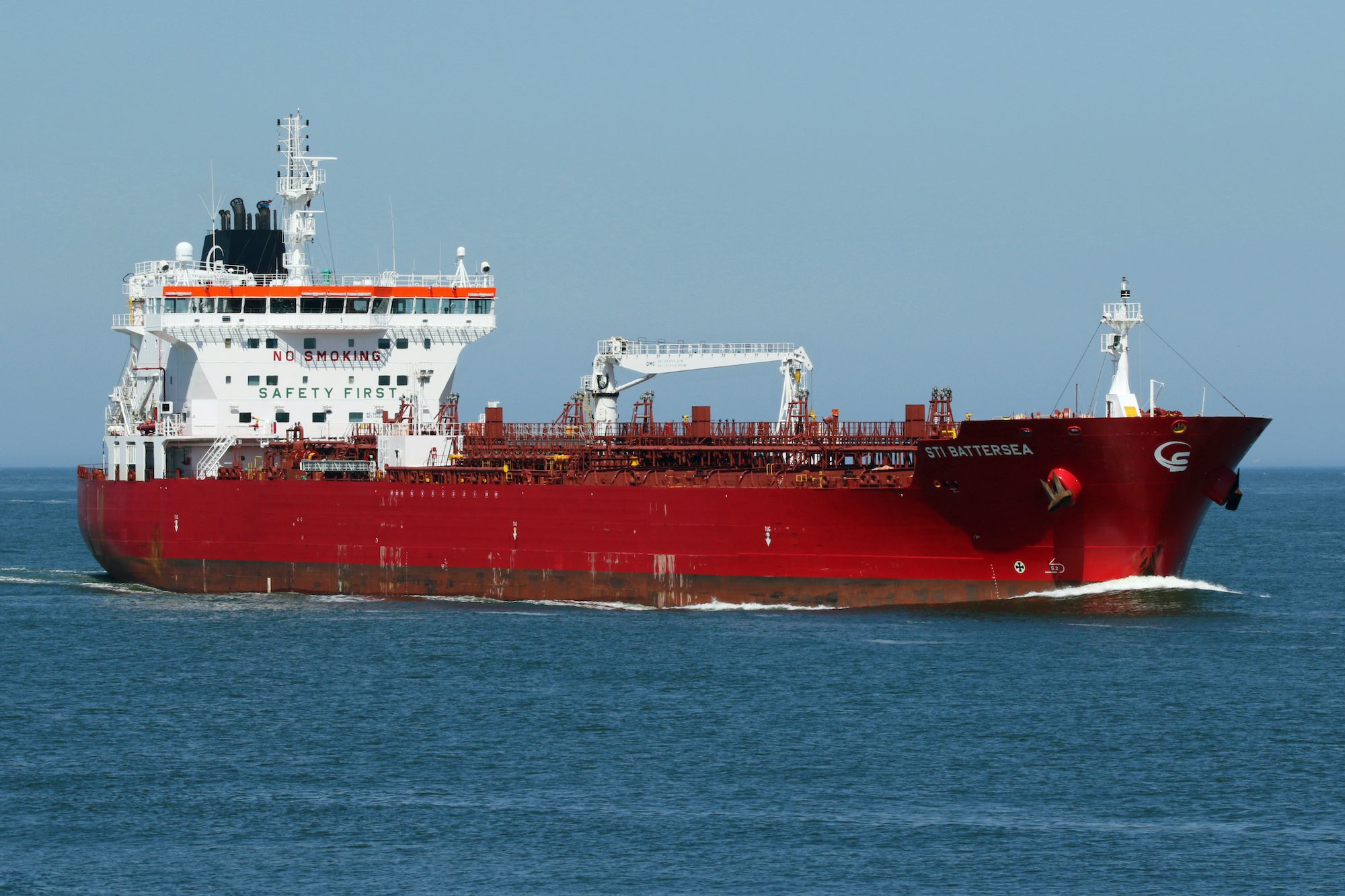
- At least one vessel was likely burning near Khasab, Oman, on 29 October, but the reported cause and number of affected tankers remain unresolved. UKMTO and a passing vessel's master reported a fire about nine nautical miles north of Khasab. The IRGC Navy said three tankers hit mines south of Hormuz, while a separate account described deliberate IRGC attacks; neither account independently establishes the cause or confirms three affected vessels. (Confidence: medium · REPORTED)
- I&W: UKMTO, the vessel operator or a flag-state authority identifies the burning vessel and reports its crew status or damage, narrowing the incident account. (0-14 days)
- I&W: Independent vessel or satellite reporting confirms additional tanker damage or a mine strike, which would support the IRGC Navy's account of multiple vessels. (0-14 days)
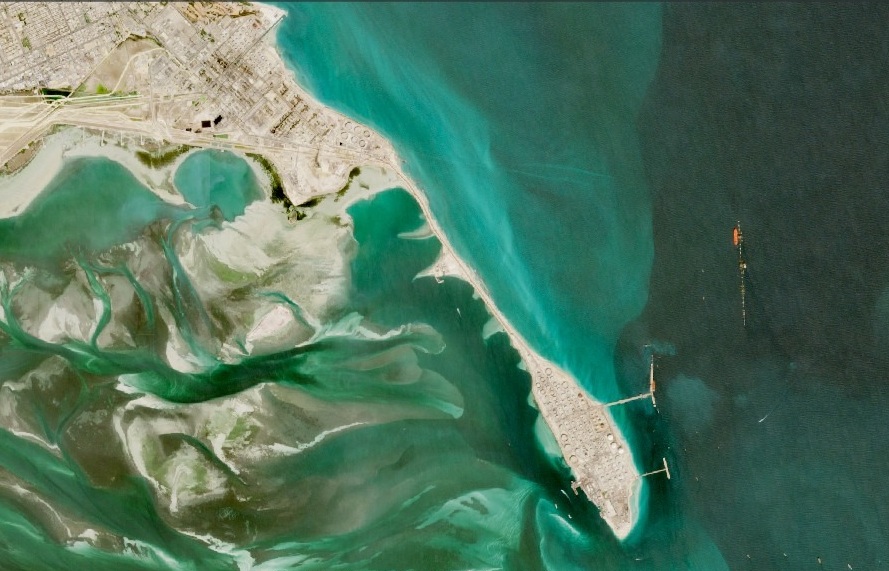
- A Houthi missile likely damaged a processing unit at Ras Tanura on 27 or 28 October, but the supplied evidence does not establish a sustained interruption to Saudi crude exports. Houthi claims and satellite-based reporting support damage at the refinery. Reports of nine very large crude carriers loading at Ras Tanura and Juaymah, and of Saudi Aramco crude exports recovering to pre-war volumes, indicate that export activity continued. A separate assessment based on stopped flaring conflicts with those reports and does not by itself establish an export stoppage. (Confidence: medium · ASSESSED)
- I&W: New satellite imagery or an Aramco statement confirms that the damaged processing unit remains offline and crude loading at Ras Tanura or Juaymah falls. (0-14 days)
- I&W: Imagery shows the unit operating and new loading reports show continued crude exports from Ras Tanura and Juaymah, which would weaken the assessment of sustained disruption. (0-14 days)
- The supplied reporting does not establish a commercial blockade at Bab-el-Mandeb or disruption at four of five key straits. It documents the Sana'a government's 20 July announcement of a maritime blockade against Saudi Arabia and Houthi-reported attacks on Saudi-associated vessels in the Red Sea, but provides no Bab-el-Mandeb transit count or verified commercial vessel stoppage there. Route-specific evidence is too limited to judge the scale of commercial disruption. (Confidence: low · ASSESSED)
- I&W: UKMTO reports a commercial vessel stopped or attacked within Bab-el-Mandeb, or a shipowner announces rerouting because passage there was denied; either would break the current assessment. (0-14 days)
- I&W: Two consecutive weekly reporting periods show no Bab-el-Mandeb commercial stoppage and no shipowner rerouting announcement citing denied passage, which would support the assessment that a blockade is unestablished. (0-30 days)
- It is very unlikely that $108 per barrel describes the latest Brent observations in the supplied reporting. The EIA listed Brent at $123.10 on 27 October, and Reuters reported on 29 October that oil prices had exceeded $115. A separate blog figure of $116.28 for 27 October differs from the EIA value, but also does not support $108. (Confidence: high · REPORTED)
- I&W: A timestamped EIA Brent observation or Reuters market report for 28 or 29 October records Brent at $108 per barrel, which would break this assessment. (0-7 days)
- I&W: The next dated EIA Brent observation remains above $115 per barrel, which would support this assessment. (0-7 days)
- Tanker availability and marine insurance conditions are likely to remain under pressure over the next one to three months. Scorpio Tankers reported that longer voyages and geographically displaced vessels were tightening supply and raising freight rates; marine insurance reporting described cancellation notices, revised exclusions and an expansion of designated high-risk areas. Lockton forecast an average 5% increase in P&I premiums in 2027, but the supplied reporting does not establish a single market-wide war-risk premium. (Confidence: medium · ASSESSED)
- I&W: Marine insurers issue additional cancellation notices or widen designated high-risk areas, confirming continued pressure on cover. (0-30 days)
- I&W: Insurers rescind cancellation notices and narrow designated high-risk areas, weakening the assessment of continuing insurance pressure. (1-3 months)
- A verified agreement to reopen Hormuz before 3 November is unlikely. Qatar presented Tehran with a draft on 25 October, but Iranian officials described the proposals as unacceptable while Foreign Minister Abbas Araghchi said Tehran remained in contact with intermediaries. Reports differ on whether the draft sets a five-day or seven-day sequence, and no agreement or reopening date has been announced. (Confidence: medium · ASSESSED)
- I&W: The parties announce a signed agreement with a dated Hormuz reopening sequence before 3 November, which would break this assessment. (0-5 days)
- I&W: No joint agreement or confirmed reopening timetable is announced by 3 November, which would support this assessment. (0-5 days)
Outlook & scenarios
Sustained restriction with uneven commercial passage (55%)
Hormuz remains passable but hazardous, with US blockade enforcement, Iranian restrictions and attacks on shipping continuing to complicate transit. Tanker flows remain uneven and insurers maintain restrictive terms. This is the most likely near-term path if mediation produces no agreed sequence for sanctions relief and reopening.
Conditional reopening through mediation (25%)
Qatar and Oman continue mediation and the parties agree on a staged sequence linking sanctions or blockade relief to reopening Hormuz. This is an unlikely near-term outcome given Tehran's rejection of reported draft terms and the disagreement over the order of concessions. If agreed, verified commercial transits would be the clearest sign that the arrangement is taking effect.
Post-election military escalation (15%)
After the 3 November US midterm elections, renewed US or Israeli strikes against Iran trigger Iranian retaliation against shipping or energy infrastructure. This is an unlikely but high-impact scenario. US statements and reports of military planning make it a credible risk, not an established decision to resume strikes.
Recommendations
- For the next situation update, separate AIS transit counts from oil-export volumes. Report the date, measurement and source for each figure, and retain the disagreement between Windward, Kpler and trade reporting rather than presenting one as a reconciled total.
- Seek a UKMTO follow-up and confirmation from the relevant vessel operator or flag-state authority on the fire near Khasab, including vessel identity, crew status, damage and cause. Do not report three tankers as independently confirmed.
- Track Ras Tanura processing status separately from crude exports. Check for new satellite imagery or company statements on the damaged unit and compare them with loading reports for Ras Tanura and Juaymah.
- Do not describe Bab-el-Mandeb as commercially blockaded, or claim disruption at four of five straits, without route-specific transit evidence or a verified report of a commercial vessel stopped there.
- Use timestamped EIA or major-media Brent observations in market updates. Do not repeat $108 as the latest Brent price unless a dated observation supports it.
- Monitor announcements from Qatar, Oman, Tehran and Washington through 3 November for an agreed reopening sequence, and distinguish an active proposal from an implemented agreement.
Confidence & uncertainty
Overall confidence is high for the underlying event reporting, supported by official EIA price data, UKMTO reporting on the fire near Oman, and major-media and trade reporting on tanker movements, Ras Tanura damage and diplomatic contacts. This headline confidence does not extend equally to every assessment: Hormuz traffic measures conflict, the tanker incident's cause and vessel count remain unresolved, and evidence specific to Bab-el-Mandeb is sparse.
Intelligence gaps
- [EEI 1.1 · PARTIAL] Changes in IRGC Navy, Houthi, and affiliated maritime unit deployments, patrol patterns, missile-drone activity, mine-laying indicators, or boarding attempts near the two straits. Recommended collection: maritime/ISR-AIS
- [EEI 2.2 · PARTIAL] Tanker and container-ship rerouting through the Cape of Good Hope or other alternatives, including added sailing days, fuel consumption, and available vessel capacity. Recommended collection: shipping-industry/AIS
- [EEI 2.3 · UNCOVERED] War-risk insurance premium, deductible, coverage-exclusion, and voyage-approval changes for Hormuz, Bab-el-Mandeb, Red Sea, Gulf of Aden, and adjacent waters. Recommended collection: insurance-market
- [EEI 3.1 · PARTIAL] Brent and Dubai crude price movements, futures-curve shifts, volatility, and the spread between regional and global crude benchmarks. Recommended collection: commodity-markets
- [EEI 3.3 · UNCOVERED] Fertilizer shipment delays, canceled or redirected cargoes, regional price increases for urea and ammonia, and reported inventory levels in import-dependent markets. Recommended collection: commodity-trade/port-data
- [EEI 3.4 · UNCOVERED] Container freight rates, vessel charter rates, bunker costs, port congestion, and manufacturing or retail supply disruptions attributable to the chokepoint crisis. Recommended collection: shipping-and-logistics-markets
- [EEI 4.3 · PARTIAL] Shipping-company decisions to resume, suspend, or expand transits and corresponding changes in insurer voyage approvals and war-risk premiums. Recommended collection: shipping-and-insurance-industry
- [EEI 4.4 · PARTIAL] New incidents, military alerts, vessel diversions, or port restrictions at other critical chokepoints indicating geographic spread beyond Hormuz and Bab-el-Mandeb. Recommended collection: maritime/AIS-official-notices
Red cell review: CONCUR WITH COMMENT
TLP:CLEAR