TLP:CLEAR · Disclosure is not limited.
Maritime Chokepoints: Hormuz Constraints and Saudi-Yemen Escalation, 28 November 2026
Time window: Last 1 day · Audience: General analyst · Type: Situation report · DTG: 2026-11-28 22:40Z · Overall confidence: MEDIUM
BLUF
The evidence supports severe constraints on Strait of Hormuz traffic and a new round of Houthi-Saudi attacks, but it does not establish a Bab-el-Mandeb blockade, disruption to four of five key straits, or Brent at $108. A reported boarding of a cargo vessel off Yemen ended with the armed individuals leaving and the crew safe; responsibility remains unknown.
Executive summary
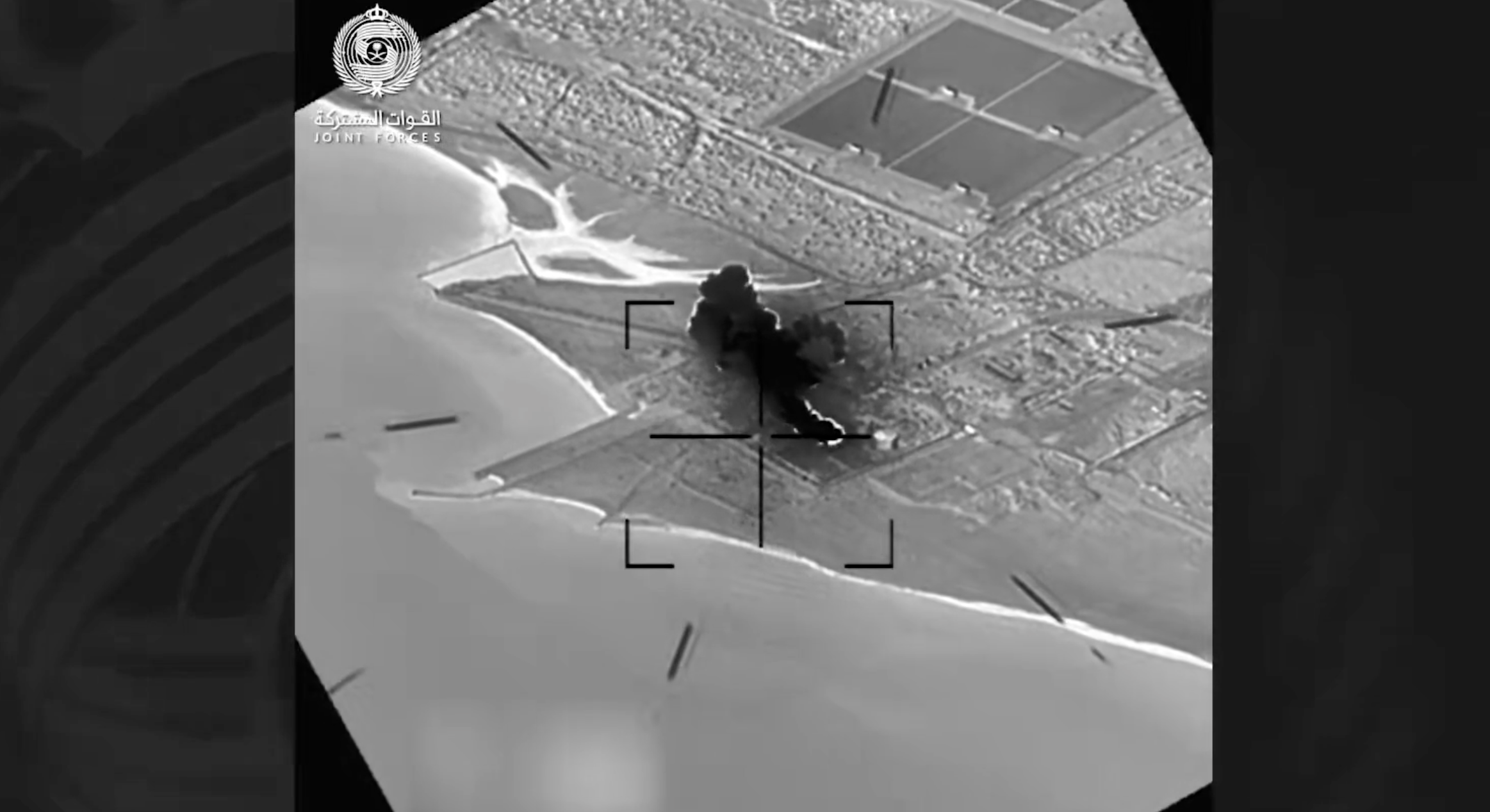
The Houthis claimed attacks on King Khalid International Airport in Riyadh, the Jazan refinery and two power stations in southern Saudi Arabia. Saudi-led coalition sources reported intercepting missiles and said the coalition had struck Houthi facilities in Yemen. The specific reported strike on a Riyadh financial-district tower is not matched by the Houthis’ listed targets. Strait of Hormuz traffic indicators point to severe disruption, though they measure different things and conflict with a separate claim that export flows have recovered. Bab-el-Mandeb navigation is described as threatened, but the supplied reporting does not verify a blockade. The latest supplied EIA Brent spot price is $91.80 per barrel on 24 November; the record does not substantiate $108 or a current war-risk insurance spike.
Change from previous assessment
Since the 27 November brief, reporting adds Houthi claims of attacks on King Khalid International Airport, the Jazan refinery and two southern Saudi power stations, alongside reported Saudi-led coalition interceptions and a new operation against Houthi facilities in Yemen. It also adds the reported boarding off Balhaf, which UKMTO said ended with the armed individuals leaving and the crew safe. These developments raise the near-term assessment of Saudi-Yemen escalation. The evidence still does not establish a Bab-el-Mandeb blockade, disruption to four of five straits or Brent at $108; the supplied Brent quote remains dated 24 November.
Key judgments
- Further Houthi attacks on Saudi targets and Saudi-led coalition retaliation are likely over the next 14 days. The Houthis claimed attacks on King Khalid International Airport, the Jazan refinery and two southern power stations; Saudi-led coalition sources reported missile interceptions and an operation against Houthi facilities in Yemen. The reported Riyadh tower strike conflicts with the Houthis’ enumerated list of targets. Confidence is medium: wire-service and major-media reporting corroborate interceptions and a coalition operation, but the Houthi target claims are not all independently verified and the Riyadh tower report is contested. (Confidence: medium · ASSESSED)
- I&W: Confirm: Saudi authorities or the Saudi-led coalition report another interception aimed at Riyadh, Jazan or Al-Shuqaiq, or announce another operation against Houthi facilities in Yemen. Break: no new Houthi attack claim, Saudi interception or coalition retaliation is reported through 12 December. (0-14 days)
- I&W: Confirm: independently reported damage or casualties at a named Saudi target match one of the Houthi claims. Break: follow-up reporting establishes that the claimed airport, refinery or power-station attacks caused no damage. (0-14 days)
- Strait of Hormuz traffic is likely to remain severely constrained over the next 14 days, but the supplied evidence does not establish a complete halt. IMF PortWatch crossings were reported at 1 per cent of a roughly 85-vessel daily pre-crisis baseline on 22 November, while a Kpler estimate put oil movement through the strait and Gulf of Oman ship-to-ship transfers at about 10 million barrels per day on 10 November. The latter is a different measure, and reported transponder-off crossings may make AIS counts incomplete. A separate claim that export flows have recovered remains in tension with the low crossing figure. Confidence is low because the measures cover different dates and traffic categories, the reporting is not fully independent, and the recovery claim is unresolved. (Confidence: low · ASSESSED)
- I&W: Confirm: comparable daily IMF PortWatch counts remain below 25 per cent of the roughly 85-vessel pre-crisis baseline over the next 14 days. Break: counts exceed 50 per cent of that baseline for seven consecutive days. (0-14 days)
- I&W: Break: a new, dated oil-flow estimate shows sustained movement near the pre-war level of about 21 million barrels per day, rather than ship-to-ship transfers or AIS crossing counts alone. (0-14 days)
- The supplied evidence supports a threat to navigation at Bab-el-Mandeb, but does not establish a blockade there or disruption to four of five key straits. The Saudi-led coalition said Houthi attacks threatened navigation in the southern Red Sea and Bab-el-Mandeb, and a major-media report said the Houthis had retaken coast at Bab-el-Mandeb. A boarding off Balhaf was reported, but the responsible actors were not identified and the EU naval mission did not confirm whether its piracy report concerned the same incident. No supplied claim gives a verified Bab-el-Mandeb transit count or confirms a blockade. Confidence is medium: reporting supports elevated risk, but the maritime incident’s attribution and its connection to Houthi activity are unresolved. (Confidence: medium · ASSESSED)
- I&W: Break: UKMTO or the EU naval mission reports a verified closure or sustained interruption of Bab-el-Mandeb transits, or publishes daily passage data showing traffic halted for 48 hours. Confirm: verified vessel transits continue and no Houthi-attributed interdiction is reported. (0-14 days)
- The reported 28 November boarding of a cargo vessel about 64 nautical miles southwest of Balhaf appears to have ended without the armed individuals retaining control: UKMTO said they left, the crew were safe and the vessel was proceeding to its next port. Responsibility remains unknown, and the EU naval mission’s piracy report may or may not describe the same incident. Confidence is medium: the wire-service account cites maritime monitoring reports, but the incident’s attribution and relationship to the separate piracy report are unresolved. (Confidence: medium · REPORTED)
- I&W: Confirm: UKMTO’s next update continues to report the crew safe and the vessel proceeding to port. Break: UKMTO or the EU naval mission reports renewed control of the vessel, crew injuries or a diversion linked to the same incident. (0-14 days)
- The supplied record does not substantiate Brent at $108 per barrel or a current war-risk insurance spike. The latest supplied EIA Brent spot quote is $91.80 on 24 November; the only supplied insurance figure is an estimate of 32 times normal dated 7 October from a low-reliability tracker. Confidence is low because the Brent quote is several days old and the insurance estimate is dated and uncorroborated; neither establishes the current market level. (Confidence: low · ASSESSED)
- I&W: Break: a dated Brent spot or futures benchmark reaches or exceeds $108 per barrel. Confirm: the next published EIA Brent spot quote remains below $108. (0-14 days)
- I&W: Break: multiple named insurers publish current Hormuz war-risk quotes showing a continuing rise from the last supplied estimate. Confirm: current insurer quotes show premiums below that estimate or no further increase. (0-14 days)
Outlook & scenarios
Continued Hormuz constraint and Saudi-Houthi exchanges (55%)
Likely over the next 14 days. Hormuz traffic remains well below its reported pre-crisis baseline, while further Houthi attack claims and Saudi-led coalition responses sustain pressure on Saudi targets. Bab-el-Mandeb remains at risk, but a blockade is not verified.
Limited de-escalation and partial shipping recovery (25%)
Unlikely over the next 14 days. A pause in Houthi attacks and coalition operations, alongside a sustained increase in verified Hormuz crossings, would ease immediate shipping pressure without establishing that all chokepoints have returned to normal.
Verified Bab-el-Mandeb interdiction (15%)
Very unlikely over the next 14 days. A confirmed Houthi-attributed attack on a commercial vessel or sustained interruption of Bab-el-Mandeb transits would widen the shipping threat. The current boarding report does not identify the perpetrators.
Direct Iran-US incident widens the maritime crisis (5%)
Very unlikely, but high impact. A direct incident involving US forces and Iran in or near the Strait of Hormuz would add military risk to existing traffic constraints and could prompt a further increase in shipping and insurance costs.
Recommendations
- Do not repeat the four-of-five straits claim or Brent at $108 as established facts. Require dated transit data for each named strait and a current, specified Brent benchmark before using either figure.
- Maintain a daily Hormuz series that separates vessel crossings, oil volume and ship-to-ship transfers. Record the date, method and AIS limitations for each measure.
- Track UKMTO and EU naval mission updates on the Balhaf boarding. Keep the incident unattributed unless later reporting identifies those responsible or links it to Houthi operations.
- Separate Houthi claims from confirmed damage in Saudi Arabia. Seek follow-up reporting on King Khalid International Airport, the Jazan refinery, the two power stations and the reported Riyadh tower strike before treating each as a verified hit.
- Request current, route-specific war-risk quotes from multiple insurers and record the coverage period and vessel type. Do not treat the 7 October estimate as a current premium.
- For the next 14 days, flag any new Saudi interception, coalition operation in Yemen, verified Bab-el-Mandeb transit interruption or sustained change in Hormuz crossings for reassessment.
Confidence & uncertainty
Overall confidence is medium. Wire-service and major-media reporting supports the reported Saudi missile interceptions, coalition operation and boarding off Yemen; the EIA provides a dated Brent spot quote. Confidence is lower on Houthi attack outcomes, the boarding’s attribution, current Hormuz traffic levels and war-risk premiums. Hormuz measures cover different dates and categories, and the reported recovery in export flows conflicts with very low AIS crossing counts.
Intelligence gaps
- [EEI 1.3 · PARTIAL] Daily vessel-transit volume, AIS dark activity, anchorage buildup, and rerouting rates at Hormuz and Bab-el-Mandeb compared with pre-crisis levels. Recommended collection: maritime/AIS
- [EEI 2.2 · UNCOVERED] Tanker and container-ship rerouting through the Cape of Good Hope or other alternatives, including added sailing days, fuel consumption, and available vessel capacity. Recommended collection: shipping-industry/AIS
- [EEI 2.3 · UNCOVERED] War-risk insurance premium, deductible, coverage-exclusion, and voyage-approval changes for Hormuz, Bab-el-Mandeb, Red Sea, Gulf of Aden, and adjacent waters. Recommended collection: insurance-market
- [EEI 2.4 · PARTIAL] Operational status and export-loading changes at Saudi, UAE, Omani, Iranian, Djiboutian, and Red Sea ports, terminals, pipelines, and storage facilities. Recommended collection: port-operator/energy-infrastructure
- [EEI 3.1 · UNCOVERED] Brent and Dubai crude price movements, futures-curve shifts, volatility, and the spread between regional and global crude benchmarks. Recommended collection: commodity-markets
- [EEI 3.2 · PARTIAL] Changes in crude, refined-product, LNG, and LPG volumes transiting the straits and in announced production cuts, strategic-stock releases, or emergency cargo substitutions. Recommended collection: energy-trade/AIS
- [EEI 3.3 · UNCOVERED] Fertilizer shipment delays, canceled or redirected cargoes, regional price increases for urea and ammonia, and reported inventory levels in import-dependent markets. Recommended collection: commodity-trade/port-data
- [EEI 3.4 · UNCOVERED] Container freight rates, vessel charter rates, bunker costs, port congestion, and manufacturing or retail supply disruptions attributable to the chokepoint crisis. Recommended collection: shipping-and-logistics-markets
- [EEI 4.3 · PARTIAL] Shipping-company decisions to resume, suspend, or expand transits and corresponding changes in insurer voyage approvals and war-risk premiums. Recommended collection: shipping-and-insurance-industry
- [EEI 4.4 · UNCOVERED] New incidents, military alerts, vessel diversions, or port restrictions at other critical chokepoints indicating geographic spread beyond Hormuz and Bab-el-Mandeb. Recommended collection: maritime/AIS-official-notices
Red cell review: CONCUR WITH COMMENT
TLP:CLEAR