TLP:CLEAR · Disclosure is not limited.
Maritime chokepoints: Hormuz disrupted, broader closure claim unverified
Time window: Last 1 day · Audience: General analyst · Type: Situation report · DTG: 2026-11-11 15:52Z · Overall confidence: HIGH
BLUF
The Strait of Hormuz is severely disrupted, but the supplied reporting does not establish that four of five key straits are disrupted or that Bab-el-Mandeb is fully blocked. Brent was reported near $92 to $93 on 11 November, not $108; current evidence also does not quantify the claimed war-risk premium spike or tanker shortage.
Executive summary
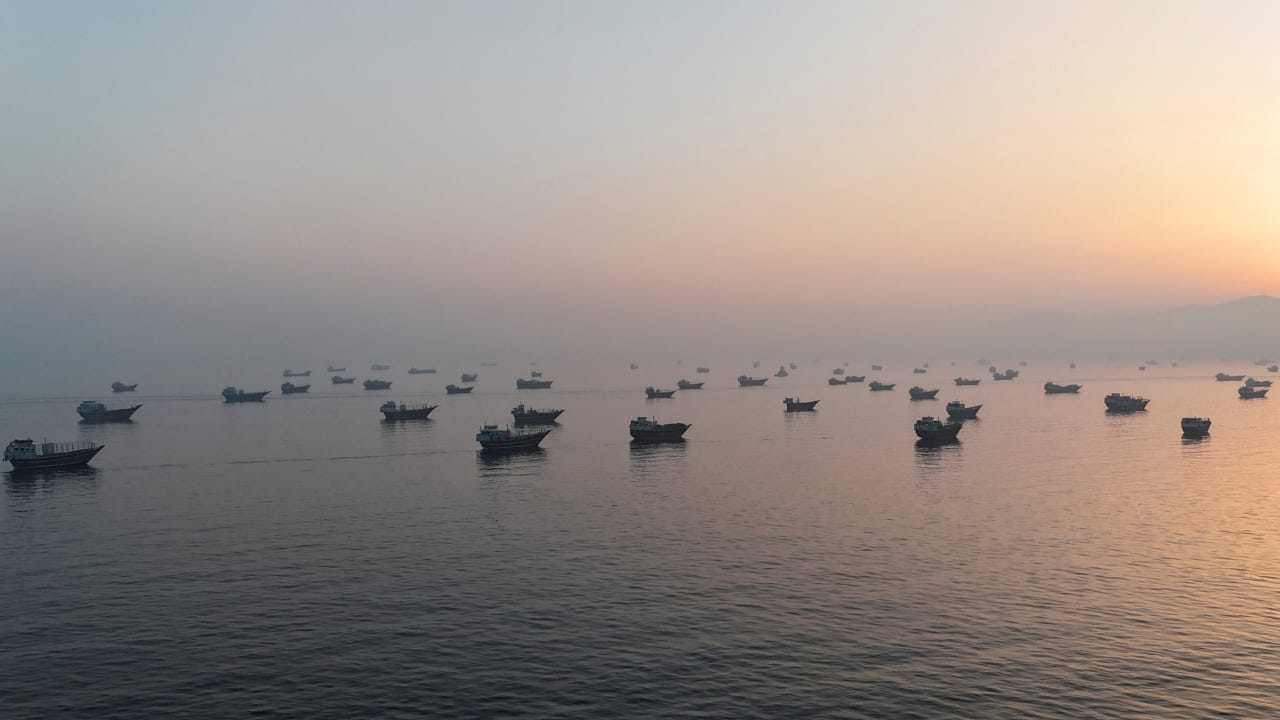
Reporting on 10 and 11 November describes very low Strait of Hormuz transits, attacks on vessels and a large number of ships waiting near Fujairah and Khor Fakkan. Other reporting indicates Middle East oil flows were approaching pre-war levels, so flow and transit measures require careful distinction. A trade publication reports Houthi restrictions on Saudi- and Israeli-related shipping off Yemen, but the supplied evidence does not confirm a Bab-el-Mandeb closure or provide current transit data for three additional straits. Brent futures were reported around $92 to $93 on 11 November. QatarEnergy delivery disruptions have produced contractual consequences, while the specific claims of spiking war-risk premiums, tightening tanker availability and disrupted fertilizer trade remain unsubstantiated in the supplied record.
Change from previous assessment
Since the 10 November brief, JMIC-cited reporting adds a current transit estimate of single digits to low double digits per day through Hormuz and a queue estimate of 162 ships near Fujairah and Khor Fakkan. This strengthens the assessment of severe disruption, but does not establish complete closure. New reporting describes Houthi restrictions on Saudi- and Israeli-related shipping off Yemen and contested control near Bab-el-Mandeb; it still does not substantiate a full blockade or disruption at four of five straits. Brent remains reported near $92 to $93 on 11 November, so the $108 headline remains unsupported. The Didamar strike allegation is now accompanied by conflicting satellite and Omani-official accounts, leaving the occurrence and effect unresolved.
Key judgments
- Very likely, commercial movement through the Strait of Hormuz remains severely constrained over the next 14 days, but the reporting does not establish a complete closure. JMIC-cited tracking put daily transits in the single digits to low double digits, against a 2025 historical average of approximately 138 vessels; JMIC also estimated 162 ships anchored near Fujairah and Khor Fakkan on 8 November. The IMO reported at least 130 maritime incidents and 25 seafarer deaths, and JMIC maintained a SEVERE threat rating. ING’s report that Middle East oil flows were approaching pre-war levels complicates the picture: cargo-flow and vessel-transit measures are not interchangeable. Confidence is medium because incident reporting is corroborated across sources, while current transit and flow measures are limited and differ in scope. (Confidence: medium · ASSESSED)
- I&W: JMIC or independent daily tracking continues to show single-digit to low-double-digit transits, confirming severe constraint; counts above 100 per day for three consecutive days would break this judgement. (0-14 days)
- I&W: UKMTO or JMIC records another confirmed vessel attack near Lima, Musandam or the Strait of Hormuz, supporting continued danger; a sustained absence of reported attacks alongside rising transit counts would weaken it. (0-14 days)
- A complete Bab-el-Mandeb blockade and disruption of four of five key straits are unlikely on the evidence supplied. A trade publication says the Houthis are blocking Saudi- and Israeli-related shipping off Yemen’s coast, while a separate report describes contested control of the Yemeni coast near Bab-el-Mandeb and says the claim of a government retaking the coast was not verified. The record provides no current Bab-el-Mandeb transit counts and no current transit evidence for three additional straits. Confidence is low because the interdiction report is single-source and the coastal-control account is unverified; absence of transit data is not evidence that passage has stopped. (Confidence: low · ASSESSED)
- I&W: Verified transit records show commercial vessels continuing to pass Bab-el-Mandeb, breaking the full-blockade claim; verified zero commercial transits alongside evidence of Houthi enforcement would support it. (0-14 days)
- I&W: Independent reporting confirms Houthi control of the coast up to Mocha or documents enforcement against vessels transiting Bab-el-Mandeb; either would strengthen the assessment of a widening threat. (0-30 days)
- Brent at $108 on 11 November is very unlikely. Reports put Brent futures at $92.53 by 04:20 GMT and $92.77 in European morning trading on 11 November. The EIA figure of $107.03 is a spot price dated 3 November, not a 11 November market level. Confidence is medium: separate reports place the 11 November futures price in a similar range, but their intraday snapshots differ and the EIA figure measures a different date and price type. (Confidence: medium · REPORTED)
- I&W: A timestamped exchange record for 11 November identifies Brent futures at or above $108, which would break this judgement; a record in the low $90s would confirm it. (0-3 days)
- Likely, shipping and LNG delivery disruption will continue to impose costs over the next one to three months, but the supplied reporting does not substantiate a specific war-risk premium spike, a quantified tanker shortage or fertilizer-trade disruption. JMIC reported 162 ships anchored near Fujairah and Khor Fakkan, and ING said tanker freight rates still reflected heightened security risks. QatarEnergy’s force majeure notice affects shipments through year-end; Orlen initiated termination of one contract, which remains in force for a further 60 days, and retains a second Qatar supply contract. Confidence is medium because the shipping and contractual effects are reported by more than one source, but the record gives no premium, vessel-availability or fertilizer-flow figures. (Confidence: medium · ASSESSED)
- I&W: QatarEnergy maintains force majeure notices through year-end and does not restore scheduled deliveries, confirming continued LNG disruption; withdrawal of the notices and documented cargo deliveries would weaken this judgement. (1-3 months)
- I&W: JMIC continues to report large vessel queues near Fujairah and Khor Fakkan while ING or comparable reporting describes elevated tanker freight rates; declining queues and freight rates would break the assessment of persistent logistics pressure. (0-3 months)
Outlook & scenarios
Continued severe disruption centred on Hormuz (60%)
The most likely course is continued low commercial transit through the Strait of Hormuz, with vessel attacks and delays sustaining shipping and LNG delivery pressure. Houthi restrictions on Saudi- and Israeli-related shipping persist, but reporting does not establish a full Bab-el-Mandeb closure or disruption at four of five straits.
Partial, managed improvement in passage (30%)
A partial improvement follows renewed coordination or escorted passage through Hormuz. Transits rise from the reported single digits to low double digits, while the JMIC SEVERE threat rating and reported attacks keep freight costs elevated. Iranian proposals relayed through Qatar do not, by themselves, establish a formal agreement.
High-impact spread to Bab-el-Mandeb or Omani navigation infrastructure (10%)
A low-probability, high-impact outcome is confirmed Houthi enforcement that halts commercial passage at Bab-el-Mandeb, or a verified attack on Omani navigation infrastructure at Didamar. Either development would compound the Hormuz disruption. The Didamar strike reporting is disputed, and the supplied record does not confirm a Bab-el-Mandeb closure.
Recommendations
- Revise the situation headline: do not state that four of five straits are disrupted or that Brent is $108 on 11 November. Report Brent with its date, price type and observation time.
- Maintain a daily strait-by-strait watch table. Record verified commercial transits, vessel incidents and queues separately for Hormuz and Bab-el-Mandeb, and mark the other three straits as lacking current evidence rather than assuming disruption.
- Track JMIC transit counts against its cited 2025 average of approximately 138 vessels per day, alongside the reported 162-vessel queue near Fujairah and Khor Fakkan. Separate vessel transits from oil-flow estimates in assessments.
- Seek dated war-risk insurance quotes and tanker-availability figures from insurers and operators before using claims of premium spikes or vessel shortages. Obtain separate fertilizer shipment data before assessing fertilizer-trade exposure.
- Monitor QatarEnergy’s force majeure notices and Orlen’s 60-day termination period. Distinguish notice of termination from the date deliveries actually cease, and track whether QatarEnergy cargoes resume.
Confidence & uncertainty
Overall confidence is high in the core findings that Hormuz is severely disrupted and Brent was not reported at $108 on 11 November. These findings draw on corroborating maritime incident reporting from the IMO, JMIC and UKMTO, and separate market reports that place Brent futures in the low $90s. Confidence is lower in the broader four-of-five claim: Bab-el-Mandeb reporting is limited and contested, and current transit evidence for three additional straits is absent. Freight, insurance, tanker-availability and fertilizer claims also lack quantified support.
Intelligence gaps
- [EEI 1.1 · PARTIAL] Changes in IRGC Navy, Houthi, and affiliated maritime unit deployments, patrol patterns, missile-drone activity, mine-laying indicators, or boarding attempts near the two straits. Recommended collection: maritime/ISR-AIS
- [EEI 1.3 · PARTIAL] Daily vessel-transit volume, AIS dark activity, anchorage buildup, and rerouting rates at Hormuz and Bab-el-Mandeb compared with pre-crisis levels. Recommended collection: maritime/AIS
- [EEI 2.1 · PARTIAL] US, coalition, Iranian, Saudi, Omani, and other naval force posture changes, including escorts, convoy schedules, mine-countermeasure deployments, air patrols, and rules-of-engagement announcements. Recommended collection: maritime/defense-reporting
- [EEI 2.2 · UNCOVERED] Tanker and container-ship rerouting through the Cape of Good Hope or other alternatives, including added sailing days, fuel consumption, and available vessel capacity. Recommended collection: shipping-industry/AIS
- [EEI 2.3 · UNCOVERED] War-risk insurance premium, deductible, coverage-exclusion, and voyage-approval changes for Hormuz, Bab-el-Mandeb, Red Sea, Gulf of Aden, and adjacent waters. Recommended collection: insurance-market
- [EEI 2.4 · PARTIAL] Operational status and export-loading changes at Saudi, UAE, Omani, Iranian, Djiboutian, and Red Sea ports, terminals, pipelines, and storage facilities. Recommended collection: port-operator/energy-infrastructure
- [EEI 3.1 · PARTIAL] Brent and Dubai crude price movements, futures-curve shifts, volatility, and the spread between regional and global crude benchmarks. Recommended collection: commodity-markets
- [EEI 3.2 · PARTIAL] Changes in crude, refined-product, LNG, and LPG volumes transiting the straits and in announced production cuts, strategic-stock releases, or emergency cargo substitutions. Recommended collection: energy-trade/AIS
- [EEI 3.3 · UNCOVERED] Fertilizer shipment delays, canceled or redirected cargoes, regional price increases for urea and ammonia, and reported inventory levels in import-dependent markets. Recommended collection: commodity-trade/port-data
- [EEI 3.4 · UNCOVERED] Container freight rates, vessel charter rates, bunker costs, port congestion, and manufacturing or retail supply disruptions attributable to the chokepoint crisis. Recommended collection: shipping-and-logistics-markets
- [EEI 4.2 · PARTIAL] Diplomatic commitments, deconfliction arrangements, prisoner or vessel releases, and publicly announced conditions for reopening commercial transit. Recommended collection: diplomatic-reporting
- [EEI 4.3 · UNCOVERED] Shipping-company decisions to resume, suspend, or expand transits and corresponding changes in insurer voyage approvals and war-risk premiums. Recommended collection: shipping-and-insurance-industry
- [EEI 4.4 · PARTIAL] New incidents, military alerts, vessel diversions, or port restrictions at other critical chokepoints indicating geographic spread beyond Hormuz and Bab-el-Mandeb. Recommended collection: maritime/AIS-official-notices
Red cell review: CONCUR WITH COMMENT
TLP:CLEAR