TLP:CLEAR · Disclosure is not limited.
Maritime Chokepoints: Hormuz Disruption Persists, Four-of-Five Claim Unverified
Time window: Last 1 day · Audience: General analyst · Type: Situation report · DTG: 2026-11-05 14:14Z · Overall confidence: HIGH
BLUF
The supplied evidence supports serious disruption in the Strait of Hormuz and Red Sea route avoidance, but does not substantiate a verified closure of four of five key straits. The latest supplied Brent quote is $95.60 on the morning of 5 November, not $108; reports for 4 November conflict on the price.
Executive summary
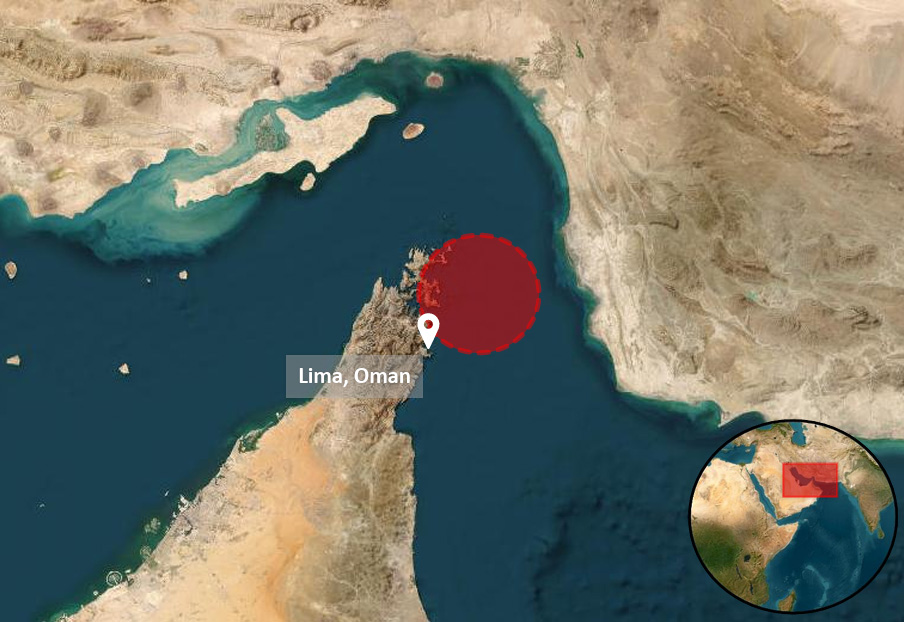
Commercial shipping through the Strait of Hormuz remains exposed to attacks and restrictions. UKMTO reported a tanker attack northeast of Lima, Oman, and Lloyd’s List Intelligence reported a strike on the Panama-flagged bulker Era S while it attempted to transit Hormuz. The IRGC’s accounts of tanker fires and mine strikes differ on the number of vessels and their condition. In Yemen, reports describe Houthi gains near Mokha and Aden, while Yemeni government forces say they retook Dhubab and positions near Bab-el-Mandeb. Houthi attacks have led carriers to avoid Red Sea routes, but the supplied reporting does not confirm a Bab-el-Mandeb blockade or disruption at four of five straits. War-risk insurance costs and tanker rates are reported as elevated. Brent price reporting is inconsistent: the EIA recorded $107.03 on 3 November, one report placed Brent at $95.60 on the morning of 5 November, and reports for 4 November give conflicting levels.
Change from previous assessment
Since the 4 November brief, reporting adds the UKMTO account of a tanker attack northeast of Lima, Oman, Lloyd’s List Intelligence reporting on the Era S, and further IRGC claims with conflicting vessel counts. Reporting also says the Houthis captured Mokha and advanced to about 80 kilometres from Aden, while Yemeni government forces say they retook Dhubab and nearby positions; confidence in the Bab-el-Mandeb operational picture remains low. The latest supplied Brent report is $95.60 on the morning of 5 November, alongside an EIA value of $107.03 for 3 November and conflicting 4 November reports. The assessment that four of five straits are not verified remains unchanged; confidence in the Hormuz assessment remains medium.
Key judgments
- The Strait of Hormuz is likely to remain severely disrupted, but a full closure is unlikely. UKMTO reported that a tanker said two projectiles struck its engine room about 14 nautical miles northeast of Lima, Oman; Vanguard Tech identified the vessel as the Barbados-registered Grit, with a deadweight tonnage of 298,555. Lloyd’s List Intelligence reported that the Panama-flagged Era S was struck while attempting to transit Hormuz on 2 November. These reports support ongoing danger to shipping, but the reported IRGC vessel toll is unresolved: accounts describe two tankers and a tugboat, three tankers, or four tankers. A shipping-industry estimate that crude shipments had recovered to around 80% of pre-war levels conflicts with separate reporting of flows near a standstill, and the figures cover different periods or measures. (Confidence: medium · ASSESSED)
- I&W: UKMTO reports additional merchant-vessel attacks or transit suspensions in Hormuz by 19 November, confirming continued disruption; sustained crude transits near the reported 80% of pre-war level with no new UKMTO incidents would weaken this assessment. (0-14 days)
- I&W: A verified report of no commercial transits through Hormuz for seven consecutive days would break the assessment that a full closure is unlikely. (0-14 days)
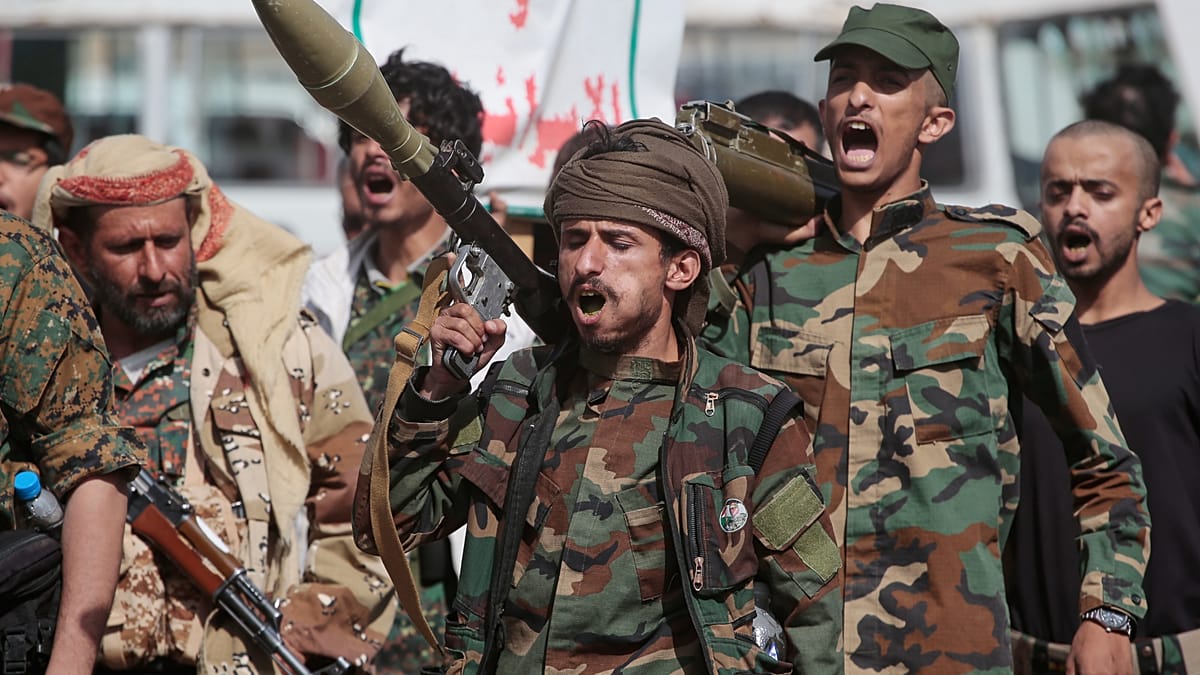
- A Houthi blockade of Bab-el-Mandeb is unlikely to be established on the supplied evidence, although the threat to Red Sea shipping has increased. Reporting says the Houthis captured Mokha and advanced to about 80 kilometres from Aden; Yemeni government forces say they retook Dhubab district and key positions near the strait, while separate reporting describes Houthi gains in Taiz and Lahij. These accounts leave control around the approaches contested. Houthi attacks have forced carriers to avoid Red Sea routes, but no supplied claim provides current Bab-el-Mandeb transit figures or confirms a blockade. This judgment rests on reported battlefield claims and an absence of transit data, so confidence is low. (Confidence: low · ASSESSED)
- I&W: Independent reporting verifies Houthi control of Mokha and sustained commercial-transit suspension at Bab-el-Mandeb, breaking the assessment that a blockade is unlikely. (0-14 days)
- I&W: Yemeni government forces confirm continued control of Dhubab and published transit data show vessels continuing to pass Bab-el-Mandeb, confirming the assessment. (0-14 days)
- The headline’s claim that four of five key straits are disrupted is not substantiated by the supplied record. The reporting directly describes disruption in Hormuz and carrier avoidance of Red Sea routes, but does not demonstrate disruption at three additional named straits. The $108 Brent figure is also not supported as the latest supplied price: the EIA recorded $107.03 on 3 November, a report put Brent at $95.60 on the morning of 5 November, and 4 November reports conflict, including figures around $94 and $101.70 and reports of a fall below $100. The exact 4 November level remains uncertain. (Confidence: medium · ASSESSED)
- I&W: Independent, date-specific reporting documents operational disruption at four of five named straits, breaking the assessment that the four-of-five claim is unsubstantiated. (0-14 days)
- I&W: An official EIA or exchange record shows Brent at $108 on 5 November, breaking the assessment that the supplied evidence does not support that price as current; a dated record below $100 confirms it. (0-14 days)
- War-risk insurance and tanker charter-cost pressure is present, despite Brent’s reported fall from its recent highs. Trade reporting describes elevated war-risk insurance costs and tanker rates; one report put supertanker leases at well over $1 million per day. Carriers are also avoiding Red Sea routes because of Houthi attacks. The supplied claims do not quantify a general shortage of tankers, so availability should not be described as a confirmed system-wide constraint. (Confidence: medium · REPORTED)
- I&W: Published war-risk quotations remain elevated and reported supertanker lease rates remain above $1 million per day, confirming continued cost pressure. (0-14 days)
- I&W: Insurers withdraw elevated-risk pricing and reported supertanker lease rates fall below $1 million per day, breaking the assessment of continuing high cost pressure. (1-3 months)
Outlook & scenarios
Prolonged, constrained Hormuz transit (55%)
Likely: attacks and restrictions keep Hormuz transits below normal, while some oil cargoes continue to move. Red Sea route avoidance persists, and insurance and charter costs remain elevated. The inconsistent IRGC vessel counts continue to complicate assessment of individual incidents.
Houthi pressure near Bab-el-Mandeb intensifies (20%)
Houthi control claims around Mokha and reported advances towards Aden sharpen the threat to shipping. If those gains are confirmed and attacks continue, carriers maintain or expand Red Sea avoidance. Yemeni government claims of control around Dhubab would leave the front-line picture contested rather than establish a blockade.
Negotiated pause reduces maritime risk (20%)
A US-Iran agreement or pause reduces attacks and restrictions around Hormuz, easing war-risk pricing and tanker charter rates. This path depends on movement beyond the current talks: Iran says the sides remain far apart, while Qatar says both remain committed to negotiations.
Renewed US-Iran military exchange (5%)
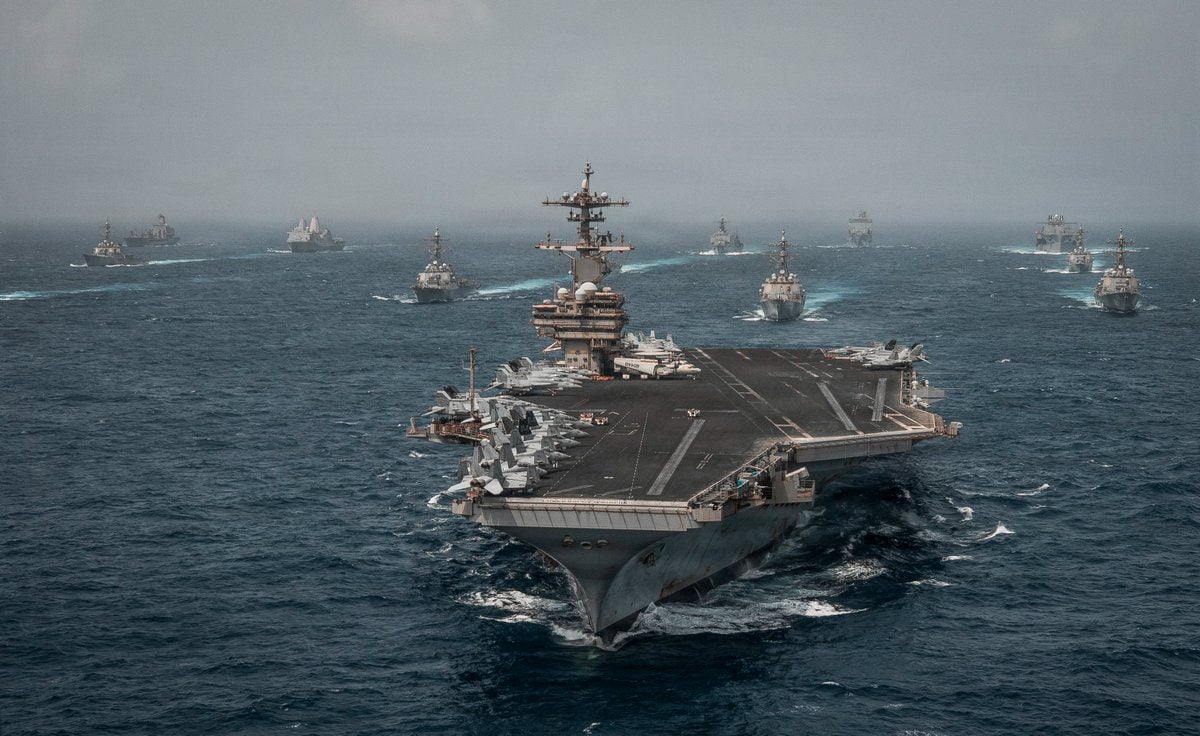
Unlikely but high impact: further US strikes or Iranian responses widen the confrontation around Hormuz. The reported US strikes on Qeshm Island, competing accounts of their date, and reports of prepared US strike options make renewed escalation a relevant wildcard. A new exchange would increase the risk of wider shipping suspensions and sharper price swings.
Recommendations
- Do not present four-of-five strait disruption or Brent at $108 as verified current conditions. Use dated, benchmark-specific price points and state that the supplied 4 November reports conflict.
- Maintain a daily Hormuz incident log that separates UKMTO reports, vessel identifications, IRGC claims and independently verified outcomes. Keep the conflicting counts of two, three and four tankers distinct until reconciled.
- Track Bab-el-Mandeb transit data separately from reports of territorial control in Mokha, Dhubab, Taiz and Lahij. Escalate the assessment if independent transit reporting confirms a sustained halt or a verified shift in control near the strait.
- Monitor published war-risk quotations and tanker charter rates by date. Report the documented rate and route, and do not infer a system-wide tanker shortage without direct availability data.
Confidence & uncertainty
Overall confidence is high in the broad finding that maritime disruption is real: UKMTO reporting, Lloyd’s List Intelligence vessel reporting and trade and major-media coverage describe danger to Hormuz shipping, while separate reporting documents Red Sea route avoidance. The EIA provides an official dated Brent price. Confidence is lower in the exact IRGC vessel toll, the current level of Hormuz traffic, control around Bab-el-Mandeb and the conflicting 4 November Brent figures.
Alternative analysis (red cell)
The supplied record supports a materially more uncertain outlook for Hormuz than the judgment conveys. The near-standstill assessment (d087128d-9164-441c-94cf-dcce4feed022) and conflicting IRGC incident reports (f4e37f6a-d552-41fb-a2b6-168d82a431d5; 1d34dfeb-5e2c-4b8c-ba91-154046ab98a3; ba10a325-5c40-4af4-9503-519725865f71) leave open the possibility that disruption could deepen into an effective closure. The 80-percent recovery claim (5f55d0bb-0265-4a75-8ac6-b213dd672ded) is too weakly sourced to anchor the contrary forecast.
Intelligence gaps
- [EEI 1.1 · PARTIAL] Changes in IRGC Navy, Houthi, and affiliated maritime unit deployments, patrol patterns, missile-drone activity, mine-laying indicators, or boarding attempts near the two straits. Recommended collection: maritime/ISR-AIS
- [EEI 1.3 · PARTIAL] Daily vessel-transit volume, AIS dark activity, anchorage buildup, and rerouting rates at Hormuz and Bab-el-Mandeb compared with pre-crisis levels. Recommended collection: maritime/AIS
- [EEI 1.4 · PARTIAL] Public or private warnings from the US Fifth Fleet, regional naval forces, port authorities, or shipping companies identifying specific routes or vessel categories as unsafe. Recommended collection: official-statements/shipping-notices
- [EEI 2.2 · UNCOVERED] Tanker and container-ship rerouting through the Cape of Good Hope or other alternatives, including added sailing days, fuel consumption, and available vessel capacity. Recommended collection: shipping-industry/AIS
- [EEI 2.3 · UNCOVERED] War-risk insurance premium, deductible, coverage-exclusion, and voyage-approval changes for Hormuz, Bab-el-Mandeb, Red Sea, Gulf of Aden, and adjacent waters. Recommended collection: insurance-market
- [EEI 2.4 · UNCOVERED] Operational status and export-loading changes at Saudi, UAE, Omani, Iranian, Djiboutian, and Red Sea ports, terminals, pipelines, and storage facilities. Recommended collection: port-operator/energy-infrastructure
- [EEI 3.2 · PARTIAL] Changes in crude, refined-product, LNG, and LPG volumes transiting the straits and in announced production cuts, strategic-stock releases, or emergency cargo substitutions. Recommended collection: energy-trade/AIS
- [EEI 3.3 · UNCOVERED] Fertilizer shipment delays, canceled or redirected cargoes, regional price increases for urea and ammonia, and reported inventory levels in import-dependent markets. Recommended collection: commodity-trade/port-data
- [EEI 3.4 · PARTIAL] Container freight rates, vessel charter rates, bunker costs, port congestion, and manufacturing or retail supply disruptions attributable to the chokepoint crisis. Recommended collection: shipping-and-logistics-markets
- [EEI 4.3 · UNCOVERED] Shipping-company decisions to resume, suspend, or expand transits and corresponding changes in insurer voyage approvals and war-risk premiums. Recommended collection: shipping-and-insurance-industry
- [EEI 4.4 · PARTIAL] New incidents, military alerts, vessel diversions, or port restrictions at other critical chokepoints indicating geographic spread beyond Hormuz and Bab-el-Mandeb. Recommended collection: maritime/AIS-official-notices
Red cell review: PARTIAL DISSENT
TLP:CLEAR