TLP:CLEAR · Disclosure is not limited.
Maritime chokepoints: Hormuz remains constrained, Bab-el-Mandeb blockade unconfirmed
Time window: Last 1 day · Audience: General analyst · Type: Situation report · DTG: 2026-11-04 13:51Z · Overall confidence: HIGH
BLUF
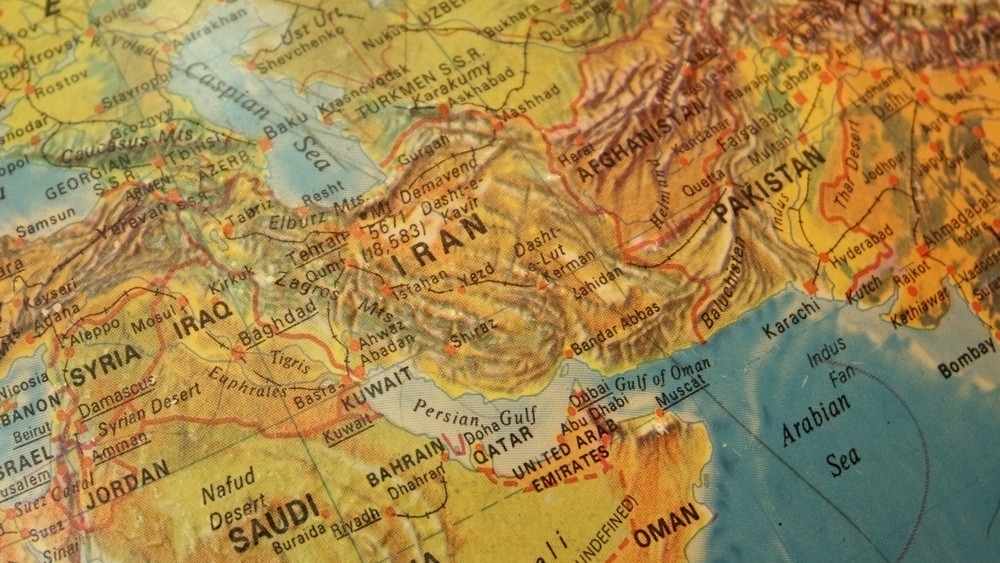
The evidence supports serious disruption in the Strait of Hormuz, but not a verified closure of four of five key straits. The IRGC’s claim that four tankers were destroyed is unverified, while reported Hormuz transits remain substantial; the latest supplied Brent figure is about $103 on 3 November, not a confirmed current $108. The IRG’s reported gains near Bab-el-Mandeb raise the threat to shipping, but do not establish a blockade.
Executive summary
Reporting describes restricted Hormuz passage, increased shipping risk and lower October export flows. Vortexa and Kpler estimates differ in scope, but both show declines from September. The IRGC said tankers struck mines and caught fire, but BBC Verify found no evidence that four tankers were destroyed, and other reporting gives different vessel counts and outcomes. In Yemen, the IRG reportedly recaptured Ras Menhali and probably Perim Island, while the Houthis captured Al Maqatirah; the supplied reporting does not establish disrupted Bab-el-Mandeb transits. Brent was reported at $103.14 intraday on 3 November and at $104.77 at the 2 November close. We assess that a prolonged, contested Hormuz standoff is more likely than either an immediate reopening or a verified closure of multiple straits.
Change from previous assessment
Since the 3 November brief, the IRGC has claimed that tankers struck mines and caught fire, but BBC Verify found no evidence that four tankers were destroyed; the number and condition of vessels remain unresolved. New reporting of IRG gains at Ras Menhali and probably Perim Island, alongside Houthi capture of Al Maqatirah, raises concern about Bab-el-Mandeb, but does not establish a blockade or disrupted transits. October flow estimates add evidence of lower exports, while the latest supplied Brent figures place the price below $108 on 3 November. The assessment that Hormuz is constrained rather than demonstrably closed remains; the claim of four disrupted straits remains unsubstantiated.
Key judgments
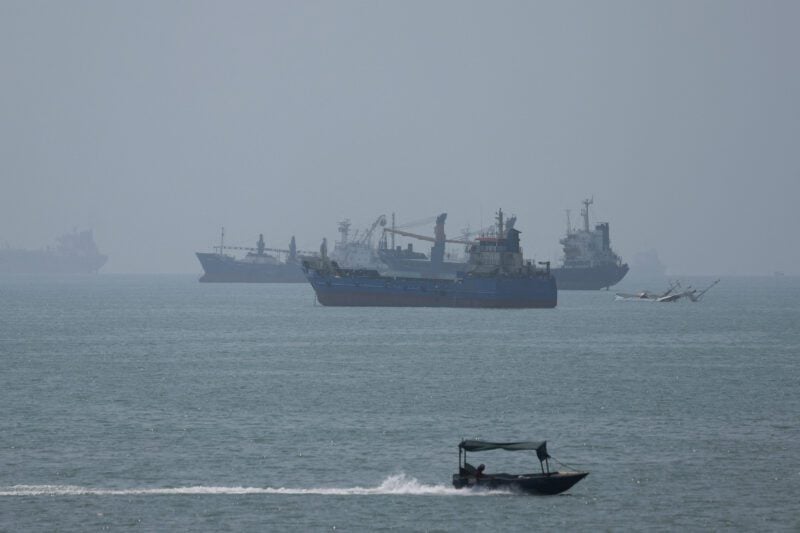
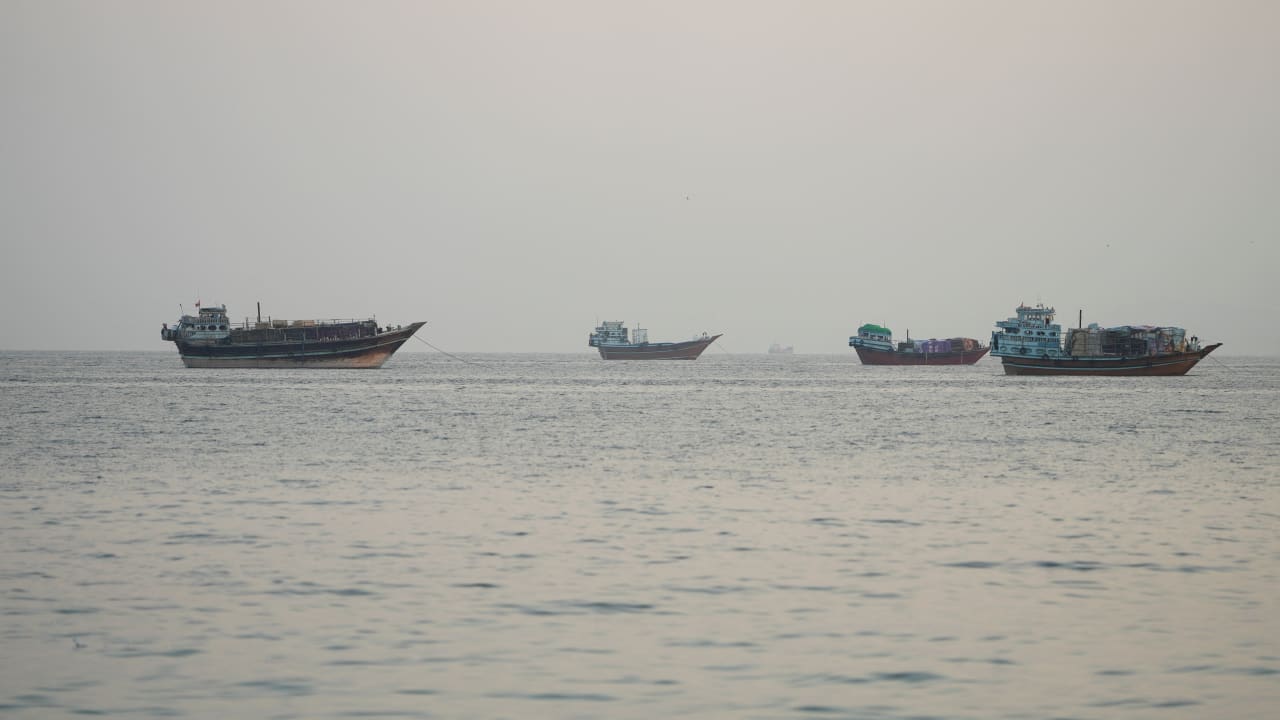
- The Strait of Hormuz is likely to remain severely constrained, but is unlikely to be fully closed. A shipping-industry estimate puts transits at about 80% of pre-war levels, while Vortexa and Kpler report lower October flows than in September. The IRGC’s 4 November account of tankers striking mines and catching fire is not independently verified: BBC Verify found no evidence that four tankers were destroyed, and reporting differs on the number and condition of vessels. The 80% transit figure and export-flow estimates measure different activity and should not be treated as directly comparable. (Confidence: medium · ASSESSED)
- I&W: Daily AIS and satellite-derived Hormuz transits remain above 50% of the pre-war baseline for seven consecutive days, confirming continued passage; a fall below 20% for three consecutive days would break this judgement. (0-14 days)
- I&W: UKMTO or another independent maritime authority identifies the tankers named in the IRGC account and confirms mine damage; confirmation would increase confidence in the reported incident, while identification of unaffected vessels would further weaken it. (0-14 days)
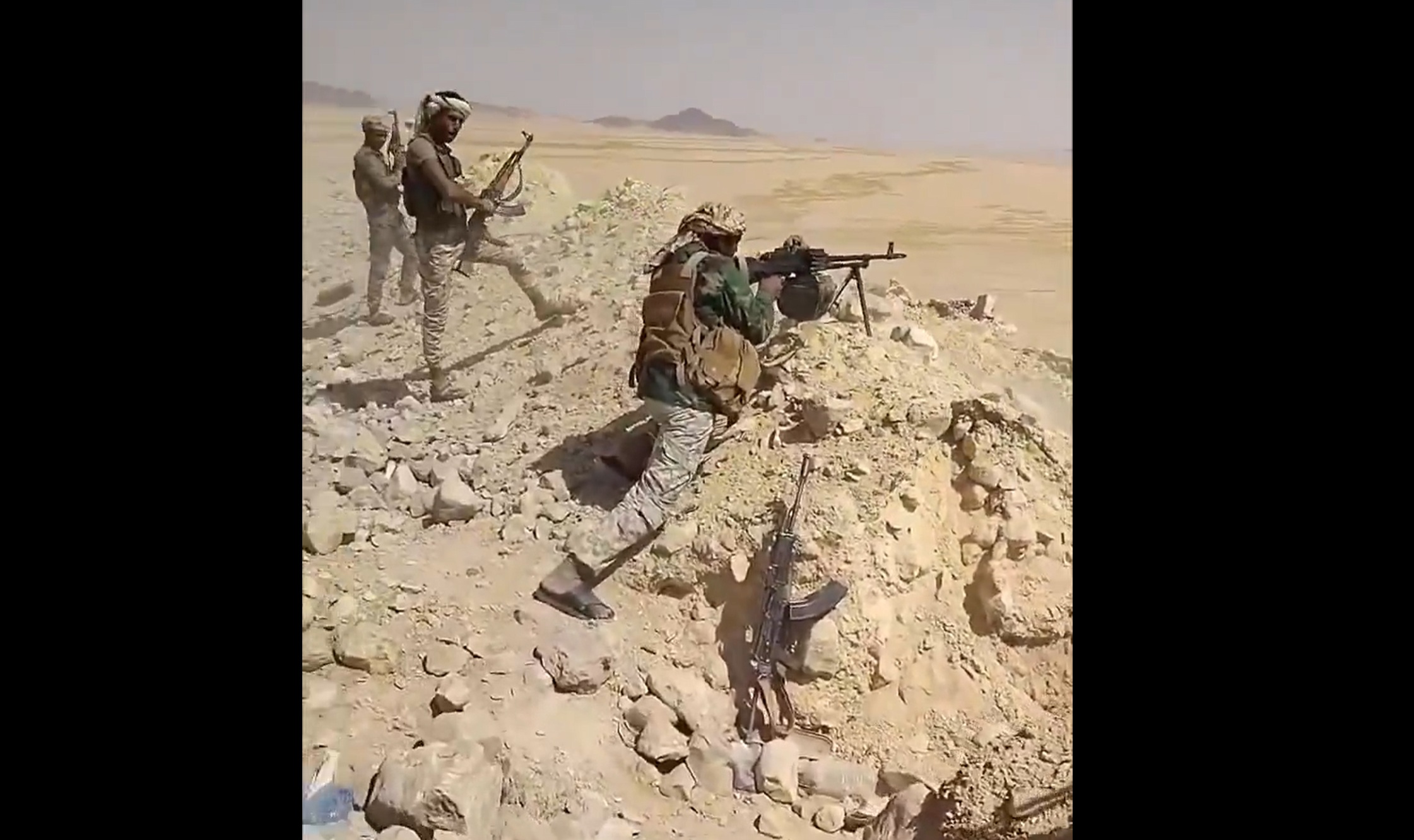
- A Houthi blockade of Bab-el-Mandeb is unlikely to be established on the supplied evidence, although the threat to Red Sea shipping has increased. The IRG reportedly recaptured Ras Menhali, which overlooks the strait, and probably reclaimed Perim Island; the Houthis reportedly captured Al Maqatirah. The reporting also says the IRG has not retaken Dhubab or Mocha or advanced towards Hodeidah. No supplied claim provides current Bab-el-Mandeb transit figures or confirms a blockade, so confidence in the operational picture is low. (Confidence: low · ASSESSED)
- I&W: UKMTO reports a confirmed attack on a commercial vessel transiting Bab-el-Mandeb, or verified transit counts show a sustained decline through the strait; either would confirm worsening maritime disruption. (0-14 days)
- I&W: Independent reporting verifies Houthi control of additional coastline between Ras Menhali and Mocha, or verifies IRG control of Perim Island and the adjacent approaches; either would materially change the assessment of who can threaten passage. (1-3 months)
- The supplied record does not substantiate the headline’s claim of four disrupted straits or Brent at $108 as a current price. Vortexa puts October Middle East crude, condensate and fuel exports at 17.1 million barrels per day, down from 18.9 million in September; Kpler gives a different, provisional measure of 16.1 million barrels per day for October flows through Hormuz, the Red Sea and Gulf of Oman, down from 17.09 million in September. Brent was reported at $103.14 intraday on 3 November and at $104.77 at the 2 November close. A trade report says Hormuz risk has raised insurance costs and that some diversions around Africa add up to a month to voyages. Separate claims of about 150 stranded commercial ships and widespread insurance cancellations come from a blog and remain weakly corroborated. (Confidence: medium · ASSESSED)
- I&W: New Vortexa or Kpler monthly data show further declines in October or November flows, confirming continued supply pressure; a sustained recovery towards September levels would break that assessment. (1-3 months)
- I&W: Published notices from named insurers or P&I clubs confirm Gulf war-risk cover cancellations, alongside vessel-level evidence of reduced tanker availability; absent such notices or evidence, treat those claims as unconfirmed. (0-14 days)
- A near-term US-Iran agreement that reopens Hormuz is unlikely. Tehran’s reported seven-point plan seeks an end to the US naval blockade and sanctions, among other conditions. Qatar said both sides were reviewing proposals and no agreement had been announced, despite a separate report that Washington had approved a draft. A senior Iranian official disputed that a breakthrough had occurred. The negotiating status is contested, but the mediator’s account and Tehran’s stated conditions do not indicate an agreed reopening. (Confidence: medium · ASSESSED)
- I&W: Qatar or both governments announce a signed agreement that addresses the naval blockade and explicitly authorises commercial Hormuz passage; that would break the judgement. (0-14 days)
- I&W: Iranian officials reiterate that all seven conditions must be met before Hormuz reopens, while Qatar reports no agreed text; this would confirm the judgement. (0-14 days)
- Further localised military or maritime incidents are likely while the US-Iran standoff continues, but the supplied reporting does not establish a return to large-scale fighting. US officials said the US military carried out limited strikes on Qeshm Island on 2 November after the IRGC fired on a US aircraft. Mojtaba Khamenei’s office reported directives for Iranian forces to respond without geographic limits and expand US and Israeli target lists if the war escalates. The tanker-destruction claims remain unverified, so they do not establish the scale of any maritime escalation. (Confidence: medium · ASSESSED)
- I&W: US officials confirm another strike on Iranian territory, or UKMTO confirms another attack on a commercial vessel in Hormuz; either would confirm continued incident risk. (0-14 days)
- I&W: Washington and Tehran announce a halt to military action and UKMTO records no new Hormuz attacks for seven consecutive days; that would weaken the judgement. (0-14 days)
Outlook & scenarios
Constrained passage and prolonged standoff (55%)
Hormuz remains restricted, with commercial traffic continuing below normal and insurers and operators pricing in elevated risk. Qatar keeps mediating, but the parties do not agree on the conditions for reopening. Bab-el-Mandeb remains a threat area rather than a confirmed blockade.
Negotiated easing (25%)
Qatari mediation produces an agreed text addressing the US naval blockade and Iran’s reopening conditions. Verified commercial transits through Hormuz recover, reducing pressure on shipping costs and export flows.
Renewed Hormuz escalation (15%)
Further US strikes or confirmed attacks on commercial vessels prompt Iran to tighten passage restrictions. Operators divert more voyages, and export flows fall further. This scenario does not require a complete closure.
Bab-el-Mandeb disruption wildcard (5%)
The Houthis gain additional coastline near the strait or attack commercial shipping, disrupting Bab-el-Mandeb passage while Hormuz remains constrained. This low-probability outcome would compound route and supply pressures.
Recommendations
- Maintain a daily passage picture for Hormuz and Bab-el-Mandeb using AIS and satellite imagery. Separate verified vessel movements from IRGC statements and flag periods when transponders are switched off.
- Seek vessel names, flags, crew status and independent damage confirmation for the IRGC tanker claims before using the reported count or destruction claim in assessments.
- Track UKMTO incident notices and verified control changes around Ras Menhali, Perim Island, Dhubab and Mocha. Do not describe Bab-el-Mandeb as blockaded without direct transit or incident evidence.
- Time-stamp every oil-price reference and state the benchmark. Do not present $108 as the current Brent price without a dated, independently sourced quote.
- Verify war-risk cancellations and tanker availability against dated notices from named insurers, P&I clubs and operators before treating blog reporting about stranded ships or cancelled cover as established.
Confidence & uncertainty
Overall confidence is high in the direction of the situation: independent major-media reporting, maritime incident reporting and separate Vortexa and Kpler estimates converge on sustained Hormuz disruption and reduced October flows. Confidence is lower in the precise scale of the tanker incidents, Bab-el-Mandeb transit conditions and claims of widespread insurance cancellations or stranded vessels. The flow estimates use different scopes, and the IRGC tanker account is directly challenged by BBC Verify.
Alternative analysis (red cell)
The supplied record supports a fluid and contested territorial situation around Bab-el-Mandeb, but it does not reliably establish either the absence or presence of a blockade. Claims, and e486ba5a-f1f2-4680-868b-a1a490540093 describe inconsistent control of key approaches, while no claim provides current transit data. A blockade judgment should therefore remain indeterminate rather than directionally assessed as unlikely.
Intelligence gaps
- [EEI 1.1 · PARTIAL] Changes in IRGC Navy, Houthi, and affiliated maritime unit deployments, patrol patterns, missile-drone activity, mine-laying indicators, or boarding attempts near the two straits. Recommended collection: maritime/ISR-AIS
- [EEI 1.3 · PARTIAL] Daily vessel-transit volume, AIS dark activity, anchorage buildup, and rerouting rates at Hormuz and Bab-el-Mandeb compared with pre-crisis levels. Recommended collection: maritime/AIS
- [EEI 1.4 · PARTIAL] Public or private warnings from the US Fifth Fleet, regional naval forces, port authorities, or shipping companies identifying specific routes or vessel categories as unsafe. Recommended collection: official-statements/shipping-notices
- [EEI 2.1 · PARTIAL] US, coalition, Iranian, Saudi, Omani, and other naval force posture changes, including escorts, convoy schedules, mine-countermeasure deployments, air patrols, and rules-of-engagement announcements. Recommended collection: maritime/defense-reporting
- [EEI 2.2 · UNCOVERED] Tanker and container-ship rerouting through the Cape of Good Hope or other alternatives, including added sailing days, fuel consumption, and available vessel capacity. Recommended collection: shipping-industry/AIS
- [EEI 2.3 · PARTIAL] War-risk insurance premium, deductible, coverage-exclusion, and voyage-approval changes for Hormuz, Bab-el-Mandeb, Red Sea, Gulf of Aden, and adjacent waters. Recommended collection: insurance-market
- [EEI 2.4 · UNCOVERED] Operational status and export-loading changes at Saudi, UAE, Omani, Iranian, Djiboutian, and Red Sea ports, terminals, pipelines, and storage facilities. Recommended collection: port-operator/energy-infrastructure
- [EEI 3.1 · PARTIAL] Brent and Dubai crude price movements, futures-curve shifts, volatility, and the spread between regional and global crude benchmarks. Recommended collection: commodity-markets
- [EEI 3.3 · UNCOVERED] Fertilizer shipment delays, canceled or redirected cargoes, regional price increases for urea and ammonia, and reported inventory levels in import-dependent markets. Recommended collection: commodity-trade/port-data
- [EEI 3.4 · UNCOVERED] Container freight rates, vessel charter rates, bunker costs, port congestion, and manufacturing or retail supply disruptions attributable to the chokepoint crisis. Recommended collection: shipping-and-logistics-markets
- [EEI 4.2 · PARTIAL] Diplomatic commitments, deconfliction arrangements, prisoner or vessel releases, and publicly announced conditions for reopening commercial transit. Recommended collection: diplomatic-reporting
- [EEI 4.3 · PARTIAL] Shipping-company decisions to resume, suspend, or expand transits and corresponding changes in insurer voyage approvals and war-risk premiums. Recommended collection: shipping-and-insurance-industry
- [EEI 4.4 · PARTIAL] New incidents, military alerts, vessel diversions, or port restrictions at other critical chokepoints indicating geographic spread beyond Hormuz and Bab-el-Mandeb. Recommended collection: maritime/AIS-official-notices
Red cell review: PARTIAL DISSENT
TLP:CLEAR