TLP:CLEAR · Disclosure is not limited.
Middle East Conflict: Direct Exchanges and Maritime Spillover Intensify
Time window: Last 1 day · Audience: General analyst · Type: Situation report · DTG: 2026-09-12 21:06Z · Overall confidence: HIGH
BLUF
Likely US-Israel-Iran military exchanges will continue over the next 14 days, with reported Iranian attacks or attempted attacks reaching the UAE and Qatar. Very likely shipping through the Strait of Hormuz will remain severely restricted rather than fully closed, while Houthi gains at Mayyun, also known as Perim, threaten the Bab el-Mandeb route. BRICS diplomacy and Iran-UAE contact offer a temporary restraint channel, but are unlikely to halt hostilities on their own.
Executive summary
The reporting indicates an active US-Israel-Iran air and maritime conflict, with Iran responding with missiles and drones and the US reportedly sinking five Iranian oil tankers. Iran and the Islamic Revolutionary Guard Corps also claim attacks involving Israel, the UAE and other Gulf states, while the UAE reports intercepting six missiles and 131 drones since the war began, with one ballistic missile and six drones reaching its territory. Qatar has reported missile attacks near Doha and evacuated residents near the US Embassy. The Houthis have reached or reportedly taken Mayyun, or Perim, in the Bab el-Mandeb Strait, while the East-West pipeline in Saudi Arabia has been temporarily shut after attacks. Commercial shipping remains hazardous, with record VLCC freight rates. BRICS members secured a joint declaration calling for restraint, and Iran-UAE leaders held their highest-level talks since the conflict began, but unresolved attribution disputes and continued military threats limit the immediate diplomatic effect.
Change from previous assessment
Since the 11 September brief, the assessment has added reported joint US-Israel air strikes against Iran, Iranian attacks or attempted attacks involving the UAE and Qatar, the unresolved Nakhchivan attribution dispute, and the diplomatic opening between Iran and the UAE at the BRICS summit. The Houthi assessment is unchanged in direction but remains contested because one account now claims completed control of Mayyun while other reporting only establishes that the Houthis reached Perim. The Hormuz assessment remains that transit is severely restricted rather than demonstrably closed. The pipeline assessment is updated with additional reporting on pumping-station damage, the temporary shutdown and competing accounts of attack origin.
Key judgments
- Likely US-Israel-Iran military exchanges will continue over the next 0-14 days. Reporting describes ongoing joint US-Israel air strikes against Iran, Iranian missile and drone responses, the US Navy sinking five Iranian oil tankers, and Iran claiming attacks on 10 ships near the Strait of Hormuz. An Iranian Revolutionary Guard commander announced readiness for further offensive operations, while Israel Katz threatened strikes on Iranian energy facilities and Donald Trump warned of a possible strong strike over activity near Natanz. The claim that the US-Israel operation killed Ayatollah Ali Khamenei and destroyed Iran's missile arsenal and nuclear programme remains insufficiently corroborated and conflicts with reporting that describes the campaign as ongoing. (Confidence: medium · ASSESSED)
- I&W: Confirmation of additional US-Israel strikes on Iranian military or energy facilities, followed by Iranian missile or drone launches against Israel or US-linked maritime assets. (0-14 days)
- I&W: A verified halt in US-Israel air operations and Iranian maritime or missile activity for at least seven consecutive days would break the assessment of continuing exchanges. (0-14 days)
- Likely Iranian attacks or attempted attacks against Gulf states will continue over the next 0-14 days, although the effectiveness of those attacks remains contested. The UAE Ministry of Defence reported six missiles and 131 drones intercepted since the war began, with one ballistic missile and six drones reaching UAE territory. Iran's Islamic Revolutionary Guard Corps claimed attacks on the UAE, while Qatar reported missile attacks over Doha and evacuated residents near the US Embassy. The deployment of four additional British Typhoon fighter jets to Qatar indicates that defensive postures are tightening. (Confidence: medium · ASSESSED)
- I&W: The UAE or Qatar reports another missile or drone impact, interception sequence, or protective evacuation linked to Iranian attacks. (0-14 days)
- I&W: The UAE and Qatar report no further attacks, lift protective measures near diplomatic sites, and record no additional impacts for 14 days. (0-14 days)
- There is a roughly even chance that the drone attacks on Nakhchivan city and its airport were launched from Iranian territory, and responsibility should remain unassigned. Azerbaijan attributes the attacks to Iranian territory and reports infrastructure damage and two civilian injuries, while Iran's general staff denies launching a drone towards Azerbaijan. This is a direct government-to-government attribution dispute with no independent corroboration in the reporting provided. (Confidence: low · ASSESSED)
- I&W: Independent imagery, flight-path analysis, or recovered equipment links the Nakhchivan attacks to an Iranian launch site. (0-14 days)
- I&W: Independent evidence identifies another launch location or a non-Iranian perpetrator. (0-14 days)
- Very likely commercial transit through the Strait of Hormuz will remain severely restricted over the next 0-14 days, while a complete closure is unlikely. Only a few shipowners are reportedly willing to transit the strait, Iran has reported attacks on 10 ships near it, and VLCC rates have reached unprecedented levels. One account describes the strait as blocked, but that claim conflicts with reports of continued ship activity and risk-priced transit. The evidence supports a hazardous, operational waterway rather than a confirmed physical closure. (Confidence: medium · ASSESSED)
- I&W: A sustained fall in vessel transits, additional ship attacks, or formal navigation restrictions reduce traffic beyond the already reported limited movement. (0-14 days)
- I&W: Regular commercial transits resume and VLCC rates fall materially from the reported 450 Worldscale level. (0-14 days)
- Very likely Houthi forces will maintain a presence on Mayyun, also known as Perim, and continue pressure on shipping through the Bab el-Mandeb Strait over the next 0-14 days. Four Yemeni government sources reported that the Houthis reached Perim, another account said they completed the takeover, and celebrations in Sanaa claimed control of the island and the strait. The extent of control remains contested, but reporting of restrictions on Bab el-Mandeb transit and Houthi intentions to attack Saudi vessels supports continued maritime pressure. (Confidence: medium · ASSESSED)
- I&W: Imagery or reporting confirms Houthi personnel, weapons or maritime control measures on Mayyun and records additional restrictions or attacks in the Bab el-Mandeb. (0-14 days)
- I&W: Yemeni government forces retake Mayyun or establish an uncontested position there, while commercial transit restrictions are lifted. (0-14 days)
- Very likely the East-West pipeline and Saudi oil distribution network will face continued disruption over the next 0-14 days. Saudi Arabia temporarily suspended the pipeline after attacks in the Riyadh and Medina areas, several people were injured, at least two pumping stations were reportedly damaged, and the route normally carries about 5 million barrels per day to Yanbu. The attack is corroborated, but the perpetrator, weapon type and exact timing remain unresolved: reporting variously describes drones launched from Iraq, a shell strike, and an unconfirmed connection to Iraqi groups linked to Iran. (Confidence: medium · ASSESSED)
- I&W: Saudi Arabia reports that the pipeline remains shut, identifies further damage at pumping stations, or records another attack on the Riyadh-Yanbu route. (0-14 days)
- I&W: The Saudi Energy Ministry confirms a full restart, repairs the reported pumping stations, and records no additional attacks on the route. (0-14 days)
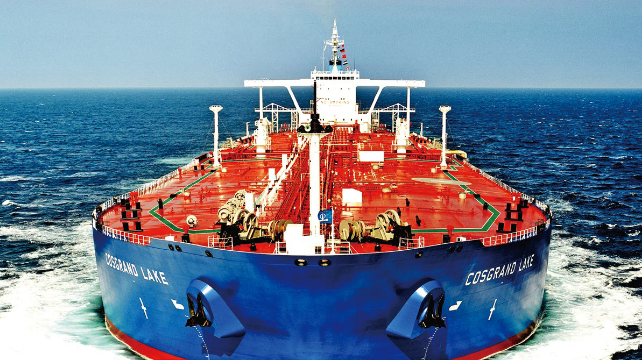
- Very likely elevated VLCC freight rates will persist over the next 1-3 months. The Gulf of Oman to China rate reached about 450 Worldscale, or roughly USD 11.50 per barrel, while VLCC earnings on the Arabian Gulf to Far East route exceeded USD 800,000 per day in September to date. Record rates also extend to the West Africa to Asia route, indicating that shipowners are pricing wider regional risk rather than only one disrupted passage. (Confidence: high · ASSESSED)
- I&W: Baltic Exchange or Poten & Partners data keep Gulf of Oman to China rates near or above 450 Worldscale, or retain VLCC earnings above USD 800,000 per day. (1-3 months)
- I&W: Repeated safe transits through Hormuz and Bab el-Mandeb coincide with a sustained fall in Gulf and alternative-route VLCC rates. (1-3 months)
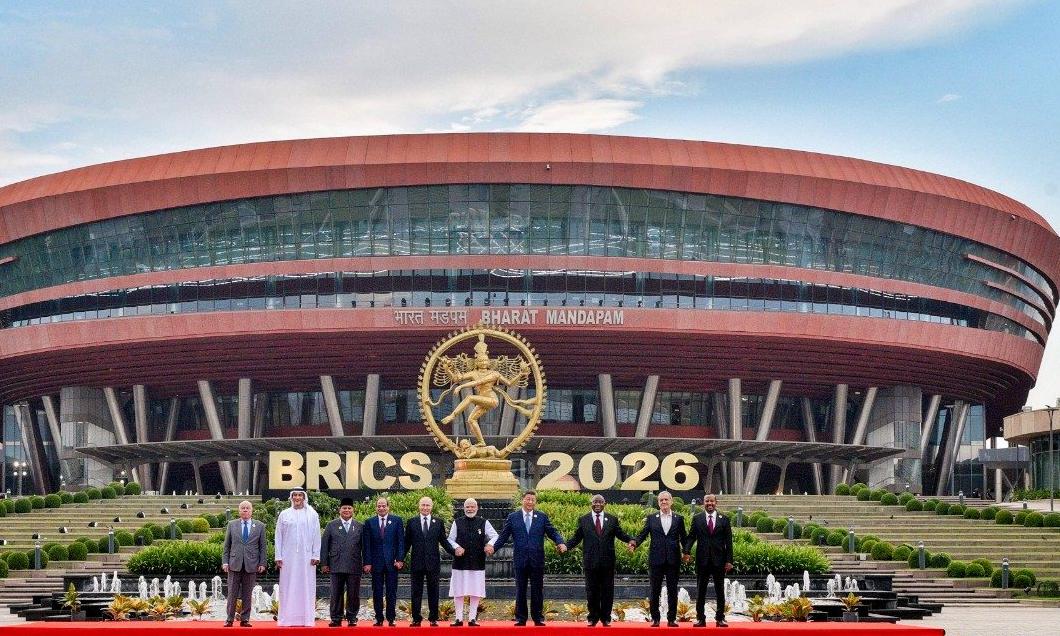
- Likely BRICS diplomacy and Iran-UAE contact will produce temporary pressure for restraint over the next 0-14 days, but unlikely to halt military exchanges. BRICS members including Iran, Saudi Arabia and the UAE agreed a declaration calling for maximum restraint, freedom of navigation and dialogue, while Masoud Pezeshkian met Abu Dhabi Crown Prince Khaled bin Mohamed Al Nahyan. The consensus required concessions over whether to name the US, Israel or Iran, and Bahrain refused to meet Pezeshkian, showing that the diplomatic channel remains divided. (Confidence: medium · ASSESSED)
- I&W: Iran and the UAE hold a follow-up meeting that produces specific restraint measures, or BRICS members announce an implementation mechanism for navigation and civilian protection. (0-14 days)
- I&W: Iran, the UAE or BRICS members publicly abandon restraint language while new missile, drone or maritime attacks continue after the New Delhi declaration. (0-14 days)
Outlook & scenarios
Sustained confrontation with restricted maritime access (60%)
US-Israel strikes and Iranian missile, drone and maritime attacks continue through the next 14 days. The UAE and Qatar maintain heightened air-defence measures, Hormuz remains passable only for a limited number of vessels, and Houthi forces retain a position on Mayyun or Perim. Oil shipping rates remain near record levels.
Temporary restraint without a settlement (30%)
BRICS pressure and the Pezeshkian-Khaled meeting produce a short pause or reduction in attacks. Iran, the UAE and Saudi Arabia preserve diplomatic contact, but the absence of agreed attribution and the continued US-Israel military posture prevent a durable settlement. Hormuz and Bab el-Mandeb remain restricted during the pause.
Wider regional spillover (35%)
Iranian attacks on Gulf states intensify, the East-West pipeline faces additional disruption, and Houthi pressure extends to Saudi-linked vessels and Bab el-Mandeb traffic. The unresolved Nakhchivan attribution dispute adds another direct Iran-neighbour confrontation, while Iraq faces increased pressure to prevent attacks from its territory.
High-impact escalation against Iranian strategic facilities (15%)
The US or Israel conducts a new strike against an Iranian energy or nuclear facility after the warnings issued by Donald Trump and Israel Katz. Iran responds against Israel, US-linked maritime assets and Gulf states, producing a sharp deterioration in Hormuz and Bab el-Mandeb access and a further surge in oil freight costs.
Recommendations
- Prioritise independent verification of the US-Israel strike campaign, the reported death of Ayatollah Ali Khamenei, and claims concerning damage to Iran's missile and nuclear infrastructure before using those claims in further assessments.
- Maintain separate maritime watchlists for the Strait of Hormuz and Bab el-Mandeb. Track vessel transits, AIS gaps, reported attacks, route diversions and VLCC freight rates at least daily.
- Monitor UAE, Qatar and Bahrain official reporting for additional missile or drone impacts, interceptions, evacuations and changes to foreign military deployments, with particular attention to areas near the US Embassy in Doha.
- Obtain imagery and local reporting on Mayyun, or Perim, to distinguish Houthi presence from uncontested control. Treat claims of completed takeover as unconfirmed until independent evidence establishes the status of the island.
- Track the East-West pipeline's repair and restart status, damage at the Riyadh and Medina pumping stations, and the Iraqi investigation into launches from Iraqi territory. Keep attribution separate from the confirmed fact of disruption.
- Use the BRICS declaration and the Pezeshkian-Khaled meeting as indicators of temporary restraint, not as evidence of de-escalation. Assess any follow-up against actual changes in missile launches, maritime attacks and Gulf defensive measures.
- Review the Anthropic reporting on Iran-linked AI-assisted collection of US naval data and shipboard vulnerabilities. Prioritise exposure of public personnel rosters, vessel identifiers, satellite-query tools and maritime VSAT information in defensive collection.
Confidence & uncertainty
Overall confidence is high because the core picture is supported by multiple official government statements, wire-service reporting, major media, trade data and NASA observations. The continuation of military exchanges, the East-West pipeline shutdown, restricted maritime access and record VLCC rates have stronger corroboration than claims about the campaign's ultimate effect on Iran, Houthi control of Mayyun, responsibility for the Nakhchivan attacks, or the perpetrators and weapon type involved in the Saudi pipeline attack. These unresolved contradictions lower confidence in several individual judgments without materially changing the broader assessment.
Intelligence gaps
- [EEI 1.1 · UNCOVERED] Unusual long-range missile/rocket transporter-launcher (TEL) movements, storage activation, or assembly activity at known IRGC missile sites or forward staging areas. Recommended collection: satellite/imagery
- [EEI 1.2 · PARTIAL] Orders, threat-alert messages, or changes in posture from IRGC, Quds Force, or senior Iranian military leadership indicating attack timelines or rules of engagement changes. Recommended collection: signals/ELINT and HUMINT
- [EEI 1.3 · UNCOVERED] Large-scale transfers, deliveries, or convoy movements of armed UAVs/drones, guided munitions, or spare parts from Iran into Lebanon (Hezbollah), Iraq, Syria, or Gaza. Recommended collection: air/aviation track and HUMINT
- [EEI 1.4 · UNCOVERED] Sustained changes in Israeli air-defense usage (SAM launches, radar activations), wide-area alerts, or NOTAMs indicating elevated imminent strike response. Recommended collection: air/aviation/NOTAMs and signals
- [EEI 2.1 · UNCOVERED] Concentration, repositioning, or sortie patterns of Iranian naval/IRGC patrol boats and fast-attack craft near shipping chokepoints or commercial lanes. Recommended collection: maritime/AIS and satellite/imagery
- [EEI 2.3 · UNCOVERED] Insurance market indicators: sudden spikes in war-risk or hull insurance premiums for routes through the Red Sea, Suez corridor, or Persian Gulf, and major carriers announcing route changes. Recommended collection: financial/market and commercial shipping notices
- [EEI 2.4 · PARTIAL] Port closures, naval escorts requested by commercial operators, or formal rerouting advisories issued by major shippers (e.g., Maersk, Hapag-Lloyd) for regional transits. Recommended collection: commercial/OSINT
- [EEI 3.1 · PARTIAL] Deployment of foreign military assets to the region (carrier strike groups, amphibious ships, combat aircraft deployments, or additional bases activated) from the US, UK, France, Russia, or GCC states. Recommended collection: maritime/AIS and air/aviation and satellite/imagery
- [EEI 3.3 · UNCOVERED] Confirmed arms transfers, expedited weapons shipments, or transfer authorizations to Israel, Iran, or their proxies (aircraft parts, munitions, air defenses). Recommended collection: customs/INTEL and HUMINT
- [EEI 3.4 · UNCOVERED] Issuance of travel warnings, embassy evacuations or reductions, and closure of diplomatic missions by major capitals indicating escalation risk or shifted threat assessments. Recommended collection: OSINT/diplomatic
TLP:CLEAR