TLP:CLEAR · Disclosure is not limited.
Middle East Conflict: Hormuz Disruption and Regional Spillover
Time window: Last 1 day · Audience: General analyst · Type: Situation report · DTG: 2026-09-07 18:56Z · Overall confidence: HIGH
BLUF
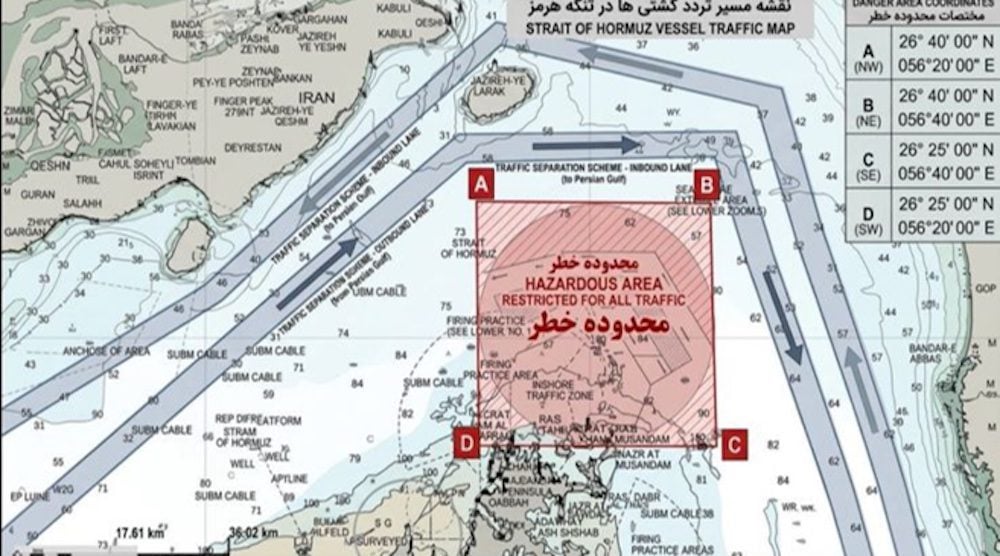
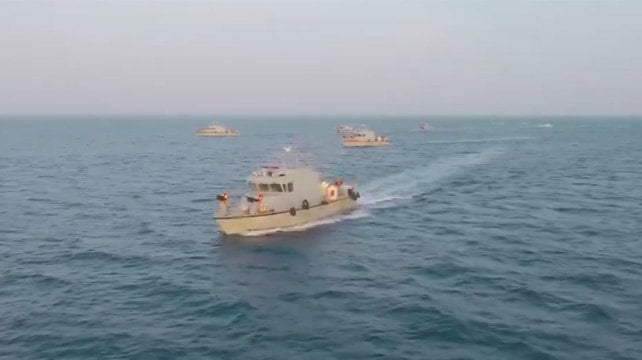
US-Iran fighting has moved from a month-long lull into sustained maritime confrontation. Kpler records about 10 commodity vessels a day through the Strait of Hormuz over the past 10 days, against roughly 125 before the conflict, while Iran prepares a restricted zone and US Central Command reports redirecting 92 commercial vessels. Israel-Hezbollah violence in southern Lebanon, Houthi activity near Bab al-Mandab and Israel-Turkey friction in Syria widen the risk of regional spillover.
Executive summary
Reported activity on 7 September shows pressure across several connected fronts. US forces and the IRGC continue to exchange attacks, although attribution of the 5 September tanker strikes remains disputed. Shipping through the Strait of Hormuz is at its lowest reported level since May, and Iran is preparing a restricted zone and proposed shipping corridor whose boundaries and operating status remain unclear. Israeli strikes in southern Lebanon have caused at least 27 deaths over three days, while Hezbollah rhetoric and military activity challenge the June ceasefire. Houthi operations near Bab al-Mandab and the disputed Israeli strike on Abu al-Duhur in Syria add further escalation pathways. Diplomatic activity involving Oman, Qatar and Iran is expanding, but Washington and Tehran continue to dispute implementation of their June memorandum and nuclear verification remains unresolved.
Change from previous assessment
Since the 5 September brief, the assessment of continuing US-Iran activity and worsening Israel-Hezbollah violence is unchanged in direction. New reporting provides stronger quantitative evidence of Hormuz disruption, including an average of 10 commodity vessels per day versus roughly 125 before the conflict, 27 projectile incidents since 6 July and 92 US Central Command vessel redirections, although confidence in disruption lasting beyond 14 days remains medium. Iran's proposed restricted zone and safe route add detail but also introduce new geographic and policy-status contradictions. A new judgment has been added on wider spillover involving the Houthis near Bab al-Mandab and Israel-Turkey tensions around Abu al-Duhur. The nuclear verification judgment is retained but confidence is lowered to low because current reporting is concentrated in one account. No prior judgment is retired.
Key judgments
- The US-Iran military exchange is very likely to continue over the next 0-14 days, with further pressure on maritime targets and US-linked positions. The 5 September tanker strikes have competing US and IRGC attributions, but reporting separately places renewed US-Iran fighting, IRGC attacks on US warships and an IRGC claim of a drone strike on a US surveillance aerostat near Erbil airport. Confidence is medium because the tanker attribution is directly contested and the anti-ship missile claim remains unconfirmed by US or independent sources. (Confidence: medium · ASSESSED)
- I&W: Confirmation: US Central Command or the IRGC reports another strike on a warship, tanker or US-linked facility in the Gulf, Strait of Hormuz or northern Iraq. (0-14 days)
- I&W: Break: Washington and Tehran announce an operational ceasefire followed by 14 days without a reported US or IRGC attack on maritime or military targets. (0-14 days)
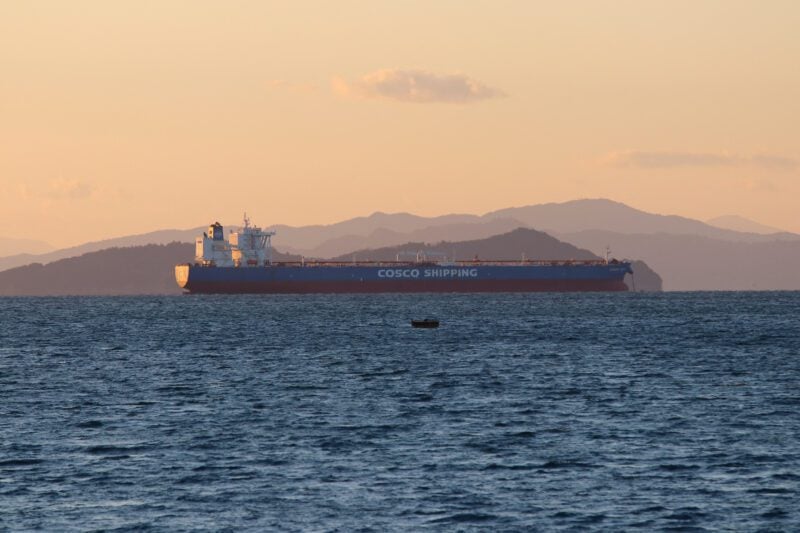
- Commercial shipping through the Strait of Hormuz is very likely to remain far below pre-conflict levels over the next 0-14 days and likely to remain disrupted over the next 1-3 months. Kpler reports an average of 10 commodity ships per day over the past 10 days, compared with roughly 125 before the conflict, while no very large crude carrier has exited since 2 September, UKMTO records 27 projectile incidents since 6 July, and LSEG records a tanker being turned back. The 9 million barrels per day and two-thirds-of-pre-conflict-flow claims indicate that vessel counts do not measure all oil movement, so the severity of volume disruption remains less certain than the decline in traffic. (Confidence: medium · ASSESSED)
- I&W: Confirmation: Kpler continues to record roughly 10 or fewer commodity vessels per day through Hormuz, with no VLCC exits over a further seven-day period. (0-14 days)
- I&W: Break: Kpler records a return towards roughly 125 commercial transits per day for seven consecutive days and UKMTO reports no new projectile damage to vessels. (1-3 months)
- Israel-Hezbollah violence in southern Lebanon is likely to intensify over the next 0-14 days. The Lebanese health ministry reports at least 27 people killed in Israeli attacks across southern Lebanon over three days, while the Israeli military reports strikes on Hezbollah infrastructure and weapons transfers after a drone attack on Israeli troops. Hezbollah MP Ali Ammar has reaffirmed armed resistance, and Israel's claimed operational control of the Ali al-Taher ridge conflicts with reporting that the operation to seize it remains under way. Confidence is medium because casualty figures for Kfar Roummane differ between 11 and 12 deaths and the ridge's control status is unresolved. (Confidence: medium · ASSESSED)
- I&W: Confirmation: Hezbollah claims or conducts another drone, rocket or anti-armour attack from southern Lebanon, followed by Israeli strikes on Hezbollah sites or populated areas. (0-14 days)
- I&W: Break: Israel, Lebanon and Hezbollah implement a verified pause in attacks around Kfar Roummane, Arab Salim, Nabatieh al-Fawqa and the Ali al-Taher ridge for 14 days. (0-14 days)
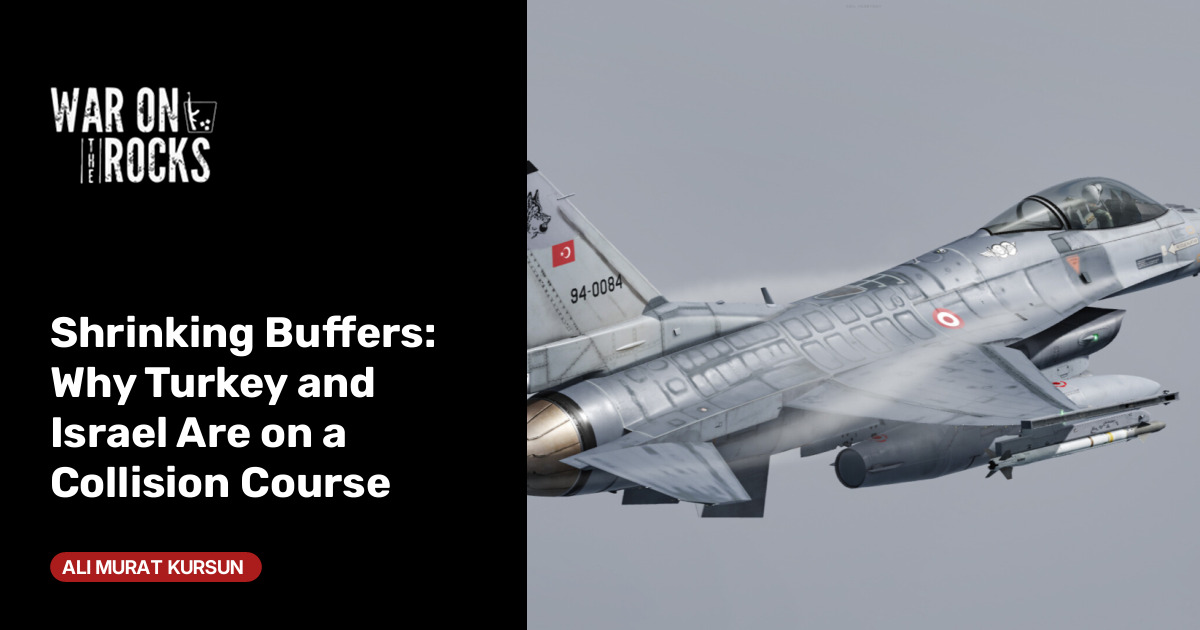
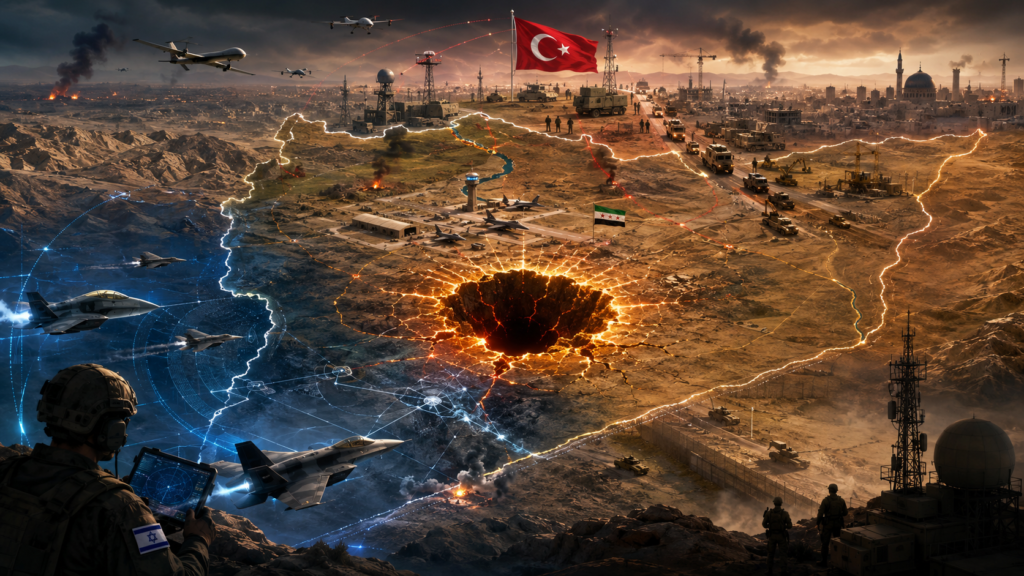
- Regional spillover beyond the US-Iran and Israel-Hezbollah fronts is likely over the next 0-14 days. The Houthis are continuing an offensive near the Bab al-Mandab Strait and have declared a blockade of Saudi shipping interests, while Iranian proxies have attacked Saudi oil facilities and the IRGC claims to have destroyed a US surveillance aerostat near Erbil airport. Israel-Turkey tensions in Syria add a separate escalation pathway after the Abu al-Duhur strike, with Israel describing a prospective Turkish radar and air-defence deployment as a threat and Ankara denying an offensive build-up. Confidence is medium because the Turkish presence at Abu al-Duhur is disputed and much of the Israel-Turkey assessment rests on think-tank and local-media reporting. (Confidence: medium · ASSESSED)
- I&W: Confirmation: Houthi forces attack Saudi-linked shipping near Bab al-Mandab, or Iranian-linked forces conduct another attack on Saudi energy infrastructure or a US position in Iraq. (0-14 days)
- I&W: Break: Ankara and Jerusalem establish a publicly acknowledged notification or deconfliction arrangement covering Turkish deployments and Israeli operations in Syrian airspace. (0-14 days)
- Regional mediation is likely to expand over the next 0-14 days, but a comprehensive US-Iran settlement is unlikely in that period. Oman and Iran have held discussions on restoring normal Strait of Hormuz operations, Iran has described a temporary safe route for possible registration with the IMO, and Qatar continues to mediate between Washington and Tehran. These efforts conflict with the US position that naval escorts will continue, Iran's conditions for keeping Hormuz open, continuing accusations over the June memorandum and Washington's reported move towards a UN Security Council referral over nuclear non-compliance. Confidence is medium because the proposed corridor's formal status and geographic scope remain inconsistent across Iranian statements. (Confidence: medium · ASSESSED)
- I&W: Confirmation: Iran publishes the restricted-zone maps, registers the safe route with the IMO and resumes formal talks with Qatar or Oman while US-Iran attacks continue. (0-14 days)
- I&W: Break: Washington and Tehran announce a mutually accepted navigation arrangement, suspend attacks and begin implementing the June memorandum. (0-14 days)
- The nuclear verification gap is very likely to persist over the next 1-3 months. Nuclear inspectors remain unable to verify the location of Iran's near-weapons-grade uranium stockpile, and Washington has proposed referring Iran to the UN Security Council. Confidence is low because the current reporting on the stockpile location and verification gap is concentrated in one major-media account, with no corroborating inspection detail in the current reporting set. (Confidence: low · ASSESSED)
- I&W: Confirmation: nuclear inspectors continue to report that they cannot verify the stockpile's location or conduct verification at the relevant Iranian facilities. (1-3 months)
- I&W: Break: inspectors publicly confirm access to the relevant facilities and reconcile Iran's declared stockpile with physical records. (1-3 months)
Outlook & scenarios
Managed maritime confrontation (55%)
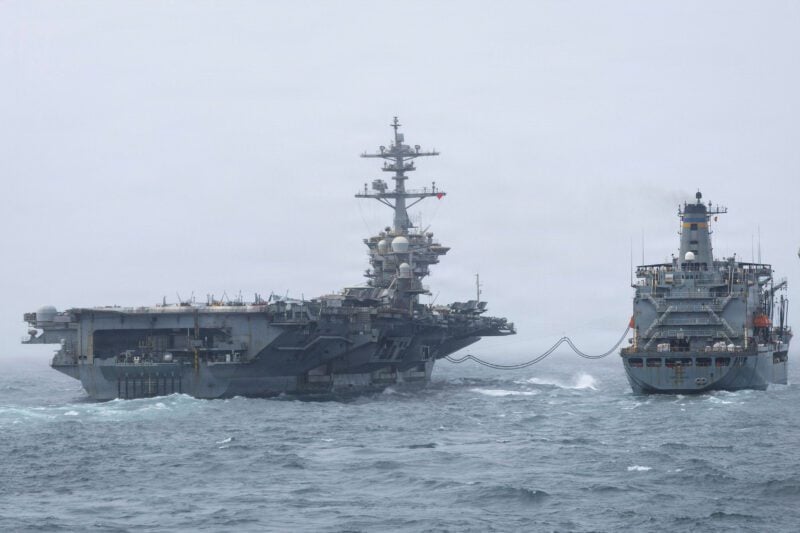
US Navy escorts and US Central Command vessel redirections continue, while Iran uses the restricted-zone threat, sanctions warnings and selective pressure on US-linked shipping. Hormuz traffic remains depressed, but the exchange stays concentrated on shipping and military targets rather than expanding into a sustained attack on Gulf energy infrastructure.
Wider regional expansion (25%)
IRGC pressure on US positions, Houthi operations near Bab al-Mandab, Israeli-Hezbollah exchanges in southern Lebanon and Israeli-Turkish friction in Syria reinforce one another. The result is a broader campaign against shipping and military positions across the Gulf, Iraq, Lebanon, Yemen and Syria.
Partial maritime deconfliction (30%)
Oman and Qatar expand mediation, Iran publishes a safe-route arrangement and the IMO receives a registration request. The arrangement permits limited commercial movement through Hormuz while US-Iran strikes, sanctions disputes and the nuclear verification dispute continue.
Low-probability, high-impact Syrian confrontation (10%)
A further Israeli strike on Turkish-associated military infrastructure in Syria triggers a direct Turkey-Israel confrontation. The confrontation draws Turkish, Israeli and US diplomatic and military resources away from the Iran crisis and creates a separate crisis around Syrian airspace.
Recommendations
- Maintain separate attribution tracks for the 5 September tanker strikes. Do not merge the US Central Command and IRGC narratives until vessel identities, locations and damage evidence establish whether they describe the same incidents.
- Prioritise daily collection on Iran's restricted-zone maps, the proposed corridor in Iranian and Omani waters, any IMO registration and the status of US Navy escorts. Record the zone's boundaries and management authority separately from Iranian political statements.
- Use Kpler, UKMTO and LSEG reporting as the core maritime indicators. Track daily commodity-vessel transits, VLCC exits, projectile incidents, vessel turnarounds and US Central Command redirections as separate measures.
- Track the Lebanese ceasefire through named locations and actors: Kfar Roummane, Arab Salim, Nabatieh al-Fawqa, the Ali al-Taher ridge, Hezbollah statements and Israeli strike announcements. Keep casualty counts provisional where Lebanese health ministry and media figures diverge.
- Prioritise collection on Houthi activity near Bab al-Mandab, attacks on Saudi energy facilities, IRGC activity near Erbil airport and any Turkish radar or air-defence deployment at Abu al-Duhur. Treat claims about Turkish personnel at the base as disputed.
- Flag the nuclear verification gap as a separate escalation driver. Track inspection access, statements on the uranium stockpile and any movement towards a UN Security Council referral without treating referral plans as evidence of a settlement failure or a nuclear diversion.
- Prepare a daily warning note for any combination of a new US or IRGC strike, a further fall in Hormuz traffic, an attack on Saudi energy infrastructure and a breakdown in Oman-Qatar mediation.
Confidence & uncertainty
Overall confidence is high for the core situation because the main developments are corroborated by multiple high-reliability sources, including Reuters reporting based on Kpler and LSEG data, UKMTO incident reporting, BBC reporting on southern Lebanon, CNN reporting on the US-Iran confrontation and official US statements. The principal uncertainties concern attribution of the 5 September tanker strikes, the boundaries and legal status of Iran's proposed restricted zone, conflicting casualty counts in Kfar Roummane, the disputed Turkish presence at Abu al-Duhur and the reliability of the reported nuclear verification gap. These uncertainties lower confidence in several forward-looking judgments but do not alter the assessment of active conflict and severe maritime disruption.
Intelligence gaps
- [EEI 1.1 · UNCOVERED] Observed repositioning, sustained increases, or new forward basing of Iranian conventional or IRGC forces (armored units, missile batteries, aircraft, naval vessels) toward borders or regional launch points. Recommended collection: IMINT/satellite
- [EEI 1.4 · PARTIAL] Interdicted or observed shipments (air, sea, land manifests, seizures, satellite imagery of transfers) of advanced weapons or missile components from Iran toward proxy groups or forward staging points. Recommended collection: maritime/AIS
- [EEI 2.1 · PARTIAL] Satellite or on-the-ground imagery showing fires, damage, or operational shutdown at major oil export facilities, refineries, storage terminals, or key pipeline infrastructure in the Gulf and Red Sea. Recommended collection: IMINT/satellite
- [EEI 2.4 · PARTIAL] Rapid increases in war-risk insurance premiums for Middle East routes, shipping company advisories to avoid region, or major charter cancellations tied to the conflict. Recommended collection: financial/open-source
- [EEI 3.1 · UNCOVERED] Movement/arrival of major foreign military assets into the region: US carrier strike groups, amphibious ready groups, strategic bomber flights, Russian/Chinese naval taskings, or allied expeditionary units (visible in AIS, NOTAMs, satellite imagery, official releases). Recommended collection: IMINT/satellite
- [EEI 3.2 · PARTIAL] Official expedited arms transfers, basing/overflight agreements, or declarations of operational support (formal government announcements, defense ministry releases, logistics flight manifests). Recommended collection: open-source/diplomatic
- [EEI 3.3 · UNCOVERED] Embassy evacuations, large-scale personnel movements, issuance of government travel bans/advisories, or multinational security alerts affecting foreign nationals and diplomatic posture in the region. Recommended collection: diplomatic/open-source
TLP:CLEAR