TLP:CLEAR · Disclosure is not limited.
Middle East Conflict: Hormuz Disruption Deepens as Houthi Pressure Spreads
Time window: Last 1 day · Audience: General analyst · Type: Situation report · DTG: 2026-09-14 20:38Z · Overall confidence: HIGH
BLUF
Very likely, the conflict will remain active and disruptive across the Strait of Hormuz, southern Saudi Arabia, Yemen and southern Lebanon during the next 0-14 days. Hormuz traffic is severely constrained, Houthi attacks are striking Saudi targets, and the postponement of the Oman meeting has reduced the immediate prospect of a negotiated maritime arrangement.
Executive summary
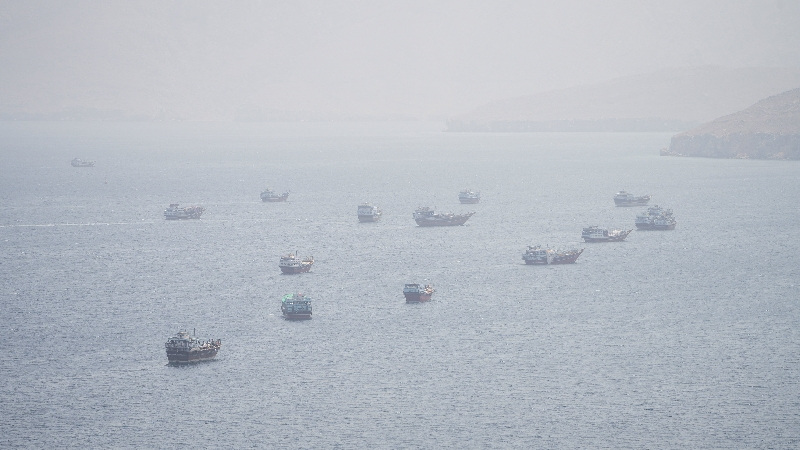
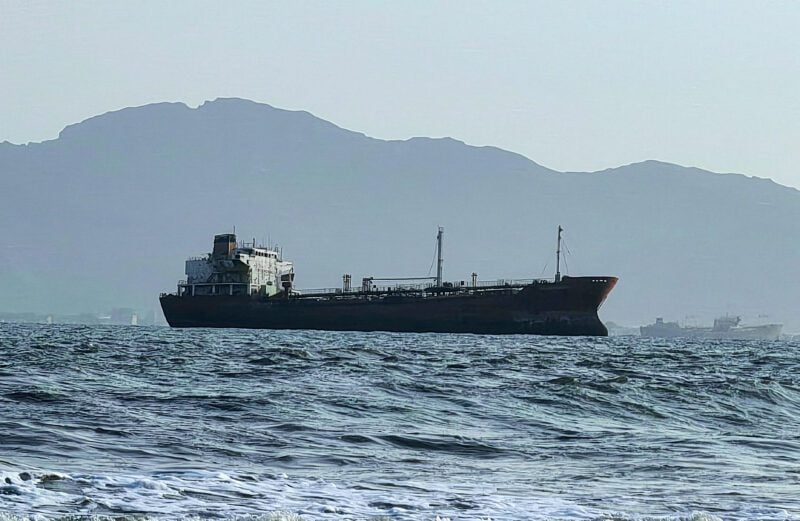
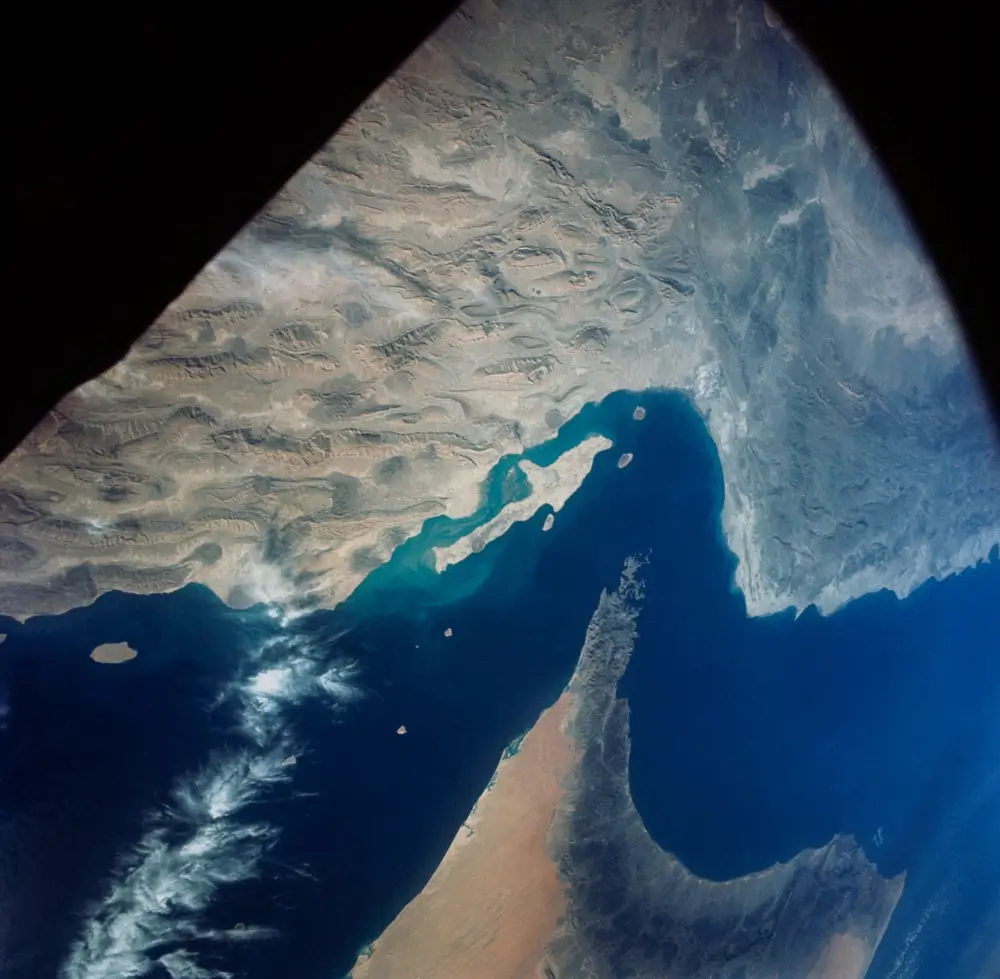
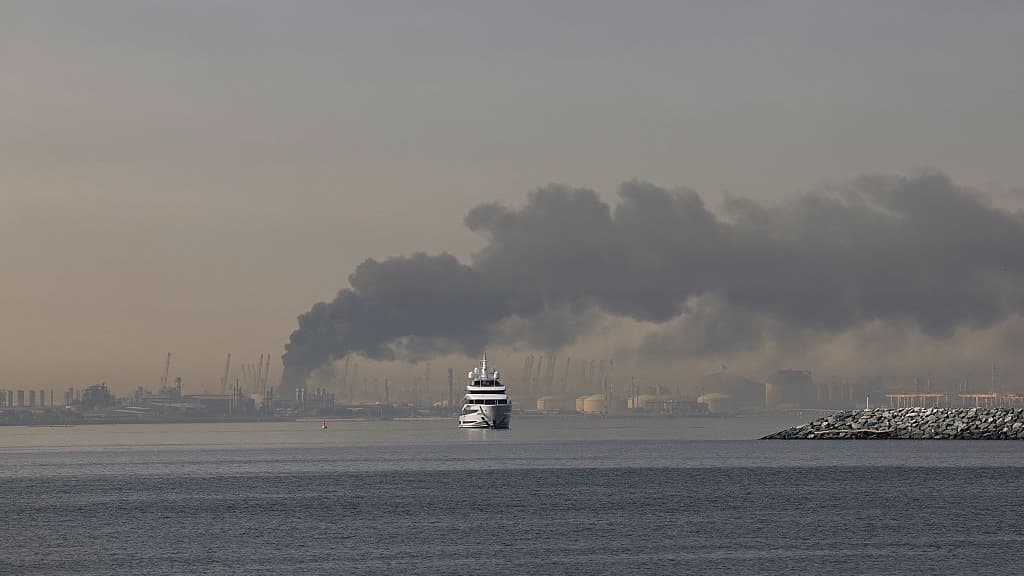
Iran continues to restrict shipping through the Strait of Hormuz, including by listing 77 vessels for possible penalties, while commodity-vessel transits fell to single digits at the weekend and UKMTO reported a projectile strike that caused a fire and crew evacuation on 13 September. The 14 September Iran-Gulf meeting in Oman was postponed, despite an Iran-Oman technical arrangement and diplomatic calls for restraint at the BRICS summit in New Delhi. Houthi forces claimed attacks on King Khalid Air Base at Khamis Mushait, a Saudi base near Jazan and a base at Sharurah, while reports differ on whether the Houthis captured Perim Island or only gained positions nearby. Brent crude exceeded $109 a barrel, US retail diesel exceeded $6.20 a gallon, and tanker hire rates surpassed $1 million per day. The attribution of the 11 September attack on Saudi Arabia's East-West pipeline remains disputed between Houthi forces and Iran-backed fighters operating from Iraq.
Change from previous assessment
Since the 13 September brief, the assessment has shifted towards a more severe and immediate maritime disruption. The Iran-Gulf meeting planned for 14 September was postponed, Abbas Araqchi explicitly said the Oman arrangement would not reopen the Strait of Hormuz, Iran published a 77-vessel restriction list, and weekend commodity transits fell to single digits. Confidence in the Hormuz assessment has risen from medium to high because the new reporting combines shipping data, UKMTO reporting, Iranian statements and multiple high-confidence media sources. The Houthi threat picture has also expanded with reported attacks on Khamis Mushait, Jazan and Sharurah, claims concerning Perim Island and an IOM estimate of 82,000 Yemenis displaced since 1 September. Energy pressure is now assessed as more immediate after Brent exceeded $109 a barrel and tanker hire passed $1 million per day. The prior judgments on southern Lebanon, humanitarian pressure and limited diplomatic effect remain active, while the proposed Iran-Oman lane is now assessed as less likely to normalise traffic in the near term.
Key judgments
- Very likely, commercial traffic through the Strait of Hormuz will remain severely constrained rather than return to normal during the next 0-14 days. Iran continues to restrict shipping, the Persian Gulf Strait Authority has listed 77 vessels for possible fines, detention or confiscation, and Foreign Minister Abbas Araqchi said an Oman arrangement would not reopen the strait until the United States meets Tehran's demands. Commodity-vessel transits fell to single digits at the weekend, while UKMTO reported a projectile strike, fire and crew evacuation on 13 September. Confidence is high because the restriction, traffic and incident reporting is corroborated by high-confidence wire, trade and major-media sources; the main uncertainty is whether the proposed Iran-Oman route changes access without a formal reopening. (Confidence: high · ASSESSED)
- I&W: Confirmation: UKMTO or ship-tracking data records another struck vessel, crew evacuation or commodity transits remaining below the 10-day average of 14 per day. (0-14 days)
- I&W: Break: Iran removes the 77-vessel restrictions, declares unrestricted navigation and commodity transits recover above 14 per day for seven consecutive days. (0-14 days)
- Likely, Houthi forces will sustain attacks on Saudi military and energy sites and maritime pressure around the Bab el-Mandeb during the next 0-14 days. On 14 September, Houthi forces claimed an attack using dozens of missiles and drones against King Khalid Air Base at Khamis Mushait, while Saudi authorities reported a projectile strike in Jazan that wounded two people and damaged a mosque. Houthi forces have also expanded along Yemen's Red Sea coast, captured or surrounded positions near Perim Island, and captured the port of Mokha according to separate reports. Confidence is medium because the attack reporting includes Houthi claims, the reported Saudi target locations conflict, and the extent of Houthi control over Perim Island is unresolved. (Confidence: medium · ASSESSED)
- I&W: Confirmation: Saudi authorities or independent reporting record another Houthi missile or drone attack on Khamis Mushait, Jazan, Sharurah or a Saudi energy facility, or confirm additional Houthi positions on Perim Island. (0-14 days)
- I&W: Break: Houthi forces announce a withdrawal from Perim Island or Mokha and Saudi authorities report no new cross-border Houthi attack for 14 consecutive days. (0-14 days)
- Likely, energy and tanker-freight pressure will remain elevated for 1-3 months. Brent crude futures exceeded $109 a barrel on 14 September, US retail diesel exceeded $6.20 a gallon on 13 September, and tanker hire on the Persian Gulf-to-China route reached $1.035 million per day. Traders reported that Yanbu could sustain Saudi exports for only five to seven days if the East-West pipeline remains shut. Confidence is medium because the market indicators are corroborated by high-confidence wire and trade reporting, but the duration is an analytic inference and responsibility for the pipeline attack remains disputed between Houthi forces and Iran-backed fighters operating from Iraq. (Confidence: medium · ASSESSED)
- I&W: Confirmation: The East-West pipeline remains offline beyond the reported five-to-seven-day Yanbu stock window while Brent stays above $100 a barrel or benchmark tanker hire remains above $1 million per day. (0-14 days)
- I&W: Break: Saudi authorities confirm the pipeline has restarted, Yanbu exports continue beyond seven days without new attacks, and benchmark tanker rates fall below $1 million per day. (0-14 days)
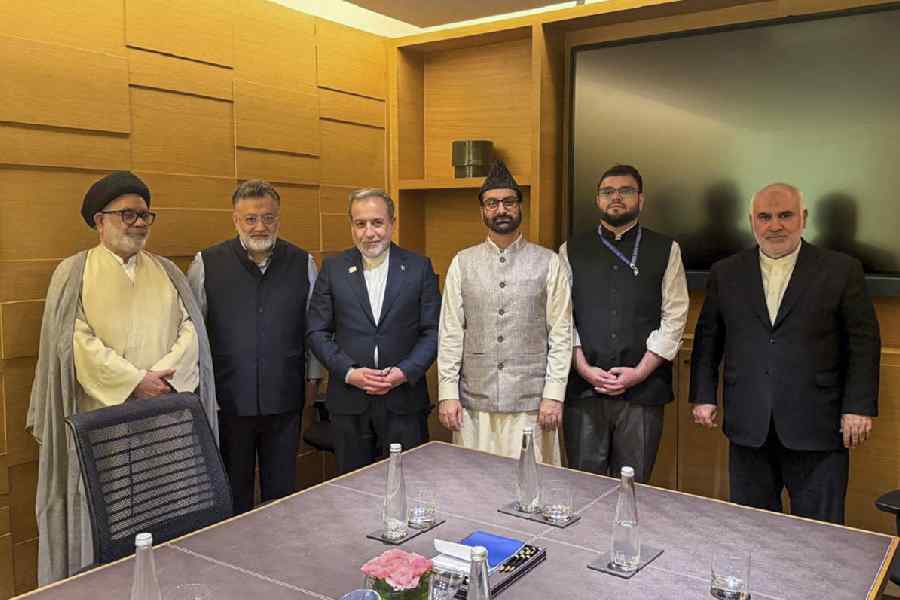
- Unlikely, the Iran-Oman maritime arrangements and BRICS calls for restraint will produce immediate de-escalation or restore normal navigation during the next 0-14 days. Oman postponed the Iran-Gulf meeting planned for 14 September, Bahrain refused participation, and Iran's Foreign Minister Abbas Araqchi said the proposed arrangement did not reopen the Strait of Hormuz. Countervailing signals include the 12 or 13 September meeting between Masoud Pezeshkian and Abu Dhabi Crown Prince Khaled bin Mohamed bin Zayed Al Nahyan, the BRICS New Delhi Declaration, and Donald Trump's statements that the United States is open to engagement. Confidence is medium because the diplomatic contacts and statements are reported by multiple sources, but their operational effect remains untested. (Confidence: medium · ASSESSED)
- I&W: Break: Oman reconvenes the Iran-Gulf meeting, Iran withdraws the 77-vessel restrictions and commodity-vessel transits recover above the 10-day average of 14 per day. (0-14 days)
- I&W: Confirmation: Iran issues additional shipping restrictions or another vessel strike follows despite the Pezeshkian-Khaled meeting and BRICS calls for restraint. (0-14 days)
- Very likely, Israel will maintain military pressure against Hezbollah in southern Lebanon during the next 0-14 days. Hezbollah launched drones towards IDF soldiers in the Security Zone, and the IDF responded with strikes on Hezbollah personnel, weapons storage facilities and a command centre in a former hospital building. A separate account states that the June ceasefire did not bind Israel and that Israel continued striking Hezbollah during negotiations. Benjamin Netanyahu stated on 2 September that Israel was working to bring down Iran's government. Confidence is medium because the operational reporting is weighted towards IDF statements, much of it dates from 4-6 September, and the regime-change assessment rests on a single think-tank report. (Confidence: medium · ASSESSED)
- I&W: Confirmation: Hezbollah launches another drone or rocket towards the IDF Security Zone and the IDF conducts a retaliatory strike in southern Lebanon. (0-14 days)
- I&W: Break: Israel announces a halt to strikes in southern Lebanon and Hezbollah stops attacks on IDF positions for 14 consecutive days. (0-14 days)
- Very likely, humanitarian pressure in Yemen will increase over the next 0-30 days. The International Organization for Migration estimates that 82,000 Yemenis fled fighting since 1 September, while Houthi forces expanded along the Red Sea coast and reportedly captured Mokha and Perim Island. Continued Houthi attacks on Saudi Arabia and fighting around the Bab el-Mandeb provide a direct basis for further displacement. Confidence is medium because the IOM estimate is a strong source for the reported total, but the forward assessment rests on one cumulative displacement estimate and unresolved reporting on the extent of Houthi territorial control. (Confidence: medium · ASSESSED)
- I&W: Confirmation: IOM or another humanitarian reporting system records displacement above 82,000 since 1 September, with new displacement linked to fighting around Mokha, Perim Island or the Bab el-Mandeb. (0-30 days)
- I&W: Break: IOM reports no material increase in displacement for 14 consecutive days and Houthi forces withdraw from Mokha and Perim Island. (0-30 days)
Outlook & scenarios
Controlled but restricted Hormuz (50%)
Iran maintains a controlled and restricted transit regime through the Strait of Hormuz. The proposed Iran-Oman route remains technically available for selected vessels, but Iran does not declare a full reopening or remove the 77-vessel restrictions. Houthi attacks continue at roughly the current level, keeping shipping and energy costs elevated without a wider direct exchange between Iran and US forces.
Maritime and energy escalation (30%)
Iran adds vessel restrictions or strikes another commercial ship, while Houthi forces intensify attacks on Khamis Mushait, Jazan, Sharurah or Saudi energy infrastructure. The East-West pipeline remains offline, Yanbu stocks approach exhaustion and tanker rates remain above $1 million per day. Houthi control around Perim Island and Mokha further raises pressure on Saudi oil exports through the Red Sea.
Diplomatic opening (15%)
Oman reconvenes the Iran-Gulf meeting, the Pezeshkian-Khaled contact develops into a working channel, and the United States and Iran begin substantive engagement. Iran allows broader passage through the Strait of Hormuz without fully resolving the underlying dispute over traffic vetting and passage conditions. BRICS statements provide political cover, but Israel-Hezbollah fighting continues.
Wildcard: direct US-Gulf-Iran expansion (5%)
Iran expands attacks on US bases in Bahrain, the UAE, Jordan, Kuwait and Iraqi Kurdistan, while strikes against Gulf energy sites increase. The United States and Israel widen military operations against Iran, and Saudi Arabia seeks direct US military support against Houthi forces. This low-probability, high-impact path would sharply increase pressure on Hormuz, Gulf infrastructure and regional air defences.
Recommendations
- Maintain a 6-hourly maritime watch covering commodity-vessel transits through the Strait of Hormuz, the 77-vessel restriction list, UKMTO incident reports and the first confirmed movements on the proposed Iran-Oman route.
- Track the East-West pipeline, Yanbu export volumes, Brent crude, US retail diesel and benchmark tanker hire rates as a linked warning set. Flag a pipeline outage beyond seven days or tanker rates above $1 million per day for immediate analytic review.
- Keep separate attribution tracks for the 11 September East-West pipeline attack. Do not merge the Houthi attribution with Riyadh's account involving Iran-backed fighters operating from Iraq until independent reporting or an official investigation resolves the discrepancy.
- Treat Houthi control of Perim Island as unresolved. Prioritise imagery, shipping data and official Yemeni or Saudi reporting that distinguishes control of the island from positions around it, and separately verify whether the reported Khamis Mushait, Jazan and Sharurah attacks were one operation or multiple attacks.
- Set a diplomatic trigger for the Oman channel: a reconvened Iran-Gulf meeting, an Iranian removal of vessel restrictions and a sustained increase in Hormuz transits should prompt a revised de-escalation assessment. A further vessel strike or cancellation of renewed talks should prompt the opposite update.
- Prepare a Yemen humanitarian update every 7 days using the IOM displacement estimate, developments around Mokha and Perim Island, and reporting on Red Sea access. Highlight any increase above the reported 82,000 displaced since 1 September.
Confidence & uncertainty
Overall confidence is high because the core developments are corroborated by high-confidence wire services, major media, trade publications, military reporting and the International Organization for Migration. The strongest evidence concerns restricted Hormuz traffic, the UKMTO vessel strike, Houthi attacks on Saudi Arabia, market disruption and the postponement of the Oman meeting. The principal uncertainties are the attribution of the East-West pipeline attack, the extent of Houthi control over Perim Island, the exact date of the Pezeshkian-Khaled meeting and the attribution of responsibility for Ali Khamenei's death.
Intelligence gaps
- [EEI 1.1 · PARTIAL] Detection and characterization of ballistic/cruise missile or rocket launches originating from Iranian territory or from Iran-controlled positions in Iraq/Syria (time, launch coordinates, missile type, flight trajectory/impact area). Recommended collection: satellite/imagery
- [EEI 1.2 · UNCOVERED] Movements and posture changes of Iran-backed proxy forces (Hezbollah units in Lebanon, militias in Syria/Iraq): concentrations of personnel, transport of rocket/artillery launchers, visible logistics build-up within operational range of Israel. Recommended collection: human/intel
- [EEI 1.3 · PARTIAL] Israeli defensive and offensive posture changes: reservist call-ups, mobilization orders, sorties/airstrikes attributed to Israel, and domestic activation of missile-defense systems (locations and activation times). Recommended collection: open-source/media
- [EEI 1.4 · UNCOVERED] Evidence of pre-positioning or arming of naval mines, fast attack craft, or anti-ship missile systems in the Gulf of Oman, northern Arabian Sea, or off the Lebanese/Syrian coasts that could be used to interdict Israeli or allied shipping. Recommended collection: maritime/AIS
- [EEI 2.1 · PARTIAL] Movements and tasking changes of external military assets: carrier strike groups, amphibious ready groups, expeditionary air wings, or ballistic-missile defense units into the Eastern Mediterranean, Persian Gulf, or Red Sea (vessel/aircraft IDs, routing, on-station times). Recommended collection: maritime/AIS
- [EEI 2.3 · PARTIAL] Changes to force protection or alert levels at foreign bases in the region (e.g., US bases in Kuwait, Qatar, UAE; Russian bases in Syria): activation of additional air defenses, curfews, or reinforcement shipments (personnel/equipment manifests). Recommended collection: signals/intel
- [EEI 3.2 · PARTIAL] Changes in crude oil and refined product flows from key terminals (reported tanker loading delays, terminal closures, throughput volumes at Kharg, Mina al-Ahmadi, Ras Tanura, and major Gulf ports compared to baseline). Recommended collection: commercial/ports
Cited sources
[1] gCaptain · Maersk, Hapag-Lloyd Accelerate Return to Suez Despite Red Sea Risks (C) · Mon Sep 14 2026 15:53:32 GMT+0000 (Coordinated Universal Time) · sha256:cd96ffd3e9be [2] The Express Tribune · Trump says Iran wants deal with US quickly and badly (B) · Mon Sep 14 2026 16:17:45 GMT+0000 (Coordinated Universal Time) · sha256:df44b9d2aa2b [3] Reuters (republished by gCaptain) · Gulf States Postpone Iran Talks as Houthis Strike Saudi Arabia (A) · Mon Sep 14 2026 16:25:34 GMT+0000 (Coordinated Universal Time) · sha256:d52bcd7f7927 [4] gCaptain · New Attacks in Hormuz and Saudi Test Nerves as War's Spread Worsens Oil Disruption (B) · Mon Sep 14 2026 17:16:46 GMT+0000 (Coordinated Universal Time) · sha256:4d8e33104dc4 [5] KSL.com (content sourced from Reuters) · New attacks in Hormuz and Saudi test nerves as war's spread worsens oil disruption (A) · Sun Sep 13 2026 21:18:00 GMT+0000 (Coordinated Universal Time) · sha256:e1cd47bd1d80 [6] Banking News (bankingnews.gr) · Emirates and Qatar shift line toward Iran, close deal on Hormuz – Trump in panic, demands agreement (D) · Mon Sep 14 2026 00:00:00 GMT+0000 (Coordinated Universal Time) · sha256:816843f5a044 [7] The Express Tribune · Pakistan backs Saudi Arabia amid Houthi escalation | The Express Tribune (B) · Mon Sep 14 2026 09:08:44 GMT+0000 (Coordinated Universal Time) · sha256:3415dde98327 [8] gCaptain (republishing Bloomberg News) · Oil Tanker Rates Top $1 Million a Day as Hormuz War Squeezes Fleet (B) · Mon Sep 14 2026 18:24:16 GMT+0000 (Coordinated Universal Time) · sha256:106ad4bd72e0 [9] The Maritime Executive · Oman's Strait of Hormuz Conference Implodes (C) · sha256:889e5e28d408 [10] India News Network · UAE and Iran Leaders Discuss Relations at BRICS Summit (B) · Mon Sep 14 2026 01:48:20 GMT+0000 (Coordinated Universal Time) · sha256:9fa0355b2ff1 [11] News.az · Iran, UAE back BRICS call for restraint in Middle East | News.az (D) · sha256:2407b6659031 [12] Israel Defense Forces (IDF) · Israel Defense Forces (A) · Fri Sep 04 2026 09:32:42 GMT+0000 (Coordinated Universal Time) · sha256:d4dbf866ac02 [13] TIME · How the Iran War Forced the Gulf to Rethink Its Security (A) · Mon Sep 14 2026 10:00:00 GMT+0000 (Coordinated Universal Time) · sha256:8b0f1a649b70 [14] Manara Magazine · The Iran War and the UK’s “Reset” towards the Middle East (C) · Mon Sep 14 2026 17:22:00 GMT+0000 (Coordinated Universal Time) · sha256:3a53d97ec8c4
Source content hashes were computed at collection time; the cited text is preserved unmodified for the life of this product.
TLP:CLEAR