TLP:CLEAR · Disclosure is not limited.
Middle East: Conflict Pressure Spreads Across Shipping and Humanitarian Fronts
Time window: Last 1 day · Audience: General analyst · Type: Situation report · DTG: 2026-08-25 15:10Z · Overall confidence: HIGH
BLUF
Very likely military and economic pressure involving the US, Israel and Iran will persist over the next 14 days, with the Strait of Hormuz and Saudi-linked shipping remaining the most immediate regional escalation vectors. A general closure of Hormuz remains unlikely, but vessel strikes, Iranian transit controls and severe humanitarian conditions in Gaza and southern Lebanon will sustain instability.
Executive summary
Reporting indicates that the conflict is imposing pressure across several connected fronts. The United States has expanded sanctions against Iranian oil, shipping and financial networks, while Iran has blacklisted vessels and threatened penalties for non-compliant transit through the Strait of Hormuz. Maritime incidents have caused deaths, damaged vessels and reduced traffic, although the supplied figures contain conflicting dates and measures. UN agencies continue to report severe humanitarian conditions in Gaza, and UNIFIL has recorded Israeli military activity in southern Lebanon. Pakistan and Egypt are maintaining diplomatic contacts, but the material does not establish a durable path to cessation.
Change from previous assessment
Since 24 August, the assessment has shifted from a general warning about Iranian signalling and prospective Strait of Hormuz controls to a clearer judgement that maritime disruption is already producing vessel damage, 68 reported incidents, at least 20 deaths and 35 injuries, although traffic data remain contradictory. Confidence in the sanctions assessment is strengthened by the reported Treasury action against more than 60 entities, five tankers and five Iranian sectors. The humanitarian judgement remains high confidence. The mediation judgement remains low confidence because reporting on Asim Munir's visit and diplomatic progress is statement-based and chronologically unclear. The prior judgements on Israel-Türkiye tensions in Syria and the Mecca Joint Defence Agreement are not updated because the current reporting adds no corroborated development on either issue.
Key judgments
- Very likely military activity involving the US, Israel and Iran will remain active over the next 14 days, while regional spillover will remain an escalation vector through southern Lebanon, Syria and Saudi-linked shipping. The supplied reporting dates the latest confrontation to 28 February 2025, states that the United States has not ruled out resuming bombing in Iran, records 86 Israeli airspace violations and nine airstrikes in southern Lebanon, reports an Israeli jet attack on Abu Al-Duhur near Idlib on 18 August 2025, and attributes an anti-ship ballistic missile attack on the Saudi-flagged, Bahri-owned VLCC AMZAN to the Houthis. This is an assessed forecast. Confidence is medium because multilateral and major-media reporting corroborates the activity, but the chronology of the Iran confrontation and attribution for some maritime incidents remain unresolved. (Confidence: medium · ASSESSED)
- I&W: Confirm: The United States announces renewed bombing in Iran, or Israeli forces conduct another airstrike in southern Lebanon or at Abu Al-Duhur. (0-14 days)
- I&W: Break: Asim Munir's contacts with Iranian leaders or Badr Abdelatty's contact with Abbas Araghchi produce a publicly announced cessation of US-Israel-Iran military operations. (0-14 days)
- Likely US economic pressure on Iran will intensify over the next 14 days, while Iran will likely continue threatening retaliation and using maritime rules to impose costs on companies trading through the Strait of Hormuz. US Treasury reporting describes sanctions against more than 60 entities, five targeted tankers and secondary sanctions against foreign banks connected to five Iranian sectors. Iran has threatened to respond to the expanded sanctions, blacklisted 45 tankers and threatened penalties against vessels that do not comply with its transit arrangements. This is an assessed forecast. Confidence is medium because official Treasury material corroborates the policy direction, but the exact number of targets and the timing of additional measures vary across the reporting. (Confidence: medium · ASSESSED)
- I&W: Confirm: US Treasury designates another Iranian financial enabler, foreign bank or shipping company, or expands sanctions beyond the reported 60 targets. (0-14 days)
- I&W: Break: US Treasury withdraws its secondary-sanctions warning and Iran stops announcing retaliation or new maritime penalties. (0-14 days)
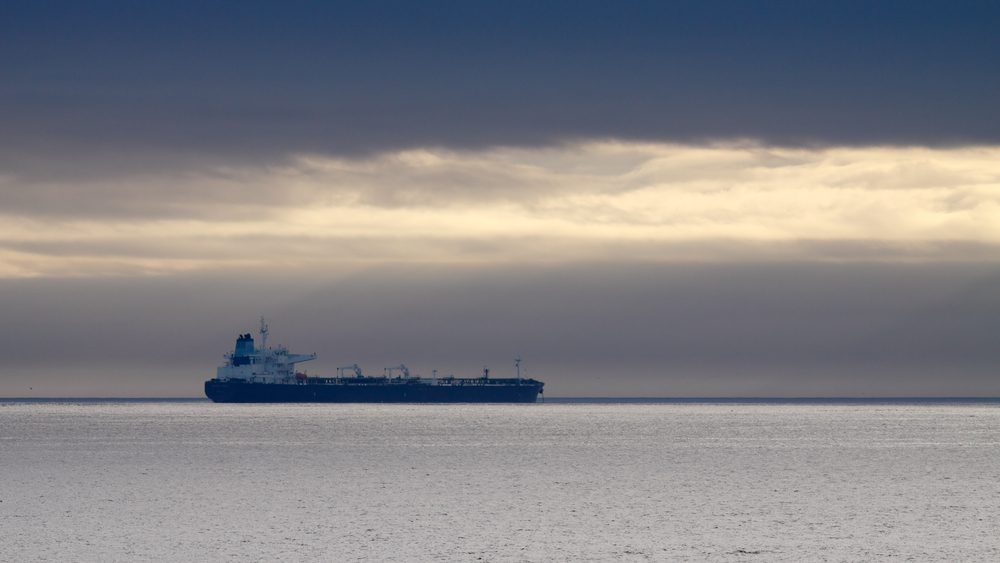
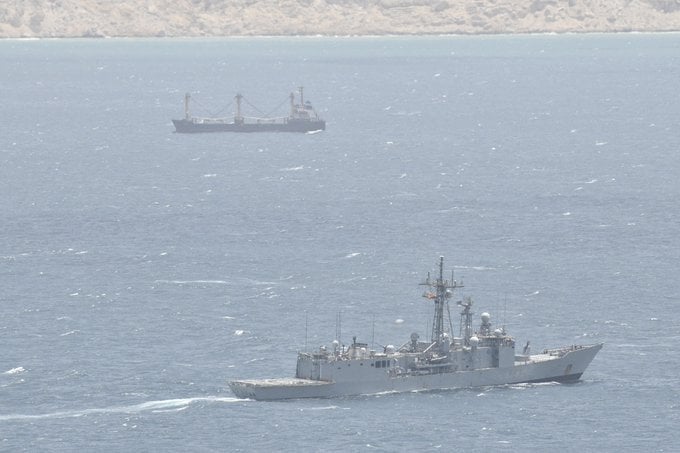
- Likely Iran will maintain coercive transit controls through the Strait of Hormuz and maritime disruption will remain elevated over the next 14 days, but a general closure is unlikely. Iran has published a 46-vessel non-compliance list, blacklisted 45 tankers, threatened fines, detention, seizure or confiscation, and warned ships against an alternative route. The International Maritime Organization documented 68 maritime incidents and at least 20 deaths and 35 injuries. Traffic reporting is inconsistent: Kpler reported 121 crossings in the latest weekly measure, up 2.5 per cent, while another report counted two tankers on 25 August 2023 and the US Energy Secretary asserted that more than 8 million barrels of oil were leaving Hormuz each day. These conflicting measures support persistent restrictions and risk, not a proven general closure. Confidence is medium because the transit controls and casualties are supported by official and maritime reporting, but the dates and measurement bases are not consistent. (Confidence: medium · ASSESSED)
- I&W: Confirm: Iran adds vessels to its non-compliance list or detains, seizes or confiscates a listed tanker. (0-14 days)
- I&W: Break: Shipping data show sustained passage above the reported 121 weekly crossings, with no new Iranian restrictions or vessel detentions. (0-14 days)
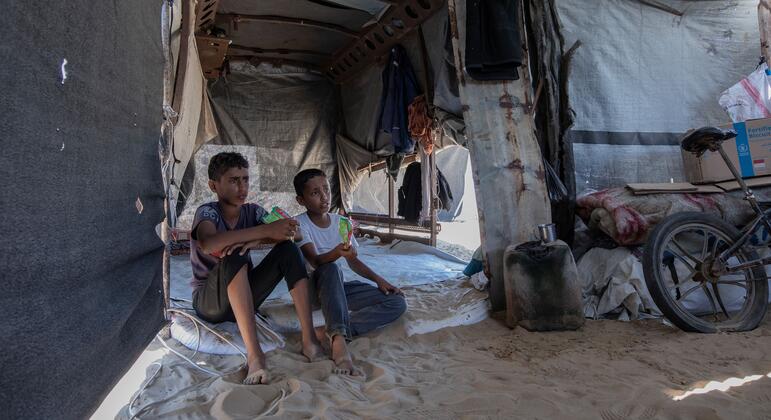
- Very likely humanitarian pressure will remain severe in Gaza and southern Lebanon over the next 14 days. UN agencies reported on 20 August 2026 that 94 per cent of Gaza's 2.1 million residents needed shelter, while more than four out of five families faced critical or catastrophic living conditions. Israeli restrictions continue to impede aid deliveries, and UNDP pest-control activity has reached more than 3,250 high-risk sites. In southern Lebanon, UNIFIL recorded 86 Israeli airspace violations and nine airstrikes, while UNRWA is distributing food parcels in refugee camps. This is an assessed forecast. Confidence is high because UN agencies, UNDP, UNRWA and UNIFIL provide repeated multilateral reporting. The reported percentages measure different aspects of need and are not directly interchangeable. (Confidence: high · ASSESSED)
- I&W: Confirm: UN agencies continue to report shelter needs near 94 per cent, critical or catastrophic conditions for more than four out of five families, or ongoing restrictions on aid. (0-14 days)
- I&W: Break: UN agencies report that aid restrictions have been lifted and that Gaza families no longer face critical or catastrophic living conditions. (0-14 days)
- Roughly even chance Pakistan and Egypt will sustain limited diplomatic channels over the next 14 days, but a durable US-Iran cessation is unlikely. Pakistani army chief Asim Munir visited Tehran after a call with Donald Trump, the Pakistani army said the talks focused on preventing further escalation, and Interior Minister Mohsin Naqvi reported progress with Iranian leaders. Badr Abdelatty spoke with Abbas Araghchi about a potential US-Iran peace deal, while Egypt's Foreign Ministry described Abdelatty's discussions with Johann Wadephul on curbing fighting in Gaza. A separate report that the US State Department is preparing to return diplomats to Middle Eastern embassies does not resolve the policy direction. This is an assessed forecast. Confidence is low because the mediation reporting is largely statement-based, the timing and purpose of Munir's visit are not fully consistent, and the embassy report is single-source. (Confidence: low · ASSESSED)
- I&W: Confirm: Asim Munir or Badr Abdelatty announces follow-up talks with Iranian leaders that produce written de-escalation terms. (0-14 days)
- I&W: Break: The United States and Iran announce a cessation agreement, or Pakistan states that its channel with Tehran has ended. (0-14 days)
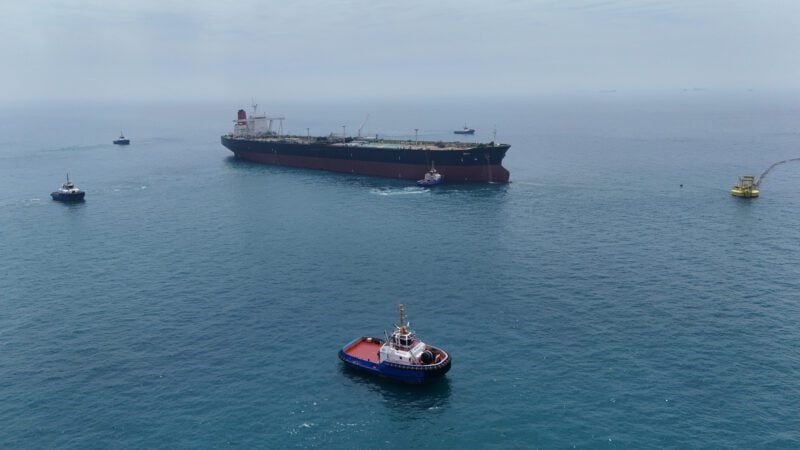
- Likely Houthi attacks on Saudi-linked commercial shipping will continue over the next 14 days. A maritime security analyst attributed the attack on the Saudi-flagged, Bahri-owned VLCC AMZAN to an anti-ship ballistic missile, the Houthis claimed responsibility, and the Joint Maritime Information Center assesses the threat in Bab el-Mandeb and the southern Red Sea as SUBSTANTIAL. Confidence is medium because major-media reporting and a maritime threat assessment corroborate the reported incident, but the supplied material does not provide independent confirmation of the attribution. (Confidence: medium · ASSESSED)
- I&W: Confirm: The Houthis claim another attack on Saudi-linked commercial shipping, or maritime authorities report a further strike in Bab el-Mandeb or the southern Red Sea. (0-14 days)
- I&W: Break: A 14-day period passes without a further Houthi-claimed or independently reported attack on Saudi-linked commercial shipping. (0-14 days)
- Very unlikely an Iranian-Houthi-Somali operational alignment will be confirmed over the next 14 days, but confirmation would widen the maritime threat beyond the currently reported Houthi and Somali activity. The only supplied support for such an alignment is an intelligence-report warning, while separate reporting describes Somali pirate seizures, ransom demands and EUNAVFOR monitoring of pirate-held vessels. This is an assessed judgement resting on thin, single-source reporting. Confidence is low. (Confidence: low · ASSESSED)
- I&W: Confirm: A maritime attack is jointly claimed by Houthi and Somali actors and is independently linked to Iranian support. (0-14 days)
- I&W: Break: EUNAVFOR and Puntland authorities continue to describe Somali maritime incidents as piracy, with no Iranian or Houthi attribution. (0-14 days)
Outlook & scenarios
Persistent but bounded conflict (55%)
Likely US economic pressure, Israeli military activity and Houthi attacks will continue without a confirmed general closure of the Strait of Hormuz. Iran will maintain vessel blacklists and transit penalties, while Gaza and southern Lebanon will remain under severe humanitarian pressure.
Maritime escalation around Hormuz and the Red Sea (30%)
Iran is likely to detain, seize or confiscate a listed vessel, or the Houthis are likely to strike another Saudi-linked commercial ship. Shipping traffic would fall further, and the reported freight burden would rise from already elevated levels.
Limited diplomatic pause (25%)
Pakistan's contacts with Tehran and Egypt's discussions with Iranian and European officials are likely to produce temporary deconfliction or a narrow pause. A durable US-Iran cessation would remain unlikely without clearer and sustained implementation.
Regional maritime alignment wildcard (10%)
Very unlikely but high-impact, an Iranian-Houthi-Somali operational alignment is confirmed through a jointly attributed maritime attack. This would extend the current Houthi and Somali maritime threat pattern and complicate attribution and response.
Recommendations
- Maintain a daily 0-14 day watch on Iran's 45-tanker blacklist and 46-vessel non-compliance list. Separate Iranian warnings from verified detentions, seizures, confiscations and vessel damage.
- Create a date-normalised Strait of Hormuz traffic baseline that reconciles the reported 121 weekly crossings, the two-tanker daily count and the claim of more than 8 million barrels per day leaving the strait. Do not treat these figures as interchangeable without checking their dates and definitions.
- Map exposure to the US sanctions campaign across Iranian oil, shipping, digital assets, technology, gold and aviation. Prioritise collection on new designations involving foreign banks, ship-to-ship services and the Iranian shadow fleet.
- Track concrete outputs from Asim Munir, Mohsin Naqvi, Badr Abdelatty and Abbas Araghchi. Give greater weight to written terms, follow-up meetings and verified implementation than to public claims of progress.
- Maintain separate attribution tracks for Houthi attacks, Somali piracy and any alleged Iranian support. Seek corroboration from maritime authorities before treating an Iranian-Houthi-Somali link as operational.
- Prioritise UN agency reporting on Gaza shelter needs, aid access and family living conditions, alongside UNIFIL reporting on Israeli activity in southern Lebanon. Flag any change in aid restrictions or shelter requirements as an early indicator of humanitarian deterioration or improvement.
Confidence & uncertainty
Overall confidence is high for the principal reported developments because UN agencies, UNDP, UNRWA and UNIFIL provide repeated multilateral reporting on Gaza and Lebanon, while US Treasury material and maritime reporting corroborate the sanctions and shipping-control measures. The International Maritime Organization reporting provides a further basis for the maritime casualty and incident picture. The main uncertainties concern inconsistent dates, differing definitions of vessel traffic, unresolved attribution for some attacks and the limited evidence for diplomatic outcomes or an Iranian-Houthi-Somali operational link.
Intelligence gaps
- [EEI 1.1 · UNCOVERED] Unusual long-range missile/rocket transporter-launcher (TEL) movements, storage activation, or assembly activity at known IRGC missile sites or forward staging areas. Recommended collection: satellite/imagery
- [EEI 1.2 · PARTIAL] Orders, threat-alert messages, or changes in posture from IRGC, Quds Force, or senior Iranian military leadership indicating attack timelines or rules of engagement changes. Recommended collection: signals/ELINT and HUMINT
- [EEI 1.3 · UNCOVERED] Large-scale transfers, deliveries, or convoy movements of armed UAVs/drones, guided munitions, or spare parts from Iran into Lebanon (Hezbollah), Iraq, Syria, or Gaza. Recommended collection: air/aviation track and HUMINT
- [EEI 1.4 · UNCOVERED] Sustained changes in Israeli air-defense usage (SAM launches, radar activations), wide-area alerts, or NOTAMs indicating elevated imminent strike response. Recommended collection: air/aviation/NOTAMs and signals
- [EEI 2.1 · UNCOVERED] Concentration, repositioning, or sortie patterns of Iranian naval/IRGC patrol boats and fast-attack craft near shipping chokepoints or commercial lanes. Recommended collection: maritime/AIS and satellite/imagery
- [EEI 2.3 · UNCOVERED] Insurance market indicators: sudden spikes in war-risk or hull insurance premiums for routes through the Red Sea, Suez corridor, or Persian Gulf, and major carriers announcing route changes. Recommended collection: financial/market and commercial shipping notices
- [EEI 2.4 · UNCOVERED] Port closures, naval escorts requested by commercial operators, or formal rerouting advisories issued by major shippers (e.g., Maersk, Hapag-Lloyd) for regional transits. Recommended collection: commercial/OSINT
- [EEI 3.1 · UNCOVERED] Deployment of foreign military assets to the region (carrier strike groups, amphibious ships, combat aircraft deployments, or additional bases activated) from the US, UK, France, Russia, or GCC states. Recommended collection: maritime/AIS and air/aviation and satellite/imagery
- [EEI 3.3 · UNCOVERED] Confirmed arms transfers, expedited weapons shipments, or transfer authorizations to Israel, Iran, or their proxies (aircraft parts, munitions, air defenses). Recommended collection: customs/INTEL and HUMINT
- [EEI 3.4 · UNCOVERED] Issuance of travel warnings, embassy evacuations or reductions, and closure of diplomatic missions by major capitals indicating escalation risk or shifted threat assessments. Recommended collection: OSINT/diplomatic
Cited sources
[1] Yenisafak · Iran broadcaster says 50-plus sites hit in US-Israel war (B) · sha256:577cfd6b6f7b [2] Al Jazeera · أخبار إيران | إيران | الجزيرة نت (A) · sha256:41ff41d09a79 [3] United Nations · Middle East: 94 per cent need shelter in Gaza, Israel ramps up demolitions in Lebanon (A) · sha256:aa5d2b0f402c [4] Arab News · Could Syria become the unlikely bridge between Israel and Turkiye? (B) · sha256:a52dd5c261f8 [5] gcaptain.com · Houthis Escalate Saudi Shipping Campaign With VLCC Strike (B) · sha256:fc6337652367 [6] gcaptain.com · U.S. Threatens Iran’s Trading Partners in New Economic Pressure Campaign (B) · sha256:10218a634ef8 [7] gcaptain.com · Trump Administration Launches Sweeping New Iran Sanctions Campaign Targeting Shipping and Oil Trade (B) · sha256:089be1c13277 [8] maritime-executive.com · US Treasury Says Sanctions on Iran's Bankers Are Coming Soon (A) · sha256:b32cc825b8c6 [9] annahar.com · حرب إيران: طهران تُبلغ واشنطن بشروطها بشأن هرمز.. وأميركا تستعد لإعادة ديبلوماسيين للشرق الأوسط | تغطية متواصلة لـالنهار (B) · sha256:8d313a7aac24 [10] gcaptain.com · Commodity Vessel Transits Through Strait of Hormuz Hit Three-Month Low, Data Shows (A) · sha256:f5b19c7a56a3 [11] gcaptain.com · Iran Blacklists 46 Ships On Hormuz ‘Non-Compliant’ List (B) · sha256:1fefbf4718a6 [12] maritime-executive.com · Iran Blacklists Ships Threatening Detention, Confiscation, and Fines (B) · sha256:acc37042e18b [13] aljazeera.net · هرمز تحت ضغط التصعيد. 68 حادثا بحريا وتراجع حاد لحركة الملاحة (A) · sha256:903f989ed706 [14] africa.businessinsider.com · After speaking to Iran, Egypt turns to Europe’s strongest economic power to discuss the conflict affecting the globe (B) · sha256:33e6b436f0f8 [15] قناة الحدث Al Hadath · تقارير استخباراتية تحذر من تصاعد خطر التحالف "الحوثي الإيراني" مع الجماعات الصومالية على أمن الملاحة البحرية | قناة الحدث Al Hadath (B) · sha256:dd6a6427e030 [16] maritime-executive.com · Mystery Grows Around Cargo Ship Held by Somali Pirates (B) · sha256:9f2ffa821bac
Source content hashes were computed at collection time; the cited text is preserved unmodified for the life of this product.
Red cell review: CONCUR WITH COMMENT
TLP:CLEAR