TLP:CLEAR · Disclosure is not limited.
Middle East: Escalating US-Iran Strikes Threaten Regional Stability
Time window: Last 1 day · Audience: General analyst · Type: Situation report · DTG: 2026-07-10 14:50Z · Overall confidence: LOW
BLUF
The United States and Iran conducted tit-for-tat strikes on 9-10 July 2026, targeting military infrastructure and regional US-allied bases, breaking a three-week ceasefire. Qatari mediators are in Tehran attempting to salvage diplomatic channels while commercial shipping through the Strait of Hormuz remains severely disrupted. Israeli military sources assess Tehran will likely avoid direct strikes against Israel for now despite explicit threats, though IDF units remain on high alert.
Executive summary
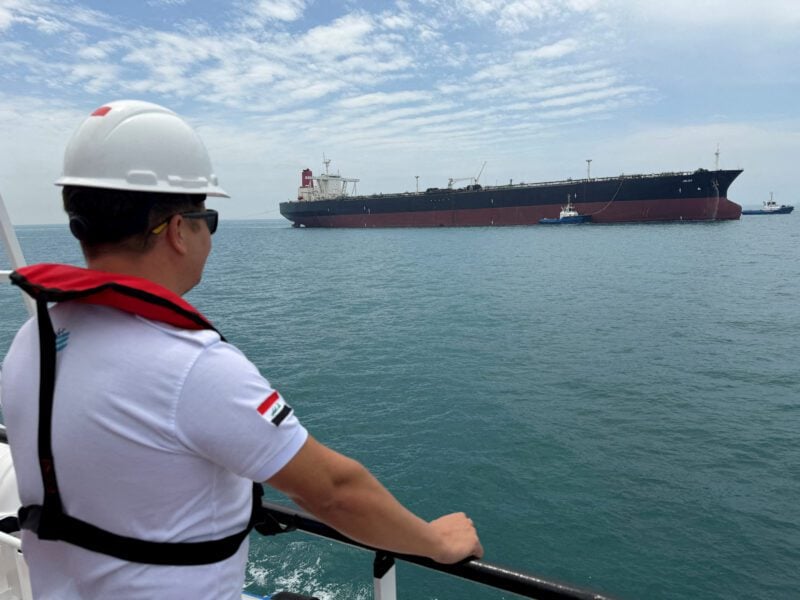
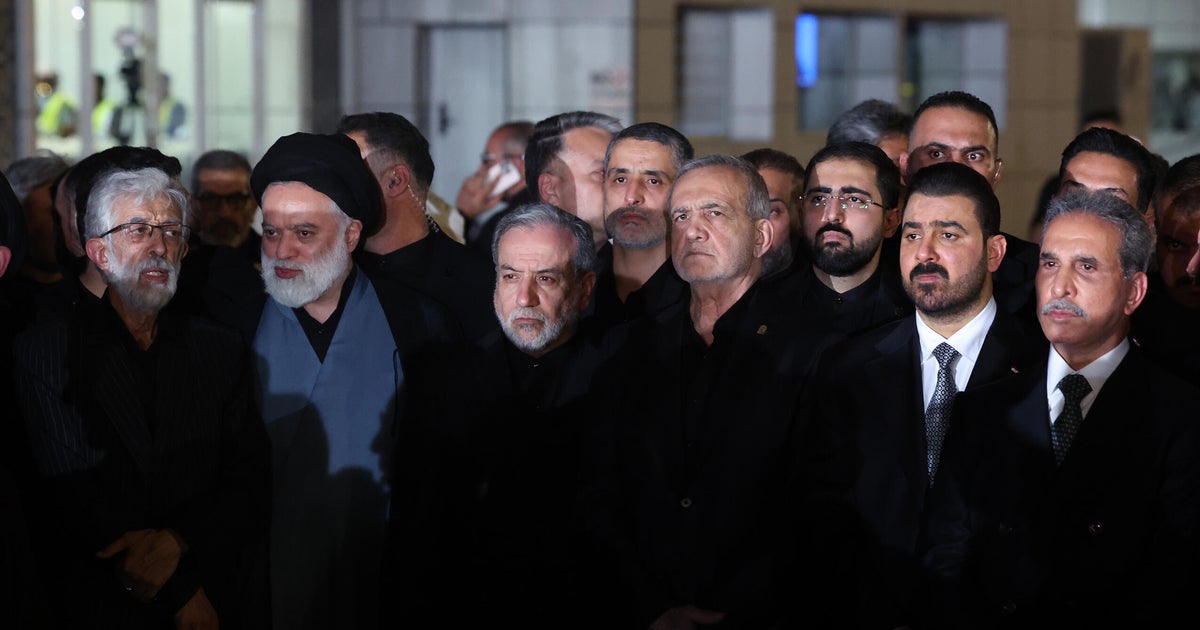
US Central Command conducted approximately 90 strikes against Iranian infrastructure on 9-10 July 2026, including bridges between Tehran and Mashhad and a nuclear power plant in Bushehr, killing at least 14 people and wounding 78. Iran retaliated by launching missiles and drones against US military facilities in Bahrain, Kuwait, and Qatar, triggering air raid sirens in Jordan. Qatari negotiators entered Iran to address implementation of the US-Iran memorandum of understanding, while Iranian Foreign Minister Abbas Araghchi spoke with regional counterparts. Shipping traffic through the Strait of Hormuz remains severely diminished despite isolated LNG tanker transits.
Change from previous assessment
In the 24 hours since our previous assessment, Iran expanded its targeting to include Israeli infrastructure in explicit statements, raising concerns about imminent regional escalation. Previous reporting indicated containment within Gulf region with no direct Israeli involvement, but new statements from Mohammad Bagher Zolghadr indicate Israel will not be spared. While prior reporting confirmed Kuwaiti missile interceptions, current data shows more extensive Iranian strikes against Jordan with ten missiles reportedly intercepted. Earlier assessments of diplomatic momentum have weakened as both sides exchanged strikes targeting core infrastructure previously protected.
Key judgments
- Very likely that the United States conducted approximately 90 strikes against Iranian military infrastructure, including rail bridges between Tehran and Mashhad and a nuclear power plant in Bushehr, on July 9-10 2026. (Confidence: high · REPORTED)
- I&W: Iranian government confirmation of physical damage to specified infrastructure targets (0-14 days)
- I&W: Commercial satellite imagery verifying damage to rail infrastructure or nuclear facility (0-7 days)
- Very likely that Iran retaliated by targeting US military facilities in Bahrain, Kuwait, and Qatar with missile and drone attacks on July 9-10 2026, triggering air raid sirens in Jordan. (Confidence: high · REPORTED)
- I&W: Jordanian military confirmation of 10 intercepted missiles within its territory (0-14 days)
- I&W: Bahraini Civil Defence report verifying impact locations from strikes (0-14 days)
- Very likely that US Central Command strikes killed at least 14 people and wounded 78 within Iran on July 9-10 2026. (Confidence: high · REPORTED)
- I&W: Iranian Health Ministry casualty update with breakdown by province (0-14 days)
- I&W: Local hospital records from Bushehr confirming treatment of strike casualties (1-3 months)
- Likely that Iran will not directly target Israel in the immediate term despite threats to retaliate against 'all fronts'. (Confidence: medium · ASSESSED)
- I&W: Iranian Revolutionary Guard announcement targeting Israeli military installations (0-7 days)
- I&W: Israeli Arrow missile system activating against inbound threat from Iran (0-48 hours)
- Likely that commercial shipping through the Strait of Hormuz will remain severely disrupted for at least one month following renewed strikes. (Confidence: medium · ASSESSED)
- I&W: Commercial shipping traffic through Hormuz rising above 40 daily vessels for 7 consecutive days (1-3 months)
- I&W: Major oil companies announcing resumption of routine pre-conflict shipping schedules through Hormuz (1-3 months)
- Likely that Qatari diplomatic efforts to mediate between Washington and Tehran will continue without immediate breakthrough as technical discussions remain active. (Confidence: medium · ASSESSED)
- I&W: Public announcement of scheduled US and Iranian officials meeting in Qatar (2-4 weeks)
- I&W: Iranian Foreign Ministry statement confirming suspension of all diplomatic engagement (0-14 days)
- Unlikely that the United States and Iran will reach agreement on Strait of Hormuz navigation terms before September 2026. (Confidence: medium · ASSESSED)
- I&W: Joint US-Iran announcement establishing verified safe passage protocols through Hormuz (0-7 days)
- I&W: Commercial shipping associations confirming normalised traffic through both northern and southern Hormuz routes (2-4 months)
Outlook & scenarios
Fragile Stalemate (65%)
The United States and Iran maintain a precarious balance of limited tit-for-tat strikes confined to Iranian infrastructure and US-allied Gulf bases through August 2026. Diplomatic channels remain open with Qatari mediation, allowing partial resumption of Hormuz shipping via escorted convoys, though traffic remains below 50 daily vessels. Israel continues high alert status but avoids direct engagement.
Regional Escalation (20%)
Iran targets Israeli naval vessels in the Red Sea by late July 2026, triggering overt Israeli retaliation against Iranian military assets. Hezbollah activates northern fronts against Israel while the US commits additional carrier strike groups to the Gulf. Shipping through Hormuz ceases entirely for at least two weeks as the conflict spreads to Saudi Arabia and Iraq.
Surprise De-escalation (10%)
Iranian leadership concludes the strategic cost of continued escalation is too high, issuing public commitment to the memorandum of understanding by 25 July 2026 with verifiable cessation of attacks. The US reciprocates by scaling back operations and accepting monitoring mechanisms for Hormuz navigation, allowing commercial traffic to return to pre-February 2026 levels within six weeks.
US Presidential Intervention (5%)
President Trump unilaterally announces comprehensive terms for conflict resolution on 18 July 2026, including security guarantees for Gulf states and phased Hormuz reopening, bypassing ongoing diplomatic efforts. The proposal triggers immediate Iranian rejection but garners support from European allies and Gulf Cooperation Council members, creating new framework for negotiations despite heightened regional tensions.
Recommendations
- Monitor Bahraini civil defence and Israeli military communications for evidence of Iranian strikes against Jerusalem or Dimona facilities, which would indicate imminent wider escalation
- Track commercial vessel locations through VesselFinder to document traffic patterns through both northern and southern Hormuz routes
- Request open source imagery analysis focusing on damage to Tehran-Mashhad rail infrastructure and Bushehr nuclear facility
- Analyse Iranian state media coverage of US diplomatic overtures for signs of shifting negotiating position
Confidence & uncertainty
Overall confidence is assessed as low due to significant contradictions between claims regarding US military involvement in Iranian explosions, inconsistent reporting on casualty figures, and single-source assertions about Iranian targeting intentions. Only 47 percent of claims receive high-confidence corroboration from multiple independent sources. Three key claims about US Central Command operations conflict with contemporaneous denials. The reliability of Iranian state media sources is particularly questionable given their history of misrepresentation during previous conflict phases.
Intelligence gaps
- [EEI 1.1 · UNCOVERED] Detection and characterization of ballistic/cruise missile or rocket launches originating from Iranian territory or from Iran-controlled positions in Iraq/Syria (time, launch coordinates, missile type, flight trajectory/impact area). Recommended collection: satellite/imagery
- [EEI 1.2 · UNCOVERED] Movements and posture changes of Iran-backed proxy forces (Hezbollah units in Lebanon, militias in Syria/Iraq): concentrations of personnel, transport of rocket/artillery launchers, visible logistics build-up within operational range of Israel. Recommended collection: human/intel
- [EEI 1.3 · UNCOVERED] Israeli defensive and offensive posture changes: reservist call-ups, mobilization orders, sorties/airstrikes attributed to Israel, and domestic activation of missile-defense systems (locations and activation times). Recommended collection: open-source/media
- [EEI 1.4 · UNCOVERED] Evidence of pre-positioning or arming of naval mines, fast attack craft, or anti-ship missile systems in the Gulf of Oman, northern Arabian Sea, or off the Lebanese/Syrian coasts that could be used to interdict Israeli or allied shipping. Recommended collection: maritime/AIS
- [EEI 2.1 · UNCOVERED] Movements and tasking changes of external military assets: carrier strike groups, amphibious ready groups, expeditionary air wings, or ballistic-missile defense units into the Eastern Mediterranean, Persian Gulf, or Red Sea (vessel/aircraft IDs, routing, on-station times). Recommended collection: maritime/AIS
- [EEI 2.2 · UNCOVERED] Formal diplomatic/military actions: evacuation orders or embassy closures, public troop posture statements, bilateral/multilateral defense commitments announced, requests for overflight or basing rights in regional states. Recommended collection: diplomatic
- [EEI 2.3 · UNCOVERED] Changes to force protection or alert levels at foreign bases in the region (e.g., US bases in Kuwait, Qatar, UAE; Russian bases in Syria): activation of additional air defenses, curfews, or reinforcement shipments (personnel/equipment manifests). Recommended collection: signals/intel
- [EEI 3.1 · UNCOVERED] Incidents against commercial vessels: attacks, seizures, mine strikes, or forced rerouting of tankers and bulk carriers in the Strait of Hormuz, Bab al-Mandeb, Red Sea, or eastern Mediterranean (vessel names/IMO, location, damage/impairment). Recommended collection: maritime/AIS
- [EEI 3.2 · UNCOVERED] Changes in crude oil and refined product flows from key terminals (reported tanker loading delays, terminal closures, throughput volumes at Kharg, Mina al-Ahmadi, Ras Tanura, and major Gulf ports compared to baseline). Recommended collection: commercial/ports
- [EEI 3.3 · UNCOVERED] Market and insurance indicators: sudden spikes in war-risk or hull insurance premiums for Middle East routes, large moves in regional FX/stock indices, and notable changes in commodity futures (oil, freight rates) tied to regional risk perceptions. Recommended collection: financial/transactional
Cited sources
[1] npr.org · U.S. and Iran exchange intensifying fire across Mideast, threatening ceasefire deal (A) · sha256:29a32e92c50d [2] UALR Public Radio · U.S. and Iran exchange intensifying fire across Mideast, threatening ceasefire deal (A) · sha256:ed61d83f57af [3] The Jerusalem Post · Israel not expected to get involved in new round of US-Iran fighting, officials tell 'Post' (B) · sha256:120fc757b051 [4] wkms.org · U.S. and Iran exchange intensifying fire across Mideast, threatening ceasefire deal (A) · sha256:c66a99211b36 [5] bbc.co.uk · Huge crowds in Mashhad for burial of Iran's late supreme leader (A) · sha256:be730a8bf9cc [6] haaretz.com · Iran says it hits U.S. military targets in Gulf, buries slain leader Khamenei (A) · sha256:785512786936 [7] nypost.com · Exclusive | Israel ready for more war on Iran should Trump ask for backup, sources tell The Post (B) · sha256:ff9819546f52 [8] Jerusalem Post · Iran: Israel will 'not be spared' in future attacks, Qatari negotiators in Iran to defuse tensions (B) · sha256:20e98f78b807 [9] gcaptain.com · INTERTANKO: Hormuz Tanker Transits Via Southern Route Fall to Single Digits After Renewed Fighting (C) · sha256:caa60cd7dc03 [10] gcaptain.com · More LNG, Japan-Linked Vessels Transit Hormuz Despite Renewed Mideast Tensions (B) · sha256:c7994dce4cf0 [11] gcaptain.com · Hormuz War-Risk Cover Climbs as Shipowners Pull Back (B) · sha256:0c13f8271499 [12] CBS News · U.S.-Iran Latest: Tehran seeks regional support as mediators push to keep talks going after intense flare-up (A) · sha256:81ffe3e64573 [13] ynetnews.com · Iran warns Israel of retaliation as diplomacy struggles to prevent renewed fighting (B) · sha256:154197c95d8a [14] gcaptain.com · American Mariners Protest Chinese Tanker as Jones Act Waiver Faces Growing Scrutiny (B) · sha256:3370d3dbe4a4 [15] maritime-executive.com · American Mariners Protest Chinese Ship Working in U.S. Domestic Trade (B) · sha256:1a6f342c4542
Source content hashes were computed at collection time; the cited text is preserved unmodified for the life of this product.
TLP:CLEAR