TLP:CLEAR · Disclosure is not limited.
Middle East: Hormuz Constraint and Conflict Escalation
Time window: Last 1 day · Audience: General analyst · Type: Situation report · DTG: 2026-08-22 12:08Z · Overall confidence: HIGH
BLUF
Very likely commercial movement through the Strait of Hormuz will remain severely constrained over the next 0-14 days, but the supplied reporting does not establish a complete closure. Likely military activity will continue across Iran, Israel, Gaza and southern Lebanon, while Iran-Oman contacts offer a limited channel for maritime deconfliction.
Executive summary
Washington is maintaining a naval counter-blockade of Iran and reported redirecting 68 vessels, disabling three and boarding two on 22 August. Tehran continues to describe the Strait of Hormuz as shut or partially shut, although Iran and Oman are discussing a navigation arrangement. Iranian officials are combining warnings of a forceful response with calls to end the war from a position of strength. Israeli operations continue in Gaza, the West Bank and southern Lebanon, while Hezbollah has vowed to continue resistance against Israel. Shipping risks are also rising in the Gulf of Aden, where two vessels were reportedly hijacked or attacked this week.
Change from previous assessment
Since the prior brief, the assessment that Hormuz traffic will remain severely constrained is unchanged at medium confidence, but the latest reporting raises the reported number of US vessel redirections from 67 to 68 and adds two new boardings to the current picture. New developments strengthen the evidence for a limited diplomatic channel through Iran and Oman, while President Pezeshkian has publicly urged an end to the war from a position of strength. Reporting on the Gulf of Aden now identifies two hijacked vessels, Sibu 1 and Lutuf, adding detail to the earlier warning of maritime insecurity. This brief adds judgements on Oman-mediated deconfliction and France-UK coalition planning, while retaining the prior judgements on military activity, sanctions pressure, maritime insecurity and humanitarian conditions.
Key judgments
- Very likely commercial movement through the Strait of Hormuz will remain severely constrained over the next 0-14 days, while a complete closure remains unresolved. Iran has described the waterway as shut or partially shut, Washington is maintaining a naval counter-blockade, and US forces reportedly redirected 68 vessels, disabled three and boarded two. Iran and Oman are discussing a legal and technical framework for maritime traffic, but Iranian officials have warned that an agreement would not guarantee safe navigation. This is an assessed judgement with medium confidence because official claims of blockade activity, low reported transits and diplomatic efforts to reopen navigation do not establish a single traffic picture. (Confidence: medium · ASSESSED)
- I&W: CENTCOM reports further vessel redirections, boardings or disabled ships in the Strait of Hormuz. (0-14 days)
- I&W: Iran and Oman publish an operational navigation route and corroborated tracking shows normal commercial movement through the strait for seven consecutive days. (0-30 days)
- Likely military activity will remain active across Iran, Israel, Gaza and southern Lebanon over the next 0-14 days, and a durable ceasefire is unlikely. Iranian commanders have warned of a devastating response and asserted that the armed forces are ready, while the IDF has reported operations in southern Gaza, central Gaza and southern Lebanon. Israeli attacks continue in Gaza and Lebanon, and Hezbollah has vowed to continue resistance against Israel. This is an assessed judgement with medium confidence because the evidence combines current operational reporting with official rhetoric, and rhetoric alone does not establish a planned Iranian strike. (Confidence: medium · ASSESSED)
- I&W: The IDF reports another strike or ground operation in southern Lebanon or Gaza, or Iranian forces announce a new missile or drone operation. (0-14 days)
- I&W: Iran, Israel and the United States announce a ceasefire and sustain a 14-day period without a new Iranian operation or Israeli strike. (0-30 days)
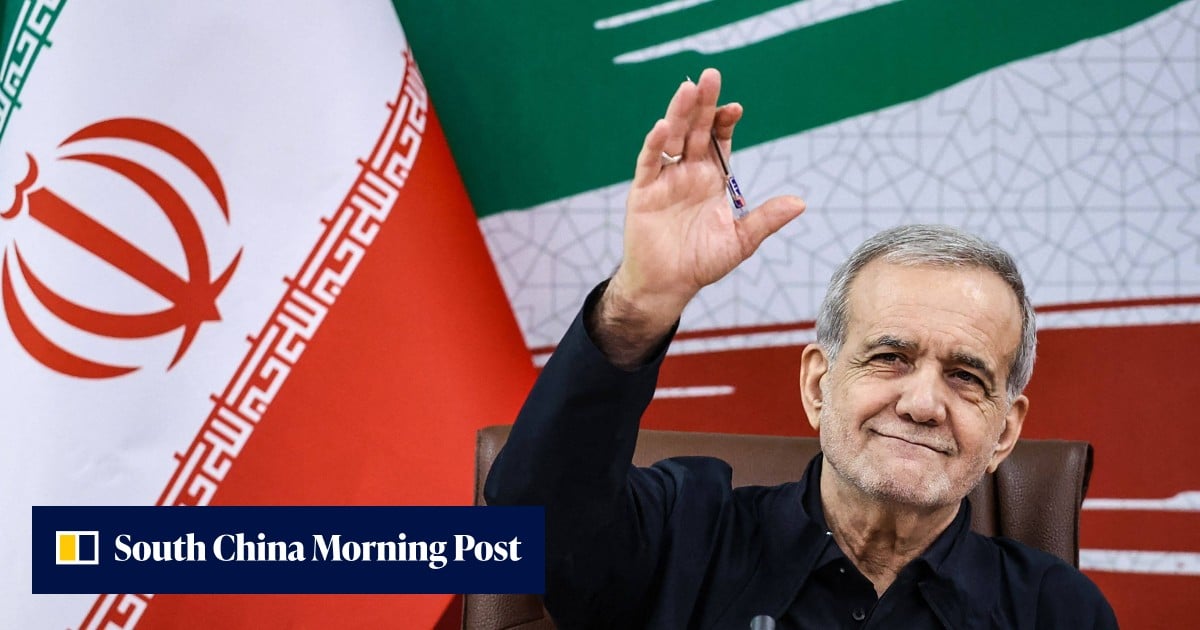
- Roughly even chance Iran and Oman will produce a limited maritime deconfliction arrangement over the next 0-30 days, but unlikely that the contacts will produce a durable US-Iran settlement. Tehran and Muscat have discussed maritime navigation, conditions for resuming talks, and a legal and technical framework for traffic. Iran has also stated that intermediary contacts do not constitute negotiations with Washington, while President Trump has said that no talks are ongoing or scheduled. President Pezeshkian's call to end the war from a position of strength provides an additional diplomatic opening, but does not resolve the conflicting public positions. This is an assessed judgement with medium confidence because the contacts are corroborated across several reports, while their political scope and effect on the conflict remain unclear. (Confidence: medium · ASSESSED)
- I&W: Iran and Oman publish a signed navigation protocol and verified commercial vessels begin using the agreed route. (0-30 days)
- I&W: Washington or Tehran publicly reiterates that no talks are taking place, while Iran repeats that the Oman channel does not guarantee safe navigation. (0-14 days)
- Very likely US sanctions pressure on Tehran will intensify over the next 0-30 days, while China will oppose unilateral sanctions and remain exposed through its dependence on Iranian oil. US Treasury Secretary Scott Bessent has stated that Washington will impose the toughest sanctions in history on Tehran. China opposes unilateral sanctions, buys more than 80 percent of Iran's shipped oil, and has already seen Iranian supplies tighten as the US blockade reduces Tehran's crude exports. Iranian officials acknowledge economic strain, soaring food prices and the interdependence of security and economic conditions. This is an assessed judgement with medium confidence because the US policy commitment and Chinese position are reported, but the timing, scope and enforcement of further measures remain unreported. (Confidence: medium · ASSESSED)
- I&W: The US Treasury publishes new measures against Iranian oil exports, shipping entities or firms supporting Tehran. (0-30 days)
- I&W: China's Foreign Ministry repeats its opposition to unilateral sanctions while reported Iranian oil deliveries to China remain below pre-blockade levels. (0-30 days)
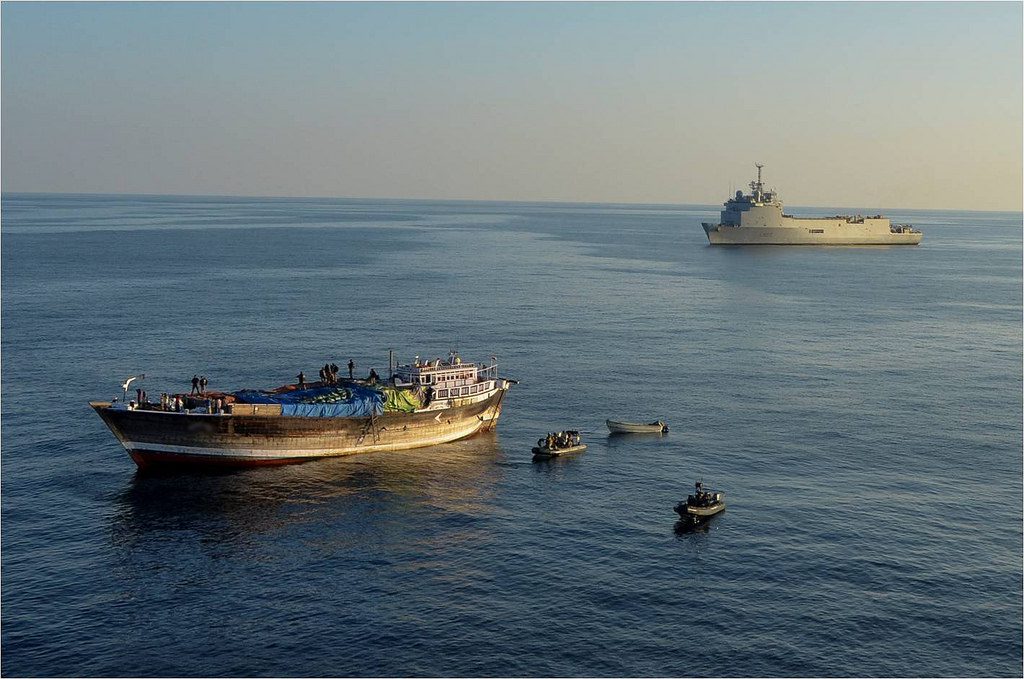
- Likely at least one further armed maritime security incident will be reported in the Gulf of Aden over the next 0-14 days. Naval authorities reported two attacks on ships during the week, while major-media reporting identified the oil-products tanker Sibu 1 and the cargo ship Lutuf as hijacked. A maritime piracy observer said incidents off Somalia are rising again, although the reported risk remains much lower than in 2009 and 2010. EUNAVFOR ASPIDES is operating to protect commercial vessels. This is an assessed judgement with medium confidence because the incident reporting is corroborated, but the perpetrators, vessel circumstances and relationship to the wider Iran conflict remain unconfirmed. (Confidence: medium · ASSESSED)
- I&W: UKMTO, naval authorities or EUNAVFOR ASPIDES report another armed boarding, hijacking or attempted diversion in the Gulf of Aden. (0-14 days)
- I&W: EUNAVFOR ASPIDES and naval authorities report no new armed boardings or hijackings for 14 consecutive days. (0-14 days)
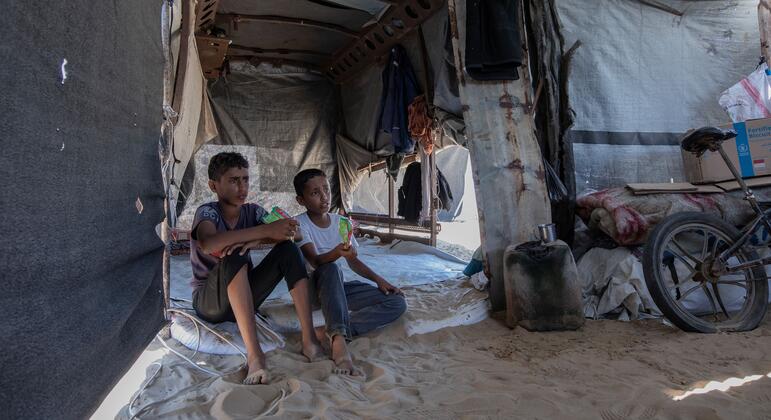
- Very likely humanitarian pressure will persist in Gaza and the West Bank over the next 1-3 months, while Lebanon faces additional economic strain. UN agencies report that 94 percent of Gaza's 2.1 million residents need shelter and that more than four out of five families face critical or catastrophic living conditions. Israeli restrictions continue to impede aid deliveries and services, while recent reporting records attacks on homes, property demolitions, arrests and settler violence in the West Bank. The World Bank expects Lebanon's economy to contract by 6.4 percent in 2026 and inflation to reach 17.5 percent. This is an assessed judgement with high confidence because UN, government, multilateral and major-media reporting corroborate the direction of humanitarian and economic pressure, although specific incident and casualty totals remain unsettled. (Confidence: high · ASSESSED)
- I&W: New UN situation reports record shelter needs near 94 percent in Gaza and continued Israeli restrictions on aid deliveries, shelter-building or waste collection. (1-3 months)
- I&W: UN agencies report restored access for essential services in Gaza and a sustained fall in shelter needs, while the World Bank revises down its Lebanese inflation or contraction outlook. (1-3 months)
- Likely France and the UK will continue developing an ad hoc coalition involving roughly a dozen countries for Hormuz, while NATO allies will avoid formal direct alliance involvement over the next 0-30 days. France and the UK are leading coalition efforts, and NATO has explored freedom-of-navigation options through a senior-level videoconference and a meeting hosted by Supreme Headquarters Allied Powers Europe. NATO allies have simultaneously sought to avoid direct involvement in the Iran conflict. This is an assessed judgement with medium confidence because coalition planning is corroborated, but no confirmed force contributions or formal NATO mission are reported. (Confidence: medium · ASSESSED)
- I&W: France, the UK or one of the roughly dozen proposed coalition states announces a named naval contribution or formal coalition mechanism for Hormuz. (0-30 days)
- I&W: NATO assigns the alliance an operational mission in Hormuz, or France and the UK suspend their coalition planning. (0-30 days)
Outlook & scenarios
Constrained standoff (52%)
Iran maintains partial restrictions on the Strait of Hormuz and Washington continues its naval counter-blockade. Commercial traffic remains low, Israeli operations continue in Gaza and southern Lebanon, and public threats substitute for a decisive change in military posture.
Limited Oman-mediated deconfliction (23%)
Iran and Oman formalise a narrow navigation arrangement that permits selected commercial transits without resolving the wider US-Iran conflict. The arrangement reduces immediate shipping pressure but remains vulnerable to a new military incident or renewed sanctions.
Regional spillover (17%)
A new attack involving a Mecca Joint Defence Agreement member, Hezbollah activity or an Israeli operation in southern Lebanon expands the conflict's regional dimensions. Saudi Arabia, Pakistan and Turkey face pressure to clarify how their mutual defence commitment applies, while maritime coalition planning accelerates.
Direct internationalisation of Hormuz security (8%)
A high-impact incident involving a commercial vessel prompts named coalition states to deploy forces for freedom of navigation. NATO remains formally outside the conflict, but its members become directly involved through an external coalition, increasing the risk of confrontation with Iranian forces.
Recommendations
- Maintain a daily fused maritime picture for the Strait of Hormuz that separates Iranian closure claims, US interdiction activity and independently observed commercial transits. Report clearly whether the evidence supports severe constraint, partial access or complete closure.
- Prioritise collection on Iran-Oman contacts. Record any signed navigation protocol, legal or technical provisions, named route, vessel exemptions and verified commercial transits separately from political statements about resuming US-Iran talks.
- Distinguish Iranian military rhetoric from observable force activity. Track missile and drone launches, naval movements, further boardings and official operational announcements alongside IDF activity in southern Gaza, central Gaza and southern Lebanon.
- Monitor US Treasury announcements, Chinese Foreign Ministry statements and changes in Iranian oil deliveries to China. Flag measures that target non-Iranian shipping firms, oil buyers or maritime insurers as indicators of wider economic pressure.
- Maintain a Gulf of Aden warning watch using reports from UKMTO, naval authorities and EUNAVFOR ASPIDES. Reconcile vessel names, flag states, locations and attacker descriptions before attributing hijackings to a specific organisation.
- Track the implementation of the France-UK coalition initiative for Hormuz, including named contributors, rules for safe passage and any distinction between an external coalition and a NATO operation.
- Use UN reporting as the baseline for Gaza humanitarian monitoring. Track shelter needs, aid access, fuel, waste collection and education services, while keeping West Bank settler attacks, demolitions and arrests separate from Gaza indicators.
- Update Lebanon analysis with separate military and economic lines. Monitor Israeli airstrikes and demolitions, UNIFIL-reported airspace violations, inflation and the World Bank's 2026 contraction outlook without treating the 2025 growth figure as evidence of recovery in 2026.
Confidence & uncertainty
Overall confidence is high because the assessment draws on corroboration from UN agencies, official government and military statements, major-media reporting, shipping data and trade publications. The direction of developments is consistent across the main reporting streams: Hormuz traffic is constrained, US maritime pressure is active, Iranian and Israeli military positions remain assertive, and humanitarian pressure is acute. The main uncertainties are the exact level of Hormuz traffic, the scope of Iran-Oman contacts, the status of US-Iran talks, attribution for Gulf of Aden hijackings and inconsistent dates in parts of the supplied reporting.
Intelligence gaps
- [EEI 1.1 · UNCOVERED] Movement, dispersal, or emplacement of Iranian conventional or IRGC heavy assets (ballistic missile launchers, Khoramshahr/Toofan-class missile transporters, ground-to-ground TELs, air defense batteries, amphibious units) from garrison areas toward forward bases or coastal launch sites. Recommended collection: satellite/IMINT
- [EEI 1.2 · PARTIAL] Authenticated Iranian military orders, NSC/IRGC operations directives, or senior leadership statements explicitly directing strikes against Israel or US forces or authorizing cross-border operations. Recommended collection: human/diplomatic
- [EEI 1.3 · UNCOVERED] Changes in Israeli and US force posture indicating anticipation of direct large-scale conflict, elevated readiness levels, mobilization notices, pre-positioning of munitions, or public/private orders to prepare offensive strikes. Recommended collection: open-source/diplomatic
- [EEI 2.1 · UNCOVERED] Observable pre-launch preparations for missile/rocket/cruise missile strikes (fueling, warhead mating, launcher orientation, support vehicle congregation) and abnormal munitions handling at known launch sites. Recommended collection: satellite/IMINT
- [EEI 2.2 · UNCOVERED] Indications of proxy arms shipments and weapons transfers (truck convoys, small boat transfers, container movements from Iran to proxies, new stockpiles in Lebanon, Iraq, Yemen, Syria). Recommended collection: maritime/AIS
- [EEI 2.3 · UNCOVERED] Evidence of cyber attack planning or active exploitation campaigns targeting Israeli or US military/critical infrastructure (emergence of new command-and-control servers, spear-phishing campaigns against defense personnel, successful intrusions). Recommended collection: cyber
- [EEI 3.1 · UNCOVERED] Movements and posture changes of US regional platforms (carrier strike groups, amphibious ready groups, B-52/B-1/B-2 or fighter deployments, missile defense assets repositioning) and associated armament loadouts. Recommended collection: satellite/IMINT
- [EEI 3.2 · UNCOVERED] Official or leaked US government/diplomatic communications indicating thresholds for strikes, authorization for offensive operations, or limits on action (NSC/DoD statements, congressional notifications, diplomatic notes). Recommended collection: diplomatic/human
- [EEI 3.3 · UNCOVERED] Changes in US base force-protection measures and rules of engagement at regional facilities (base lockdowns, evacuation notices, flight restrictions, activation of Local Defense Forces or missile intercept systems). Recommended collection: open-source/local reporting
- [EEI 4.1 · UNCOVERED] Hezbollah-specific indicators: convoys and logistics movements toward Lebanon, Israel border, artillery/rocket emplacement in southern Lebanon, documented strikes-preparation activity, public mobilization orders or recruitment drives. Recommended collection: satellite/IMINT
- [EEI 4.2 · UNCOVERED] Houthi-attributed maritime attack indicators: AIS anomalies/loss of contact for commercial vessels, reports of missile/drone strikes or near-miss incidents in Bab al-Mandeb/Red Sea, Houthi claims paired with imagery of weapons launches. Recommended collection: maritime/AIS
- [EEI 4.3 · UNCOVERED] Militia cross-border attack evidence from Iraq/Syria: recorded rocket/mortar launch events into Israel or strikes against US facilities, movement of armed convoys toward border areas, and intercepted communications coordinating cross-border operations. Recommended collection: signals/ELINT
Cited sources
[1] rferl.org · Iran Dismisses 'Unprecedented' Sanctions Proposed By US (A) · sha256:ffab65093103 [2] middleeasteye.net · Iran president says time to end war while in position of strength (B) · sha256:28b7204fc571 [3] thedailystar.net · Hormuz shipping unchanged amid US-Iran stalemate, data shows (B) · sha256:feda5af9e213 [4] The Jerusalem Post · Live Updates: Latest from Israel, Iran, and the Middle East | The Jerusalem Post (B) · sha256:df6791a7b8ea [5] businessupturn.com · Iran, Oman discuss conditions for restarting talks as Strait of Hormuz tensions persist (B) · sha256:d196e3dfd2d5 [6] alalam.ir · الأدميرال شهرام إيراني: لن نسمح للعدو بالتقدم ولو لخطوة واحدة - قناة العالم الاخبارية (A) · sha256:053ade85327e [7] gcaptain.com · Iran Vows 'Devastating' Response to US Threat to Cut Off Its Economic Lifelines (B) · sha256:ec2f20ca0068 [8] ar.webangah.ir · مقررة أممية: الجيش الإسرائيلي هو الأكثر انعداماً للأخلاق في العالم (B) · sha256:23ef914cb09c [9] United Nations · Middle East: 94 per cent need shelter in Gaza, Israel ramps up demolitions in Lebanon (A) · sha256:aa5d2b0f402c [10] scmp.com · Iran president says time to end war while Tehran is in position of strength (B) · sha256:348e50b2c79b [11] kayhan.ir · اللواء عبداللهي: رد إيران على التهديدات االخيرة لالعداء سيكون.. (B) · sha256:acd3c5beab38 [12] i24news.tv · Pezeshkian calls for ending war ‘from position of strength’ as Qalibaf warns Iran ‘won’t endure’ under economic stranglehold (B) · sha256:914c6a7f74ec [13] gcaptain.com · Piracy Observer Says Somali Incidents Rising as Navies Stretched (B) · sha256:8a3c3a8b2aaf [14] gov.uk · Minister renews calls for Israel to allow more aid into Gaza on first visit to the region (A) · sha256:ba76e538e65a [15] aljazeera.com · World Bank projects war-hit Lebanon’s economy to contract by 6.4 percent (A) · sha256:8de3b299d843 [16] devdiscourse.com · NATO's Role in Ensuring Freedom of Navigation in the Strait of Hormuz (A) · sha256:a5636604b0f8 [17] tbsnews.net · NATO members discuss Strait of Hormuz options without alliance involvement (B) · sha256:066c21a87eb4
Source content hashes were computed at collection time; the cited text is preserved unmodified for the life of this product.
TLP:CLEAR