TLP:CLEAR · Disclosure is not limited.
Middle East: Hormuz Pressure, Houthi Escalation and US-Iran Contact
Time window: Last 1 day · Audience: General analyst · Type: Situation report · DTG: 2026-09-22 22:43Z · Overall confidence: HIGH
BLUF
US-Iran contact has reopened a diplomatic channel, but the conflict is very likely to remain multi-front over the next 0-14 days. Strait of Hormuz traffic is materially disrupted despite Iran's conditional seven-day reopening offer and Saudi Arabia's East-West Pipeline restart; Houthi attacks on Riyadh and Red Sea pressure keep direct US involvement and wider regional escalation as live risks.
Executive summary
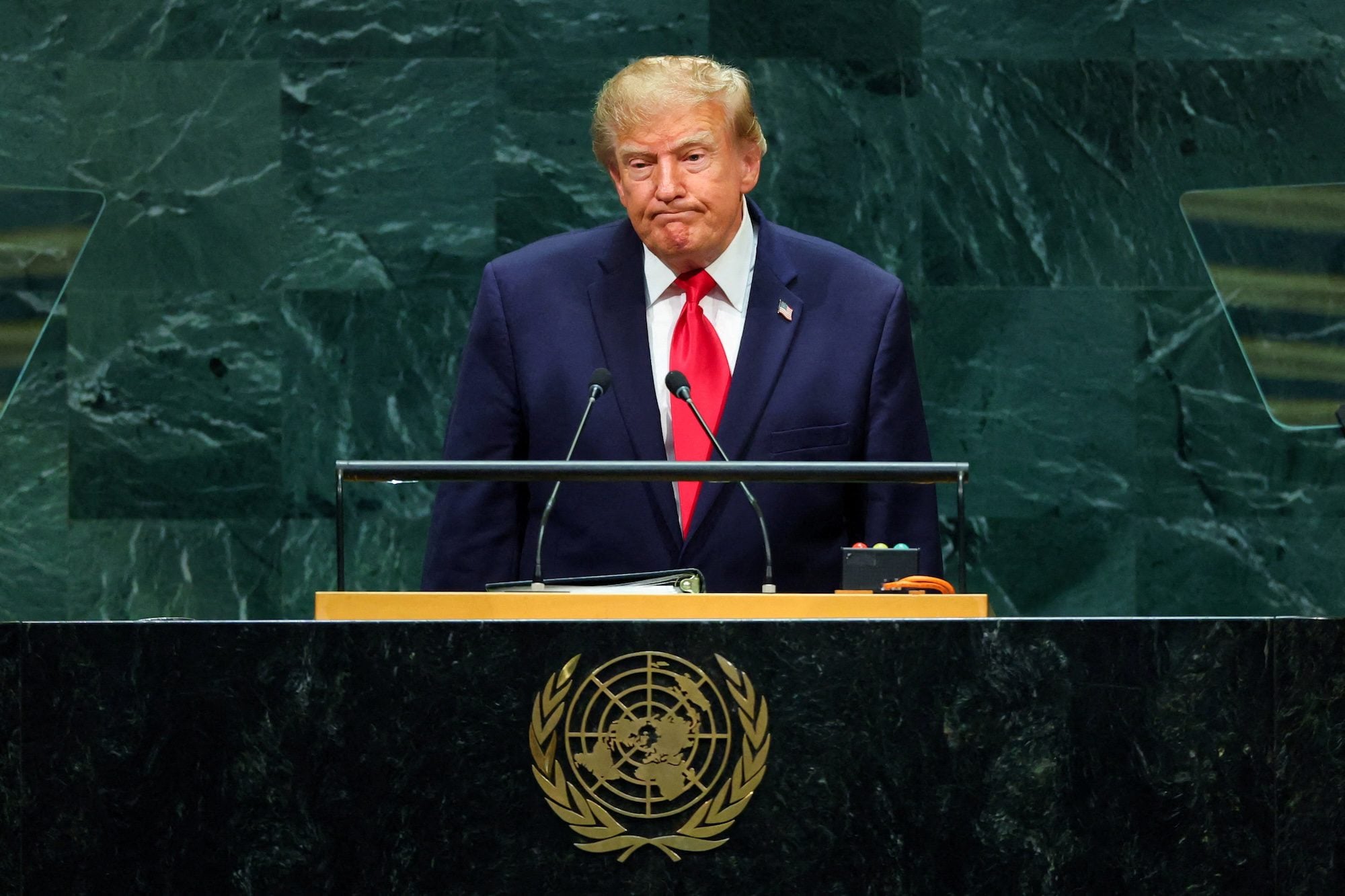
Reporting on 22 September indicates simultaneous military, maritime and diplomatic pressure. Iranian Foreign Minister Abbas Araghchi met US special envoy Steve Witkoff in New York, while Donald Trump called for Iran's complete economic isolation and continued to issue threats against Tehran. Iran offered to reopen the Strait of Hormuz within seven days if Washington eased military pressure and lifted its blockade, but only 17 commodity vessels crossed the waterway over one recent weekend. Saudi Arabia restarted its East-West Pipeline, while Houthi attacks and territorial advances in Yemen continued to threaten Riyadh, Red Sea shipping and the Bab el-Mandeb corridor. The principal uncertainties are whether the Hormuz offer will produce verifiable traffic normalisation and whether Washington will resume planned strikes against the Houthis.
Change from previous assessment
Since the 21 September brief, the assessment now gives greater weight to the reopening of a direct US-Iran channel after the 22 September Araghchi-Witkoff meeting. Iran's conditional seven-day Hormuz reopening offer and Saudi Arabia's East-West Pipeline restart introduce clearer pathways to partial economic relief, so the assessment has shifted from a mainly disruption-focused outlook to one of continued disruption with a roughly even chance of limited improvement. Confidence in sustained multi-front conflict remains high. The assessment adds a low-confidence judgment on possible direct US action against the Houthis because reporting now shows that strikes were prepared and cancelled, while retaining the prior concerns over Houthi attacks, maritime disruption and humanitarian costs.
Key judgments
- It is very likely that the Iran-Israel conflict will remain a multi-front confrontation over the next 0-14 days, with Iran's military central command and the IRGC threatening retaliation against US bases, interests and allies, the Houthis claiming missile and drone attacks on Riyadh, and the Israeli military maintaining a high security alert across Israel. Confidence is high because these developments are supported by multiple major-media, wire-service and official or state-media reports, although Houthi damage and casualty details remain contested. (Confidence: high · ASSESSED)
- I&W: Confirming indicator: a new Houthi missile or drone launch against Saudi Arabia or Red Sea shipping, or a fresh IRGC or Iranian military central command warning naming US bases, interests or allies as targets. (0-14 days)
- I&W: Breaking indicator: a formal US-Iran ceasefire announcement followed by at least seven consecutive days without a reported Houthi strike, Iranian retaliation warning or new Israeli military alert. (0-14 days)
- It is very likely that commercial shipping through the Strait of Hormuz will remain materially disrupted over the next 0-14 days, while it is unlikely that available reporting will establish a fully closed waterway. There is a roughly even chance of partial traffic improvement if Iran's seven-day reopening offer is matched by US easing of military pressure and the lifting of the blockade on Iranian ports. Confidence is medium because the traffic decline is supported by major-media reporting, but the tanker attack remains unattributed and the reopening offer is conditional and untested. (Confidence: medium · ASSESSED)
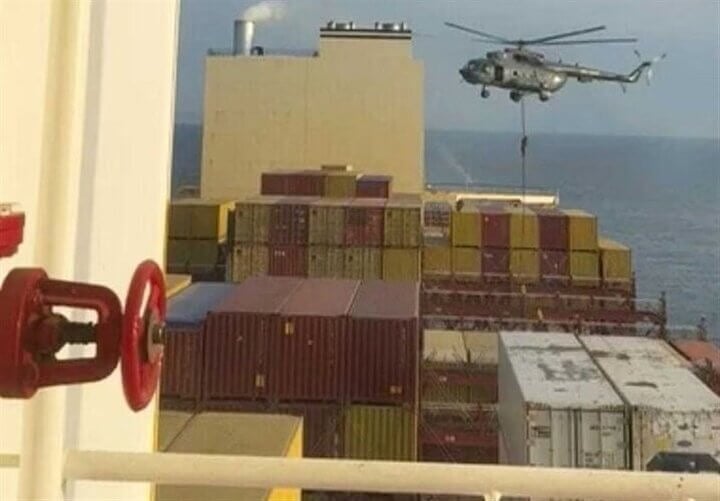
- I&W: Confirming indicator: commodity vessel transits remain below 30 per day for three consecutive days, or another commercial vessel is detained, struck or warned against unauthorised passage by Iran's Persian Gulf Strait Authority. (0-14 days)
- I&W: Breaking indicator: Iran withdraws its authorisation requirement and verified daily commodity transits rise above the recent 37-vessel weekly level for three consecutive days, accompanied by no new tanker incident. (0-14 days)
- It is unlikely that the 22 September Araghchi-Witkoff contact will produce a durable US-Iran settlement over the next 0-14 days, although there is a roughly even chance that it will produce a short-term deconfliction measure. The public meeting and Iran's proposal through mediators provide a live channel, but Trump's call for complete economic isolation, his threats against Iran, the IRGC demand for a full US and Israeli military withdrawal, and the collapse of the July interim deal leave the parties' positions sharply opposed. Confidence is medium because the contact is corroborated by major-media and wire-service reporting, while its effect on policy remains untested. (Confidence: medium · ASSESSED)
- I&W: Confirming indicator: another public US-Iran meeting or written proposal is followed by a US announcement easing the blockade and an Iranian announcement removing or suspending Hormuz transit restrictions. (0-14 days)
- I&W: Breaking indicator: either government publicly rejects further talks, or a new US, Israeli or Iranian strike occurs after the 22 September meeting. (0-14 days)
- There is a roughly even chance that the United States will conduct direct military action against the Houthis over the next 0-14 days rather than maintain the current pause. Donald Trump reportedly prepared and then cancelled strikes, Saudi Crown Prince Mohammed bin Salman repeatedly pressed Washington to intervene, and Houthi leader Abdel-Malik al-Houthi warned against direct US involvement. Confidence is low because the preparation and cancellation reporting derives largely from one New York Times account repeated in related reports, while some Houthi battlefield reporting is single-source. (Confidence: low · ASSESSED)
- I&W: Confirming indicator: the White House or US Central Command announces strikes against Houthi positions, or US forces begin publicly acknowledged strike preparations in the Red Sea or Yemen. (0-14 days)
- I&W: Breaking indicator: the US President publicly rules out direct action against the Houthis and the Houthis repeat their stated commitment not to fight the United States without launching a new attack. (0-14 days)
- It is likely that the regional economic effect will remain volatile rather than move in a single direction over the next 0-14 days. Brent crude fell 2% to $98.33 a barrel and WTI fell 2.61% to $93.28 after signals of a possible Hormuz reopening, while only 17 commodity vessels crossed the strait over one recent weekend, Houthi advances threatened the Bab el-Mandeb corridor, and Saudi Arabia restarted the East-West Pipeline to Yanbu at reduced volume. Confidence is medium because price and supply indicators point in opposite directions and the operational effect of the pipeline restart is not yet established. (Confidence: medium · ASSESSED)
- I&W: Confirming indicator: Brent and WTI move sharply in opposite directions on successive days in response to US-Iran statements, while Hormuz transits remain below the recent 37-vessel weekly level or Red Sea shipping warnings increase. (0-14 days)
- I&W: Breaking indicator: Saudi Arabia verifies sustained East-West Pipeline exports from Yanbu and Hormuz commodity transits return to at least the previous weekly level without a new maritime incident. (0-14 days)
- It is very likely that humanitarian pressure in Yemen will remain high over the next 1-3 months. The World Health Organization reported 674 deaths and almost 3,000 injuries since 6 August, including 164 deaths and 516 injuries between 13 and 18 September, while officials reported more than 158,000 people displaced. Confidence is medium because the figures are reported through a combination of WHO and unspecified official sources, and the future course of the fighting remains uncertain. (Confidence: medium · REPORTED)
- I&W: Confirming indicator: WHO or another named multilateral organisation reports additional deaths, injuries or displacement linked to fighting in Taiz, Lahj, al-Jawf, Saada or Marib. (1-3 months)
- I&W: Breaking indicator: a verified cessation of hostilities is followed by a sustained halt in frontline fighting and documented returns of displaced Yemenis to their homes. (1-3 months)
Outlook & scenarios
Conditional deconfliction and partial Hormuz reopening (35%)
Iran and the United States use the Araghchi-Witkoff channel to establish limited deconfliction. Washington eases military pressure, Tehran begins the seven-day Hormuz reopening process, and Saudi Arabia restores reduced exports through Yanbu. Houthi attacks continue at a lower tempo, leaving Red Sea and Bab el-Mandeb risks unresolved.
Prolonged multi-front confrontation (55%)
The diplomatic channel produces no durable arrangement. Iran maintains pressure on Hormuz, the Houthis sustain attacks against Riyadh and Red Sea shipping, and Israel remains on high alert. Shipping remains materially disrupted, while energy prices fluctuate between fears of further disruption and expectations of additional Saudi supply.
Direct US-Houthi escalation, high-impact wildcard (20%)
Washington reverses the decision to cancel prepared strikes and conducts direct action against Houthi positions in Yemen. The Houthis respond against US interests, Saudi Arabia or maritime traffic, while Iran's warnings against US bases and allies become operational. This scenario has a low probability but would sharply increase the risk of a wider regional conflict and longer-lasting shipping disruption.
Recommendations
- Prioritise daily collection on the Strait of Hormuz: count commodity vessel transits, record Iranian authorisation notices, identify any new detentions or attacks, and separate confirmed incidents from unattributed reports.
- Track implementation rather than rhetoric in the US-Iran channel. Record further meetings, written proposals, any US change to the blockade, Iranian changes to transit restrictions, and verified changes in shipping activity.
- Establish a specific warning watch for direct US action against the Houthis, including public strike orders, force movements, Saudi requests for intervention, Houthi warnings and any change to the reported US-Houthi non-conflict understanding.
- Monitor Saudi Arabia's East-West Pipeline through verified export volumes from Yanbu rather than relying on the restart announcement alone. Compare those volumes with Hormuz and Red Sea shipping data.
- Maintain separate reporting lines for the Strait of Hormuz and Bab el-Mandeb. The current evidence concerns both waterways, but the available reporting does not establish that Houthi operations are geographically centred on both at the same time.
- Flag casualty and damage figures that remain contested, particularly the reported Houthi attack on Riyadh and the differing Iranian maritime damage counts, until independent confirmation is available.
- Include Yemen's reported casualty and displacement figures in near-term regional risk assessments, with updates from WHO or other named multilateral sources given priority.
Confidence & uncertainty
Overall confidence is high because the main developments are corroborated by multiple major-media, wire-service, multilateral and official or state-media reports. The strongest evidence concerns the 22 September Araghchi-Witkoff meeting, Iranian and US statements, reduced Hormuz traffic, Houthi attacks on Riyadh and Saudi Arabia's pipeline restart. The main uncertainties concern attribution of tanker incidents, the operational meaning of Iran's conditional reopening offer, the scale of Houthi battlefield gains and whether Washington will resume direct strikes.
Intelligence gaps
- [EEI 1.1 · UNCOVERED] Number, type, launch times, and trajectories of ballistic missiles, cruise missiles, armed UAV strikes, and combat-air sorties launched by Iranian or Israeli forces toward the other's territory or forward bases within a 72-hour window. Recommended collection: signals/intel
- [EEI 1.2 · PARTIAL] Observable changes in Israeli and Iranian force posture: mobilization or reserve call-up orders, unit road/rail movements, dispersal or sortie rates of air squadrons, redeployment of air-defense batteries, and activation of civil-defense alerts or sirens in major population centers. Recommended collection: open-source/media
- [EEI 1.3 · PARTIAL] Indications of strike authorization or targeting preparations in Iranian or Israeli command chains: authenticated public orders by senior commanders, detected increases in encrypted communications consistent with targeting, or visible movement of strike munitions to launch/storage sites. Recommended collection: signals/intel
- [EEI 2.1 · UNCOVERED] Counts, launch locations (coordinates), weapons types, and assessed damage from rocket/missile/drone strikes originating from Lebanon into northern Israel attributed to Hezbollah or allied groups. Recommended collection: open-source/media
- [EEI 2.2 · PARTIAL] Reported attacks by Iranian-backed militias in Iraq and Syria: rocket/IED strikes on bases hosting US/coalition or Israeli personnel, documented militia unit movements toward borders, and captured movement or transfer of weapons systems to forward militia positions. Recommended collection: human
- [EEI 3.1 · PARTIAL] Movements and arrival dates of foreign military assets into the region: carrier strike groups, amphibious ships, surface combatants, strategic airlift/tanker deployments, and air/sea patrol patterns by US, European, Russian, or regional militaries. Recommended collection: imagery/satellite
- [EEI 3.3 · PARTIAL] Immediate commercial and market indicators: rerouting of commercial tankers and container vessels (e.g., avoidance of Bab el-Mandeb or Strait of Hormuz), sudden spikes in war-risk insurance premiums for regional sea lanes, temporary port closures, and near-term price moves in regional benchmark crude tied to incidents. Recommended collection: financial/market
Cited sources
[1] Travel Tomorrow · US urges citizens to ‘seriously reconsider’ Middle East travel plans (C) · Tue Sep 22 2026 14:09:11 GMT+0000 (Coordinated Universal Time) · sha256:c7a2fa092486 [2] independent.co.uk · US government tells Americans to ‘seriously reconsider’ travel to the Middle East (F) · Tue Sep 22 2026 07:51:21 GMT+0000 (Coordinated Universal Time) · sha256:e5e790b8d183 [3] The Business Standard · IRGC calls for full US, Israel military withdrawal from the Middle East (B) · Tue Sep 22 2026 16:45:00 GMT+0000 (Coordinated Universal Time) · sha256:43fca862ad89 [4] The Chosun Daily (chosun.com) · War-Torn Nations Win Medals Amid Asian Games Missile Strikes (A) · Tue Sep 22 2026 15:44:29 GMT+0000 (Coordinated Universal Time) · sha256:362e45aaaa32 [5] ABC News · Houthis' escalating attacks on Saudi Arabia give Iran leverage in the Middle East (A) · Mon Sep 21 2026 22:39:49 GMT+0000 (Coordinated Universal Time) · sha256:a1268675e2b1 [6] Online Khabar · Tanker attacked in Hormuz as US-Iran tensions escalate (D) · Tue Sep 22 2026 10:19:52 GMT+0000 (Coordinated Universal Time) · sha256:85f2f4ce846f [7] Sunday Guardian Live · Oil Price Today: Why Are Crude Prices Falling To A 2-Week Low As Iran Signals 7-Day Strait Of Hormuz Reopening And Saudi Restarts Pipeline? (B) · Tue Sep 22 2026 12:26:49 GMT+0000 (Coordinated Universal Time) · sha256:505742acf689 [8] Business Insider Africa · The value of Africa’s most powerful military nation to the US comes into focus as the head of the CIA discusses some of the world’s most critical issues in Cairo (B) · Tue Sep 22 2026 15:10:14 GMT+0000 (Coordinated Universal Time) · sha256:85dc66ac26cc [9] The Maritime Executive · Iran Plans to Sell Seized Commercial Ships to “Compensate” Fishermen (C) · sha256:a6c01886ed9a [10] Reuters (republished by gCaptain) · Trump Calls for Iran’s Economic Isolation at UN as Tehran Offers Hormuz Reopening (A) · Tue Sep 22 2026 16:05:08 GMT+0000 (Coordinated Universal Time) · sha256:5aea7be4dab2 [11] Middle East Eye · Live: Trump says choosing to make a deal or 'annihilate' Iran (B) · Tue Sep 22 2026 08:28:43 GMT+0000 (Coordinated Universal Time) · sha256:52383ced4f90 [12] aljazeera.com · Houthis battle for strategic heights in Yemen as thousands more flee homes (F) · Tue Sep 22 2026 04:48:29 GMT+0000 (Coordinated Universal Time) · sha256:08b38c187f66 [13] Reuters (republished by gCaptain) · France Mulls New UN Security Council Resolution on Hormuz (A) · Tue Sep 22 2026 16:34:46 GMT+0000 (Coordinated Universal Time) · sha256:08eb0524ebd4
Source content hashes were computed at collection time; the cited text is preserved unmodified for the life of this product.
TLP:CLEAR