TLP:CLEAR · Disclosure is not limited.
Middle East Humanitarian SITREP: Gaza, Yemen and Lebanon under strain as Hormuz reopens with residual risk
Time window: Last 7 days · Audience: General analyst · Type: Situation report · DTG: 2026-06-19 00:13Z · Overall confidence: MEDIUM
BLUF
Acute humanitarian needs in Gaza, Yemen and southern Lebanon persist despite new diplomacy and funding pledges. The Strait of Hormuz has reopened, but mine threats and routing constraints will likely limit near‑term throughput that underpins aid and commodity flows.
Executive summary
Reporting this week points to entrenched humanitarian crises in Gaza and Yemen and sustained risk to civilians in southern Lebanon amid ongoing cross‑border fire. The UK, Canada and Australia launched a new International Peace Fund for Israel and Palestine and Canada announced additional humanitarian funding, while Egyptian, Qatari and Turkish mediation with Palestinian factions continued in Cairo. In the Gulf, U.S. Central Command and the Joint Maritime Information Center confirmed the reopening of the Strait of Hormuz and an end to blockade enforcement, and multiple tankers transited the strait. However, active mine‑clearance and restricted traffic lanes indicate a cautious and gradual normalisation. Across the region, food insecurity remains a primary driver of instability and displacement, with Yemen and Palestine identified as critical hotspots and appeals heavily underfunded.
Key judgments
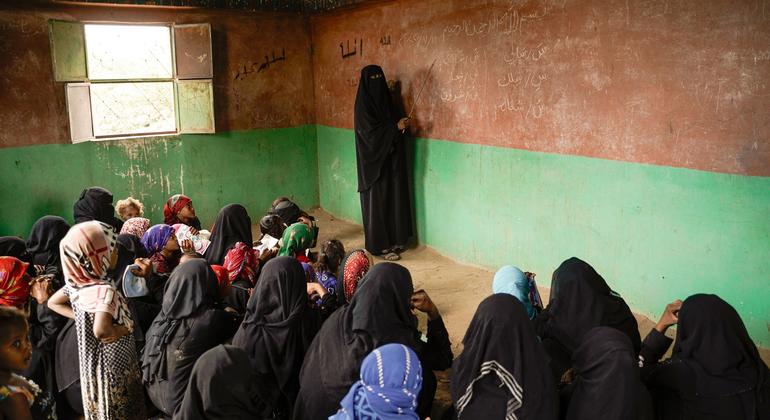
- Gaza almost certainly remains in an acute humanitarian emergency, with widespread food insecurity, renewed displacement and constrained aid access despite ceasefire frameworks and fresh funding announcements. (Confidence: high · ASSESSED)
- I&W: Israel formally lifts specified 'dual use' restrictions on essential items for Gaza relief operations and UNRWA reports unrestricted access across all governorates. (0-3 months)
- I&W: UN reporting shows week‑on‑week decreases in newly displaced households inside Gaza for at least four consecutive weeks. (1-3 months)
- Yemen very likely faces a worsening humanitarian crisis driven by severe hunger, funding shortfalls and economic pressure, compounded by constraints on humanitarian personnel, despite limited mitigation from Saudi fuel support and stated government reforms. (Confidence: high · ASSESSED)
- I&W: UN financial tracking shows Yemen’s response plan remains below 25 percent funded and WFP/FAO update keeps Yemen among top hunger hotspots. (1-3 months)
- I&W: Conflict parties complete release of over 1,600 detainees and Houthi forces free the 73 detained UN staff, enabling expanded humanitarian access. (0-3 months)
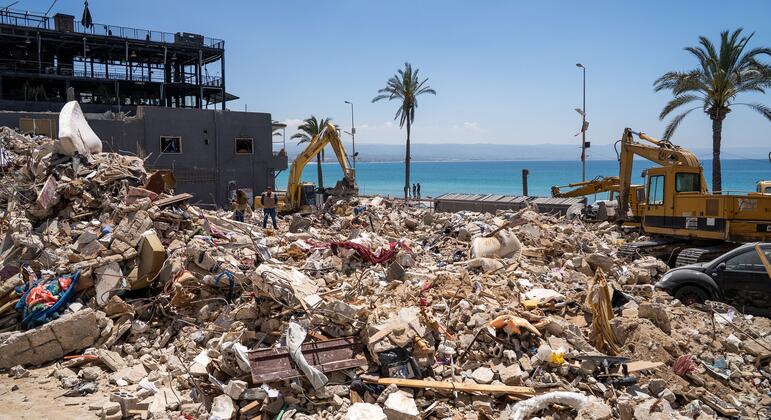
- It is likely that southern Lebanon will remain unsafe for large‑scale returns in the near term given continuing Israeli military activity and high civilian harm, even as UNIFIL has observed intermittent decreases in exchanges of fire and some families assess conditions. (Confidence: medium · ASSESSED)
- I&W: UNIFIL continues to log triple‑digit trajectory counts on multiple days per week and the Lebanese Armed Forces keep advisories against returns to high‑risk areas in effect. (0-2 months)
- I&W: A two‑week verified absence of cross‑border exchanges of fire and a Government of Lebanon directive enabling organised returns to affected localities. (0-2 months)
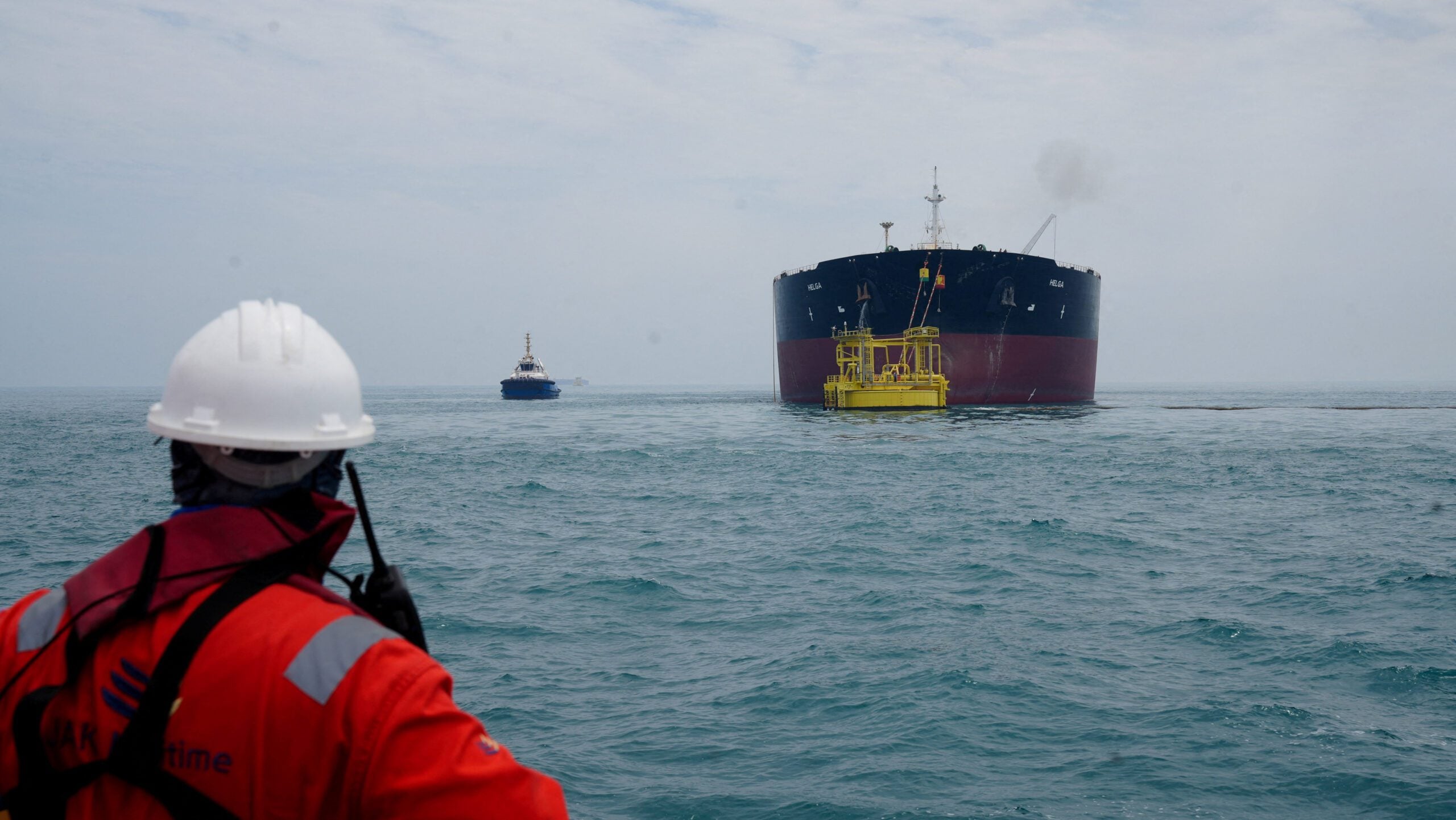
- The Strait of Hormuz has reopened and tanker traffic is resuming, but it is likely that active mine‑clearance and restricted routing will keep throughput below pre‑war levels for weeks, keeping logistics for energy and relief commodities tight. (Confidence: medium · ASSESSED)
- I&W: JMIC or NAVCENT confirms completion of mine‑clearance in the Traffic Separation Scheme and reinstatement of full traffic lanes. (0-8 weeks)
- I&W: A new mine incident or security advisory raising the regional maritime threat level, or renewed enforcement operations restricting transits. (0-8 weeks)
- Despite de‑escalation steps, regional security risks remain elevated across the Gulf and Levant, with recent Iranian strikes, active advisories for aviation and U.S. drawdowns in the UAE, and continuing Israel, Hezbollah exchanges. (Confidence: medium · ASSESSED)
- I&W: FAA maintains or expands NOTAM coverage for U.S. carriers in the Gulf region and U.S. travel advisories for the UAE remain at current levels or higher. (0-2 months)
- I&W: Sustained two‑week cessation of Israel, Hezbollah exchanges verified by UNIFIL and easing of U.S. government departure orders for the UAE. (0-2 months)
- Food insecurity is very likely to remain a primary driver of instability and displacement in Yemen and Palestine through the next quarter, given conflict‑driven access constraints and severe funding gaps in global food security appeals. (Confidence: high · ASSESSED)
- I&W: No establishment of a humanitarian transit corridor for fertiliser shipments via Hormuz and food security funding remains near one‑third of prioritised needs. (1-3 months)
- I&W: Donors close at least 80 percent of prioritised food security requirements and agriculture support is scaled up ahead of planting seasons. (1-3 months)
Outlook & scenarios
Managed de‑escalation and cautious normalisation (45%)
The U.S., Iran process holds, maritime advisories remain in effect but mine‑clearance opens full lanes, and tanker traffic trends upward. Gaza conditions stay fragile but stabilise modestly with new funding and incremental access gains. Southern Lebanon sees fewer exchanges monitored by UNIFIL, though sporadic incidents continue.
Protracted humanitarian squeeze (50%)
Mine threats and routing limits keep Hormuz flows constrained. Gaza access restrictions persist and displacement continues. Yemen’s response plan remains severely underfunded amid rising prices and constrained aid operations, with acute malnutrition rising. In southern Lebanon, intermittent fire deters large‑scale returns.
Relapse to escalation and renewed disruption (20%)
The U.S., Iran track falters, prompting fresh strikes or maritime incidents that slow or halt transits. Fuel and fertiliser logistics tighten again, amplifying food insecurity in Yemen and Palestine. Israel, Hezbollah exchanges intensify, raising civilian casualties and displacement.
Recommendations
- Prioritise collection on Gaza access constraints: track any formal changes to Israel’s 'dual use' list and UNRWA operational status; brief on implications for food assistance scale‑up.
- Task maritime monitoring to JMIC and NAVCENT advisories and daily ship movements through Hormuz; maintain a near‑term forecast of route capacity and mine‑clearance progress for energy and fertiliser supply chains.
- Support interagency planning for a humanitarian fertiliser transit corridor via Hormuz, aligned with Congressional calls, to mitigate knock‑on food security risks.
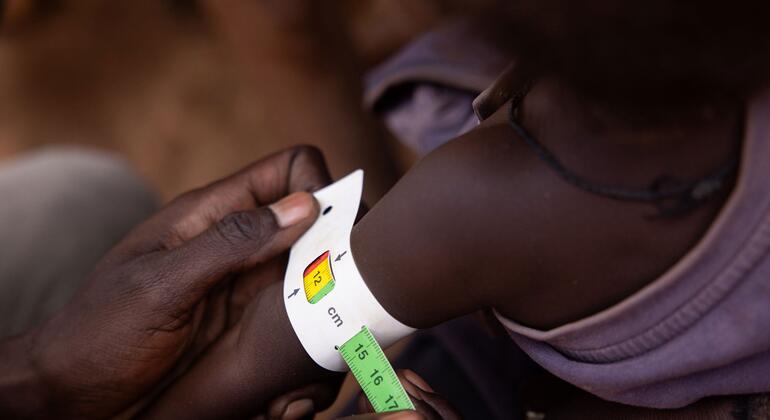
- Engage donor coordination on Yemen to raise response plan funding above critical thresholds and to resource acute malnutrition treatment for the reported 2.2 million under‑fives.
- Maintain elevated security posture for personnel and partners in the UAE and Lebanon in line with FAA and State advisories; integrate UNIFIL trajectory data into movement risk matrices.
- Back local agriculture support where feasible, given FAO evidence of its efficiency in sustaining food production and reducing aid dependency.
Confidence & uncertainty
Overall confidence is medium‑to‑high. Most judgments rest on multilateral and official reporting on humanitarian conditions, policy steps and maritime status. Confidence is moderated by dynamic conditions in the Gulf sea lanes and by mixed signals in southern Lebanon, where both escalatory and de‑escalatory indicators are present. Gaza casualty and needs reporting varies by source and timeframe, though multiple independent statements converge on severe and continuing humanitarian distress.
Alternative analysis (red cell)
The evidence supports a more granular assessment: Gaza shows severe needs in many localities but also signs of ceasefire-related relief and donor commitments that could produce localized improvement; treating it as uniformly 'acute' today is an overreach without recent distribution and market data. For the Strait of Hormuz and regional risk, contradictory medium/low-quality reports of reopening and mine hazards mean throughput and regional tensions could plausibly trend toward either constrained recovery or faster normalization; targeted naval, commercial, and humanitarian monitoring would resolve which scenario is unfolding.
Cited sources
[1] UK Government · We urge Israel to immediately remove unjustifiable restrictions on humanitarian access: UK statement at the UN Security Council (A) · sha256:2b923f1dd46a [2] Wikipedia · Gaza humanitarian crisis (B) · sha256:4df66f949dca [3] United Nations · World News in Brief: Risky return home in Lebanon, displacement in Gaza, emergency funding for Somalia (A) · sha256:78d1f372127a [4] jpost.com · Canada pledges $100m. for Palestinian aid amid UNRWA staff Hamas controversy (B) · sha256:31f2e1af99ed [5] People's Daily · 加沙和平为何总是“停在纸上”?(环球走笔) (B) · sha256:2343c41ad3ab [6] United Nations · Worsening hunger could push millions closer to famine in 13 global hotspots (A) · sha256:69ceed483836 [7] United Nations · 也门:联合国呼吁抓住地区局势缓和契机重启政治进程 (A) · sha256:431535c0516b [8] United Nations · Lebanon: 12 children killed, maimed daily, despite Hezbollah-Israel truce (A) · sha256:62ce650be4f1 [9] gcaptain.com · U.S. Officially Ends Maritime Blockade of Iran and Declares Hormuz Open (A) · sha256:79e946ea8d1a [10] gcaptain.com · Three Saudi-Flagged Supertankers Sail Through Hormuz After Iran Deal Signed, Data Shows (A) · sha256:6451ebd1b9c4 [11] theguardian.com · Middle East crisis: Trump says US expects ‘complete ceasefire on all fronts, including Lebanon, Hezbollah and Israel’ – as it happened (A) · sha256:aa04dfdd9292 [12] gcaptain.com · Maritime Industry Demands Clarity on Hormuz Reopening as Mine Risks Persist (B) · sha256:95da5e306d15 [13] gcaptain.com · Qatar Brings Empty LNG Ship Back for First Time Since War Began (A) · sha256:a8c7956a115c [14] jpost.com · Voices from the Arab press: Attacking civilians is never justified (B) · sha256:97ce4ce2c472 [15] U.S. Department of State · United Arab Emirates Travel Advisory (A) · sha256:7a0c71f2991b [16] Atlantic Council · What the US-Iran deal means for the rest of the Middle East (and beyond) (C) · sha256:5f93318fe142 [17] House Foreign Affairs Committee · Meeks, Himes Call on Rubio to Avert Humanitarian Crisis (A) · sha256:6640ade2ff48
Source content hashes were computed at collection time; the cited text is preserved unmodified for the life of this product.
Red cell review: PARTIAL DISSENT
TLP:CLEAR