TLP:CLEAR · Disclosure is not limited.
Middle East: Iran-Israel Conflict Widens Across the Gulf and Red Sea
Time window: Last 1 day · Audience: General analyst · Type: Situation report · DTG: 2026-09-08 19:42Z · Overall confidence: HIGH
BLUF
Very likely the conflict will remain active across Iran, the Strait of Hormuz, southern Saudi Arabia and Yemen over the next 0-14 days. The immediate risk is sustained restriction and episodic attacks that keep US forces, Saudi energy sites and commercial shipping exposed while Qatar, Oman and China pursue limited de-escalation.
Executive summary
On 8 September 2026, reported Iranian attacks killed US personnel in Kuwait, Jordan and Saudi Arabia and damaged five KC-135 aircraft at Prince Sultan Air Base. Houthi attacks reportedly wounded 73 people in southern Saudi Arabia and caused fires and temporary disruption at energy facilities, while fighting in Yemen reached its most serious level since the 2022 truce. Iran has tightened restrictions around the Strait of Hormuz, where traffic remains sharply reduced, but claims of an effective closure conflict with evidence of continuing transits. Qatar, Oman, China and Russia are pursuing diplomatic or maritime initiatives, although no durable US-Iran ceasefire is in place. New UK and US sanctions are adding pressure on Iran as Israel maintains a stated objective of regime change in Tehran.
Change from previous assessment
Since the 7 September 2026 brief, the assessment has shifted towards a higher risk of regional widening. New reporting adds US personnel killed in Kuwait, Jordan and Saudi Arabia, damage to five KC-135 aircraft at Prince Sultan Air Base, 73 reported wounded in southern Saudi Arabia and fires at southern Saudi energy facilities. The Yemen judgement is strengthened by reporting that fighting is the most serious since 2022 and that the Houthis have threatened a broader operation. Confidence remains high that Hormuz disruption will continue, but confidence in its exact scale is lower because the reported 85 percent traffic decline conflicts with the 10-ship daily commodity-transit figure and Rystad's lower tonnage estimate. Diplomatic activity has broadened through Qatar-China talks, proposed Qatar-Iran safe passage and Russia's offer to assist, but the assessment that a durable ceasefire is unlikely remains unchanged. New UK and US sanctions and clearer Israeli regime-change rhetoric add pressure to the nuclear and diplomatic dimensions.
Key judgments
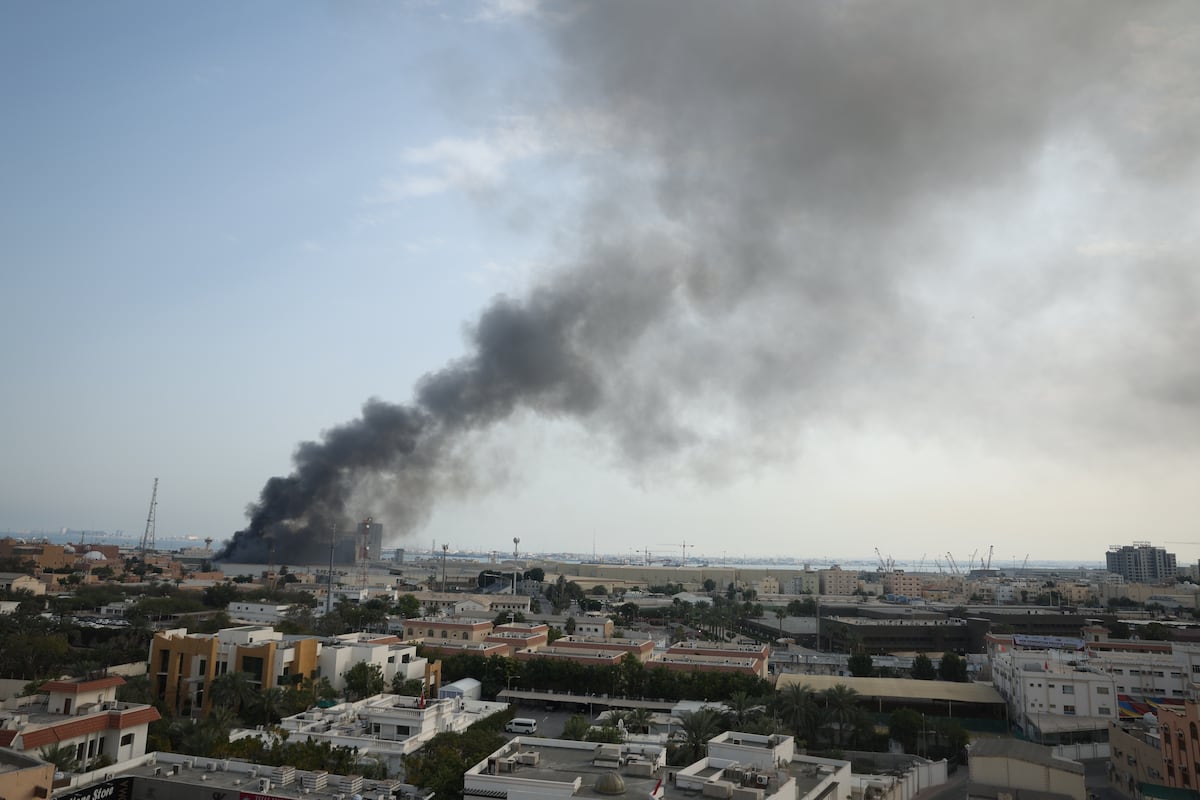
- Very likely US-Iran military exchanges and attacks on US-linked facilities will continue over the next 0-14 days. Reported incidents include an Iranian one-way attack drone strike on a makeshift operations centre at a civilian port in Kuwait that killed US troops, attacks that killed US troops at Muwaffaq Salti Air Base in Jordan and Prince Sultan Air Base in Saudi Arabia, and damage to five KC-135 aircraft at Prince Sultan. Iran and the United States also exchanged strikes over the weekend. Accounts conflict over whether an Iranian missile attack on US warships was successful or thwarted. Confidence is medium because the casualty and aircraft-damage reporting is concentrated in trade reporting and the missile outcome remains contested. (Confidence: medium · ASSESSED)
- I&W: Confirmation: Iran conducts another missile or one-way attack drone strike against US personnel, aircraft or facilities in Kuwait, Jordan, Saudi Arabia or another Gulf location. (0-14 days)
- I&W: Break: Iran and the United States announce and observe a halt to attacks, with no further reported strikes for seven consecutive days. (0-14 days)
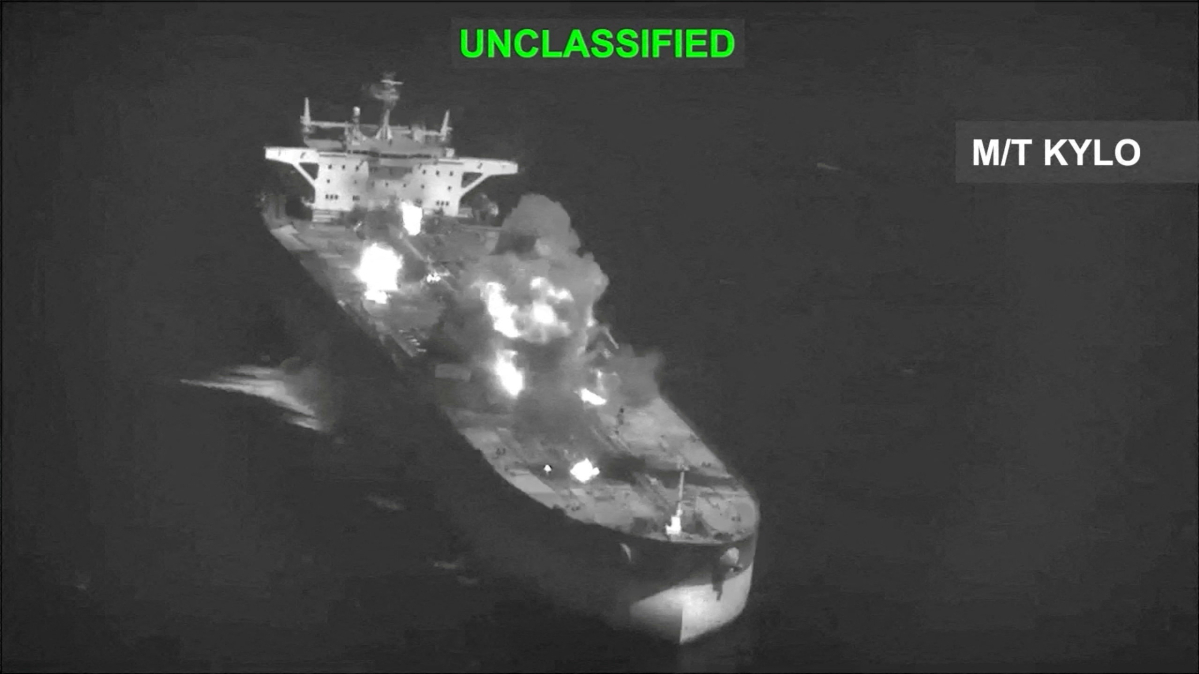
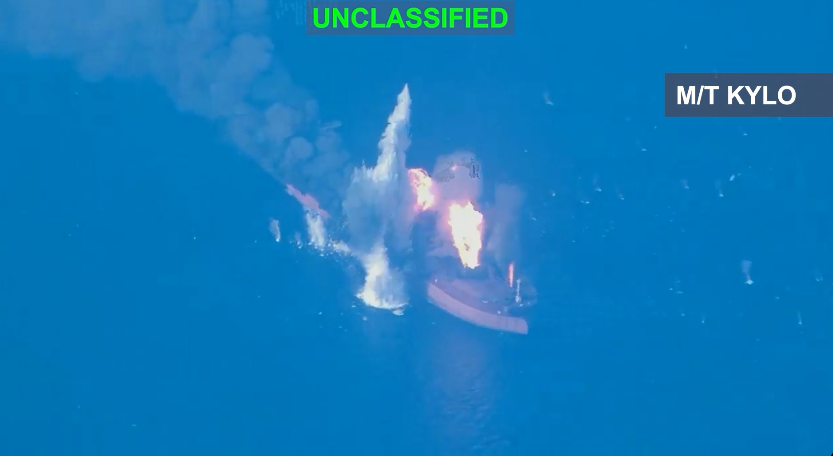
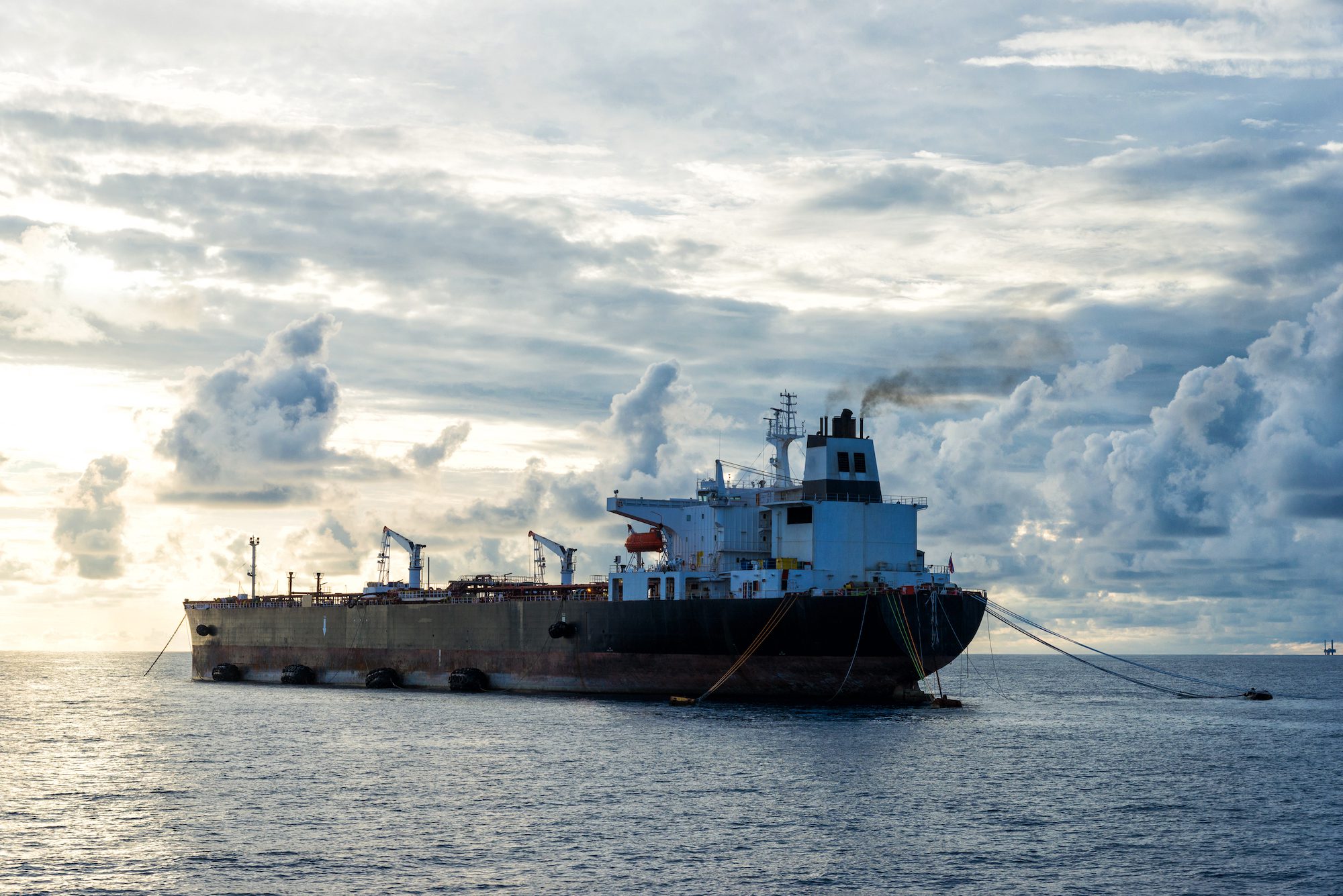
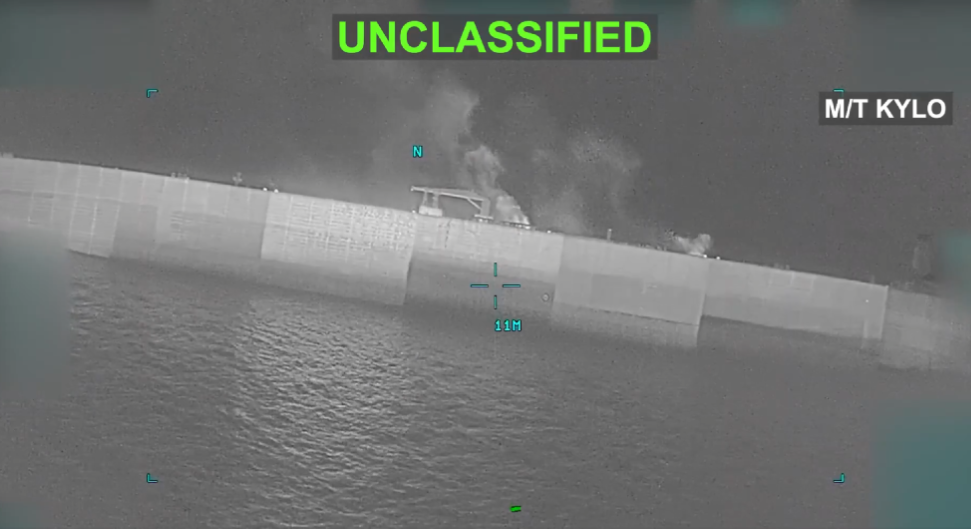
- Very likely commercial shipping through the Strait of Hormuz will remain severely disrupted over the next 0-14 days, and likely remain below recent pre-conflict levels for 1-3 months. Reported traffic averaged 10 commodity ships per day over the preceding 10 days, while another assessment placed the fall in maritime traffic at roughly 85% and Rystad estimated tanker flows had declined from about 8 million barrels per day to 4-5 million barrels per day. Iran has renewed tanker blockades, tightened restrictions and signalled restricted zones around the Strait of Hormuz and Gulf of Oman. The claim that Iran has effectively closed the strait conflicts with evidence of continuing transits. Confidence is high for continued disruption, but the exact scale and geographic scope remain unresolved. (Confidence: high · ASSESSED)
- I&W: Confirmation: Daily shipping data continue to record around 10 or fewer commodity ship transits through the Strait of Hormuz, alongside new tanker incidents or Iranian restricted-zone notices. (0-14 days)
- I&W: Break: Commodity transits rise materially above the current reported level for seven consecutive days and Iran rescinds its tanker restrictions or blacklist threat. (0-14 days)
- Likely Houthi attacks on Saudi civilian and energy sites and fighting in Yemen will continue over the next 0-14 days, with pressure on shipping near the Bab al-Mandeb Strait likely to persist for 1-3 months. Saudi Arabia reported 73 people wounded in attacks affecting Abha, Khamis Mushait, Jazan and Najran, while fires at southern energy facilities caused a temporary halt to some operations. The Houthis have threatened a broad operation deep inside Saudi Arabia, declared a blockade against Saudi vessels transiting the Bab al-Mandeb, and launched an offensive towards al-Makha and the strait. Fighting between Houthi forces and Yemen's internationally recognised government is reportedly the most serious since 2022. Confidence is high for continued pressure, but the exact casualty attribution remains contested because the 73-person figure comes from Saudi-led reporting. (Confidence: high · ASSESSED)
- I&W: Confirmation: Houthi missiles or drones again strike Abha, Khamis Mushait, Jazan, Najran or a named Saudi energy facility, or Houthi authorities announce an expanded blockade affecting another Saudi vessel. (0-14 days)
- I&W: Break: Saudi Arabia and the Houthis announce and observe a cessation of attacks, while commercial vessels resume regular passage near the Bab al-Mandeb. (0-14 days)
- Unlikely a durable US-Iran ceasefire will be implemented over the next 0-14 days, although likely limited diplomatic and maritime arrangements will continue. Qatar, Oman and Pakistan remain involved in mediation; Qatar has discussed a temporary safe-passage corridor with Iran and maritime security with China, while Russia has offered to help resolve the regional crisis. Iran has also indicated that an Omani navigation deal could be released within days, but its reported conditions include US compliance with demands on the naval blockade and sanctions. Renewed tanker blockades and the absence of an implemented agreement indicate that diplomatic contact has not yet produced a durable halt. Confidence is medium because the evidence consists mainly of official statements and proposed arrangements, with no verified implementation. (Confidence: medium · ASSESSED)
- I&W: Confirmation: Qatar, Oman, Iran and the United States sign or publicly implement a maritime arrangement that produces verified safe passage for commercial vessels. (0-14 days)
- I&W: Break: Iran announces further restrictions or another US-Iran strike occurs while diplomatic contacts continue without an operational agreement. (0-14 days)
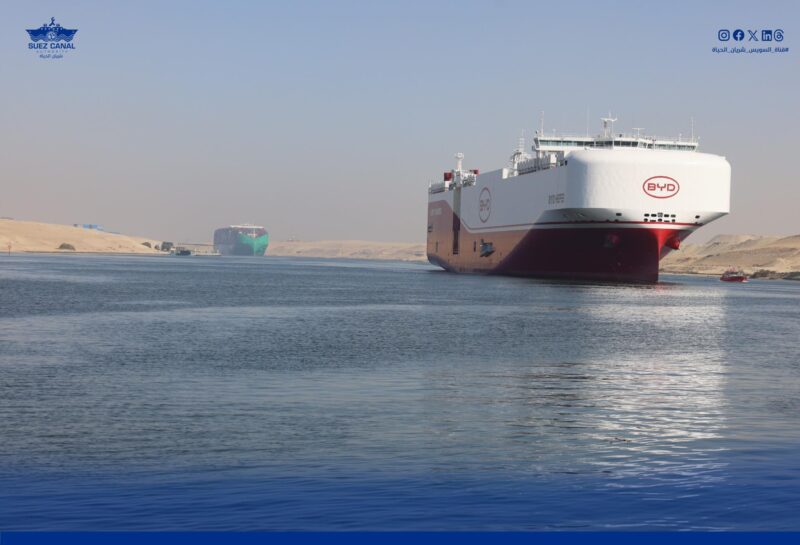
- Likely energy and supply-chain pressure will persist for 1-3 months. Brent futures were trading around USD 97 per barrel, crude tanker earnings on the Saudi Arabia to China route reached a reported record of USD 728,000 per day, and tanker owners were demanding large premiums to enter the Persian Gulf. The Hormuz disruption and Houthi threats have redirected vessels towards the Suez Canal, where July revenue and traffic increased. Forecasts of Brent reaching USD 120 remain scenario-based and have conflicting analyst attribution, so the persistence of pressure is more certain than the size of any further price rise. Confidence is high for continued pressure, with lower confidence in price forecasts. (Confidence: high · ASSESSED)
- I&W: Confirmation: Brent remains near or above USD 97 per barrel and Saudi Arabia to China tanker earnings remain close to the reported USD 728,000 daily record. (1-3 months)
- I&W: Break: Hormuz shipping rises materially above the current reported level for a sustained week and Suez rerouting reverses. (0-14 days)
- Likely US and UK sanctions pressure on Iran will remain elevated over the next 1-3 months, reinforcing the confrontation surrounding Iran's nuclear programme. On 8 September, the UK laid legislation restricting Iranian access to the UK financial system, expanding trade prohibitions and designating 71 individuals and entities linked to Iran's nuclear programme. The US Treasury announced sanctions against more than 30 entities and one individual. Iran is reported to hold more than 400 kilograms of uranium enriched to 60 percent and remains in significant non-compliance with international safeguards obligations. Confidence is high for continued sanctions pressure and the reported enrichment level, but the claims do not establish the current location of the stockpile. (Confidence: high · ASSESSED)
- I&W: Confirmation: The United States or UK announces additional designations, expanded financial restrictions or implementation of sanctions relief as a formal bargaining condition. (1-3 months)
- I&W: Break: Washington and London suspend the new measures and Iran accepts a monitored arrangement covering enrichment and safeguards compliance. (1-3 months)
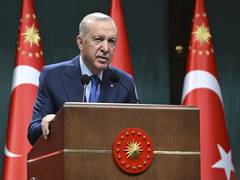
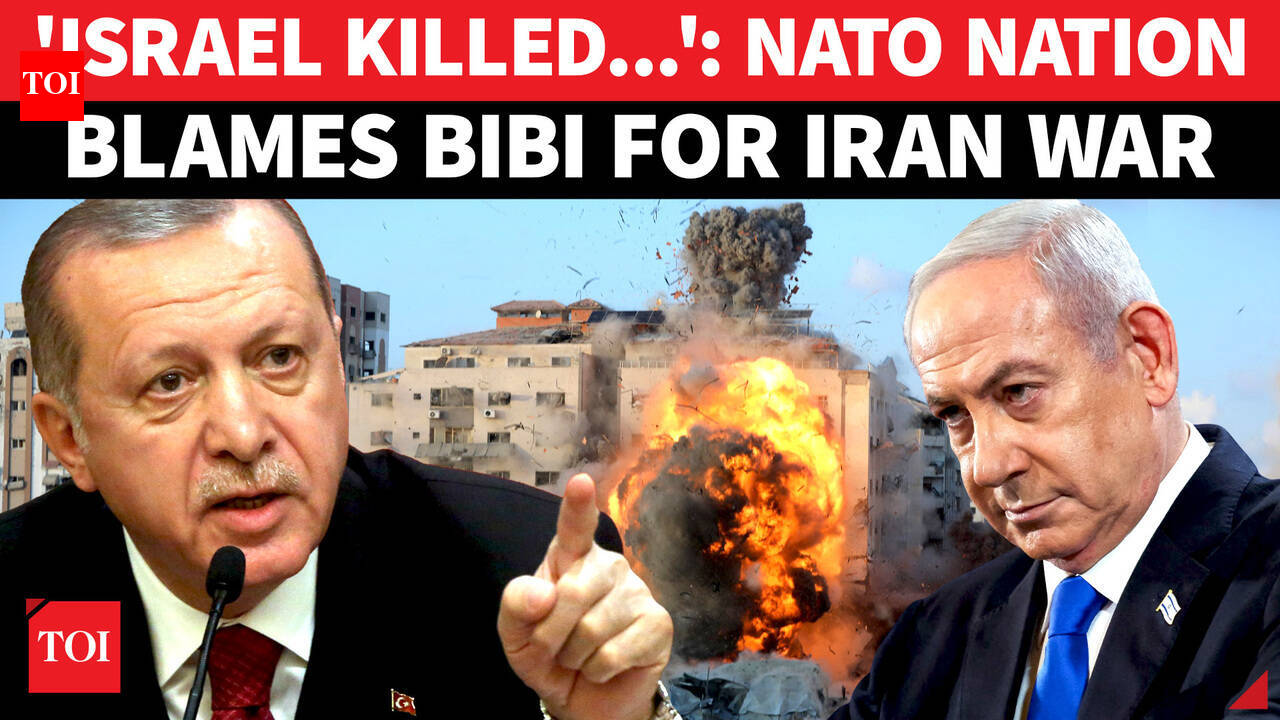
- Likely Israeli and Turkish public positions will harden diplomatic polarisation over the next 0-14 days. Benjamin Netanyahu has stated that toppling the Iranian regime remains an Israeli objective and warned Iran against attacking Israel. Recep Tayyip Erdogan has accused Israel of sparking the conflict and derailing the Islamabad agreement, while Arab foreign ministers have condemned both Iranian attacks on Arab countries and Israeli military operations in Palestine, Lebanon and Syria. Confidence is medium because the reporting is well corroborated as political signalling, but it does not establish a direct operational decision by either Israel or Turkey. (Confidence: medium · ASSESSED)
- I&W: Confirmation: Turkey or Arab League members issue another coordinated condemnation while Israel publicly restates regime change as an objective or announces further action against Iran. (0-14 days)
- I&W: Break: Israel, Turkey and Arab states endorse a common diplomatic framework that includes an immediate halt to military operations. (0-14 days)
Outlook & scenarios
Prolonged, regionally contained attrition (45%)
Likely. US-Iran strikes continue without a decisive campaign outcome, Iran keeps Hormuz traffic restricted, and Houthi attacks continue against Saudi sites and shipping near the Bab al-Mandeb. Qatar, Oman and China sustain diplomatic contacts, but no durable ceasefire is implemented. Energy prices and rerouted shipping remain under pressure.
Temporary maritime accommodation (25%)
Unlikely but plausible. Qatar and Oman secure a limited arrangement with Iran and the United States for coordinated commercial passage through the Strait of Hormuz. Shipping volumes recover partially and direct strikes decline, while sanctions, the nuclear dispute and Israel's stated regime-change objective remain unresolved.
Regional widening through Gulf and Red Sea attacks (20%)
Unlikely but high impact. Iran expands attacks or maritime restrictions against Gulf-linked energy and shipping interests, the Houthis intensify operations against Saudi infrastructure and Bab al-Mandeb traffic, and Saudi Arabia responds with broader strikes in Yemen. US forces then face pressure to expand defensive or retaliatory operations.
Nuclear or regime shock (10%)
Very unlikely but high impact. Israel or the United States strikes a deeply buried Iranian nuclear-related site, or Iran experiences a sudden regime crisis. The result would be direct escalation around Iran, a sharp fall in Hormuz traffic and a wider challenge to the diplomatic efforts led by Qatar, Oman, China and Russia.
Recommendations
- Maintain separate evidence tracks for reported US casualties and aircraft damage, the Iranian missile incident, and the disputed US unmanned asset incident. Do not merge the accounts until the object, location and outcome are independently reconciled.
- Track Strait of Hormuz conditions daily using three measures: commodity ship transits, tanker flow volumes and Iranian notices on restricted zones or vessel blacklisting. Report the traffic baseline and the measurement category with every update.
- Prioritise warning collection on Houthi activity around Abha, Khamis Mushait, Jazan, Najran, Saudi energy facilities and Bab al-Mandeb shipping. Treat another named-site strike, a confirmed vessel attack or a formal expansion of the blockade as immediate escalation signals.
- Separate diplomatic process from diplomatic effect. Record meetings involving Qatar, Oman, China and Russia, but treat a safe-passage proposal as implemented only after a written arrangement and verified commercial transits.
- Run a 1-3 month energy stress update covering Brent, tanker earnings, Suez Canal rerouting and Qatar-China LNG exposure. Keep the USD 120 Brent estimate as a high-impact scenario rather than a baseline forecast.
- Monitor whether the new US and UK sanctions produce Iranian retaliation, additional maritime restrictions or a formal sanctions-relief offer. Link each development to changes in Iran's enrichment posture and safeguards compliance.
- Flag single-source and party-attributed reporting in all products, especially casualty totals, Iranian maritime-zone geography, the outcome of the carrier-related missile incident and the status of the US unmanned asset.
Confidence & uncertainty
Overall confidence is high because the principal developments are supported by multiple high-confidence event records drawing on official government statements, major media, trade reporting and corroborating diplomatic accounts. Confidence is strongest for continued military activity, Houthi attacks, shipping disruption, sanctions activity and the existence of active mediation. The main uncertainties concern the exact scale of the Hormuz traffic decline, the geographic scope and implementation status of Iran's proposed maritime restrictions, the outcome of the Iranian missile incident, and the attribution of some casualty figures.
Intelligence gaps
- [EEI 1.1 · UNCOVERED] Unusual long-range missile/rocket transporter-launcher (TEL) movements, storage activation, or assembly activity at known IRGC missile sites or forward staging areas. Recommended collection: satellite/imagery
- [EEI 1.2 · PARTIAL] Orders, threat-alert messages, or changes in posture from IRGC, Quds Force, or senior Iranian military leadership indicating attack timelines or rules of engagement changes. Recommended collection: signals/ELINT and HUMINT
- [EEI 1.3 · UNCOVERED] Large-scale transfers, deliveries, or convoy movements of armed UAVs/drones, guided munitions, or spare parts from Iran into Lebanon (Hezbollah), Iraq, Syria, or Gaza. Recommended collection: air/aviation track and HUMINT
- [EEI 1.4 · UNCOVERED] Sustained changes in Israeli air-defense usage (SAM launches, radar activations), wide-area alerts, or NOTAMs indicating elevated imminent strike response. Recommended collection: air/aviation/NOTAMs and signals
- [EEI 2.1 · UNCOVERED] Concentration, repositioning, or sortie patterns of Iranian naval/IRGC patrol boats and fast-attack craft near shipping chokepoints or commercial lanes. Recommended collection: maritime/AIS and satellite/imagery
- [EEI 2.2 · PARTIAL] Reported attacks, mine sightings, close-approach incidents, or damage to commercial tankers/merchant vessels operating in the Red Sea, Persian Gulf, or eastern Mediterranean. Recommended collection: maritime/AIS and OSINT/incident reports
- [EEI 2.3 · UNCOVERED] Insurance market indicators: sudden spikes in war-risk or hull insurance premiums for routes through the Red Sea, Suez corridor, or Persian Gulf, and major carriers announcing route changes. Recommended collection: financial/market and commercial shipping notices
- [EEI 2.4 · UNCOVERED] Port closures, naval escorts requested by commercial operators, or formal rerouting advisories issued by major shippers (e.g., Maersk, Hapag-Lloyd) for regional transits. Recommended collection: commercial/OSINT
- [EEI 3.1 · UNCOVERED] Deployment of foreign military assets to the region (carrier strike groups, amphibious ships, combat aircraft deployments, or additional bases activated) from the US, UK, France, Russia, or GCC states. Recommended collection: maritime/AIS and air/aviation and satellite/imagery
- [EEI 3.3 · UNCOVERED] Confirmed arms transfers, expedited weapons shipments, or transfer authorizations to Israel, Iran, or their proxies (aircraft parts, munitions, air defenses). Recommended collection: customs/INTEL and HUMINT
- [EEI 3.4 · PARTIAL] Issuance of travel warnings, embassy evacuations or reductions, and closure of diplomatic missions by major capitals indicating escalation risk or shifted threat assessments. Recommended collection: OSINT/diplomatic
TLP:CLEAR