TLP:CLEAR · Disclosure is not limited.
Middle East SitRep: Funeral week heightens Iran, Israel escalation risk; Hormuz hazards persist
Time window: Last 1 day · Audience: General analyst · Type: Situation report · DTG: 2026-07-04 01:40Z · Overall confidence: HIGH
BLUF
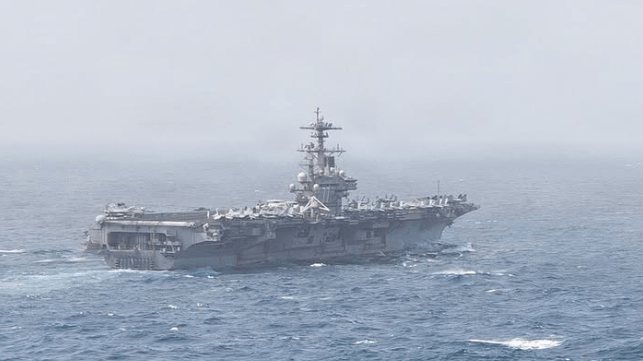
Khamenei’s funeral window, Iranian threats of harsh retaliation, and US warnings about possible Israeli targeting of Abbas Araghchi and Mohammad Bagher Ghalibaf keep escalation risks very high despite ceasefire frameworks. Maritime risk around the Strait of Hormuz remains acute after an IRGC attack on a container ship and UN estimates of floating mines, even as US forces hold a high‑readiness posture.
Executive summary
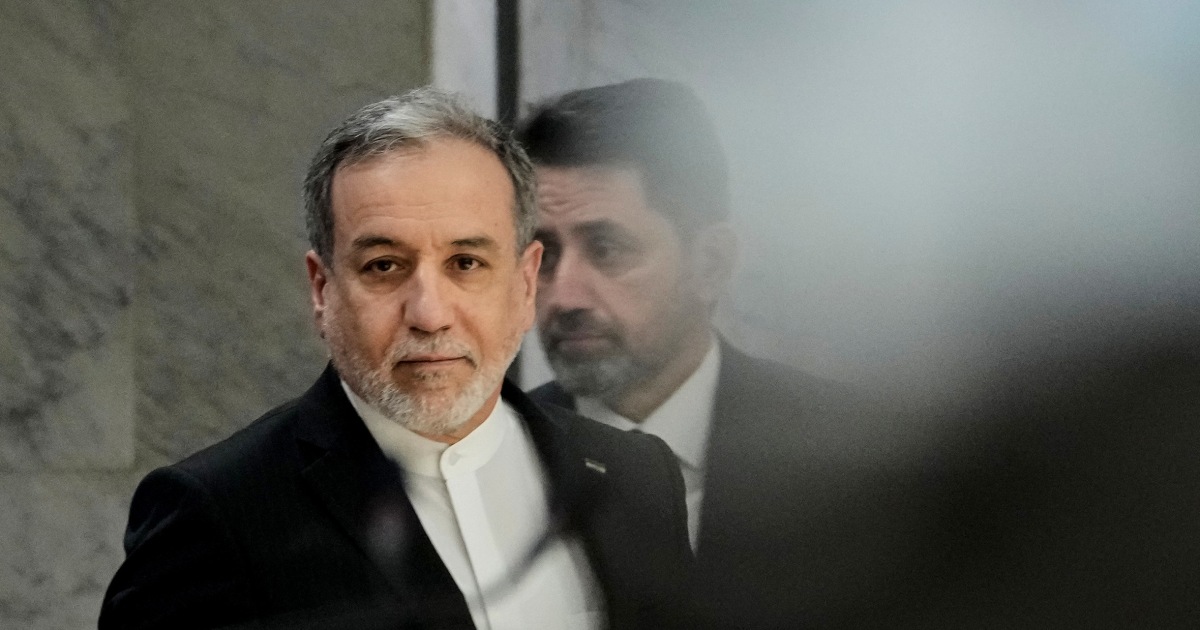
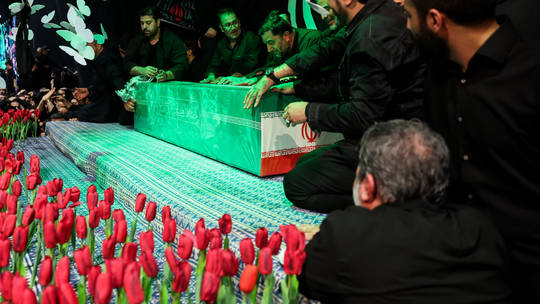
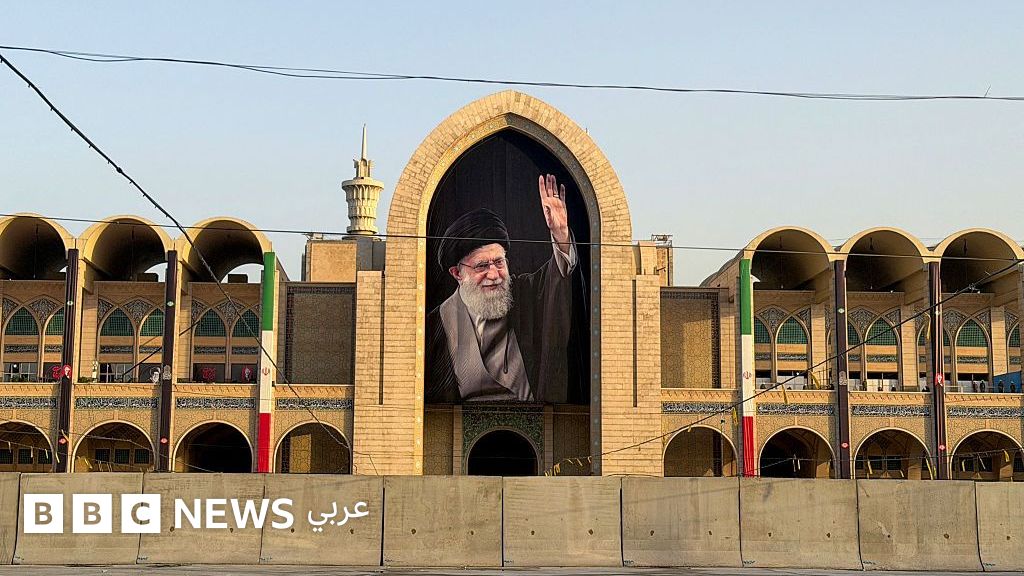
Iran opened a seven‑day funeral period for Ali Khamenei on 3 July and warned the United States and Israel against any action, while a senior Iranian commander threatened harsh retaliation for perceived aggression. US officials asked intermediaries to warn Tehran that Israel might target Foreign Minister Abbas Araghchi and Parliament Speaker Mohammad Bagher Ghalibaf during negotiations, a claim Israel’s Prime Minister’s Office publicly disputed. At sea, the risk environment in and around the Strait of Hormuz remains dangerous following an IRGC attack on a container ship, UN estimates of about 80 drifting mines, and continuing US military readiness focused on keeping commerce flowing. Houthi maritime aggression persists alongside fresh interdictions of drone and suicide‑boat components off Al Hudaydah. Energy exposure remains high: the war has produced the largest recorded supply disruption and a second energy crisis for Europe, while prospective Japanese liftings of Iranian crude depend on a waiver extension and insurability.
Change from previous assessment
New since the prior brief: funeral ceremonies for Ali Khamenei formally began in Tehran on 3 July, accompanied by fresh Iranian warnings against US or Israeli action and a senior commander’s threat of harsh retaliation; US officials’ warning via intermediaries about possible Israeli targeting of Abbas Araghchi and Mohammad Bagher Ghalibaf surfaced, and the Israeli Prime Minister’s Office publicly disputed the report; a recent IRGC attack on a container ship and UN mine estimates reinforce that Hormuz is still hazardous; US high‑readiness posture in the Gulf remains in place; Yemeni Southern Giants forces interdicted a boat carrying drone and suicide‑boat components off Al Hudaydah; and energy exposure is affirmed by reporting that the war caused the largest oil supply disruption on record, with Japanese buyers exploring Iranian crude under a US waiver but citing insurance as the key constraint.
Key judgments
- It is very likely the Iran, Israel confrontation will remain highly volatile through the 3-9 July funeral period, given Tehran’s explicit warnings, a senior commander’s threat of harsh retaliation, and US warnings that Israel might target Abbas Araghchi and Mohammad Bagher Ghalibaf during talks, which Israel publicly denies. (Confidence: medium · ASSESSED)
- I&W: Public or credible reporting of attempted targeting or extraordinary security measures tied to Araghchi or Ghalibaf travel during 3-9 July. (0-14 days)
- I&W: Funeral period concludes without cross‑border strikes or assassination attempts and Iranian leadership travel patterns normalise. (0-14 days)
- The Strait of Hormuz is very likely to remain hazardous for commercial shipping in the near term, with an IRGC attack on a container ship, UN estimates of floating mines, continuing US high‑readiness posture, and a US FAA advisory to carriers. (Confidence: high · ASSESSED)
- I&W: Additional reports of IRGC enforcement actions or attacks on merchant vessels transiting Hormuz. (0-14 days)
- I&W: Easing or rescission of FAA Middle East cautionary NOTAMs for US carriers. (1-3 months)
- The Houthi maritime threat likely remains active, supported by external supply chains, despite interdictions off Al Hudaydah. (Confidence: medium · ASSESSED)
- I&W: Further seizures of drone or suicide‑boat components bound for Houthi‑held coasts near Al Hudaydah. (0-14 days)
- I&W: Sustained drop in reported Houthi maritime incidents across international corridors. (1-3 months)
- Negotiations under the Islamabad MoU and a 60‑day ceasefire framework are likely to remain fragile and constrained by security threats to Iranian negotiators and Iranian redlines tying any final deal to Israeli withdrawal. (Confidence: medium · ASSESSED)
- I&W: Public acknowledgement of pauses or venue changes for talks citing security concerns around Araghchi or Ghalibaf. (0-14 days)
- I&W: US extends the sanctions waiver beyond 21 August and Japanese‑operated tankers begin loading at Kharg Island. (1-3 months)
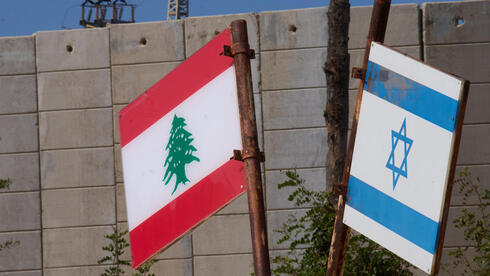
- Israel is likely to sustain high‑tempo operations against Hezbollah and Iran‑linked targets despite diplomatic tracks, while key Lebanese factions oppose the putative Israel, Lebanon agreement. (Confidence: medium · ASSESSED)
- I&W: Additional Israeli strikes on Hezbollah units or infrastructure in southern Lebanon. (0-14 days)
- I&W: Public reversal by Amal or Hezbollah to support implementation of an Israel, Lebanon agreement. (1-3 months)
- Global energy exposure remains high: the 2026 war almost certainly produced the largest oil supply disruption on record and precipitated a second energy crisis for Europe, while any Japanese return to Iranian crude hinges on a US waiver extension and achievable insurance. (Confidence: high · ASSESSED)
- I&W: First Japanese‑operated tanker loads at Kharg Island under an extended US waiver. (1-3 months)
- I&W: War‑risk insurers decline cover for Hormuz transits following new attacks, delaying Japanese liftings. (0-14 days)
- Spillover risk to the United Arab Emirates is likely to persist at elevated levels, reflected in US ordered departure, ongoing travel advisories, FAA cautions, and Iranian statements threatening US‑linked sites in the UAE. (Confidence: high · ASSESSED)
- I&W: Renewed US government drawdown orders or restrictions for personnel in the UAE. (0-14 days)
- I&W: Downgrade of US travel advisory levels or cancellation of FAA caution covering the UAE. (1-3 months)
- Civilian harm remains extensive and contested: more than 4,800 civilian deaths are reported from US and Israeli attacks, while Iran’s protest‑crackdown fatalities are variously reported at 3,117 by the government and at least 6,126 by activists. (Confidence: medium · REPORTED)
- I&W: Independent organisations publish updated, verifiable casualty audits for the war period and protest crackdowns. (1-3 months)
- I&W: Official Iranian reporting converges with activist tallies or vice versa. (3-6 months)
Outlook & scenarios
Managed de‑escalation through funeral week and into summer (40%)
Funeral ceremonies conclude without major cross‑border shocks, and both sides avoid high‑impact assassinations. The Islamabad MoU and the 60‑day ceasefire framework hold tenuously, with continued indirect talks. US readiness persists but is not further surged. Hormuz remains risky but manageable under heightened vigilance, while buyers in Japan prepare to lift Iranian crude if Washington extends the waiver and insurers remain engaged.
Shock escalation following targeted killing or high‑visibility strike (45%)
An attempted or successful strike on a senior Iranian negotiator or a symbolic target during or shortly after the funeral triggers Iranian missile and drone retaliation against Israel and US bases. Israel intensifies operations against Iranian assets and Hezbollah. Hormuz attacks increase, insurers withdraw cover, and war‑risk premiums spike, amplifying supply disruptions and European energy stress.
Hardening Hormuz regime under IRGC control splits partners (30%)
IRGC demands for transit clearances become de facto operating rules. UN‑flagged mine threats keep naval MCM active. European actors edge toward accepting fees or formalised procedures, while the US and Gulf partners oppose any charges. A negotiated technical regime reduces incident rates but entrenches Iranian leverage over flows.
Recommendations
- Stand up a 24/7 watch for the 3-9 July funeral period focused on movements and public appearances of Abbas Araghchi and Mohammad Bagher Ghalibaf, logging any route changes, flight diversions or added security measures; share daily summaries with negotiating teams.
- Task maritime analysts to map IRGC enforcement behaviour: compile all reports of clearance demands, boardings and attacks in Hormuz against AIS tracks, then brief risk to carriers and insurers alongside the FAA advisory context.
- Prioritise open‑source collection on mine activity in the central Hormuz approaches and maintain a live overlay for naval MCM planners using the UN 80‑mine estimate as the baseline.
- Prepare options analysis on the consequences of extending or letting lapse the US sanctions waiver after 21 August, including the impact on prospective Japanese liftings from Kharg Island and on war‑risk insurance appetite.
- Expand Red Sea and Yemen littoral monitoring to detect arms‑smuggling patterns to Houthi‑held ports, using the Al Hudaydah interdiction as a template for route signatures; coordinate with partners to cue maritime patrol assets.
- Update force protection guidance for US personnel and contractors in the UAE in line with current travel advisories and the FAA NOTAM; validate evacuation triggers and assembly points.
- Maintain an integrated strikes ledger for June, July capturing Iranian, Israeli and US actions and claimed targets to support trend analysis and rapid warning during and after the funeral period.
Confidence & uncertainty
This brief draws on multiple, independent and generally reliable sources: UN reporting, official US and Iranian statements, and major media coverage corroborate the funeral timeline, Iranian warnings, reported US concerns about threats to Iranian negotiators, maritime incidents in Hormuz, US military posture, Houthi activity, and energy market impacts. Some elements are contested or carry discrepancies, notably Israel’s denial of assassination‑plot reporting and divergent casualty figures. These uncertainties are flagged in judgement confidence levels. On balance, cross‑source corroboration supports a high overall confidence assessment.
Alternative analysis (red cell)
Rhetoric and public threats around Khamenei’s funeral clearly raise the risk environment, but the available reporting lacks corroborated operational indicators (force movements, taskings, or confirmed plots) that would make violent escalation during 3–9 July the most probable outcome. Given Netanyahu’s office denial (17091abb) and absence of demonstrable preparations, a defensible alternative estimate is that the period will be dominated by heightened alert and diplomatic/intelligence maneuvering rather than near‑certain kinetic strikes.
Intelligence gaps
- [EEI 1.1 · UNCOVERED] Observed repositioning, sustained increases, or new forward basing of Iranian conventional or IRGC forces (armored units, missile batteries, aircraft, naval vessels) toward borders or regional launch points. Recommended collection: IMINT/satellite
- [EEI 1.2 · PARTIAL] Hezbollah or other Iran-aligned proxy forces conducting mass mobilization, visible rocket/artillery emplacements, cross-border firing incidents, or preparations for cross-border operations from Lebanon, Syria, Iraq or Yemen. Recommended collection: HUMINT/ground ISR
- [EEI 1.3 · PARTIAL] Detection of increased missile/rocket/torpedo launch events attributable to Iran, Israel, or proxies (launch signatures, trajectories, impact points) indicating a sustained campaign rather than isolated strikes. Recommended collection: SIGINT/IMINT/air-defense radar
- [EEI 1.4 · UNCOVERED] Interdicted or observed shipments (air, sea, land manifests, seizures, satellite imagery of transfers) of advanced weapons or missile components from Iran toward proxy groups or forward staging points. Recommended collection: maritime/AIS
- [EEI 2.1 · PARTIAL] Satellite or on-the-ground imagery showing fires, damage, or operational shutdown at major oil export facilities, refineries, storage terminals, or key pipeline infrastructure in the Gulf and Red Sea. Recommended collection: IMINT/satellite
- [EEI 2.2 · PARTIAL] Commercial vessel incidents: AIS transponder shutdowns, distress signals, reported hull/engine damage, boardings, or confirmed attacks on tankers/merchant ships transiting the Strait of Hormuz, Bab al-Mandeb, or eastern Mediterranean. Recommended collection: maritime/AIS
- [EEI 2.3 · PARTIAL] Significant and sustained reductions or rerouting of tanker transits through the Strait of Hormuz (ship traffic counts, pilot reports, port call cancellations) and announcements of closure or restricted navigation zones (NOTAMs, maritime advisories). Recommended collection: maritime/NOTAMs
- [EEI 2.4 · UNCOVERED] Rapid increases in war-risk insurance premiums for Middle East routes, shipping company advisories to avoid region, or major charter cancellations tied to the conflict. Recommended collection: financial/open-source
- [EEI 3.2 · PARTIAL] Official expedited arms transfers, basing/overflight agreements, or declarations of operational support (formal government announcements, defense ministry releases, logistics flight manifests). Recommended collection: open-source/diplomatic
Cited sources
[1] BBC News عربي · تشييع علي خامنئي: مراسم تمتد ستة أيام بين طهران ومشهد والعراق - BBC News عربي (A) · sha256:2ac6a9ef1f9e [2] globalvillagespace.com · Iran warns US and ‘Zionist regime’ against attacks on Khamenei funeral (B) · sha256:530f842c83b5 [3] haaretz.com · Netanyahu's office slams report that Israel was plotting to kill Iran's top negotiators as 'fake news' (B) · sha256:ad87c2beb1f2 [4] nbcnews.com · U.S. was concerned Israel might try to kill Iran negotiators, sources say (A) · sha256:c469126ba3e2 [5] nypost.com · US officials feared Israel was plotting to kill head Iranian negotiators: report (B) · sha256:4b879b484d78 [6] gcaptain.com · Japan Weighs Return to Iranian Oil as Shipping Risks Cloud Sanctions Waiver (A) · sha256:4467a59018c1 [7] maritime-executive.com · US Forces Still Poised in the Arabian Gulf Area (B) · sha256:bc323b87762b [8] U.S. Department of State · United Arab Emirates Travel Advisory (A) · sha256:7a0c71f2991b [9] islamist-movements.com · 'من يتصدى للمشروع الإيراني في اليمن؟': متابعات الصحف العربية والأجنبية (B) · sha256:35718158ff12 [10] CNN · US officials attempted to warn Iran of fears that Israel would assassinate mediators | CNN Politics (A) · sha256:ecc65241aec5 [11] islamtimes.com · Iran Raps US Aggression, Defends Right to Self-Defense - Islam Times (A) · sha256:fa17432e4cf6 [12] ynetnews.com · Israel-Lebanon agreement touted as success but now it depends on Iran (B) · sha256:b80563dbbb46 [13] Wikipedia · 2025–2026 Iran–United States negotiations (B) · sha256:6cb2db25cb33 [14] Wikipedia · Economic impact of the 2026 Iran war (B) · sha256:204c7f4fdc71 [15] Wikipedia · 2026 United States military buildup in the Middle East (B) · sha256:576176b23ccd
Source content hashes were computed at collection time; the cited text is preserved unmodified for the life of this product.
Red cell review: PARTIAL DISSENT
TLP:CLEAR