TLP:CLEAR · Disclosure is not limited.
Middle East Sitrep: Iran, Israel confrontation keeps Hormuz and Red Sea hazardous as UAE remains in Tehran’s firing line
Time window: Last 1 day · Audience: General analyst · Type: Situation report · DTG: 2026-07-06 02:43Z · Overall confidence: MEDIUM
BLUF
Maritime risk around the Strait of Hormuz and the Red Sea remains acute and is very likely to persist, while Iran-linked threats to the United Arab Emirates continue despite de-escalation moves elsewhere. The Israel, Lebanon track shows fragile gains at best, and Israel’s internal judicial standoff adds near-term political risk.
Executive summary
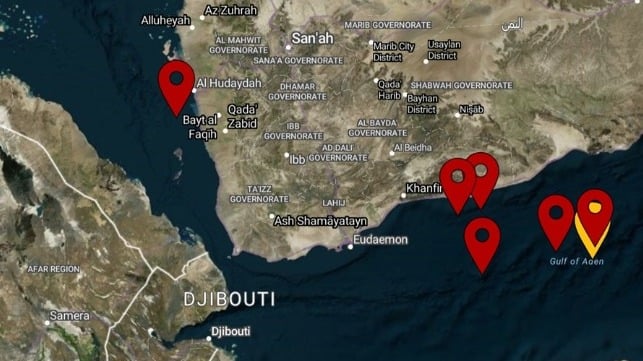
Since joint US, Israeli strikes in Iran on 28 February 2026 and Iran’s regional missile and drone response, the regional security picture remains brittle. Shipping through Hormuz has suffered sharp reductions, with at least eight vessels turning back after direct IRGC warnings and companies avoiding transit, and a fresh reported attack on a cargo ship 30 nautical miles southwest of Al Hudaydah adds to Red Sea risk. Iran focused much of its wartime missile fire on the UAE, prompting Israel to send an Iron Dome battery and personnel, and Washington to order departures of non‑emergency US staff from the UAE earlier in the war. An Israel, Lebanon agreement announced on 15 June aims to bolster Lebanese sovereignty and channel US, Iran talks on Lebanon, yet Hezbollah threats and ongoing IDF artillery activity at the border leave the outlook uncertain. Energy logistics across the region remain constrained even as global benchmarks trade near pre‑war levels, and an emerging constitutional crisis in Israel could sap decision‑making bandwidth.
Change from previous assessment
Since the 5 July brief, we have confirmation from an Israeli minister that an Iron Dome battery was sent to the UAE during the war and that US personnel supported deployment, reinforcing the assessment of a persistent Iran‑linked threat to the UAE. New reporting of a cargo vessel attack 30 nautical miles southwest of Al Hudaydah on 5 July and recent UKMTO activity keep Red Sea risk elevated. Around Hormuz, at least eight ships reportedly turned back after direct IRGC warnings and vessel counts along the Omani coast dipped on 4 July, which sustains the hazard assessment; we trim confidence from high to medium given parallel reporting of some traffic recovery. On the northern front, the 15 June Israel, Lebanon agreement remains fragile amid Hezbollah threats and ongoing IDF fires. A fresh Israeli government move to defy a High Court ruling introduces added domestic political risk. Initial assessment of this topic’s internal‑Israeli constitutional dimension has been added.
Key judgments
- The Strait of Hormuz is very likely to remain hazardous and partially restricted for commercial shipping over the coming weeks. (Confidence: medium · ASSESSED)
- I&W: Reports of further merchant vessels reversing course after direct IRGC radio warnings at the approaches to Hormuz. (0-14 days)
- I&W: Sustained daily tanker transits via Hormuz returning to near pre‑war baselines for 14 consecutive days. (1-3 months)
- Iran‑linked missile and drone threats to the United Arab Emirates are likely to persist despite limited de‑escalatory moves elsewhere. (Confidence: high · ASSESSED)
- I&W: Public statements from Israel or the UAE confirming fresh Iron Dome intercepts within UAE territory. (0-14 days)
- I&W: Thirty consecutive days without Iranian missile or drone launches toward the UAE, paired with official Iranian de‑escalatory messaging on Gulf targeting. (1-3 months)
- There is a roughly even chance the Israel, Lebanon agreement announced on 15 June holds through the summer, given Hezbollah threats and ongoing IDF fires along the border. (Confidence: low · ASSESSED)
- I&W: Lebanese authorities begin implementing the phased, conditional mechanism referenced in the agreement, with visible steps at the southern border. (1-3 months)
- I&W: Hezbollah stages armed protests in Beirut against the accord or conducts a major cross‑border rocket or anti‑tank attack. (0-14 days)
- Attacks and attempted boardings near Al Hudaydah and Balhaf make it very likely that Red Sea and Gulf of Aden shipping will remain at elevated risk. (Confidence: high · ASSESSED)
- I&W: Multiple UKMTO advisories in a fortnight on armed approaches or boardings off Al Hudaydah or Balhaf. (0-14 days)
- I&W: Houthi authorities publicly rescind the June ban on Israeli ships and UKMTO records two weeks with no incidents in the same area. (1-3 months)
- Regional energy logistics are likely to stay constrained even as Brent and WTI remain near pre‑war levels. (Confidence: medium · ASSESSED)
- I&W: Further reporting of Middle East producers struggling to place cargoes or accepting wider discounts to Brent. (1-3 months)
- I&W: Sustained Hormuz flows above two‑thirds of pre‑war levels and broader clearance of Iranian cargoes beyond Jebel Ali. (1-3 months)
- Israeli political risk is likely to rise in the near term as the government signals defiance of a High Court ruling, with a non‑trivial chance of a constitutional standoff. (Confidence: medium · ASSESSED)
- I&W: Cabinet issues formal directives instructing ministries not to implement the High Court order, prompting institutional pushback. (0-14 days)
- I&W: Government files notice of compliance with the High Court ruling and de‑escalates public rhetoric. (0-14 days)
Outlook & scenarios
Managed containment under a shaky de‑escalation (45%)
The Washington, Tehran memorandum proceeds quietly and Oman’s facilitation yields gradual improvements in navigational clearance. Hormuz flows recover from recent lows but remain below pre‑war baselines. The Israel, Lebanon agreement limps forward with limited, conditional steps while Hezbollah avoids major provocations. Red Sea incidents persist at a lower tempo focused on targeted interdictions. Energy benchmarks stay range‑bound but Middle East loadings face scheduling frictions and selective discounts.
Renewed regional escalation and maritime squeeze (30%)
Iran resumes higher‑tempo missile and drone salvos on UAE‑linked targets and signals harassment around Hormuz. Further merchant vessels reverse course after IRGC warnings and insurers tighten cover. Houthi threats expand to broader shipping, raising the frequency of attacks near Al Hudaydah and Balhaf. Hormuz throughput falls toward prior troughs, amplifying placement challenges for Gulf producers.
Northern front relapse in Lebanon (25%)
Hezbollah rejects the June understanding, threatens Beirut’s authorities, and resumes significant cross‑border fire. IDF artillery and limited manoeuvre continue along the frontier under the agreement’s tactical‑presence provision, but the accord effectively stalls. Northern Israel experiences renewed displacement pressure and prolonged military posture, complicating Israeli decision‑making on other fronts.
Wildcard: a catalytic maritime incident triggers a fresh shock (10%)
A high‑casualty attack or miscalculation at the Strait of Hormuz drives an abrupt, preventive slowdown in tanker traffic, briefly pushing flows toward one‑third of pre‑war levels. Emergency diplomacy follows, but the disruption reverberates through liftings and schedules, with outsized effects on spot availability and routeing.
Recommendations
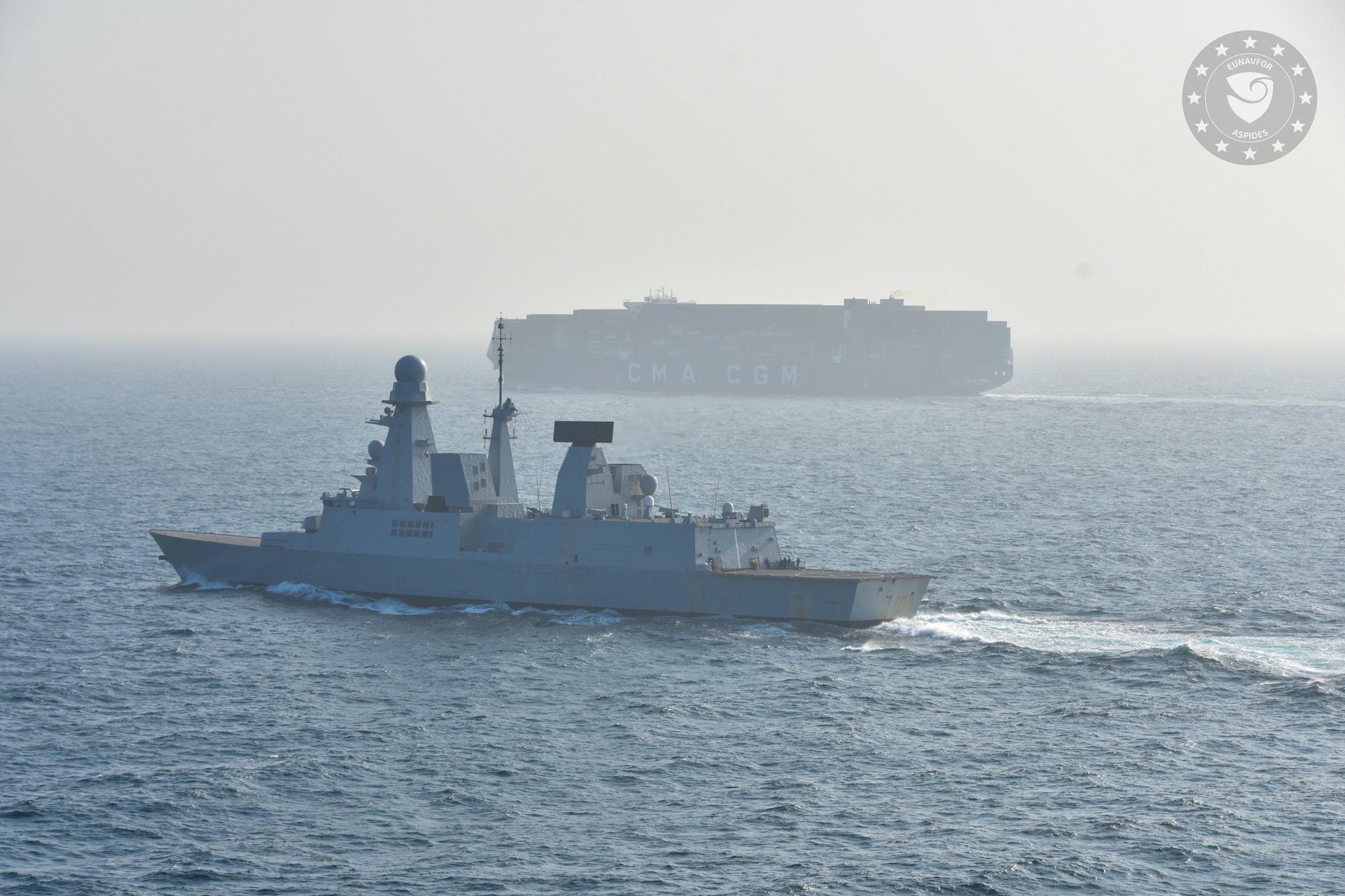
- Maintain a standing maritime risk watch on Hormuz and the southern Red Sea, fusing UKMTO notices with commercial AIS and insurer advisories to flag reversals, slowdowns, or new hazard boxes in near‑real time.
- Task collection on IRGC maritime radio traffic and small‑boat activity around the Strait’s choke points to capture further turn‑back patterns and refine early‑warning thresholds.
- Prioritise liaison with UAE counterparts on air and missile defence posture and reporting protocols for any Iron Dome intercepts or debris recovery to validate the threat picture.
- Establish a Lebanon trackline of indicators focused on Hezbollah messaging, armed mobilisation, and any Lebanese cabinet steps to implement the June agreement’s phased mechanism.
- Map energy exposure to liftings from Gulf terminals most reliant on Hormuz, and stress‑test lift‑to‑land reroute options and inventory cover under a renewed one‑third‑of‑baseline throughput constraint.
- Track Israeli domestic decision‑making milestones on the High Court dispute and prepare contingencies for delayed or disrupted policy execution on cross‑border operations.
Confidence & uncertainty
Overall confidence is medium. Several judgments rest on multiple corroborated, reliable sources, including official advisories and major media for IRGC warnings, shipping turn‑backs, Red Sea attacks, and the Iron Dome deployment to the UAE. However, there are unresolved uncertainties and some conflicting reporting, such as mixed signals on Hormuz traffic trends and the durability of the Israel, Lebanon agreement. Market dynamics also include medium‑confidence elements and complex drivers. These factors warrant a headline confidence of medium rather than high.
Alternative analysis (red cell)
While incidents and threats are credibly reported, much of the record is episodic, relies on single‑source or medium‑grade claims, and contains internal contradictions. Several judgments would be better characterized as plausible but uncertain because the available evidence equally supports mitigated or adaptive outcomes; additional continuous, multi‑source indicators are needed to elevate confidence.
Intelligence gaps
- [EEI 1.4 · UNCOVERED] Interdicted or observed shipments (air, sea, land manifests, seizures, satellite imagery of transfers) of advanced weapons or missile components from Iran toward proxy groups or forward staging points. Recommended collection: maritime/AIS
- [EEI 2.1 · UNCOVERED] Satellite or on-the-ground imagery showing fires, damage, or operational shutdown at major oil export facilities, refineries, storage terminals, or key pipeline infrastructure in the Gulf and Red Sea. Recommended collection: IMINT/satellite
- [EEI 2.4 · PARTIAL] Rapid increases in war-risk insurance premiums for Middle East routes, shipping company advisories to avoid region, or major charter cancellations tied to the conflict. Recommended collection: financial/open-source
Cited sources
[1] theguardian.com · Iran seeks to tighten control over strait of Hormuz alongside Khamenei funeral (A) · sha256:df3833c6b0e4 [2] maritime-executive.com · Could Existing Ships Operate Without Crew in High-Risk Zones Like Hormuz? (C) · sha256:a5186a0e22ba [3] Energy News Beat · Middle East Oil Producers Face Export Hurdles Amid Hormuz Disruptions: Demand Destruction or Market Mispricing? Analyst Views on the Road Ahead for Oil Prices - Energy News Beat (B) · sha256:6b6e9030587c [4] gcaptain.com · Cargo Ship Reports Attack Off Yemen, Adding To Red Sea Risks (B) · sha256:91182687603e [5] U.S. Department of State · United Arab Emirates Travel Advisory (A) · sha256:7a0c71f2991b [6] The Jerusalem Post · Israel sent dozens of IDF soldiers, Iron Dome system to UAE during Iran war, minister confirms (A) · sha256:929b3c9b85e6 [7] haaretz.com · Netanyahu minister confirms Israel sent Iron Dome system to UAE during Iran war (A) · sha256:c076eea2b049 [8] jpost.com · How the new Israel-Lebanon agreement changes the rules of the game - opinion (B) · sha256:8e8187efa95f [9] haaretz.com · After 1,000 days of war, Israel's north is running out of resilience (A) · sha256:53eff3e94104 [10] maritime-executive.com · Cargo Ship Reports Attack Near Hodeidah, Yemen (B) · sha256:43f94284c44d [11] maritime-executive.com · European Naval Coalition for Hormuz Disappears Without a Trace (B) · sha256:db0a99346fac [12] haaretz.com · 'Red line:' Herzog joins officials in pushing back against gov't decision to defy High Court order (A) · sha256:069468da1188
Source content hashes were computed at collection time; the cited text is preserved unmodified for the life of this product.
Red cell review: PARTIAL DISSENT
TLP:CLEAR