TLP:CLEAR · Disclosure is not limited.
Middle East Sitrep: US-Iran Escalation Widens Across Maritime and Regional Fronts
Time window: Last 1 day · Audience: General analyst · Type: Situation report · DTG: 2026-09-08 19:10Z · Overall confidence: HIGH
BLUF
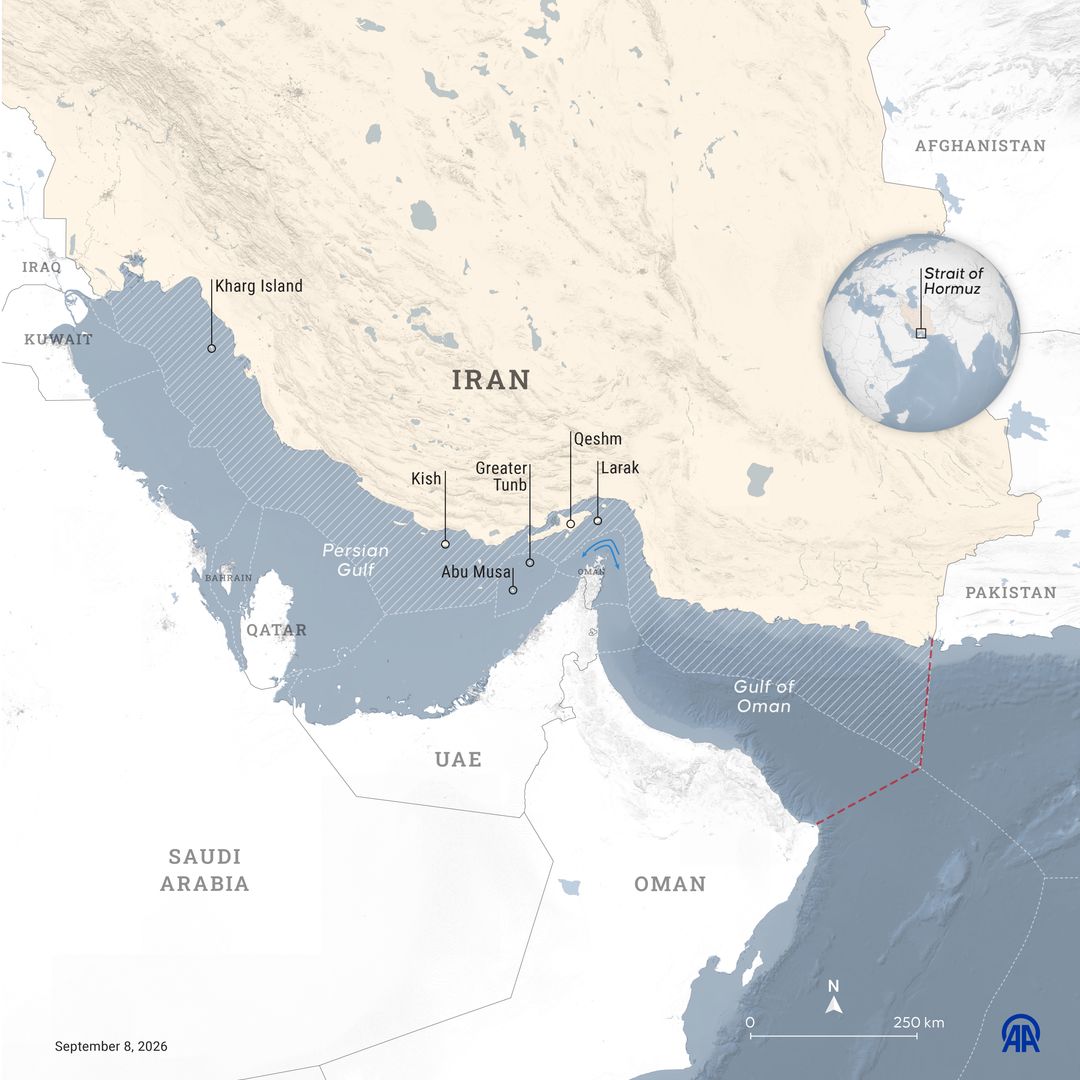
The US-Iran conflict is likely to remain in an active retaliation cycle over the next 14 days, while Iran's proposed maritime exclusion zone and severe disruption keep Strait of Hormuz shipping constrained. Houthi attacks on southern Saudi Arabia, Israeli operations in southern Lebanon and new UK sanctions widen the pressure, although Qatar, Oman and Pakistan retain channels for limited deconfliction.
Executive summary
On 8 September 2026, the conflict involving the United States, Israel and Iran remained unresolved and expanded across several fronts. Iranian officials announced plans for a maritime exclusion zone, while reporting also described a temporary safe route under discussion with Oman and at least one Qatari LNG tanker transiting the Strait of Hormuz. Houthi attacks on Abha, Khamis Mushait, Jazan and Najran injured at least 73 civilians and disrupted energy facilities in southern Saudi Arabia, prompting reported Saudi airstrikes in Yemen. Israeli strikes continued in southern Lebanon amid Hezbollah warnings of retaliation. The UK introduced new sanctions targeting Iran's nuclear programme, trade and aviation, while oil, gas and tanker freight prices remained elevated.
Change from previous assessment
Since the 7 September brief, the assessment has shifted from a primarily US-Iran maritime retaliation cycle to a wider regional escalation picture. New developments include Houthi attacks on four southern Saudi cities that injured at least 73 civilians, reported fires and operational halts at Saudi energy facilities, a proposed Iranian exclusion zone beyond the Strait of Hormuz, and new UK sanctions targeting Iran's nuclear programme, trade and aviation. The Hormuz judgement is refined to distinguish severe constraint from complete closure, while the diplomatic judgement now gives greater weight to Qatar's phased de-escalation approach and the continuing Oman track. A new judgement has been added on Saudi-Houthi escalation, and the Lebanon assessment is retained at low confidence because current reporting is thin.
Key judgments
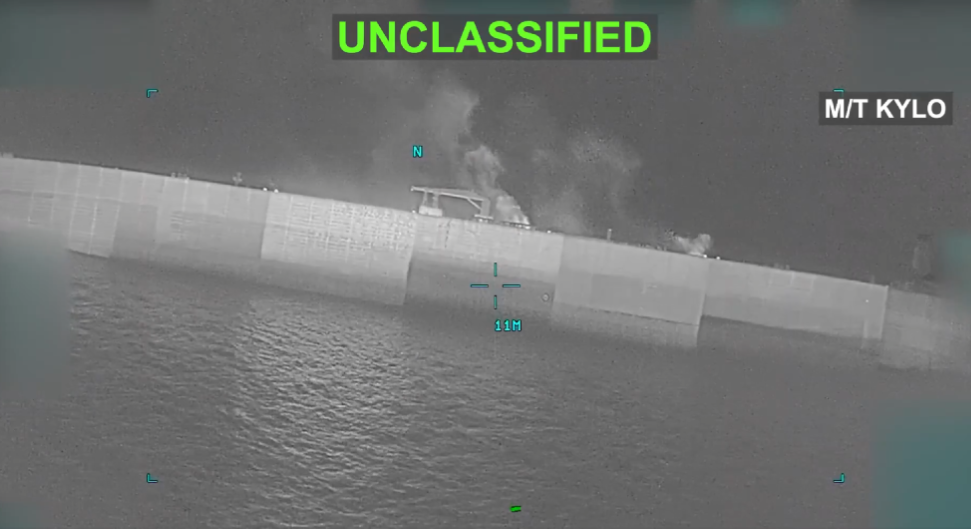
- US-Iran military and maritime retaliation is likely to continue over the next 0-14 days. The United States has targeted Iranian oil tankers, Iran has attacked US bases across the Middle East, and Mohsen Rezaei has announced or threatened expanded maritime restrictions in the Persian Gulf and near the Strait of Hormuz. This is an assessed forecast. The strike-versus-test account involving an Iranian missile and a US warship remains unresolved, and some details rely on single-source reporting, which lowers confidence. (Confidence: medium · ASSESSED)
- I&W: A further US or Iranian strike involving Iranian targets, US warships, US bases or Iranian tankers is reported by CENTCOM or Iranian official channels. (0-14 days)
- I&W: Washington and Tehran announce reciprocal suspension of strikes and tanker actions, with no further reported military exchange. (0-14 days)
- Commercial shipping through the Strait of Hormuz is likely to remain severely constrained over the next 0-14 days, but a complete closure is unlikely. Reporting describes an approximately 85% fall in maritime traffic, renewed tanker blockades and continuing Iranian disruption, while Iran and Oman are negotiating a temporary safe route and a Qatari LNG tanker has transited towards Pakistan. The 85% estimate and successful transit refer to different reporting windows, and the safe route is announced rather than confirmed operational, leaving the severity and duration of the disruption uncertain. (Confidence: medium · ASSESSED)
- I&W: Vessel-tracking reports continue to show sharply reduced traffic, repeated tanker turnbacks or no additional Qatari LNG departures through the Strait of Hormuz. (0-14 days)
- I&W: The International Maritime Organization records the temporary safe route and multiple LNG or crude tankers transit without reported turnbacks. (0-14 days)
- Houthi attacks on southern Saudi Arabia are likely to produce further Saudi-Houthi exchanges over the next 0-14 days. Houthi missiles and drones struck Abha, Khamis Mushait, Jazan and Najran, injuring at least 73 civilians and causing fires and temporary operational halts at energy facilities. Saudi airstrikes were subsequently reported in Jubah district, Yemen, and Saudi Arabia has coordinated a naval coalition with Turkiye and Pakistan. The attribution of some energy-site strikes remains contested, so confidence is reduced despite multiple reports of the attacks and casualties. (Confidence: medium · ASSESSED)
- I&W: New Houthi missile or drone strikes hit Abha, Khamis Mushait, Jazan, Najran or Saudi energy facilities, followed by reported casualties or fires. (0-14 days)
- I&W: Saudi aircraft or the Saudi-Turkiye-Pakistan naval coalition conducts further operations against Houthi positions in Jubah or other named Yemeni locations. (0-14 days)
- Qatar, Oman and Pakistan are likely to sustain mediation activity, but a broad US-Iran ceasefire is unlikely over the next 0-14 days. Qatar describes its approach as phasing the crisis out, Iran and Oman are negotiating a safe passage arrangement, and the June memorandum of understanding remains a reference point. Washington and Tehran accuse each other of violating that agreement, while President Donald Trump has dismissed it and described the war as continuing. The mediation channels are corroborated, but their ability to change military behaviour remains untested. (Confidence: medium · ASSESSED)
- I&W: Qatar, Oman or Pakistan announces a new meeting with Washington or Tehran that produces agreed navigation, force-restraint or ceasefire steps. (0-14 days)
- I&W: Washington and Tehran issue a joint ceasefire statement or publish a mutually accepted implementation mechanism for the June memorandum. (0-14 days)
- Energy and freight pressure is likely to persist over the next 1-3 months even if some shipping routes recover. Brent crude reached $98.5 per barrel, WTI reached $94, Dutch front-month gas futures reached €74.95 per megawatt-hour, European gas storage stood at 67% against a seasonal norm of 83%, and Saudi Arabia-China tanker earnings reached $728,000 per day. These indicators are reported by multiple market and wire-service sources, but the duration of the pressure depends on the extent to which Hormuz traffic resumes. (Confidence: medium · ASSESSED)
- I&W: Brent remains near or above $98 per barrel, Dutch gas futures remain near €75 per megawatt-hour, and Saudi Arabia-China tanker earnings remain above $700,000 per day. (0-14 days)
- I&W: European gas storage remains below the seasonal norm and German storage remains near half full as the 1-3 month period progresses. (1-3 months)
- Israeli strikes in southern Lebanon are likely to continue straining the Israel-Hezbollah ceasefire over the next 0-14 days. Reporting describes expanded Israeli airstrikes on villages and towns, continuing strikes around Nabatieh and Hezbollah warnings that further incursions will not go unanswered. This judgement rests on thin, partly single-source reporting from local and lower-reliability outlets, so confidence is low. (Confidence: low · ASSESSED)
- I&W: Further Israeli strikes are reported in Nabatieh or other southern Lebanese towns, followed by Hezbollah warnings or military activity. (0-14 days)
- I&W: Israel and Hezbollah publicly reaffirm the ceasefire and no new Israeli strikes or Hezbollah retaliation are reported. (0-14 days)
Outlook & scenarios
Sustained, bounded escalation (50%)
The most likely path is continued US-Iran exchanges involving Iranian targets, US bases, US warships or tankers, without a decisive change in the conflict's political status. Iran maintains severe pressure on Strait of Hormuz shipping without enforcing a complete closure. Houthi attacks and Saudi responses continue, while Israeli strikes in southern Lebanon persist. Qatar, Oman and Pakistan keep contacts open, but no comprehensive ceasefire is reached.
Partial maritime deconfliction (25%)
Iran and Oman formalise a temporary safe route through the Strait of Hormuz, and additional LNG or crude tankers transit with fewer turnbacks. Maritime disruption eases, but US-Iran military tensions, UK sanctions and the Houthi-Saudi confrontation continue. Diplomatic activity produces practical navigation arrangements without resolving the wider war.
Wider regional expansion (15%)
Iran implements the proposed exclusion zone, further restricting vessels near the Strait of Hormuz and the Gulf of Oman. Houthi attacks recur against Saudi cities or energy facilities, prompting additional Saudi operations in Yemen. Israeli strikes in Lebanon intensify and Hezbollah retaliates, producing a wider regional security crisis and sustained energy-price pressure.
High-impact maritime rupture (10%)
An Iranian missile, mine or small-boat incident damages a US warship or a tanker in the Persian Gulf, Strait of Hormuz or Gulf of Oman. The United States responds against Iranian targets, Iran enforces maritime restrictions, and commercial traffic falls towards near-total interruption. This scenario would sharply increase oil, gas and freight prices and reduce the space for mediation.
Recommendations
- Maintain a 24-hour watch on Iran's maritime policy. Separate Mohsen Rezaei's announced or conditional exclusion-zone language from evidence that the zone is operational. Check for International Maritime Organization registration of the temporary safe route, vessel-routing changes and tanker turnbacks.
- Keep separate analytic tracks for the reported Iranian missile event. Do not treat the claims of an operational strike on a US aircraft carrier, a strike on US warships or a missile test over a US warship as interchangeable. Seek confirmation from CENTCOM, Iranian official channels and independent vessel-tracking reporting.
- Create a named Saudi-Houthi incident tracker covering Abha, Khamis Mushait, Jazan, Najran, southern Saudi energy facilities, Jubah and other reported Yemeni strike locations. Record casualties, fires, operational halts, Houthi statements and Saudi or coalition responses within the same reporting window.
- Monitor diplomatic outputs from Qatar, Oman and Pakistan for specific changes to navigation rights, force restraint or the June memorandum. Treat meetings and public statements as activity indicators, not evidence of a ceasefire, unless Washington and Tehran jointly endorse implementation steps.
- Update the economic dashboard daily with Brent, WTI, Dutch gas futures, European and German storage levels, Saudi Arabia-China tanker earnings and Strait of Hormuz vessel movements. Compare price changes with actual shipping flows rather than using market prices alone as evidence of a full closure.
- Map implementation of the UK measures introduced on 8 September, including the 71 designations, expanded trade prohibitions, restrictions on Iranian aircraft and sanctions on Al-Qard Al-Hassan. Track whether the UK and its allies report additional Iranian nuclear measures to the UN Security Council.
Confidence & uncertainty
Overall confidence is high because the core developments are supported by 25 usable sources, including official government statements, wire services and multiple major-media reports. Independent reporting corroborates the US-Iran exchange of strikes, severe Hormuz disruption, Houthi attacks on southern Saudi Arabia, market effects and new UK sanctions. The main uncertainties concern whether Iran's exclusion zone is operational, whether the reported missile event was a test or an attack, the exact scale of Hormuz traffic reduction, and the attribution of some strikes.
Intelligence gaps
- [EEI 1.1 · PARTIAL] Detection and characterization of ballistic/cruise missile or rocket launches originating from Iranian territory or from Iran-controlled positions in Iraq/Syria (time, launch coordinates, missile type, flight trajectory/impact area). Recommended collection: satellite/imagery
- [EEI 1.2 · UNCOVERED] Movements and posture changes of Iran-backed proxy forces (Hezbollah units in Lebanon, militias in Syria/Iraq): concentrations of personnel, transport of rocket/artillery launchers, visible logistics build-up within operational range of Israel. Recommended collection: human/intel
- [EEI 1.3 · PARTIAL] Israeli defensive and offensive posture changes: reservist call-ups, mobilization orders, sorties/airstrikes attributed to Israel, and domestic activation of missile-defense systems (locations and activation times). Recommended collection: open-source/media
- [EEI 1.4 · UNCOVERED] Evidence of pre-positioning or arming of naval mines, fast attack craft, or anti-ship missile systems in the Gulf of Oman, northern Arabian Sea, or off the Lebanese/Syrian coasts that could be used to interdict Israeli or allied shipping. Recommended collection: maritime/AIS
- [EEI 2.1 · PARTIAL] Movements and tasking changes of external military assets: carrier strike groups, amphibious ready groups, expeditionary air wings, or ballistic-missile defense units into the Eastern Mediterranean, Persian Gulf, or Red Sea (vessel/aircraft IDs, routing, on-station times). Recommended collection: maritime/AIS
- [EEI 2.3 · PARTIAL] Changes to force protection or alert levels at foreign bases in the region (e.g., US bases in Kuwait, Qatar, UAE; Russian bases in Syria): activation of additional air defenses, curfews, or reinforcement shipments (personnel/equipment manifests). Recommended collection: signals/intel
- [EEI 3.2 · PARTIAL] Changes in crude oil and refined product flows from key terminals (reported tanker loading delays, terminal closures, throughput volumes at Kharg, Mina al-Ahmadi, Ras Tanura, and major Gulf ports compared to baseline). Recommended collection: commercial/ports
- [EEI 3.3 · PARTIAL] Market and insurance indicators: sudden spikes in war-risk or hull insurance premiums for Middle East routes, large moves in regional FX/stock indices, and notable changes in commodity futures (oil, freight rates) tied to regional risk perceptions. Recommended collection: financial/transactional
TLP:CLEAR