TLP:CLEAR · Disclosure is not limited.
Middle East SITREP: US, Iran strikes intensify, Hormuz risk acute, Israel, Lebanon talks show a limited opening
Time window: Last 1 day · Audience: General analyst · Type: Situation report · DTG: 2026-07-16 07:40Z · Overall confidence: HIGH
BLUF
US strikes reached areas around Tehran and Gulf islands while Iran hit US targets in Bahrain and Kuwait, and the IRGC says Hormuz will remain closed, leaving commercial shipping at high risk. A preliminary Rome accord on two pilot areas for Israeli withdrawal offers a narrow de-escalation path on the Lebanon front but remains fragile.
Executive summary
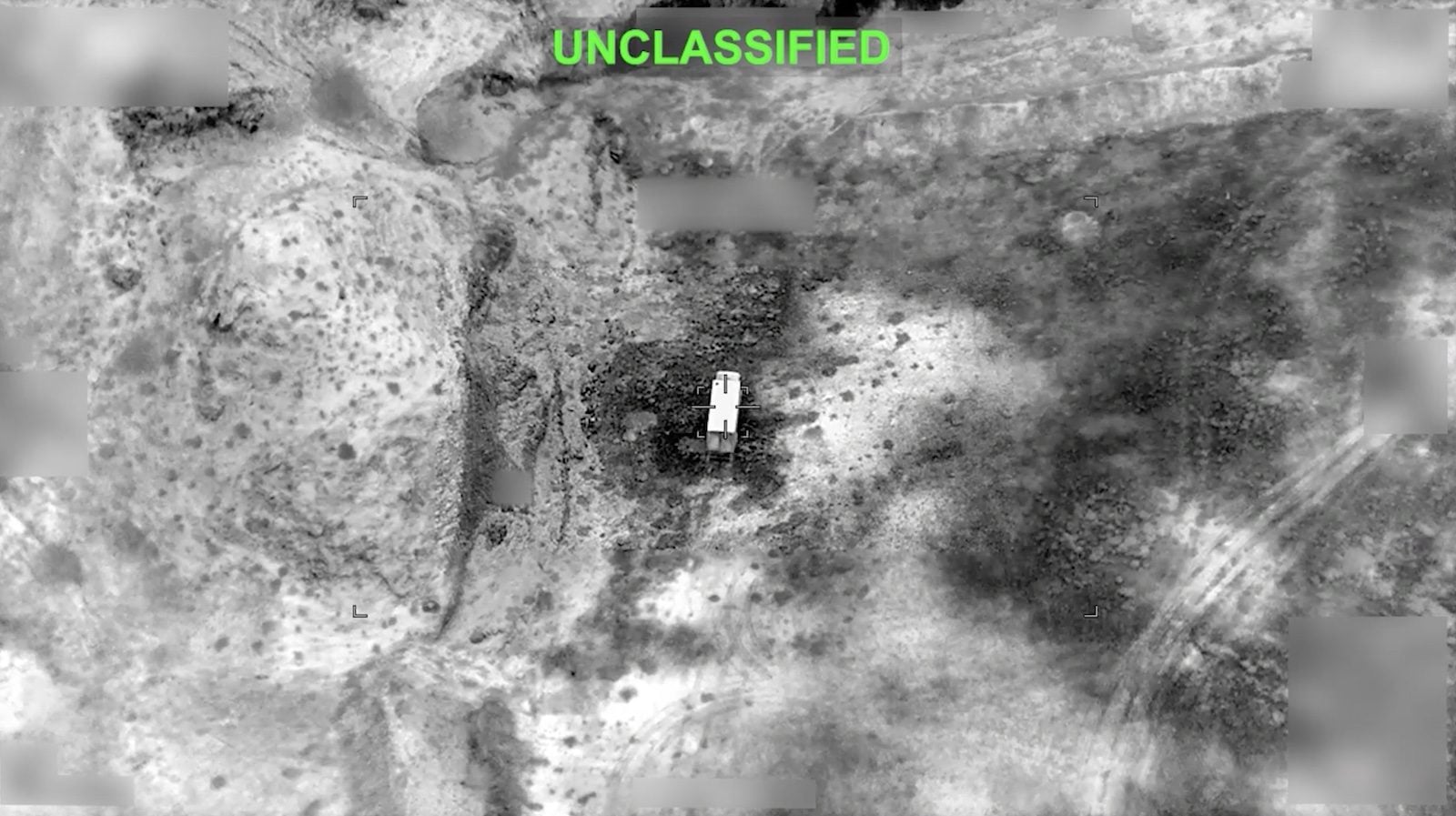
Since 15-16 July, the United States has expanded strikes on Iranian targets, including around Tehran and on Greater Tunb, Qeshm, Kish and Abu Musa, and has enforced a renewed blockade by disabling an Iran-linked tanker near Kharg Island. Iran has struck US military targets in Bahrain and Kuwait and says it targeted US troops and radar at a Kuwait air base on 16 July. The IRGC says the Strait of Hormuz will remain closed until US strikes and the port blockade end, while the IMO judges conditions too dangerous for normal navigation amid multiple recent attacks on VLCCs off Oman; the US reports assisting merchant transits. Energy flows are re-routing via Saudi Arabia’s Red Sea port of Yanbu, and markets are focused on further disruption, with Iranian and Houthi rhetoric raising a risk of Red Sea spillover. In Rome, Lebanese, Israeli talks produced a preliminary understanding on two experimental withdrawal areas and plans for a US-sponsored military meeting, though no final deal was announced. Reported casualty figures in Israel and Iran point to a rising humanitarian toll, but the numbers are contested and largely single-source.
Change from previous assessment
Since the prior brief, US strikes extended to areas around Tehran and additional Gulf islands, and the US disabled an Iran-linked tanker near Kharg Island. Iran publicly targeted a Kuwait air base and reiterated strikes in Bahrain and Kuwait. The IRGC stated Hormuz would remain closed until US strikes and the port blockade end, matching IMO warnings of unsafe navigation and fresh VLCC incidents off Oman. On the northern front, Rome talks produced a preliminary understanding on two pilot withdrawal areas and plans for a US-sponsored military meeting, introducing a potential de-escalation path absent in the prior brief. Our confidence increased on the sustained nature of US, Iran exchanges and on acute maritime risk, and we added a new judgment on the Israel, Lebanon talks while keeping casualty assessments at low confidence due to contested reporting.
Key judgments
- The United States very likely sustained and expanded a strike campaign against Iranian targets since 15-16 July, including sites around Tehran and on Greater Tunb, Qeshm, Kish and Abu Musa, and is enforcing a naval blockade by disabling at least one Iran-linked tanker near Kharg Island. (Confidence: high · REPORTED)
- I&W: CENTCOM statements or credible reporting of additional strikes in the Tehran area or on Gulf islands. (0-14 days)
- I&W: Public advisories or imagery confirming further blockade enforcement actions against tankers approaching Kharg or Bandar Abbas. (0-14 days)
- Iran very likely conducted retaliatory strikes on US military targets in Bahrain and Kuwait, including targeting US troops and radar systems at a Kuwait air base on 16 July. (Confidence: high · REPORTED)
- I&W: Official statements from Bahrain, Kuwait or the US acknowledging damage or interceptions at named bases. (0-14 days)
- I&W: A sustained halt in Iranian missile or drone launches toward Gulf targets. (0-14 days)
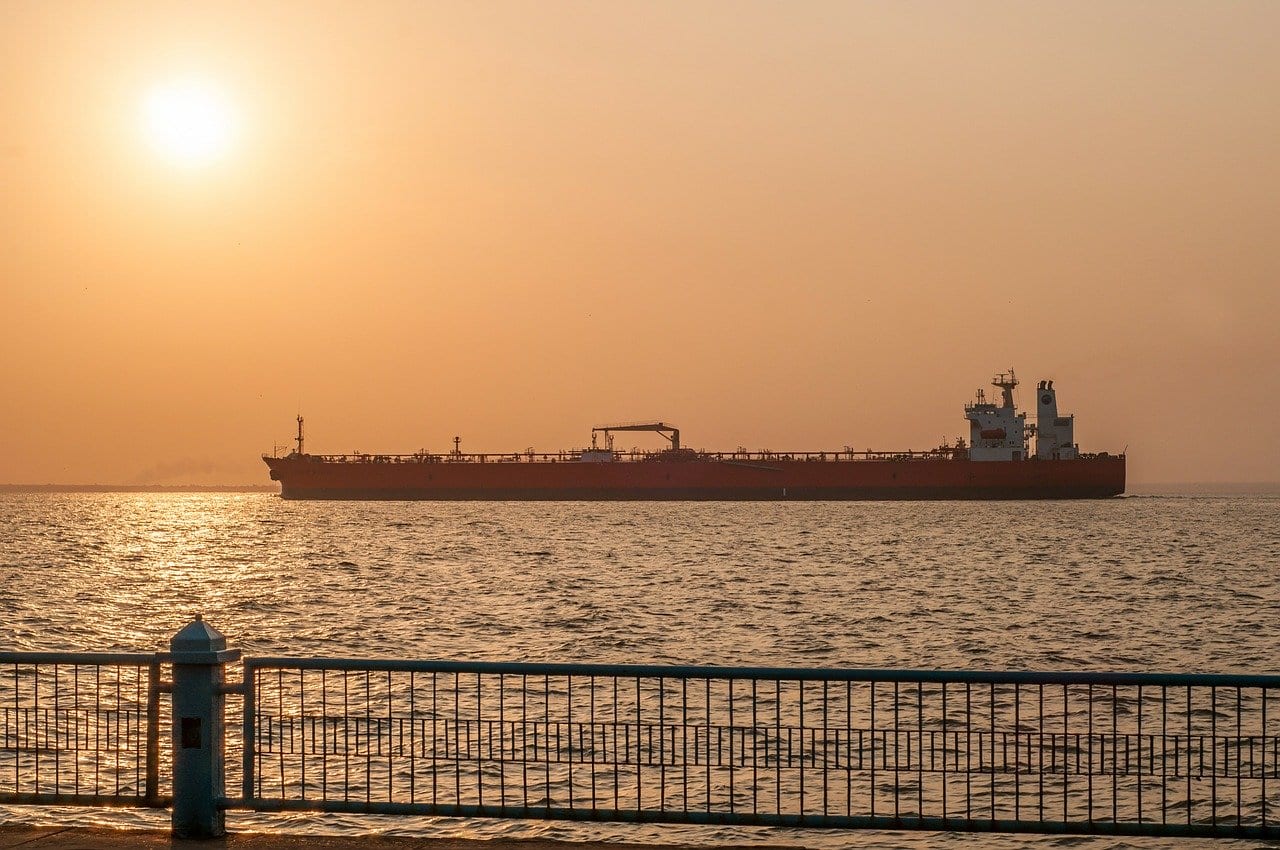
- The Strait of Hormuz is almost certainly at severe navigational risk and reduced commercial throughput, with the IRGC declaring the strait closed until US strikes and the port blockade end, the IMO judging conditions too dangerous for normal navigation, a spate of VLCC attacks off Oman, and US naval assistance to transiting merchant ships. (Confidence: high · REPORTED)
- I&W: Further UKMTO or IMO reports of attacks or damage to VLCCs near Oman or in/near Hormuz. (0-14 days)
- I&W: An IMO update easing its danger assessment for Hormuz or a two-week period without US naval assistance to merchant transits. (0-14 days)
- Energy flows are likely to continue re-routing via the Red Sea in the near term, and there is a roughly even chance of spillover to Red Sea interdiction if Houthi threats are acted upon. (Confidence: medium · ASSESSED)
- I&W: Houthi attempts to stop or strike Israel-linked vessels in the Red Sea, publicly claimed and geolocated. (1-3 months)
- I&W: A public rollback of the Houthi ban on Israel-linked ships and a decline in Saudi loadings at Yanbu toward pre-diversion baselines. (1-3 months)
- Limited de-escalation on the Israel, Lebanon front is likely in the coming weeks, given a preliminary Rome understanding on two pilot withdrawal areas and plans for a US-sponsored military meeting, though no final deal was announced and verification demands remain contentious. (Confidence: medium · ASSESSED)
- I&W: US-sponsored military meeting convenes and the two pilot withdrawal zones are publicly identified. (0-14 days)
- I&W: Renewed heavy exchanges between the IDF and Hezbollah in south Lebanon. (0-14 days)
- Reported casualty tallies indicate a rising humanitarian toll in both Israel and Iran, but figures are contested and largely single-source, so the exact numbers are assessed with low confidence. (Confidence: low · ASSESSED)
- I&W: Multiple independent organisations publish corroborated casualty assessments aligning on magnitudes and trends. (1-3 months)
- I&W: A verified pause in major strikes leading to a sharp fall in reported casualty incidents. (0-14 days)
Outlook & scenarios
Managed US, Iran tit-for-tat with high maritime risk (50%)
US precision strikes and Iranian retaliation against US targets in the Gulf continue at a controlled tempo. The IRGC keeps Hormuz at high risk as the US escorts merchant traffic. VLCC incidents recur near Oman. On the northern front, the Rome track yields incremental steps in two pilot withdrawal areas without a final accord.
Widening maritime conflict reaches the Red Sea (35%)
Houthi forces begin enforcing their announced ban on Israel-linked ships, targeting traffic in the Red Sea. Iran sustains pressure at Hormuz. Saudi diversions via Yanbu persist at elevated levels. Energy markets price in prolonged multi-chokepoint disruption.
Diplomatic pause and partial reopening of Hormuz (20%)
Back-channel efforts align with public calls for de-escalation, easing the immediate exchange. The IRGC relaxes its posture, the IMO downgrades risk, and US assistance to merchant transits tapers. Maritime insurance premiums stabilise and some normal flows resume.
Low-probability, high-impact island seizure triggers surge escalation (10%)
A US move to seize an Iranian island prompts extensive Iranian mining of Hormuz, stepped-up strikes on vessels, US bases and Gulf infrastructure, and a sharp regional escalation beyond current contours.
Recommendations
- Stand up a daily indicator tracker for Hormuz: log UKMTO and IMO incident reports, IRGC and CENTCOM statements, and US naval escort activity to assess risk levels and convoy needs.
- Task focused OSINT collection on Bahraini and Kuwaiti air bases for battle damage assessment after Iranian strikes, including commercial satellite passes and local official communiqués.
- Build a watchlist of Israel-linked or Israel-calling vessels transiting the Red Sea and Bab el-Mandeb, and monitor Houthi channels for targeting cues and enforcement claims.
- Coordinate with energy analysts to monitor liftings at Yanbu and other Red Sea terminals as a proxy for sustained re-routing of crude flows.
- Track outputs from the Rome process: confirm scheduling of the US-sponsored military meeting, identify the named pilot withdrawal areas, and capture verification proposals from both sides.
- Maintain a structured casualty ledger for Israel and Iran that flags single-source figures and seeks cross-source corroboration before inclusion in analytic products.
- Monitor US policy signals that shape maritime and military risk, including outcomes on the Massie Amendment and HR8595, and any further White House guidance on blockade enforcement.
Confidence & uncertainty
Overall confidence is high because multiple independent, reliable sources corroborate the core dynamics: US strikes on Iranian targets including around Tehran and Gulf islands, Iranian strikes on US targets in Bahrain and Kuwait, the IRGC’s declared closure posture for Hormuz, IMO’s unsafe-navigation assessment, repeated VLCC incidents off Oman, and US assistance to merchant transits. UN statements anchor the de-escalation call. Uncertainties remain around casualty figures, which are contested and often single-source, and around the timing and extent of any Red Sea spillover given mixed signals on Houthi involvement. These gaps are reflected in lowered confidence for related judgments.
Alternative analysis (red cell)
Available reporting contains multiple unaddressed contradictions and mixed-quality sourcing that weaken high-confidence claims about an expansive, sustained US strike campaign and a uniformly severe, strait‑wide navigation crisis. An alternative, defensible estimate is that kinetic activity is episodic and geographically localized (some strikes/escorts/interceptions), maritime risk is elevated in specific corridors rather than uniformly catastrophic across Hormuz, and several high-visibility incident characterizations (e.g., tanker 'disabled') remain uncorroborated pending forensic or ISR confirmation.
Intelligence gaps
- [EEI 1.1 · UNCOVERED] Observed repositioning, sustained increases, or new forward basing of Iranian conventional or IRGC forces (armored units, missile batteries, aircraft, naval vessels) toward borders or regional launch points. Recommended collection: IMINT/satellite
- [EEI 1.2 · PARTIAL] Hezbollah or other Iran-aligned proxy forces conducting mass mobilization, visible rocket/artillery emplacements, cross-border firing incidents, or preparations for cross-border operations from Lebanon, Syria, Iraq or Yemen. Recommended collection: HUMINT/ground ISR
- [EEI 1.4 · UNCOVERED] Interdicted or observed shipments (air, sea, land manifests, seizures, satellite imagery of transfers) of advanced weapons or missile components from Iran toward proxy groups or forward staging points. Recommended collection: maritime/AIS
- [EEI 2.1 · UNCOVERED] Satellite or on-the-ground imagery showing fires, damage, or operational shutdown at major oil export facilities, refineries, storage terminals, or key pipeline infrastructure in the Gulf and Red Sea. Recommended collection: IMINT/satellite
- [EEI 2.4 · PARTIAL] Rapid increases in war-risk insurance premiums for Middle East routes, shipping company advisories to avoid region, or major charter cancellations tied to the conflict. Recommended collection: financial/open-source
- [EEI 3.1 · PARTIAL] Movement/arrival of major foreign military assets into the region: U.S. carrier strike groups, amphibious ready groups, strategic bomber flights, Russian/Chinese naval taskings, or allied expeditionary units (visible in AIS, NOTAMs, satellite imagery, official releases). Recommended collection: IMINT/satellite
- [EEI 3.2 · UNCOVERED] Official expedited arms transfers, basing/overflight agreements, or declarations of operational support (formal government announcements, defense ministry releases, logistics flight manifests). Recommended collection: open-source/diplomatic
- [EEI 3.3 · UNCOVERED] Embassy evacuations, large-scale personnel movements, issuance of government travel bans/advisories, or multinational security alerts affecting foreign nationals and diplomatic posture in the region. Recommended collection: diplomatic/open-source
Cited sources
[1] The Jerusalem Post · Live Updates: Latest from Israel, Iran, and Middle East | The Jerusalem Post (A) · sha256:c55d5f77e647 [2] haaretz.com · U.S. strikes around Tehran for first time since Trump declared end of cease-fire (A) · sha256:b6a82928d6d4 [3] Al Jazeera · Could the US take control of Iran’s southern islands? (A) · sha256:b2847824f2cc [4] worldoil.com · Oil tops $85 as U.S. intensifies strikes on Iran (A) · sha256:1b386a7af195 [5] maritime-executive.com · Video: U.S. Disables Iran-Linked Tanker With Hellfire Missiles (A) · sha256:2f66b8a1d0e9 [6] bbc.com · US launches fresh strikes on Iran as Trump warns Tehran it 'better behave' (A) · sha256:f584a8b4307e [7] Bloomberg · Trump Vows Strikes on Iran's Power Plants and Bridges Unless Hormuz Reopens (A) · sha256:f20adb6eaee1 [8] gcaptain.com · Supertankers Increasingly Bear Brunt in Hormuz Ship Attacks (B) · sha256:644809450db5 [9] gcaptain.com · After Hormuz, Here's Why the Red Sea Is Now the World's Most Vulnerable Shipping Route (A) · sha256:46680c4d17db [10] aljazeera.net · ختام محادثات لبنان وإسرائيل باتفاق مبدئي وتحديد منطقتين لتجربة الانسحاب (A) · sha256:22c89a4d73d3 [11] gcaptain.com · Iran Threatens Wider Energy Chokepoints After Fresh U.S. Strikes (A) · sha256:711246ba41c4
Source content hashes were computed at collection time; the cited text is preserved unmodified for the life of this product.
Red cell review: PARTIAL DISSENT
TLP:CLEAR