TLP:CLEAR · Disclosure is not limited.
Middle East Situation Report: Iran-Israel Escalation and Maritime Risk
Time window: Last 1 day · Audience: General analyst · Type: Situation report · DTG: 2026-08-20 11:07Z · Overall confidence: MEDIUM
BLUF
Regional escalation is very likely to persist over the next 14 days as Iran, Israel, Houthi forces in Yemen and Turkey remain involved across several fronts. The immediate decision risk remains commercial shipping through the Strait of Hormuz, where shipowners continue to avoid the waterway, traffic remains below recent levels and US and Iranian positions on access remain opposed.
Executive summary
Reporting indicates continued military activity involving Iran and Israel, Israeli strikes in Syria, and a Houthi offensive against Yemen's western coast and the port of Mocha on 19 August 2026. Commercial traffic through the Strait of Hormuz remains disrupted, with three China-linked supertankers turning around and 73 recorded transits between 10 and 16 August, down from 91 the previous week. US-Iran diplomacy remains stalled after President Donald Trump stated on 18 August that no talks were taking place, although Iran and Oman are negotiating separately on management of Hormuz. The evidence is less clear on attribution and scope: reports disagree over whether Israeli strikes hit Tiyas Military Airbase in Homs or Abu al-Duhur air base in northwest Syria, and reports differ on the scale of the Houthi attacks. The dataset also mixes current 2026 reporting with claims dated 2023, which limits confidence in some event sequencing.
Change from previous assessment
Since the 19 August brief, the assessment adds the reported Houthi attack campaign against Yemen's western coast and Mocha on 19 August, including Yemeni government force mobilisation and port closure. The assessment also incorporates Brent crude settling at $91.62 per barrel on 19 August and President Donald Trump's explicit statement on 18 August that no US-Iran talks were taking place. Overall confidence remains medium. Confidence is lower on the Syria strike location and Houthi attack totals because the new reporting contains direct contradictions. No prior judgment is retired.
Key judgments
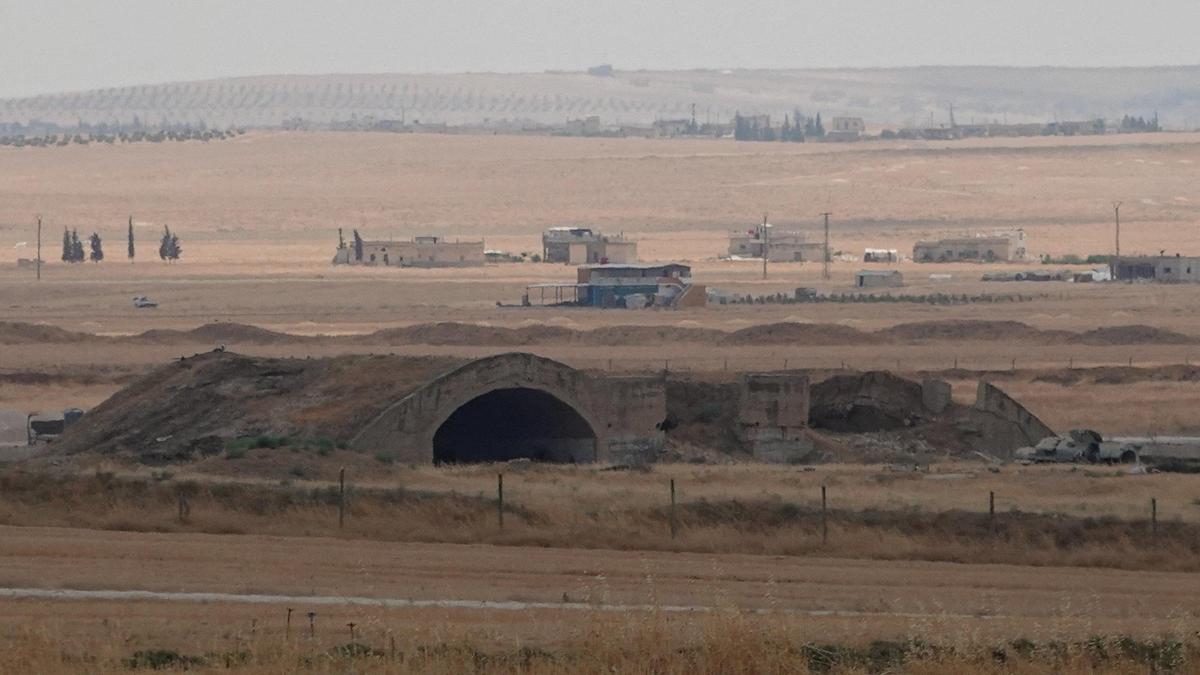
- Regional escalation is very likely to persist over the next 14 days. Iran has resumed attacks in response to US strikes, Israel has conducted or is reported to have conducted strikes on Syrian military facilities, Houthi forces have launched large-scale attacks along Yemen's western coast, and Iran's armed forces continue to warn Gulf states against supporting US forces. The evidence supports concurrent activity by Iran, Israel, Houthi forces and Turkey rather than a single centrally directed campaign. Confidence is reduced because reports identify different Syrian targets, Tiyas Military Airbase in Homs and Abu al-Duhur air base in northwest Syria. (Confidence: medium · ASSESSED)
- I&W: Confirming evidence would be another Israeli strike on Tiyas Military Airbase or Abu al-Duhur air base, or a Turkish announcement of limited military measures following Israeli action. (0-14 days)
- I&W: The judgment would weaken if no further Israeli, Iranian or Houthi attacks are reported across Syria, the Gulf or western Yemen during the next two weeks. (0-14 days)
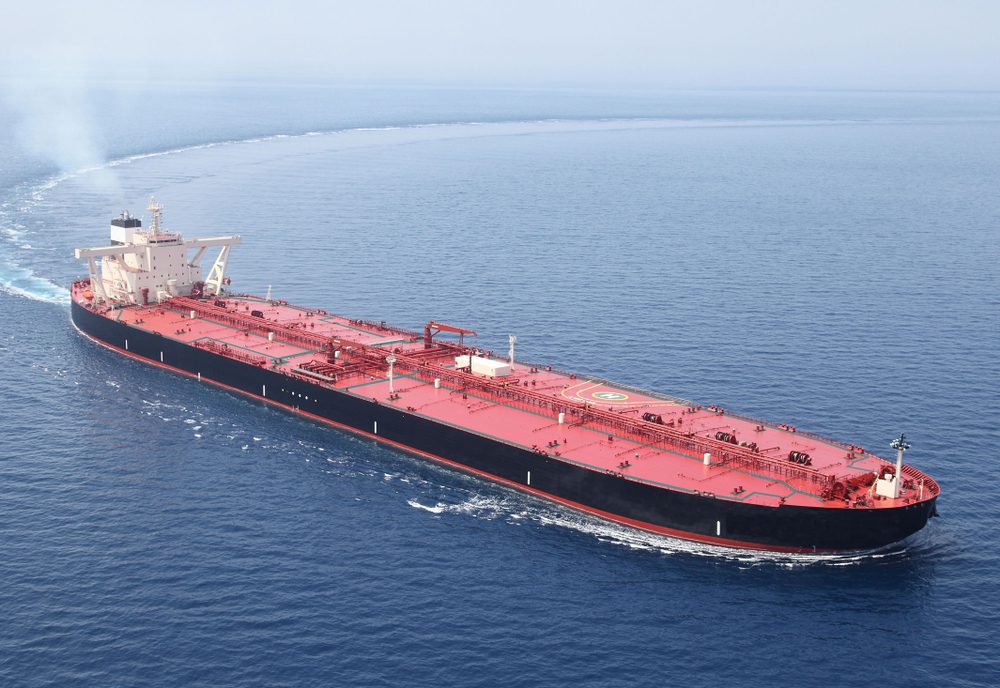
- Commercial shipping risk in the Strait of Hormuz is very likely to remain severe over the next 14 days. Iran's de facto closure has severely disrupted maritime traffic, many shipowners continue to avoid the waterway, three China-linked supertankers have turned around, and recorded transits fell to 73 between 10 and 16 August from 91 the previous week. The status of the waterway remains contested, with Washington describing it as open and Tehran maintaining that it is blocked. (Confidence: medium · ASSESSED)
- I&W: Confirming evidence would be weekly Hormuz transits remaining below 91, further shipowner avoidance, or additional commercial vessels turning around before completing the passage. (0-14 days)
- I&W: The judgment would weaken if traffic returns to or exceeds 91 weekly transits and major shipowners resume routine passages without new vessel incidents. (0-14 days)
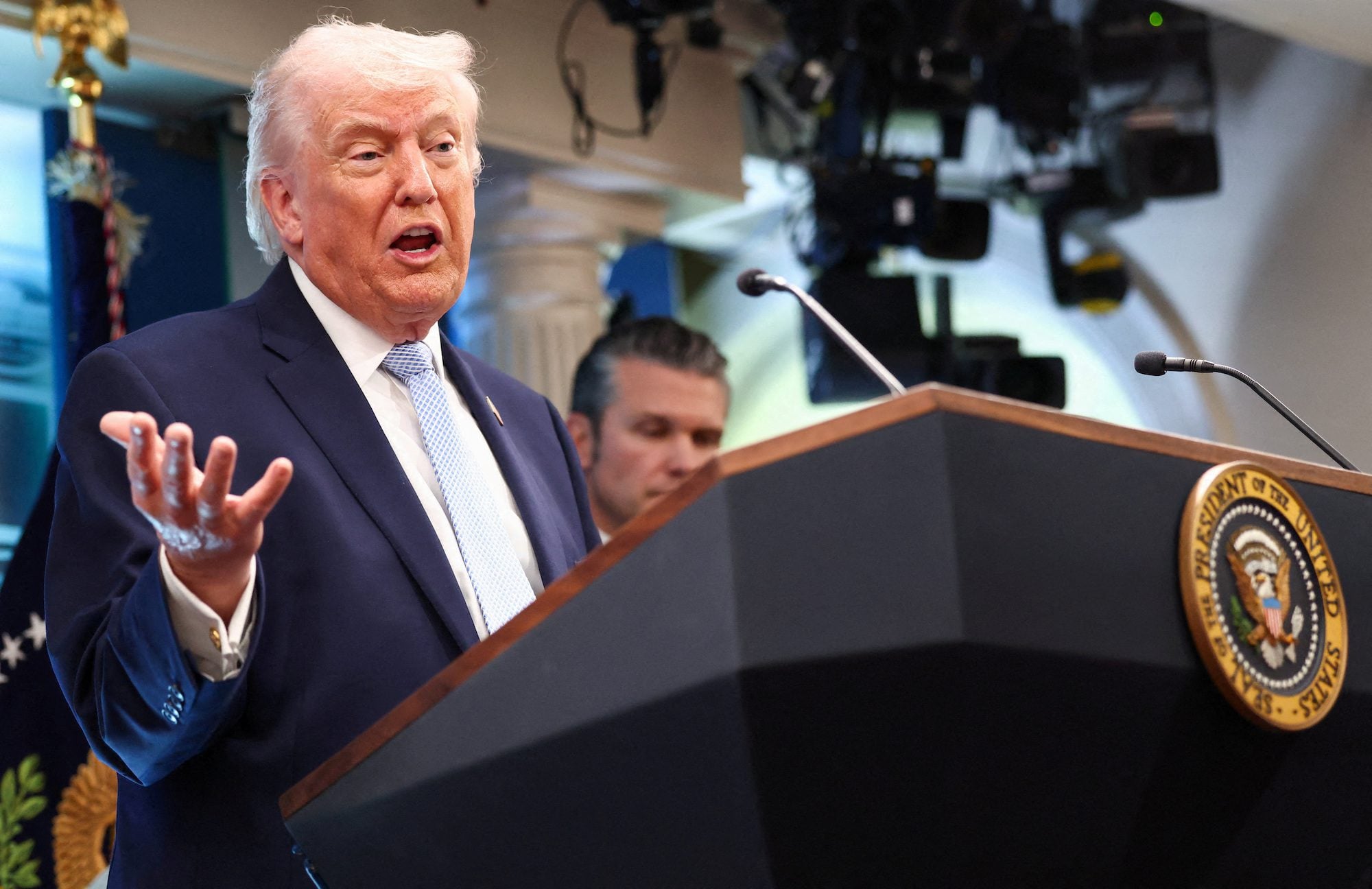
- A formal US-Iran de-escalation arrangement in the next 14 days is unlikely. President Donald Trump stated on 18 August that no talks or scheduled conversations with Iran were taking place; the US-Iran memorandum of understanding and temporary ceasefire have expired, and diplomatic channels have not reopened Hormuz or revived a comprehensive peace process. Iran and Oman are negotiating separately on management of Hormuz, while Trump has left open negotiations at an unspecified later point. These competing signals leave a diplomatic route open but unproven. (Confidence: medium · ASSESSED)
- I&W: Confirming evidence would be continued public denial of US-Iran talks, no extension of the expired arrangements, and further Iranian demands linking Hormuz access to US concessions. (0-14 days)
- I&W: The judgment would break if Washington and Tehran announce a formal negotiating channel, renew a ceasefire or sign an arrangement governing Hormuz. (0-14 days)
- The Houthis are likely to sustain high-tempo attacks against Yemen's western coast and the port of Mocha over the next 30 days. One report describes more than 100 missiles and drones launched on 19 August, while another specifies 56 ballistic missiles and 44 drones over approximately two weeks. Yemeni government forces have raised combat readiness, repositioned forces on southern front lines and accuse the Houthis of preparing, with Iranian support, to control the Bab al-Mandab Strait. The scale of the attacks is therefore assessed with low confidence, and Iranian direction remains unconfirmed. (Confidence: low · ASSESSED)
- I&W: Confirming evidence would be additional Houthi missile or drone attacks against Mocha, the western coast or vessels near Bab al-Mandab, together with continued Yemeni force mobilisation. (0-30 days)
- I&W: The judgment would weaken if Mocha reopens, Yemeni government forces end the reported mobilisation and no further Houthi attacks are recorded for 30 days. (0-30 days)
- Humanitarian pressure is likely to remain acute in Yemen, Lebanon and Gaza over the next 1-3 months. Houthi attacks have closed the main port of Mocha, at least 10 people were reportedly killed in Beirut, and Israeli Defence Minister Israel Katz threatened destruction of homes in Lebanese villages near the border and restrictions on return. In Gaza, UK Middle East Minister Stephen Doughty renewed calls for more aid, visited humanitarian facilities at Al Arish and described cooperation with Egypt to support aid flows. This assessment rests on limited direct data on displacement, aid volumes and access, so confidence is low. (Confidence: low · ASSESSED)
- I&W: Confirming evidence would be continued closure of Mocha alongside fresh casualties in Beirut or southern Lebanon and documented restrictions on aid deliveries into Gaza. (0-30 days)
- I&W: The judgment would weaken if Mocha reopens and humanitarian organisations document a sustained increase in aid deliveries into Gaza. (1-3 months)
Outlook & scenarios
Protracted multi-front pressure (50%)
This is the most likely path over the next 14 days. Iran and Israel maintain military exchanges, Houthi forces continue attacks against western Yemen and Mocha, Hormuz traffic remains below recent levels, and no formal US-Iran negotiating channel opens.
Limited maritime accommodation (25%)
Iran and Oman reach a limited arrangement on managing Hormuz without US participation. Shipping risk declines gradually, but the wider Iran-Israel conflict and Houthi activity continue. A comprehensive US-Iran settlement remains unlikely.
Regional widening through Syria, Lebanon or the Gulf (20%)
Further Israeli strikes in Syria or Lebanon trigger stronger Turkish involvement, while Iranian warnings to Gulf states produce additional security alerts or attacks. Commercial shipping and aviation disruption worsen, and humanitarian pressure rises.
European military-target wildcard (5%)
Iran launches a strike against a military target in Europe. This is very unlikely but high impact, expanding the conflict beyond the Middle East and sharply reducing the prospects for diplomatic recovery.
Recommendations
- Maintain a daily fused watch of Strait of Hormuz transits, shipowner route changes, vessel turnarounds, port activity and reported attacks. Compare each update with the recent baseline of 73 transits, rather than relying on competing official descriptions of whether the waterway is open.
- Separate incident confirmation from attribution in all reporting. Treat Iranian responsibility for the UAE missile incident as disputed, and keep Tiyas Military Airbase and Abu al-Duhur air base as competing locations until independent reporting resolves the discrepancy.
- Track the diplomatic status of the US-Iran relationship through checkable indicators: scheduled talks, renewal of the expired arrangements, Iranian conditions for reopening Hormuz and the progress of the Iran-Oman channel.
- Prioritise collection on Houthi activity around Mocha and Bab al-Mandab, including launch locations, weapon counts, vessel effects, port access and Yemeni government force movements. Do not combine the reported totals of more than 100 missiles and drones with the separate count of 56 ballistic missiles and 44 drones without resolving the discrepancy.
- Monitor humanitarian access in Gaza, Lebanon and Yemen alongside military reporting. Give particular attention to Mocha's operating status, aid movement through the Egypt-Gaza channel, casualties in Beirut and southern Lebanon, and any restrictions on civilian returns.
- Reconcile the dataset's 2023-dated claims with the current 2026 reporting before using them to establish event sequence, trend or baseline. Retain date-uncertain material as background rather than current evidence.
Confidence & uncertainty
Overall confidence is medium because multiple official, multilateral and major-media sources support the broad pattern of regional military activity, shipping disruption and stalled US-Iran diplomacy. Confidence is higher for the existence of shipping avoidance, Houthi activity and public diplomatic statements than for attribution, attack scale or the precise location of Israeli strikes in Syria. The main uncertainties are contradictory reporting, single-source claims on Yemen and the mixture of current 2026 reporting with claims dated 2023.
Intelligence gaps
- [EEI 1.1 · PARTIAL] Number, type, launch times, and trajectories of ballistic missiles, cruise missiles, armed UAV strikes, and combat-air sorties launched by Iranian or Israeli forces toward the other's territory or forward bases within a 72-hour window. Recommended collection: signals/intel
- [EEI 1.2 · UNCOVERED] Observable changes in Israeli and Iranian force posture: mobilization or reserve call-up orders, unit road/rail movements, dispersal or sortie rates of air squadrons, redeployment of air-defense batteries, and activation of civil-defense alerts or sirens in major population centers. Recommended collection: open-source/media
- [EEI 1.3 · UNCOVERED] Indications of strike authorization or targeting preparations in Iranian or Israeli command chains: authenticated public orders by senior commanders, detected increases in encrypted communications consistent with targeting, or visible movement of strike munitions to launch/storage sites. Recommended collection: signals/intel
- [EEI 2.1 · UNCOVERED] Counts, launch locations (coordinates), weapons types, and assessed damage from rocket/missile/drone strikes originating from Lebanon into northern Israel attributed to Hezbollah or allied groups. Recommended collection: open-source/media
- [EEI 2.2 · UNCOVERED] Reported attacks by Iranian-backed militias in Iraq and Syria: rocket/IED strikes on bases hosting US/coalition or Israeli personnel, documented militia unit movements toward borders, and captured movement or transfer of weapons systems to forward militia positions. Recommended collection: human
- [EEI 2.3 · UNCOVERED] Maritime harassment or attacks by proxies (e.g., Houthis): incidents of missile/rocket strikes against commercial vessels, small-boat swarm attacks, discovery or detonation of naval mines, and corresponding AIS anomalies in the Red Sea, Gulf of Aden, or southern Arabian Gulf. Recommended collection: maritime/AIS
- [EEI 3.1 · PARTIAL] Movements and arrival dates of foreign military assets into the region: carrier strike groups, amphibious ships, surface combatants, strategic airlift/tanker deployments, and air/sea patrol patterns by US, European, Russian, or regional militaries. Recommended collection: imagery/satellite
- [EEI 3.2 · PARTIAL] Concrete diplomatic and political actions: emergency UN/Arab League meetings called, official embassy evacuation orders, public declarations of intent to interpose or protect shipping/airspace, and newly announced sanctions or arms-transfer approvals tied to the conflict. Recommended collection: diplomatic
Cited sources
[1] India News Bihar Jharkhand · Israel पर Iran का बड़ा खतरा, Missile Attack के बाद Middle East में तनाव चरम पर! War Breaking News (B) · sha256:f56660f0b414 [2] al-monitor.com · With talks stalled, Iran ups threats against Gulf, Europe: What to know (B) · sha256:1beb8d49a278 [3] indianewsnetwork.com · Israeli Strikes Target Syrian Air Base Following Turkish Delegation Visit (B) · sha256:10b0cfc44e36 [4] Alhurra · Israel’s Strike on Syrian Air Base Raises Stakes with Turkey | Alhurra (B) · sha256:750794570033 [5] ajnet.me · قيادي يمني يلوّح بـ"معركة فاصلة" لمنع سيطرة الحوثيين على باب المندب (B) · sha256:b01d2c49a3bb [6] gulfnews.com · UAE flight updates today: Emirates, Etihad, Air Arabia, flydubai cancellations, delays (A) · sha256:e33a070cf27e [7] abcnepal.tv · Türkiye Forges New Defense Pact, Raising Tensions With Israel (B) · sha256:8cfb7f68b462 [8] en.yenisafak.com · Russian general warns Israel may cease to exist as state (B) · sha256:88fcde47b7a9 [9] gcaptain.com · Three Chinese Tankers U-Turn in Hormuz as Risks Remain High (B) · sha256:aa6adb23fd93 [10] sundayguardianlive.com · US-Israel-Iran War Latest Live News: Brent Crude Nears $92/Barrel as Trump Says 'No Talks' With Iran; Strait of Hormuz Tensions Stoke Global Oil Supply Fears (B) · sha256:865b00904a9d [11] gcaptain.com · Trump Takes Iran Hard Line as Hormuz Tensions Set New Normal (B) · sha256:5da975932873 [12] sundayguardianlive.com · US-Israel-Iran War Latest News: Trump Announces ‘Most Crushing’ Economic Operation Against Iran Amid Rising Middle East Tensions (B) · sha256:47238cdcb55d [13] newsonair.gov.in · UK Prime Minister Keir Starmer warns ongoing Iran conflict will affect future of their country (B) · sha256:0fb8f3ccd7d5 [14] gov.uk · Minister renews calls for Israel to allow more aid into Gaza on first visit to the region (A) · sha256:ba76e538e65a
Source content hashes were computed at collection time; the cited text is preserved unmodified for the life of this product.
TLP:CLEAR