TLP:CLEAR · Disclosure is not limited.
Middle East: US-Iran Exchanges Sustain Regional and Economic Pressure
Time window: Last 1 day · Audience: General analyst · Type: Situation report · DTG: 2026-09-04 15:40Z · Overall confidence: HIGH
BLUF
The US and Iran have almost certainly continued direct military exchanges, while commercial traffic through the Strait of Hormuz remains severely restricted but not fully halted. Energy prices, maritime insurance costs and the risk of wider attacks are likely to remain elevated over the next 30 days.
Executive summary
Fresh US strikes against Iran and Iranian retaliation against US-linked targets in the Gulf indicate that the conflict remains active and unstable. Strait of Hormuz traffic has fallen well below the pre-war level, although vessels continue to pass and US forces are facilitating a limited flow. Disruption has also reached the Bab el-Mandeb and Saudi-linked shipping, while Brent crude, US petrol and diesel prices have risen sharply. Israeli action at Tall al-Tahir and a possible South Korean maritime deployment remain unresolved escalation issues, with both supported by contested reporting.
Change from previous assessment
Since the 3 September brief, the assessment of direct US-Iran exchanges is unchanged at almost certainly, but current reporting adds fresh confirmation of US strikes, Iranian retaliation and Gulf interceptions. The Strait of Hormuz assessment is sharper: new traffic data show continued passage by a small number of vessels, supporting a partial rather than total closure, while attribution of the blockade remains disputed. The brief adds a likely maritime spillover assessment covering the Bab el-Mandeb and Saudi-linked shipping, and confidence in persistent energy-price pressure has increased with new Brent, petrol and diesel figures. The Tall al-Tahir judgement has been lowered to low confidence because the reported Iranian warning is directly disputed by a US official. South Korea's possible Hormuz deployment is a new, unresolved judgement.
Key judgments
- The US and Iran have almost certainly continued direct military exchanges through 4 September. Washington carried out fresh strikes against Iran, Tehran retaliated against US-linked targets in the Gulf, and Gulf states reported intercepting Iranian missiles and drones. The conflict remains between ceasefire efforts and all-out war. (Confidence: high · REPORTED)
- I&W: Confirm: a new US strike against Iran or an Iranian missile or drone attack on a US-linked facility in Kuwait, the UAE or another Gulf state is independently reported. (0-14 days)
- I&W: Break: Washington and Tehran announce and observe a ceasefire with no fresh strikes for 14 consecutive days. (0-30 days)
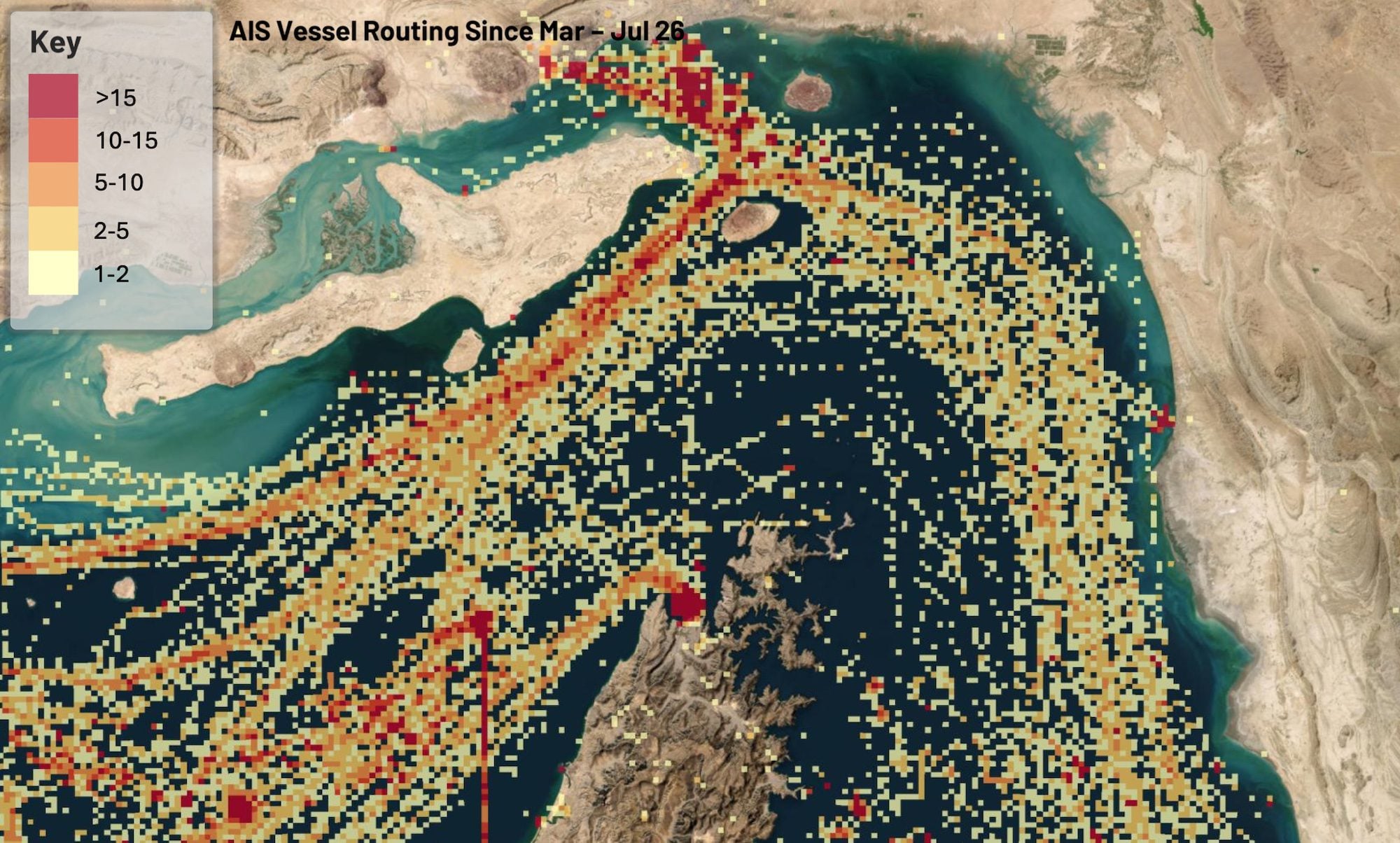
- Commercial shipping through the Strait of Hormuz is very likely to remain severely depressed over the next 30 days, but the waterway is not fully closed. Four commodity vessels crossed on Thursday, Kpler recorded four vessels by 0455 GMT on Friday, and only two very large crude carriers had crossed during the week to date, compared with about 125 large commercial vessels per day before the war. Reporting conflicts over whether Iran alone or both Iran and the US are responsible for the blockade characterisation. (Confidence: medium · ASSESSED)
- I&W: Confirm: Kpler reports continued vessel counts far below the pre-war level of about 125 large vessels per day, with very large crude carrier crossings remaining rare. (0-14 days)
- I&W: Break: sustained traffic returns towards about 125 large vessels per day and very large crude carriers resume regular crossings. (0-30 days)
- Maritime disruption has likely spread beyond the Strait of Hormuz to the Bab el-Mandeb and Saudi-linked shipping. The Houthis have reportedly targeted Port of Yanbu, Saudi oil sites and Saudi-linked tankers, Bab el-Mandeb traffic fell to 22 commodity vessels on 3 September against a 24-vessel 10-day average, and underwriters extended designated war-risk areas 800 kilometres up the Saudi Red Sea coast. This assessment rests partly on trade-publication reporting and an uncorroborated account of the Houthi blockade. (Confidence: medium · ASSESSED)
- I&W: Confirm: further attacks are reported against Port of Yanbu, Saudi oil facilities or Saudi-linked tankers, while Bab el-Mandeb traffic remains below its 10-day average. (0-14 days)
- I&W: Break: Bab el-Mandeb traffic rises above its 10-day average and underwriters withdraw the additional 800-kilometre Saudi Red Sea war-risk designation. (0-30 days)
- US energy and domestic fuel-price pressure is very likely to persist over the next 30 days. Brent crude was above US$95 per barrel on 4 September, weekly Brent and West Texas Intermediate gains reached 7.1 per cent and 9.8 per cent, and the US national averages for petrol and diesel reached US$4.15 and US$5.85 per gallon respectively. The forward price path remains uncertain because the evidence supports current pressure more strongly than its duration. (Confidence: medium · ASSESSED)
- I&W: Confirm: Brent remains above US$95 per barrel and the US national diesel average remains at or above US$5.85 per gallon for seven days. (0-14 days)
- I&W: Break: Brent moves towards the roughly US$70 pre-war level and the US national diesel average reverses materially from its record. (0-30 days)
- Iran is likely to sustain intermittent attacks while resisting a sanctions-driven settlement over the next 30 days. Reporting describes Tehran preparing for continued on-and-off attacks and proportionate responses, waiting for a return to the June MoU or a US concession, while Washington is relying on sanctions and has refused talks before Iran stops attacks on commercial vessels. This is an assessed reading of stated positions, not evidence that negotiations are impossible. (Confidence: medium · ASSESSED)
- I&W: Confirm: Iran conducts further attacks while US sanctions remain in force and Washington repeats its precondition for talks. (0-14 days)
- I&W: Break: Washington returns to the June MoU or offers a concession, and Iran halts attacks on US-linked positions and commercial vessels. (0-30 days)
- An Israeli ground operation at Tall al-Tahir in southern Lebanon is unlikely in the next 30 days, but it remains a high-impact pathway to wider Israel-Hezbollah-Iran escalation. A Lebanese source and senior Lebanese security official said an operation remained possible, Hezbollah described Israeli ground expansion as a serious violation of existing agreements, and a foreign official said US pressure delayed Israeli action. The reported Iranian warning delivered through Oman is directly disputed by a US official, so confidence is low. (Confidence: low · ASSESSED)
- I&W: Confirm: Israeli forces begin a ground movement towards or an attempt to capture Tall al-Tahir, followed by a Hezbollah declaration or attack. (0-30 days)
- I&W: Break: Israel publicly abandons the operation and no ground movement towards Tall al-Tahir occurs for 30 days. (0-30 days)
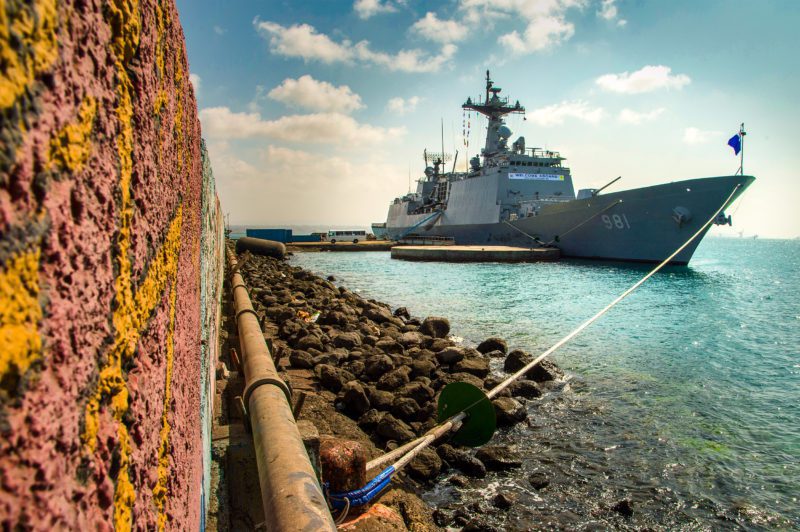
- A South Korean deployment of a naval ship, maritime patrol aircraft and approximately 150 personnel to the Strait of Hormuz is unlikely to be finalised in the near term. Media reporting describes preparations, discussions with foreign countries and notification to Washington, but South Korea's Blue House said no decision had been made and reports of an imminent deployment were inaccurate. This judgement is based on directly contradictory reporting and therefore has low confidence. (Confidence: low · ASSESSED)
- I&W: Confirm: Seoul obtains parliamentary approval and announces the departure of the naval ship or maritime patrol aircraft for the Gulf. (0-30 days)
- I&W: Break: the Blue House reiterates that no deployment decision exists and reports that preparations have been halted. (0-14 days)
Outlook & scenarios
Managed attrition with constrained shipping (52%)
The likely path over the next 30 days is intermittent US strikes and Iranian retaliation, with US forces maintaining a limited shipping trickle through the Strait of Hormuz. Traffic remains well below the pre-war level, insurance costs stay high and US fuel prices remain under pressure.
Expanded regional maritime disruption (28%)
An unlikely but credible path is a wider maritime campaign involving the Bab el-Mandeb, Saudi-linked tankers and additional attacks on commercial shipping. The result would be lower traffic, higher war-risk premiums and stronger pressure on Saudi Arabia, Gulf states and international naval forces.
Negotiated pause (18%)
A negotiated pause is unlikely but remains available through a return to the June MoU or a US concession. Iran would need to halt attacks on commercial vessels, while Washington would need to relax its precondition for talks and address sanctions.
Tall al-Tahir escalation wildcard (12%)
A very unlikely Israeli ground operation at Tall al-Tahir would have high impact. Hezbollah would treat Israeli ground expansion as a serious violation, and Iranian involvement would create a direct pathway from the Lebanon front into the wider US-Iran conflict.
Recommendations
- For each daily update, separate Strait of Hormuz traffic by vessel class and reporting window. Compare Kpler's four-vessel Friday count and two-week-to-date very large crude carrier count with the pre-war baseline of about 125 large vessels per day. Treat 'closed' as a characterisation unless traffic reaches zero.
- Maintain a 0-14 day alert for fresh US strikes against Iran, Iranian attacks on US-linked sites in Kuwait or the UAE, and further Gulf interceptions. Separate confirmed impacts from Iranian claims and social-media reporting.
- Track Bab el-Mandeb vessel counts, attacks on Port of Yanbu and Saudi-linked tankers, the 800-kilometre Red Sea war-risk extension and any further insurance exclusions. Escalate the assessment if two or more of these indicators move together.
- Treat Tall al-Tahir reporting as contested. Require corroboration from Israeli operational reporting, Hezbollah statements and evidence of ground movement before raising the probability of a new Lebanon front.
- Treat a South Korean Hormuz deployment as unconfirmed until a Blue House decision, parliamentary approval and physical movement of the naval ship or maritime patrol aircraft align.
- Track Brent, West Texas Intermediate, US national petrol and diesel prices, war-risk insurance premiums and food-price indicators in the same dashboard. Flag sustained Brent prices above US$95 per barrel or diesel prices at or above US$5.85 per gallon as evidence that conflict-related economic pressure is persisting.
- Include commercial location-data exposure in assessments of US force protection. Monitor implementation of advertising-identifier restrictions across US Air Force, Army and Special Operations Command devices and any further Pentagon response to congressional inquiries.
Confidence & uncertainty
Overall confidence is high because the central developments are corroborated by multiple major-media and wire-service reports, Kpler shipping data, AAA fuel-price data and maritime-industry reporting. Confidence is highest for the continuation of US-Iran military exchanges and current energy-price pressure. The main uncertainties concern the degree of Strait of Hormuz closure, the attribution of the blockade, the disputed Tall al-Tahir warning, the status of a South Korean deployment and claims from social media about damage to Iranian naval assets.
Intelligence gaps
- [EEI 1.1 · UNCOVERED] Movement, dispersal, or emplacement of Iranian conventional or IRGC heavy assets (ballistic missile launchers, Khoramshahr/Toofan-class missile transporters, ground-to-ground TELs, air defense batteries, amphibious units) from garrison areas toward forward bases or coastal launch sites. Recommended collection: satellite/IMINT
- [EEI 1.2 · PARTIAL] Authenticated Iranian military orders, NSC/IRGC operations directives, or senior leadership statements explicitly directing strikes against Israel or US forces or authorizing cross-border operations. Recommended collection: human/diplomatic
- [EEI 1.3 · PARTIAL] Changes in Israeli and US force posture indicating anticipation of direct large-scale conflict, elevated readiness levels, mobilization notices, pre-positioning of munitions, or public/private orders to prepare offensive strikes. Recommended collection: open-source/diplomatic
- [EEI 2.1 · UNCOVERED] Observable pre-launch preparations for missile/rocket/cruise missile strikes (fueling, warhead mating, launcher orientation, support vehicle congregation) and abnormal munitions handling at known launch sites. Recommended collection: satellite/IMINT
- [EEI 2.2 · UNCOVERED] Indications of proxy arms shipments and weapons transfers (truck convoys, small boat transfers, container movements from Iran to proxies, new stockpiles in Lebanon, Iraq, Yemen, Syria). Recommended collection: maritime/AIS
- [EEI 2.3 · UNCOVERED] Evidence of cyber attack planning or active exploitation campaigns targeting Israeli or US military/critical infrastructure (emergence of new command-and-control servers, spear-phishing campaigns against defense personnel, successful intrusions). Recommended collection: cyber
- [EEI 3.1 · PARTIAL] Movements and posture changes of US regional platforms (carrier strike groups, amphibious ready groups, B-52/B-1/B-2 or fighter deployments, missile defense assets repositioning) and associated armament loadouts. Recommended collection: satellite/IMINT
- [EEI 3.3 · PARTIAL] Changes in US base force-protection measures and rules of engagement at regional facilities (base lockdowns, evacuation notices, flight restrictions, activation of Local Defense Forces or missile intercept systems). Recommended collection: open-source/local reporting
- [EEI 4.1 · PARTIAL] Hezbollah-specific indicators: convoys and logistics movements toward Lebanon, Israel border, artillery/rocket emplacement in southern Lebanon, documented strikes-preparation activity, public mobilization orders or recruitment drives. Recommended collection: satellite/IMINT
- [EEI 4.2 · PARTIAL] Houthi-attributed maritime attack indicators: AIS anomalies/loss of contact for commercial vessels, reports of missile/drone strikes or near-miss incidents in Bab al-Mandeb/Red Sea, Houthi claims paired with imagery of weapons launches. Recommended collection: maritime/AIS
- [EEI 4.3 · UNCOVERED] Militia cross-border attack evidence from Iraq/Syria: recorded rocket/mortar launch events into Israel or strikes against US facilities, movement of armed convoys toward border areas, and intercepted communications coordinating cross-border operations. Recommended collection: signals/ELINT
TLP:CLEAR