TLP:CLEAR · Disclosure is not limited.
Middle East: US-Iran Strikes Intensify the Hormuz Crisis
Time window: Last 1 day · Audience: General analyst · Type: Situation report · DTG: 2026-09-02 15:39Z · Overall confidence: HIGH
BLUF
The United States and Iran have very likely resumed direct military exchanges after US strikes on IRGC targets in Iran on 1 September 2026, followed by reported Iranian missile and drone responses against US facilities in Jordan and Bahrain. Commercial shipping through the Strait of Hormuz is very likely to remain severely restricted, while a short, conditional pause in fighting is roughly even chance and a durable settlement is very unlikely.
Executive summary
US Central Command said US forces began striking IRGC targets in Iran at 12 p.m. ET on 1 September. Iranian missile activity was reported against two US air bases in Jordan, where Jordanian officials said their air defences intercepted 10 of 13 missiles entering Jordanian airspace, while Iranian state media reported a drone attack against a US base in Bahrain. Two Saudi oil supertankers were struck in the Strait of Hormuz on 31 August, and the tanker Senegal Prosperity was also reported hit, although attacker attribution remains unresolved. The Strait is effectively closed to normal commercial traffic, despite ship-to-ship LNG transfers outside the waterway. Iran has issued conditional language on reciprocation under the June Memorandum of Understanding, but US threats of further strikes and the absence of an implementation mechanism continue to favour renewed hostilities.
Change from previous assessment
Since the 1 September brief, the assessment has shifted from the 30 August US-Iran exchange to a renewed and more clearly corroborated cycle of US strikes and reported Iranian responses on 1 September. The maritime picture has worsened from severe restriction to a pattern that now includes reported strikes on two Saudi oil supertankers, the Senegal Prosperity incident, continuing mine warnings and expanded use of ship-to-ship LNG transfers outside Hormuz. The assessment of a near-term pause remains roughly even chance, but the current brief adds stronger evidence of market effects and a wider regional diplomatic response through the Mecca Joint Defense Agreement and China-Egypt engagement. Initial assessment of the regional defence pact as a possible high-impact wildcard.
Key judgments
- The United States and Iran have very likely resumed direct military exchanges. US Central Command said US forces began striking IRGC targets in Iran at 12 p.m. ET on 1 September 2026, while reporting describes Iranian missile activity against two US air bases in Jordan and a drone attack against a US base in Bahrain. Jordanian officials said their air defences intercepted 10 of 13 ballistic missiles that entered Jordanian airspace. The core exchange is well corroborated, but descriptions of the US strikes as beginning overnight create uncertainty over the precise timing. (Confidence: high · ASSESSED)
- I&W: A further US announcement of strikes on IRGC targets in Iran, or independently corroborated Iranian missile or drone activity against US forces in Jordan, Bahrain or Kuwait, would confirm continued direct exchanges. (0-14 days)
- I&W: A jointly announced halt to US and Iranian attacks, followed by no reported strike activity against the other side for seven consecutive days, would break this judgment. (0-14 days)
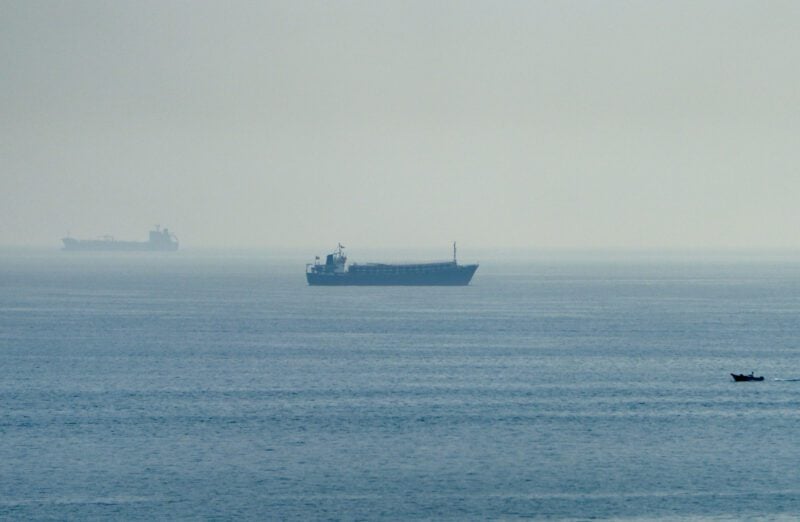
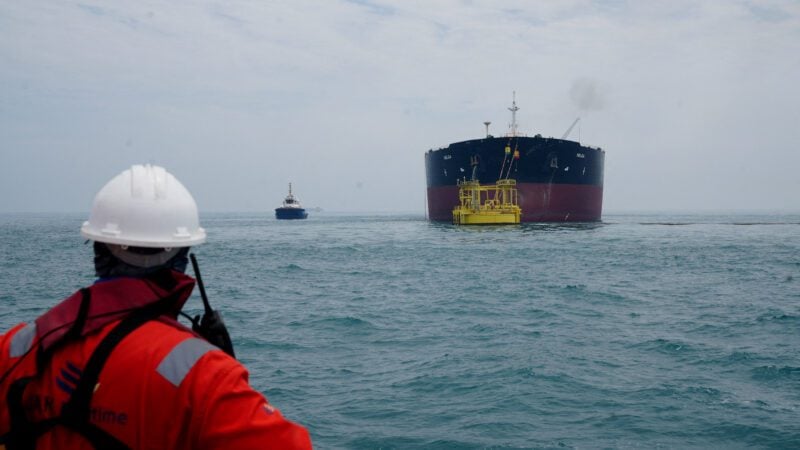
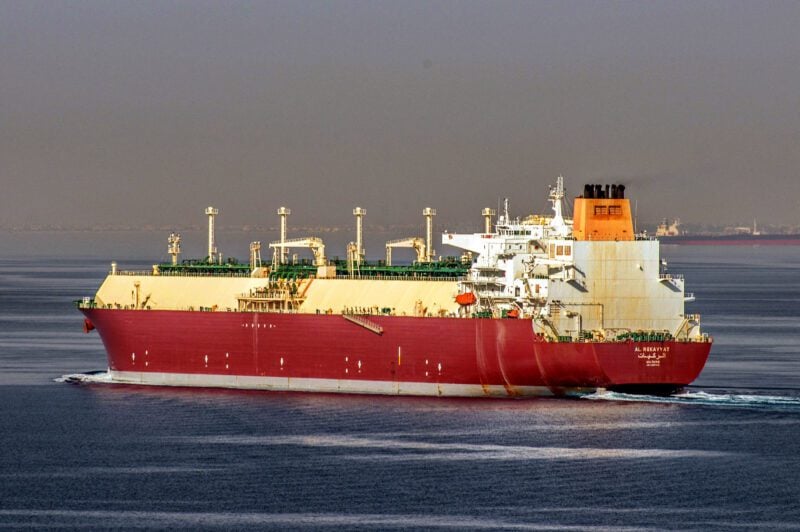
- Commercial shipping through the Strait of Hormuz is very likely to remain severely restricted over the next 0-14 days, despite limited alternative movements outside the waterway. Kpler reported only five confirmed vessel crossings on Monday, compared with President Donald Trump's claim that the United States was guiding an average of 30 ships out each night. Three LNG cargoes have instead used ship-to-ship transfers outside the strait for delivery to India and Japan. US-announced mine clearance has not restored normal operations because INTERTANKO continues to warn that clearance alone is insufficient and the Joint Maritime Information Center continues to warn of drifting or uncharted mines. (Confidence: high · ASSESSED)
- I&W: Kpler and Windward reporting of daily traffic approaching 30 confirmed outbound vessels for three consecutive days, combined with withdrawal of JMIC and INTERTANKO warnings, would break this judgment. (0-14 days)
- I&W: A further tanker attack, a new Iranian transit restriction, or continued daily confirmed traffic below 10 vessels would confirm persistent severe disruption. (0-14 days)
- Iran is likely to maintain coercive pressure on tanker movements through the Strait of Hormuz and along the southern route off Oman over the next 0-30 days. Iranian parliament speaker Mohammad Baqer Qalibaf threatened that no state would export oil from the Persian Gulf if Iran were prevented from doing so, and the IRGC said US attacks would further restrict traffic. Iran also continues to insist that vessels use the northern corridor through Iranian waters. Two supertankers carrying Saudi oil and the tanker Senegal Prosperity were reported attacked, but the identity of the attackers remains unresolved because one account attributes the supertanker strikes to Iran while other reporting identifies unknown attackers. (Confidence: medium · ASSESSED)
- I&W: A new IRGC or Iranian government announcement imposing route restrictions or safe-passage payments, or another reported attack on a vessel off Oman, would confirm continued coercive pressure. (0-30 days)
- I&W: Iranian authorities formally authorising unrestricted use of the Traffic Separation Scheme, followed by 14 days without a reported attack on commercial shipping, would break this judgment. (0-30 days)
- A short, conditional pause in fighting is roughly even chance over the next 0-14 days, while a durable US-Iran settlement is very unlikely. Iranian President Masoud Pezeshkian said Tehran would reciprocate if Washington honoured its commitments under the June Memorandum of Understanding, but another account tied free navigation to a US return to the agreement's terms. President Donald Trump warned that Iran would face harder and higher strikes if it retaliated. The conditionality differs across the reporting, and no mutually accepted implementation mechanism has been reported. (Confidence: medium · ASSESSED)
- I&W: A jointly announced US-Iran arrangement specifying compliance with the June Memorandum of Understanding, a halt to strikes and a mechanism for restoring navigation would confirm movement towards a pause. (0-14 days)
- I&W: A further US strike on Iran or a declared Iranian missile or drone response would break the near-term pause assessment. (0-14 days)
- Energy-market pressure is likely to persist over the next 0-30 days. Brent crude reached $95.52 a barrel and WTI reached $91.02 in early trading on 2 September 2026, while separate time-stamped reports put Brent at $95.40 and WTI at $90.66. WTI had risen more than 8 percent over the preceding two sessions, and Asian spot LNG reached $23.20 per million British thermal units, more than double pre-conflict levels. Indian equity indices also fell 0.98 percent and India VIX rose 2.84 percent on 2 September. Confidence in the market reaction is high, but the forward price outlook remains less certain because the quoted prices reflect different intraday snapshots. (Confidence: medium · ASSESSED)
- I&W: Brent remaining above $95 a barrel and Asian spot LNG remaining at or above $23.20 per million British thermal units in three successive daily reports would confirm persistent market pressure. (0-14 days)
- I&W: Sustained reopening of the strait reported by independent shipping trackers, accompanied by Brent falling below $90 and a clear reversal in Asian spot LNG prices, would break this judgment. (0-30 days)
Outlook & scenarios
Continued limited US-Iran exchange and restricted Hormuz traffic (50%)
The most likely path is continued US strikes against Iranian targets, Iranian missile or drone responses against US positions, and further restrictions on commercial shipping. The Strait remains operational for selected or indirect cargo movements, but normal tanker traffic does not return.
Conditional pause with partial maritime reopening (30%)
Iran and the United States use the June Memorandum of Understanding as a basis for a short pause. Iran relaxes some transit restrictions and selected shipping resumes, while the Traffic Separation Scheme remains subject to maritime warnings and limited protection.
Expanded maritime confrontation and sharper energy shock (15%)
Further attacks on tankers or vessels using the southern route prompt additional US protection or strikes against Iranian maritime capabilities. Confirmed traffic falls further, Brent and WTI rise from early September levels, and Asian LNG prices remain elevated.
Regional defence pact becomes operational (5%)
A low-probability, high-impact wildcard is an attack on Saudi Arabia, Turkiye or Pakistan that activates the Mecca Joint Defense Agreement's provision treating an attack on one member as an attack on all three. This would widen the military and diplomatic consequences beyond the current US-Iran exchange.
Recommendations
- Maintain a 24-hour watch on US Central Command announcements and Iranian state media for new strikes, missile launches or drone activity involving Iran, Jordan, Bahrain and Kuwait. Record the event time in both ET and local time to resolve the conflicting descriptions of the 1 September strikes.
- Use Kpler and Windward confirmed vessel counts as the baseline for assessing Hormuz access. Record claimed escorted transits separately from independently tracked crossings, and report daily outbound traffic, TSS use and ship-to-ship transfers outside the strait.
- Treat the Traffic Separation Scheme as retaining residual mine and interference risk until JMIC and INTERTANKO withdraw their warnings. Do not equate the US mine-clearance announcement with restored normal commercial navigation.
- Keep the attacker attribution for the 31 August supertanker strikes and the Senegal Prosperity incident as unconfirmed. Require independent reporting on vessel damage, weapon type, location and launch origin before assigning responsibility to Iran.
- Track the June Memorandum of Understanding for a jointly announced implementation mechanism, not only public offers to reciprocate. Flag any change in the conditions attached to free navigation or any further US warning of harder strikes.
- Update energy and regional-risk estimates daily using the latest time-stamped Brent, WTI and Asian LNG prices. Keep separate records for price changes, shipping volumes and Indian market reactions so that intraday movements are not treated as conflicting trend data.
- Monitor the Mecca Joint Defense Agreement for evidence of operationalisation, including a public response to any attack on Saudi Arabia, Turkiye or Pakistan, while treating Iran's current statement that it does not view the pact as a threat as a diplomatic position rather than a guarantee of restraint.
Confidence & uncertainty
Overall confidence is high for the core events because US strike announcements, Iranian responses, shipping disruption, tanker incidents and market movements are corroborated across wire services, major media and maritime trade or tracking sources. The main uncertainties concern the precise timing of the 1 September US strikes, attribution of attacks on tankers, the residual mine threat after announced clearance, and the conditions attached to Iran's offer to reciprocate under the June Memorandum of Understanding. Forecast confidence is lower than event confidence where reporting is contested or rests on official statements and trade reporting.
Intelligence gaps
- [EEI 1.1 · UNCOVERED] Movement, dispersal, or emplacement of Iranian conventional or IRGC heavy assets (ballistic missile launchers, Khoramshahr/Toofan-class missile transporters, ground-to-ground TELs, air defense batteries, amphibious units) from garrison areas toward forward bases or coastal launch sites. Recommended collection: satellite/IMINT
- [EEI 1.2 · UNCOVERED] Authenticated Iranian military orders, NSC/IRGC operations directives, or senior leadership statements explicitly directing strikes against Israel or US forces or authorizing cross-border operations. Recommended collection: human/diplomatic
- [EEI 1.3 · PARTIAL] Changes in Israeli and US force posture indicating anticipation of direct large-scale conflict, elevated readiness levels, mobilization notices, pre-positioning of munitions, or public/private orders to prepare offensive strikes. Recommended collection: open-source/diplomatic
- [EEI 2.1 · UNCOVERED] Observable pre-launch preparations for missile/rocket/cruise missile strikes (fueling, warhead mating, launcher orientation, support vehicle congregation) and abnormal munitions handling at known launch sites. Recommended collection: satellite/IMINT
- [EEI 2.2 · UNCOVERED] Indications of proxy arms shipments and weapons transfers (truck convoys, small boat transfers, container movements from Iran to proxies, new stockpiles in Lebanon, Iraq, Yemen, Syria). Recommended collection: maritime/AIS
- [EEI 2.3 · UNCOVERED] Evidence of cyber attack planning or active exploitation campaigns targeting Israeli or US military/critical infrastructure (emergence of new command-and-control servers, spear-phishing campaigns against defense personnel, successful intrusions). Recommended collection: cyber
- [EEI 3.1 · PARTIAL] Movements and posture changes of US regional platforms (carrier strike groups, amphibious ready groups, B-52/B-1/B-2 or fighter deployments, missile defense assets repositioning) and associated armament loadouts. Recommended collection: satellite/IMINT
- [EEI 3.2 · PARTIAL] Official or leaked US government/diplomatic communications indicating thresholds for strikes, authorization for offensive operations, or limits on action (NSC/DoD statements, congressional notifications, diplomatic notes). Recommended collection: diplomatic/human
- [EEI 3.3 · PARTIAL] Changes in US base force-protection measures and rules of engagement at regional facilities (base lockdowns, evacuation notices, flight restrictions, activation of Local Defense Forces or missile intercept systems). Recommended collection: open-source/local reporting
- [EEI 4.1 · UNCOVERED] Hezbollah-specific indicators: convoys and logistics movements toward Lebanon, Israel border, artillery/rocket emplacement in southern Lebanon, documented strikes-preparation activity, public mobilization orders or recruitment drives. Recommended collection: satellite/IMINT
- [EEI 4.2 · UNCOVERED] Houthi-attributed maritime attack indicators: AIS anomalies/loss of contact for commercial vessels, reports of missile/drone strikes or near-miss incidents in Bab al-Mandeb/Red Sea, Houthi claims paired with imagery of weapons launches. Recommended collection: maritime/AIS
- [EEI 4.3 · UNCOVERED] Militia cross-border attack evidence from Iraq/Syria: recorded rocket/mortar launch events into Israel or strikes against US facilities, movement of armed convoys toward border areas, and intercepted communications coordinating cross-border operations. Recommended collection: signals/ELINT
TLP:CLEAR