TLP:CLEAR · Disclosure is not limited.
Myanmar: Civilian harm and imminent Rohingya genocide ruling
Time window: Last 1 day · Audience: General analyst · Type: Situation report · DTG: 2026-11-18 13:36Z · Overall confidence: HIGH
BLUF
The supplied reporting does not establish that the UN Human Rights Office documented a Myanmar conflict death toll above 100,000: the only supplied figure is from a summary-only claim. Reports describe continuing civilian exposure to military airstrikes, while the International Court of Justice is expected to rule on The Gambia’s Rohingya genocide case on 19 November 2026.
Executive summary
The evidence supports a continuing civilian-protection crisis, but not the stated attribution of a death toll above 100,000 to the UN Human Rights Office. The National Unity Government says a junta airstrike killed 11 people at a school in Kani Township, Sagaing Region, on 7 November; the incident-level account is not independently corroborated in the supplied material. The UK also reports indiscriminate airstrikes and restrictions on humanitarian access. The ICJ is expected to issue its ruling in The Gambia’s case on 19 November, following a joint submission by the UK and five other mainly European states. Reports of possible US sanctions on ICJ judges remain fears, not a confirmed decision.
Change from previous assessment
Since the 17 November brief, the supplied reporting adds an expected ICJ ruling date of 19 November, a joint submission by the UK and five other mainly European states, and the National Unity Government’s report of 11 deaths in a 7 November school airstrike in Kani Township. The new material still does not establish that the UN Human Rights Office documented or verified a death toll above 100,000, so confidence in that figure and attribution remains low. The assessment of continuing civilian harm remains medium confidence.
Key judgments
- The claim that conflict deaths in Myanmar have exceeded 100,000 is not established as a UN Human Rights Office-documented total in the supplied reporting. The only supplied tally was read in an article summary, and provides no methodology or UN attribution; confidence in the figure and attribution is low. (Confidence: low · ASSESSED)
- I&W: A UN Human Rights Office publication or attributable statement gives a death toll, methodology and period covered, which would strengthen the claim. (0-30 days)
- I&W: The UN Human Rights Office states that it did not document or verify the 100,000 figure, which would break the attribution to the UN. (0-30 days)
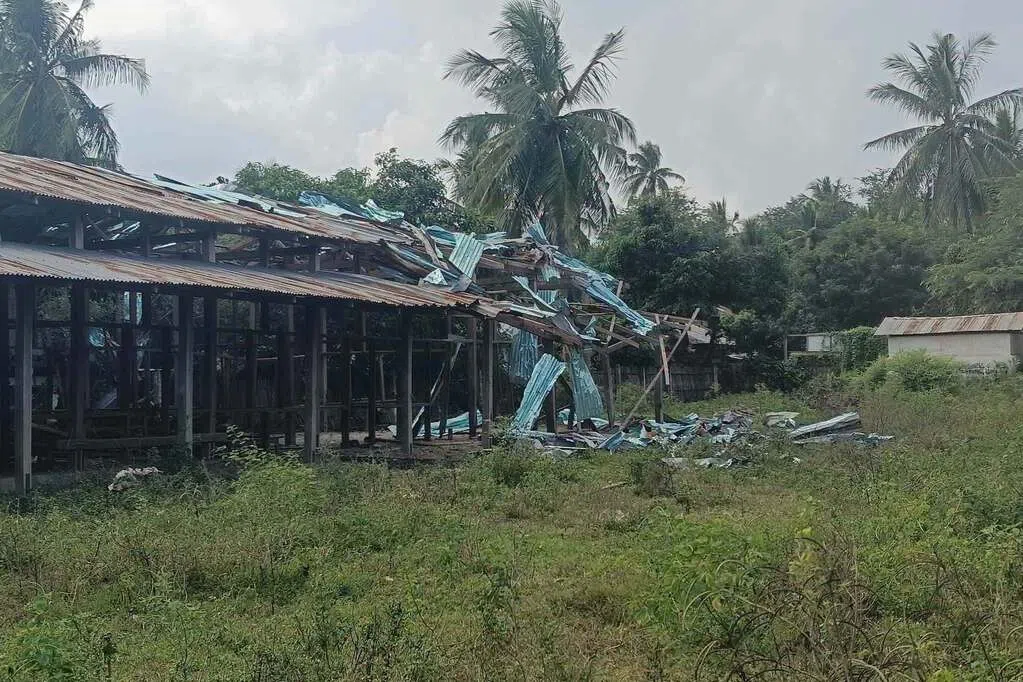
- Reports support a continuing pattern of civilian exposure to Myanmar military airstrikes, but do not independently verify the Kani Township incident. The National Unity Government says a 7 November strike on a school there killed 11 people, including teachers and children; the UK separately reports indiscriminate airstrikes affecting civilians and refers to an airstrike in Kyautaw. Confidence is medium because the broad pattern is reflected in an official UK statement, while the specific Kani casualty account is attributed to the National Unity Government. (Confidence: medium · REPORTED)
- I&W: Independent reporting or an investigation confirms the 7 November strike, the school site and the reported 11 deaths, supporting the incident account. (0-14 days)
- I&W: An independent investigation finds that the Kani school was not struck or that the reported deaths are materially inaccurate, weakening the incident account. (0-30 days)
- Responsibility for protection risks in Rakhine State remains mixed in the supplied reporting. The UK describes increasing displacement and protection risks for Rohingya, Rakhine and other minorities without assigning a perpetrator; separate reporting says the Arakan Army controls most of Rakhine State and has faced allegations of land seizure, arbitrary killings and torture. The evidence does not support attributing all reported abuses or displacement to one actor. (Confidence: medium · ASSESSED)
- I&W: A credible investigation attributes specific abuses in Rakhine State to the Arakan Army or to the Myanmar military, clarifying responsibility for those incidents. (0-3 months)
- I&W: New reporting identifies locations, affected communities and responsible actors for displacement in Rakhine State, testing whether current protection risks persist. (0-3 months)
- The ICJ is expected to deliver its ruling on 19 November 2026 in The Gambia’s case alleging genocide against the Rohingya. The UK and five other mainly European states have filed a joint submission on how the court should assess genocidal intent. Reports that the US might sanction ICJ judges remain unconfirmed concerns, although reporting says judges have taken advice on protecting their assets. Confidence is medium because the court timetable and submission are reported by major media, while the sanctions concern is not a confirmed US action. (Confidence: medium · REPORTED)
- I&W: The ICJ publishes its ruling on 19 November as scheduled, confirming the reported timetable. (0-2 days)
- I&W: The US announces sanctions targeting an ICJ judge or the court in response to the ruling, confirming that the reported concern has become policy. (0-30 days)
- Humanitarian pressures affecting Rohingya remain acute. The UK reports that access restrictions deprive communities in Myanmar of food and medicines; Al Jazeera reports UNHCR estimates of about 1.2 million Rohingya refugees in Bangladesh and 520,000 remaining in Myanmar, many under severe restrictions. These figures describe displacement and restrictions, not the conflict death toll. (Confidence: medium · REPORTED)
- I&W: The UK or a UN agency reports that access restrictions continue to prevent food or medicine deliveries to communities in Myanmar, confirming continued access pressure. (0-3 months)
- I&W: UNHCR publishes updated Rohingya displacement figures showing a material change from the reported populations in Bangladesh and Myanmar, requiring reassessment of the scale. (0-3 months)
Outlook & scenarios
ICJ ruling proceeds as scheduled (65%)
The ICJ issues its ruling on 19 November. International attention remains focused on the case and on the UK and other European states’ submission. The supplied reporting does not establish the ruling’s outcome.
Sanctions concern remains rhetorical (55%)
The ruling is issued, but the reported US sanctions concern does not become an announced measure during the near-term period. The concern remains a reported risk rather than a confirmed policy action.
US sanctions target ICJ judges (20%)
After the ruling, the US announces sanctions against one or more ICJ judges. This would turn the current sanctions concern into a direct dispute involving the court and Washington.
Ruling timetable changes (10%)
The ICJ does not issue its ruling on 19 November. The supplied reporting gives no indication of a delay, so this is a low-probability, high-impact wildcard for near-term diplomatic attention.
Recommendations
- Do not describe the 100,000-plus death toll as documented or verified by the UN Human Rights Office unless an attributable UN source and its methodology are obtained.
- Track the ICJ’s official publication of the 19 November ruling and distinguish the court’s findings from the allegations and legal submissions made by the parties.
- Monitor for an official US sanctions announcement concerning ICJ judges; keep reported fears separate from confirmed government action.
- Seek independent confirmation of the reported 7 November Kani school strike, including casualty figures, before using it as a verified incident count.
- Keep reporting on Myanmar military airstrikes distinct from allegations against the Arakan Army, and attribute each incident to the actor supported by the available evidence.
Confidence & uncertainty
Overall confidence is high for the broad situation and the near-term ICJ timetable, which are covered by an official UK statement and reporting from major media outlets. This headline rating does not apply equally to every claim: the 100,000-plus death figure is supported only by a summary-only claim, and the specific Kani school strike is attributed to the National Unity Government without independent confirmation in the supplied material. The UN Human Rights Office attribution remains unestablished.
Intelligence gaps
- [EEI 1.2 · PARTIAL] Changes in the weekly number of civilian deaths, injuries, detentions, enforced disappearances, and reported attacks compared with the preceding four weeks. Recommended collection: UN reporting and incident-monitoring databases
- [EEI 1.3 · UNCOVERED] Junta force movements, aircraft sorties, artillery deployments, and preparations near densely populated areas or displacement concentrations. Recommended collection: commercial satellite imagery, local reporting, and military-source reporting
- [EEI 2.1 · PARTIAL] Newly displaced civilians by state or region, including the number of people fleeing each major attack area and the direction of movement. Recommended collection: UN OCHA, humanitarian partners, and local civil-society reporting
- [EEI 2.2 · PARTIAL] Access conditions and stock levels for food, medicine, fuel, shelter, and clean water in conflict-affected townships. Recommended collection: humanitarian field reporting and satellite imagery
- [EEI 2.4 · PARTIAL] Changes in cross-border refugee flows and requests for emergency assistance in neighboring countries. Recommended collection: border authorities, UNHCR, and humanitarian reporting
- [EEI 3.1 · PARTIAL] Resistance attacks, territorial gains, loss of key transport routes, and changes in control of towns or administrative centers. Recommended collection: conflict-event databases, local media, and geospatial analysis
- [EEI 3.2 · PARTIAL] Junta retaliatory operations, including collective-punishment measures, village burnings, airstrikes, artillery barrages, and arrests following resistance activity. Recommended collection: local human-rights reporting and incident databases
- [EEI 3.3 · UNCOVERED] Evidence of resistance forces establishing evacuation routes, civilian-protection arrangements, local administration, or restrictions on attacks affecting civilian areas. Recommended collection: local governance reporting, NGO interviews, and resistance statements
- [EEI 3.4 · UNCOVERED] Changes in resistance access to weapons, ammunition, drones, communications equipment, training, and cross-border logistical support. Recommended collection: weapons-tracking reporting, border reporting, and imagery analysis
- [EEI 4.1 · UNCOVERED] New arms transfers, aviation fuel deliveries, spare-parts shipments, financial flows, or maintenance support reaching the junta. Recommended collection: customs data, sanctions investigations, shipping databases, and commercial imagery
- [EEI 4.3 · PARTIAL] Changes in neighboring states' border controls, refugee policies, cross-border aid access, and engagement with junta or resistance representatives. Recommended collection: official statements, border reporting, and diplomatic reporting
- [EEI 4.4 · UNCOVERED] Changes in commercial aviation-fuel prices, war-risk insurance, shipping access, or banking restrictions affecting junta-controlled ports and airports. Recommended collection: maritime/shipping data, financial reporting, and sanctions-monitoring sources
Red cell review: CONCUR WITH COMMENT
TLP:CLEAR