TLP:CLEAR · Disclosure is not limited.
Myanmar: Death toll estimate reaches 100,000, attribution remains unresolved
Time window: Last 1 day · Audience: General analyst · Type: Situation report · DTG: 2026-11-22 15:35Z · Overall confidence: HIGH
BLUF
Current reporting places deaths in Myanmar’s post-coup civil war at about 100,000, but does not establish that a UN-documented total has definitively exceeded that figure. The available reports also do not establish a recent increase in Tatmadaw attacks on civilians or attribute the reported incidents to the Tatmadaw.
Executive summary
A Reuters report says the UN estimates the post-coup civil war has killed 100,000 people and displaced more than 3.5 million. A separate report quotes the French Foreign Ministry putting deaths at nearly 100,000 and displacement at 4 million. These figures support a toll around 100,000, not a precise count above the threshold or a claim that the UN Human Rights Office documented that total. Reporting summarising UNICEF and the Independent Investigative Mechanism for Myanmar describes attacks affecting civilian sites and an investigation into attacks involving aircraft, drones and paramotors. It does not establish a trend of intensifying Tatmadaw attacks or identify the perpetrators of the incidents described. The UK announced measures following the International Court of Justice judgment on the Rohingya, while ASEAN has linked possible restoration of Myanmar’s full political representation to progress on its five-point framework.
Change from previous assessment
Since the 21 November brief, new reporting supplies a UN estimate of 100,000 post-coup deaths and a separate French estimate of nearly 100,000, so the assessment has shifted from an unsupported threshold claim to a reported toll around 100,000. The new material still does not establish that a UN Human Rights Office total has exceeded 100,000 or that Tatmadaw attacks have recently intensified. It adds reports of civilian harm in Loikaw Township and Rakhine State, but these are thinly sourced and do not establish perpetrator attribution. The brief also records the UK’s announced action, France’s call for Security Council consideration and ASEAN’s conditional approach to Myanmar’s political representation.
Key judgments
- The supplied reporting supports a post-coup death toll of about 100,000, but not a definitive claim that UN-documented deaths have exceeded 100,000. Reuters reports a UN estimate of 100,000 deaths; a separate report quotes the French Foreign Ministry estimating nearly 100,000. The estimates are not a precise, directly sourced UN Human Rights Office tally. (Confidence: medium · REPORTED)
- I&W: A primary UN publication gives a cumulative post-coup death figure above 100,000 and explains its method and reporting period. (0-30 days)
- I&W: A primary UN clarification revises the cumulative figure below 100,000 or states that the reported estimate is not a count of deaths since the coup. (0-30 days)
- The available claims do not establish that the Tatmadaw has recently intensified attacks on civilians. Reports describe civilian harm in Rakhine State and Loikaw Township, Kayah State, and investigations into attacks involving aircraft, drones and paramotors, but do not attribute the cited incidents to the Tatmadaw or provide a comparative attack trend. This is an assessment from a thin record, not evidence that intensification has not occurred. (Confidence: low · ASSESSED)
- I&W: The Independent Investigative Mechanism for Myanmar or another named source publishes multiple recent incidents attributed to the Tatmadaw and compares their frequency with an earlier period. (1-3 months)
- I&W: Follow-up reporting identifies the cited market, school and health-facility incidents as attributable to other actors, or reports no increase in Tatmadaw-attributed incidents over the same period. (1-3 months)
- Reports summarising UNICEF and the Independent Investigative Mechanism for Myanmar describe civilian harm, but the incident-level evidence remains thin and largely second-hand in the supplied record. The reporting says an airstrike on 31 October affected a school serving displaced families in Loikaw Township, killing three children and injuring five; it also refers to reports of attacks affecting a temporary health facility in Rakhine State and to a September market strike there that killed more than 50 people. (Confidence: low · REPORTED)
- I&W: UNICEF or the Independent Investigative Mechanism for Myanmar publishes primary incident details that corroborate the locations, casualty figures and circumstances reported. (0-30 days)
- I&W: A primary statement or correction disputes the casualty figures or identifies a different location or incident for any of these reports. (0-30 days)
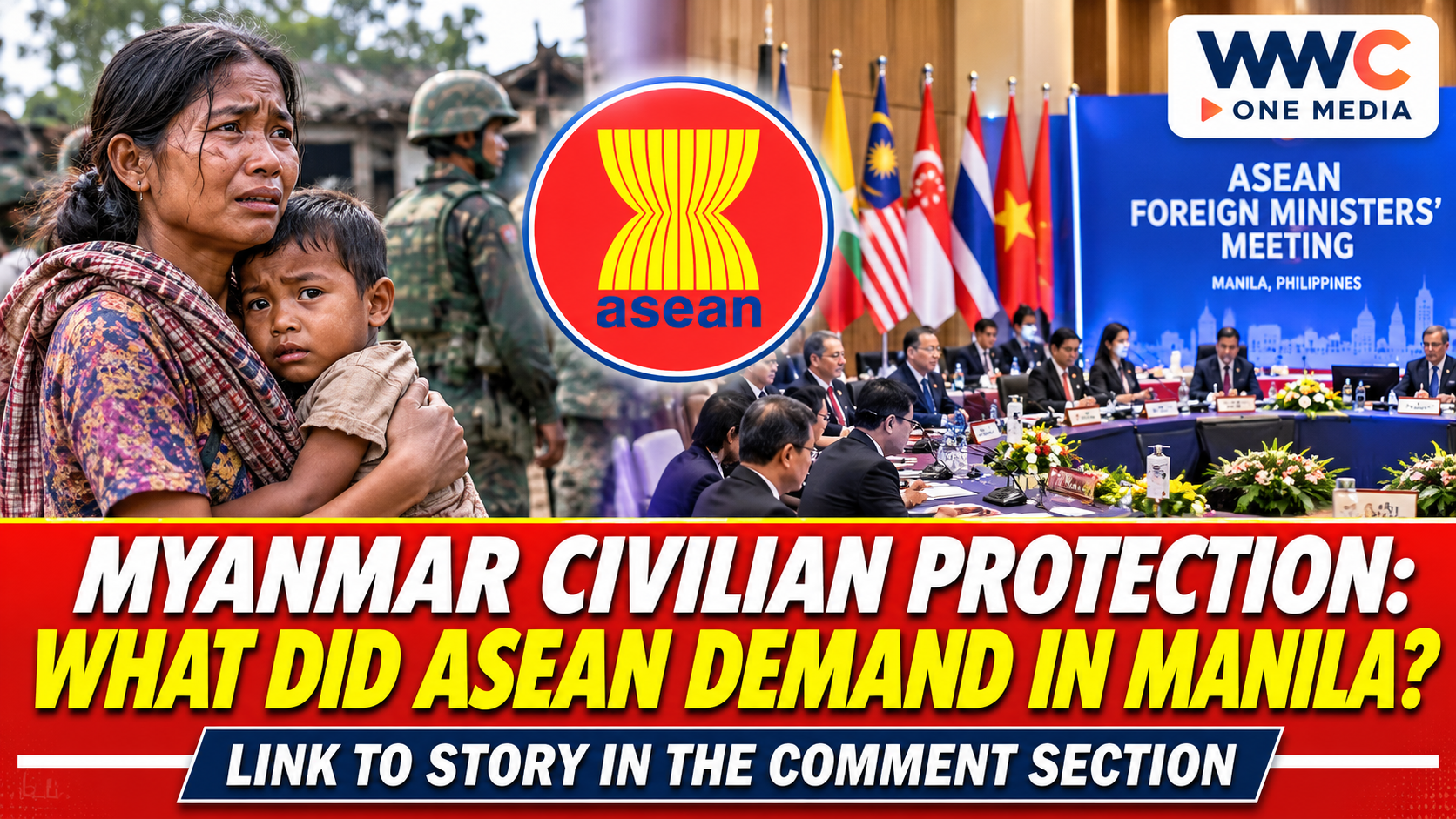
- The UK announced an order to expel Myanmar’s Defence Attaché and said it would summon Myanmar’s Chargé d’Affaires after the International Court of Justice judgment; France is also seeking a UN Security Council meeting. ASEAN’s reported position leaves a conditional route to restoring Myanmar’s full political representation, rather than confirming that representation has been restored. Myanmar’s government has criticised the ASEAN decision. (Confidence: medium · REPORTED)
- I&W: The UK confirms implementation of the Defence Attaché’s expulsion, or the UN Security Council schedules or holds the meeting sought by France. (0-30 days)
- I&W: ASEAN publishes a follow-up decision confirming whether full political representation remains conditional or has been restored. (1-3 months)
Outlook & scenarios
The estimate remains near 100,000 and attribution stays unclear (55%)
The conflict continues, while public reporting retains estimates around 100,000 deaths and does not establish either a precise threshold crossing or a comparative rise in Tatmadaw-attributed attacks. The absence of more detailed primary reporting continues to limit assessment.
Primary reporting clarifies the death toll and incident record (25%)
A UN publication or detailed reporting by UNICEF or the Independent Investigative Mechanism for Myanmar specifies the death-toll method and provides more incident-level evidence. This would clarify whether the cumulative toll exceeds 100,000 and whether particular attacks can be attributed to the Tatmadaw or another actor.
Diplomatic pressure advances without an ASEAN policy change (15%)
The UK implements its announced measure and France continues to press for Security Council consideration, while ASEAN keeps full political representation conditional on progress under the five-point framework. Myanmar’s criticism of the ASEAN position continues.
High-impact wildcard: a newly verified mass-casualty attack (5%)
A newly verified attack causes large civilian casualties and prompts urgent international action. The supplied reporting establishes neither that such an event is imminent nor who would be responsible; this scenario would sharply change the diplomatic and humanitarian picture if it occurred.
Recommendations
- Verify the underlying UN estimate and its date range before describing the death toll as above 100,000 or attributing it to the UN Human Rights Office.
- Keep conflict deaths, civilian deaths and deaths attributed to Tatmadaw attacks as separate measures in reporting. Do not infer responsibility from an airstrike or attack description alone.
- Seek primary UNICEF and Independent Investigative Mechanism for Myanmar statements on the Loikaw school, the Rakhine temporary health facility and the September market strike; record casualty figures, attribution and reporting method separately.
- Track whether the UK implements its announced expulsion, whether France’s request produces a Security Council meeting, and whether ASEAN changes the conditions for Myanmar’s full political representation.
Confidence & uncertainty
High confidence applies to the broad conclusion that reported estimates place post-coup deaths around 100,000: a Reuters report relays a UN estimate of 100,000, while separate major-media reporting quotes the French Foreign Ministry at nearly 100,000. The exact total, the claim that it has definitively exceeded the threshold, and attribution of recent attacks are less certain. The supplied record lacks a primary UN tally and relies on thin, secondary summaries for several incident reports.
Intelligence gaps
- [EEI 1.2 · PARTIAL] Changes in the weekly number of civilian deaths, injuries, detentions, enforced disappearances, and reported attacks compared with the preceding four weeks. Recommended collection: UN reporting and incident-monitoring databases
- [EEI 1.3 · UNCOVERED] Junta force movements, aircraft sorties, artillery deployments, and preparations near densely populated areas or displacement concentrations. Recommended collection: commercial satellite imagery, local reporting, and military-source reporting
- [EEI 2.1 · PARTIAL] Newly displaced civilians by state or region, including the number of people fleeing each major attack area and the direction of movement. Recommended collection: UN OCHA, humanitarian partners, and local civil-society reporting
- [EEI 2.2 · PARTIAL] Access conditions and stock levels for food, medicine, fuel, shelter, and clean water in conflict-affected townships. Recommended collection: humanitarian field reporting and satellite imagery
- [EEI 2.4 · PARTIAL] Changes in cross-border refugee flows and requests for emergency assistance in neighboring countries. Recommended collection: border authorities, UNHCR, and humanitarian reporting
- [EEI 3.1 · UNCOVERED] Resistance attacks, territorial gains, loss of key transport routes, and changes in control of towns or administrative centers. Recommended collection: conflict-event databases, local media, and geospatial analysis
- [EEI 3.2 · UNCOVERED] Junta retaliatory operations, including collective-punishment measures, village burnings, airstrikes, artillery barrages, and arrests following resistance activity. Recommended collection: local human-rights reporting and incident databases
- [EEI 3.3 · UNCOVERED] Evidence of resistance forces establishing evacuation routes, civilian-protection arrangements, local administration, or restrictions on attacks affecting civilian areas. Recommended collection: local governance reporting, NGO interviews, and resistance statements
- [EEI 3.4 · UNCOVERED] Changes in resistance access to weapons, ammunition, drones, communications equipment, training, and cross-border logistical support. Recommended collection: weapons-tracking reporting, border reporting, and imagery analysis
- [EEI 4.1 · UNCOVERED] New arms transfers, aviation fuel deliveries, spare-parts shipments, financial flows, or maintenance support reaching the junta. Recommended collection: customs data, sanctions investigations, shipping databases, and commercial imagery
- [EEI 4.3 · UNCOVERED] Changes in neighboring states' border controls, refugee policies, cross-border aid access, and engagement with junta or resistance representatives. Recommended collection: official statements, border reporting, and diplomatic reporting
- [EEI 4.4 · UNCOVERED] Changes in commercial aviation-fuel prices, war-risk insurance, shipping access, or banking restrictions affecting junta-controlled ports and airports. Recommended collection: maritime/shipping data, financial reporting, and sanctions-monitoring sources
Red cell review: CONCUR WITH COMMENT
TLP:CLEAR