TLP:CLEAR · Disclosure is not limited.
Myanmar: UN Death Estimate Reaches 100,000 Amid Recent Civilian-Site Strikes
Time window: Last 1 day · Audience: General analyst · Type: Situation report · DTG: 2026-11-03 09:35Z · Overall confidence: MEDIUM
BLUF
The United Nations estimate cited in current reporting puts deaths from Myanmar’s civil war at 100,000 since the 2021 coup, with more than 3.5 million displaced. Recent reports describe airstrikes hitting a maternity clinic in Mrauk-U and a school in Loikaw, but casualty totals remain unresolved and the material does not establish that the UN Human Rights Office verified the cumulative figure.
Executive summary
Reporting published on 2 November describes Myanmar military airstrikes in Rakhine State on 1 November and an airstrike on a school in Loikaw, Kayah State, on 31 October. Accounts report at least 12 killed and 32 wounded in Rakhine, while a broader weekend tally gives at least 15 killed, including a newborn; the figures have different scopes and are not reconciled. A separate report says an artillery shell wounded a woman in Mae Sot, Thailand, prompting Thai army warning shots into Myanmar. UN investigators have accused the military of deliberate aerial attacks on civilian buildings, including schools and hospitals, and the UN Independent Investigative Mechanism for Myanmar has warned that war crimes are escalating.
Change from previous assessment
The prior brief assessed the 1 November Rakhine casualty account as uncorroborated outside local reporting and found no support for the 100,000-death estimate. This update adds a major-media account of the Rakhine strikes, reports the UN estimate of 100,000 deaths and more than 3.5 million displaced, and adds the 31 October Loikaw school strike and reported spillover into Thailand. Confidence in the reported Rakhine incidents is now medium rather than low, but the casualty scope remains unresolved and the UN estimate is not shown here as a UN Human Rights Office verification.
Key judgments
- The reported United Nations estimate places deaths from Myanmar’s civil war at 100,000 and displacement above 3.5 million since the 2021 coup. The available reporting does not establish that the UN Human Rights Office itself compiled or verified the 100,000 figure. (Confidence: medium · REPORTED)
- I&W: A United Nations publication or spokesperson repeats the 100,000 death estimate and the displacement figure, confirming the reported attribution and scope. (0-30 days)
- I&W: A United Nations clarification identifies a different source for the estimate or materially revises its scope or total, breaking the current attribution or figure. (0-30 days)
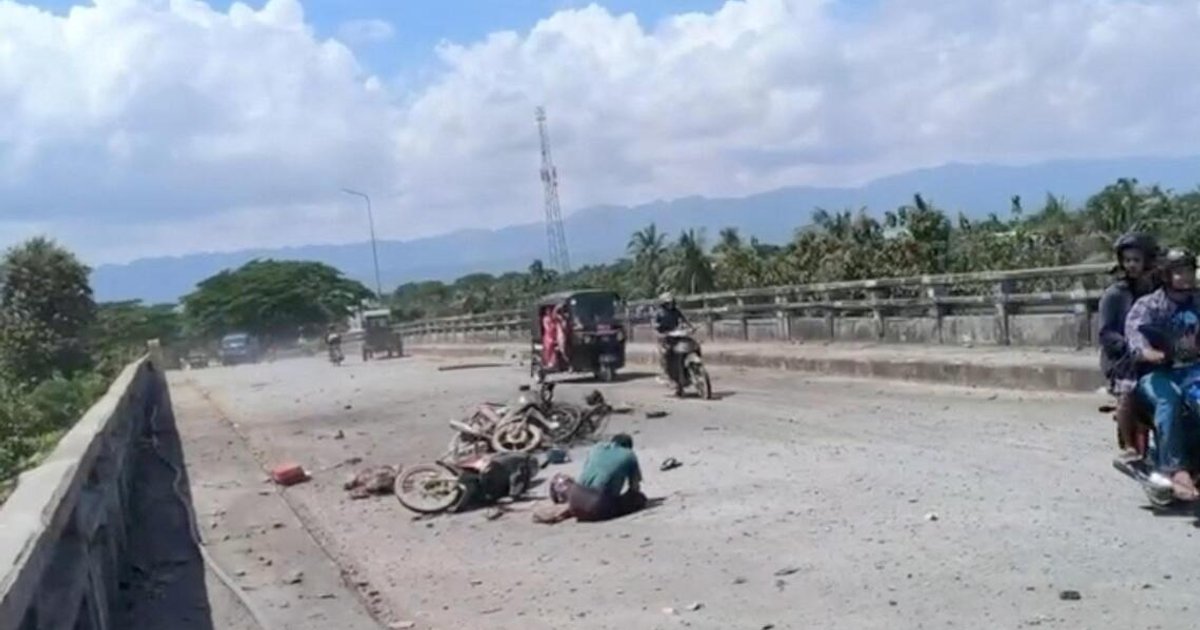
- It is likely that Myanmar military airstrikes hit civilian sites in Rakhine State and Kayah State between 31 October and 1 November 2026. Reports describe strikes across four Rakhine townships, including a clinic and maternity ward in Mrauk-U, and a school in Loikaw where three students were reported killed and five wounded. Rakhine accounts report at least 12 killed and 32 wounded, while a broader weekend account reports at least 15 killed, including a newborn; those totals have different scopes and should not be added. The Loikaw casualty and aircraft details are attributed to the Karenni Human Rights Group and Banyar Khun Aung. (Confidence: medium · REPORTED)
- I&W: Independent reporting or imagery verifies damage and casualties at the Mrauk-U clinic or Loikaw school, confirming the reported locations and incident details. (0-14 days)
- I&W: A correction or primary record shows that the Rakhine and weekend casualty counts duplicate the same victims, or that the reported military attribution is incorrect, breaking part of the current account. (0-14 days)
- The reporting indicates that Myanmar conflict spillover has affected civilians in Thailand: an artillery shell reportedly wounded a woman in Mae Sot and the Thai army fired warning shots into Myanmar. Thailand’s government also said Thai fighter jets conducted border-area air patrols after conflict spillover damaged homes and injured at least one person on the Thai side. The shell and warning-shot account comes from a blog, while the patrol and damage account is attributed to the Thai government in major-media reporting. (Confidence: medium · REPORTED)
- I&W: Thai authorities report another shell, aircraft or other conflict-related incident causing injury or property damage in Mae Sot or nearby border areas. (0-14 days)
- I&W: Thai authorities correct the Mae Sot shell attribution or state that the reported warning shots did not occur, breaking the current account of the incident. (0-14 days)
- The Myanmar military is likely to continue air attacks that threaten civilian sites in Rakhine State and Kayah State over the next 1-3 months. This assessment rests on reported strikes at civilian sites in Mrauk-U and Loikaw, strikes on internally displaced people’s camps in Kyauktaw and Ponnagyun about a month earlier, and an August 2026 accusation by UN investigators of deliberate aerial attacks on civilian buildings. The recent incident details are concentrated in one major-media account and local-source reporting, so the evidence does not establish a verified trend line. (Confidence: medium · ASSESSED)
- I&W: A further independently reported Myanmar military airstrike hits or damages a school, clinic, maternity ward or internally displaced people’s site in Rakhine State or Kayah State. (0-30 days)
- I&W: Reliable reporting documents a suspension of military air operations or a sustained absence of reported strikes on civilian sites in Rakhine State and Kayah State. (0-30 days)
Outlook & scenarios
Continued air attacks and civilian casualties (55%)
Myanmar military air attacks continue to threaten civilian sites in Rakhine State and Kayah State. Further casualty reports remain difficult to reconcile because local accounts and broader tallies cover different incidents or time periods.
Fewer reported strikes on civilian sites (30%)
Reports of air attacks on schools, clinics and displacement sites decline over the next 1-3 months, while conflict and displacement continue. The current reporting does not establish that a reduction in strikes is under way.
Cross-border incident prompts further Thai military response (15%)
A further shell or aircraft incident affects Mae Sot or nearby Thai border areas. The Thai army repeats warning fire or increases air patrols, raising the risk of direct military contact. This is a low-probability, high-impact scenario.
Recommendations
- Describe the 100,000 figure as a United Nations estimate cited in media reporting. Do not attribute it to the UN Human Rights Office or call it independently verified unless a direct United Nations source establishes that attribution and methodology.
- Maintain separate incident and casualty entries for the Mrauk-U strike, the wider Rakhine attacks and the Loikaw school strike. Reconcile victim names, locations and reporting periods before aggregating totals.
- Seek independent confirmation of the Loikaw school casualties and aircraft details, and of damage and casualty reporting from the Mrauk-U clinic and maternity ward.
- Track Thai government and army statements on Mae Sot injuries, property damage, warning shots and air patrols. Record any correction to the reported shell origin separately from confirmation of the incident itself.
- Monitor statements from UN investigators and the UN Independent Investigative Mechanism for Myanmar for updated findings on aerial attacks against civilian buildings and war-crimes documentation.
Confidence & uncertainty
Overall confidence is medium. A major-media report provides the United Nations death and displacement estimates and detailed accounts of recent strikes, while local-source reporting and a conflict-monitoring blog add incident details with less consistent proximity and corroboration. The Rakhine casualty figures have different reported scopes, and the available material does not establish direct UN Human Rights Office verification of the 100,000 estimate.
Intelligence gaps
- [EEI 1.2 · PARTIAL] Changes in the weekly number of civilian deaths, injuries, detentions, enforced disappearances, and reported attacks compared with the preceding four weeks. Recommended collection: UN reporting and incident-monitoring databases
- [EEI 1.3 · PARTIAL] Junta force movements, aircraft sorties, artillery deployments, and preparations near densely populated areas or displacement concentrations. Recommended collection: commercial satellite imagery, local reporting, and military-source reporting
- [EEI 2.1 · PARTIAL] Newly displaced civilians by state or region, including the number of people fleeing each major attack area and the direction of movement. Recommended collection: UN OCHA, humanitarian partners, and local civil-society reporting
- [EEI 2.2 · UNCOVERED] Access conditions and stock levels for food, medicine, fuel, shelter, and clean water in conflict-affected townships. Recommended collection: humanitarian field reporting and satellite imagery
- [EEI 2.4 · PARTIAL] Changes in cross-border refugee flows and requests for emergency assistance in neighboring countries. Recommended collection: border authorities, UNHCR, and humanitarian reporting
- [EEI 3.1 · PARTIAL] Resistance attacks, territorial gains, loss of key transport routes, and changes in control of towns or administrative centers. Recommended collection: conflict-event databases, local media, and geospatial analysis
- [EEI 3.2 · UNCOVERED] Junta retaliatory operations, including collective-punishment measures, village burnings, airstrikes, artillery barrages, and arrests following resistance activity. Recommended collection: local human-rights reporting and incident databases
- [EEI 3.3 · UNCOVERED] Evidence of resistance forces establishing evacuation routes, civilian-protection arrangements, local administration, or restrictions on attacks affecting civilian areas. Recommended collection: local governance reporting, NGO interviews, and resistance statements
- [EEI 3.4 · UNCOVERED] Changes in resistance access to weapons, ammunition, drones, communications equipment, training, and cross-border logistical support. Recommended collection: weapons-tracking reporting, border reporting, and imagery analysis
- [EEI 4.1 · UNCOVERED] New arms transfers, aviation fuel deliveries, spare-parts shipments, financial flows, or maintenance support reaching the junta. Recommended collection: customs data, sanctions investigations, shipping databases, and commercial imagery
- [EEI 4.2 · PARTIAL] New or expanded sanctions, arms embargo measures, accountability proceedings, diplomatic initiatives, or humanitarian funding commitments. Recommended collection: government, UN, and international-organization statements
- [EEI 4.3 · PARTIAL] Changes in neighboring states' border controls, refugee policies, cross-border aid access, and engagement with junta or resistance representatives. Recommended collection: official statements, border reporting, and diplomatic reporting
- [EEI 4.4 · UNCOVERED] Changes in commercial aviation-fuel prices, war-risk insurance, shipping access, or banking restrictions affecting junta-controlled ports and airports. Recommended collection: maritime/shipping data, financial reporting, and sanctions-monitoring sources
Red cell review: CONCUR WITH COMMENT
TLP:CLEAR