TLP:CLEAR · Disclosure is not limited.
Nepal: 2025 protest deaths and current accountability process
Time window: Last 1 day · Audience: General analyst · Type: Situation report · DTG: 2026-11-23 20:35Z · Overall confidence: HIGH
BLUF
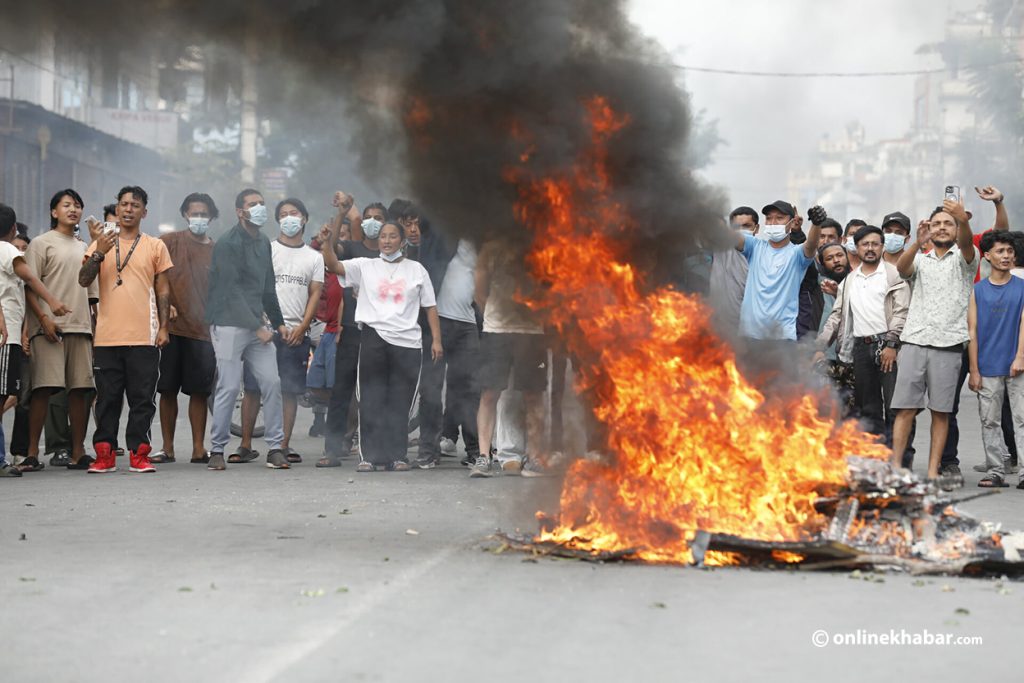
The supplied reporting does not substantiate a new protest episode on 21-22 November 2026 with 19 deaths and more than 300 injuries. The 19-death report refers to the September 2025 demonstrations; on 23 November 2026, the government’s proposed protest commission ordinance had reached the President’s Office but was not reported as issued.
Executive summary
The claims date the Gen Z protests to 8-9 September 2025 and associate the reported deaths of 19 young demonstrators with 8 September that year. The exact death figure appears only in reporting read in summary, and the supplied claims do not substantiate more than 300 injuries or a new protest episode in November 2026. Separately, the Cabinet recommended an ordinance to establish a commission for protest-related cases, compensation and reparation; the ordinance reached the President’s Office on 23 November. The evidence supports monitoring the ordinance and its treatment of protest-related cases, while keeping the historical casualty reporting distinct from any new events.
Change from previous assessment
Since the 22 November brief, the assessment has changed from treating the reported protest episode as unverified to finding that the specific 19-death reporting refers to the September 2025 demonstrations. New reporting dates the protests to 8-9 September 2025 and describes the Cabinet’s ordinance recommendation and its arrival at the President’s Office on 23 November 2026. The precise historical death toll remains low confidence because its specific report was read only in summary; the supplied evidence still does not substantiate more than 300 injuries or a new November protest episode.
Key judgments
- The supplied record does not substantiate a new protest episode on 21-22 November 2026 with 19 deaths and more than 300 injuries. It dates the Gen Z protests to 8-9 September 2025, and the specific report of 19 deaths refers to the 8 September 2025 demonstration. The exact 19-death figure rests on reporting read only in summary, so the historical date is better supported than the precise toll. (Confidence: low · ASSESSED)
- I&W: Confirm the assessment if dated reporting or an official casualty notice places any 19-death count in September 2025 and gives no corresponding 21-22 November 2026 incident. (0-14 days)
- I&W: Break the assessment if a dated government or hospital statement, or independently corroborated reporting, records protest deaths or more than 300 injuries in Nepal on 21-22 November 2026. (0-14 days)
- As of 23 November, the Nepali Cabinet had recommended the protest-related ordinance to the President, and the ordinance had reached the President’s Office. Government reporting describes a proposed commission to investigate protest-related cases and provide compensation and reparation; the supplied reporting does not say the ordinance had been issued. (Confidence: medium · REPORTED)
- I&W: Confirm the process has advanced if the President’s Office or the government publishes an issuance notice or the commission’s formal terms. (0-14 days)
- I&W: Break the expectation of near-term implementation if no issuance or formal commission notice appears and the government reports that the ordinance has been withdrawn or deferred. (0-14 days)
- Renewed political scrutiny of protest-related cases is likely over the next three months, while the ordinance’s practical effect remains uncertain. Rastriya Swatantra Party lawmakers have called for the release of people facing proceedings over protest participation, and the proposed ordinance provides for faster resolution of cases other than serious crimes; the available reporting does not establish how the process will address accountability for deaths during the demonstrations. (Confidence: medium · ASSESSED)
- I&W: Confirm continuing political scrutiny if the government publishes case-resolution figures or the commission’s terms address the release or expedited resolution of protest-related cases. (1-3 months)
- I&W: Break the expectation of continued scrutiny if the government reports that protest-related proceedings have been resolved and no further public demands about those cases are reported. (1-3 months)
Outlook & scenarios
Ordinance advances and the commission begins work (60%)
This is the most likely near-term path. The ordinance is issued and the commission begins handling protest-related investigations, compensation and eligible case resolution. The scope of its work, particularly on accountability for deaths, remains unclear in the available reporting.
Ordinance is delayed or its scope remains contested (30%)
This is unlikely but plausible. The ordinance remains pending or the commission’s remit does not resolve demands concerning protest-related cases. Political scrutiny continues without clear evidence of a new protest episode.
A new protest episode emerges (10%)
This is very unlikely on the supplied evidence, but it is the high-impact wildcard. New, dated reporting of protest mobilisation and casualties would require treating the November situation as a current security event rather than a historical casualty claim.
Recommendations
- Keep the September 2025 casualty reporting separate from any November 2026 incident in situation tracking. Do not repeat the 19-death or 300-plus injury figures as current without dated corroboration.
- Verify whether the President issues the ordinance and obtain the commission’s formal remit before assessing its likely effect on protest-related cases or accountability.
- Track government updates on case resolution, compensation and reparation, alongside any new dated reporting of demonstrations or casualties.
- Use the reported 19-death figure with an explicit qualification that the supporting report was read only in summary; do not use the truncated 76-person account to reconcile the toll.
Confidence & uncertainty
Overall confidence is high for the chronology of the September 2025 protests and the reported procedural status of the ordinance because claims from local and major media support those developments. Confidence is low in the precise 19-death figure because its specific report was read only in summary. No supplied claim substantiates more than 300 injuries or a new protest episode on 21-22 November 2026, so confidence in any current casualty claim is insufficient.
Intelligence gaps
- [EEI 1.1 · PARTIAL] Protest-related deaths, injuries, arrests, curfews, road closures, and property damage by location and 24-hour period. Recommended collection: local media/social media
- [EEI 1.3 · UNCOVERED] Evidence of protesters acquiring weapons, attacking police or military sites, setting up barricades, or coordinating sustained occupations. Recommended collection: social media/local reporting
- [EEI 1.4 · PARTIAL] Participation by opposition parties, labor unions, civil-society groups, professional associations, or organized criminal networks in protest actions. Recommended collection: political reporting/social media
- [EEI 2.1 · UNCOVERED] Deployment changes involving Nepal Police, Armed Police Force, or military units, including reinforcements, checkpoints, crowd-control equipment, and rules of engagement. Recommended collection: official statements/local media
- [EEI 2.2 · PARTIAL] New curfews, internet or communications restrictions, emergency decrees, arrests of organizers, or restrictions on political assembly. Recommended collection: government notices/telecom reporting
- [EEI 3.1 · UNCOVERED] Named protest leaders, online coordination channels, recurring mobilization calls, fundraising activity, and evidence of centralized or decentralized command. Recommended collection: social media/open-source intelligence
- [EEI 3.2 · PARTIAL] Published protest demands concerning corruption, luxury hotels, accountability for deaths, elections, or government resignation, and changes in their wording over time. Recommended collection: protester statements/social media
- [EEI 3.3 · UNCOVERED] Meetings or mediation efforts involving government officials, protest representatives, opposition parties, civil-society organizations, or religious leaders. Recommended collection: political and local media
- [EEI 3.4 · UNCOVERED] Attendance levels, geographic reach, strike participation, and protest activity after government concessions, force reductions, or leadership changes. Recommended collection: local media/social media
- [EEI 4.1 · PARTIAL] Hospital caseloads, shortages of medical supplies, reported missing persons, displacement, and verified civilian casualty figures. Recommended collection: health authorities/humanitarian reporting
- [EEI 4.2 · UNCOVERED] Closure of airports, border crossings, schools, businesses, banks, hotels, or major transport routes due to unrest. Recommended collection: transport and business reporting
- [EEI 4.3 · UNCOVERED] Changes in tourism bookings, foreign-departure advisories, remittance channels, market indicators, or war-risk and political-risk insurance pricing. Recommended collection: financial/travel reporting
- [EEI 4.4 · UNCOVERED] Public statements, sanctions warnings, aid conditions, or diplomatic démarches from India, China, the United States, the United Nations, or other external actors. Recommended collection: diplomatic statements
Red cell review: CONCUR WITH COMMENT
TLP:CLEAR