TLP:CLEAR · Disclosure is not limited.
Nepal Gen-Z unrest: reported casualty toll unverified
Time window: Last 1 day · Audience: General analyst · Type: Situation report · DTG: 2026-11-07 14:38Z · Overall confidence: LOW
BLUF
The supplied claims do not substantiate the stated toll of 19 deaths and more than 300 injuries in a current two-day protest wave. Nepal-specific reporting describes deadly Gen-Z unrest, including fires on 8-9 September 2025, but does not verify a new incident or its casualty count in the current reporting window.
Executive summary
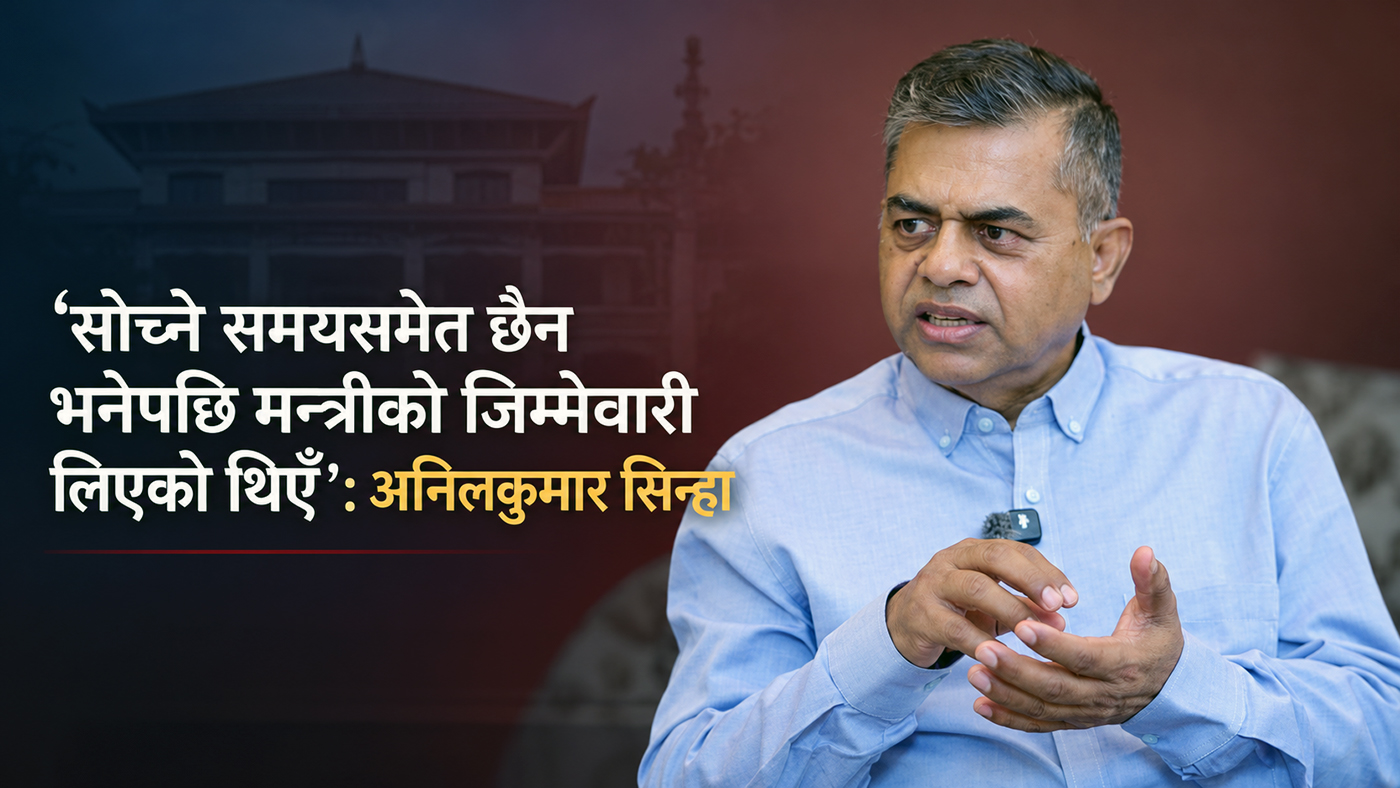
The Nepal-specific material is fragmentary and mostly undated. A social-media post reports more than 50 deaths in clashes with riot police during protests linked to a social-media ban. Local-media reporting quotes Anil Kumar Sinha describing fear and fires during the Gen-Z movement, and dates the violence he discussed to 8-9 September 2025. Separate claims describe Sushila Karki as interim prime minister and Anil Kumar Sinha as a minister in her government. The reporting does not establish the stated toll of 19 deaths and more than 300 injuries, or confirm a fresh two-day protest wave.
Change from previous assessment
Compared with the 6 November brief, this batch adds claims of Gen-Z unrest, a report of more than 50 deaths, accounts of fires and reporting that places Sushila Karki at the head of an interim government. This changes the assessment from having no supplied casualty reporting to having an undated casualty claim and accounts of earlier violence. It does not validate the stated toll of 19 deaths and more than 300 injuries, or establish a new protest event. Confidence remains low. The prior brief's reporting on Balendra Shah's 5 November security briefing and Dan Bahadur Karki's challenge to his removal is not corroborated in this batch.
Key judgments
- The stated toll of 19 deaths and more than 300 injuries is not substantiated by the supplied claims. The only explicit Nepal casualty figure is an undated social-media report of more than 50 deaths; local-media accounts describe violence and fires but give no casualty count. Confidence is low because the casualty figure lacks dated, independent corroboration. (Confidence: low · ASSESSED)
- I&W: Nepal Police or the interim government publishes a dated casualty tally for a specified protest event that records 19 deaths and more than 300 injuries. (0-14 days)
- I&W: Dated hospital and official records place the reported deaths and injuries on a different date, or show totals materially below the stated figures. (0-14 days)
- The Nepal-specific reporting more likely refers to the Gen-Z crisis of 8-9 September 2025 than to a newly verified event in the current reporting window. Anil Kumar Sinha's account explicitly links violence to those dates, while the social-media report of more than 50 deaths has no event date. Confidence is low because the casualty post is undated and the material does not independently establish when the reported deaths occurred. (Confidence: low · ASSESSED)
- I&W: A dated, independently sourced report places protest violence in Nepal on 6-7 November 2026. (0-14 days)
- I&W: Nepal Police, hospital records or a dated local-media report identify the more-than-50-death figure as belonging to the 8-9 September 2025 unrest. (0-14 days)
- The claims support that Sushila Karki led an interim government after the Gen-Z protests, but they do not establish whether she still held that role in November 2026. The reporting includes a local-media account placing Anil Kumar Sinha in her interim government, while claims about Karki's appointment and oath rely largely on social-media relays. Confidence is low because the sources do not provide a current, direct official confirmation. (Confidence: low · REPORTED)
- I&W: A dated statement from the President's office or a current cabinet roster confirms Sushila Karki as interim prime minister. (0-14 days)
- I&W: A dated official statement identifies a different office-holder or records the end of Karki's interim government. (0-14 days)
Outlook & scenarios
Interim government keeps a security and election focus (50%)
There is a roughly even chance that the interim administration retains a focus on security and elections without a verified new protest cycle. Anil Kumar Sinha described security improvement and elections as government responsibilities, but the supplied reporting does not confirm implementation or current political conditions.
Protests recur in Kathmandu (30%)
A renewed protest cycle is unlikely on the available evidence. If corruption grievances or a social-media restriction again mobilise protesters, demonstrations in Kathmandu could resume and produce confrontations with Nepal Police. The claims describe past protest drivers, not current mobilisation.
Arson prompts another Nepali Army security role (15%)
A nationwide escalation involving fires in Kathmandu and another Nepali Army assumption of security responsibility is very unlikely, but would have high impact on the interim government's stability. The reporting on fires and the Army's security role is retrospective or undated, not evidence of current deployments.
Recommendations
- Do not report the 19-death and 300-plus-injury toll as confirmed or as a current event until a dated casualty tally is corroborated.
- Maintain separate event records for the 8-9 September 2025 Gen-Z unrest and any reported activity on 6-7 November 2026. Record the date, location and source for each casualty figure.
- Seek dated confirmation from Nepal Police, hospitals and the interim government, then reconcile discrepancies in casualty totals before updating the situation assessment.
- Monitor dated statements and deployment reporting from Nepal Police and the Nepali Army. Verify any reports of fires or damage in Kathmandu against geolocated imagery before treating them as current.
Confidence & uncertainty
Overall confidence is low. The explicit Nepal casualty figure comes from an undated social-media post, while the local-media reporting describes violence in the Gen-Z movement without giving a toll. Claims about Sushila Karki's appointment are partly relayed through social media, and the supplied material does not establish whether that government arrangement remained in force in November 2026.
Alternative analysis (red cell)
The casualty report d485fbfc-6268-4466-83eb-16c60980a011 cannot be reliably assigned to the September 8-9, 2025 crisis solely because the Sinha material in claims d03cd8bb-e310-4ea3-a29f-79e73501afd0 and 813254bb-c40f-41c6-9bbb-12997e703cf1 concerns that episode. The available evidence is equally consistent with an undated report about a separate or more recent protest event. Accordingly, the supplied claims support uncertainty about the event's timing rather than a more likely attribution to September 2025.
Intelligence gaps
- [EEI 1.2 · PARTIAL] Expansion of demonstrations, strikes, or clashes from Kathmandu to additional cities, transport corridors, government facilities, or critical infrastructure. Recommended collection: geospatial/open-source reporting
- [EEI 1.3 · PARTIAL] Evidence of protesters acquiring weapons, attacking police or military sites, setting up barricades, or coordinating sustained occupations. Recommended collection: social media/local reporting
- [EEI 1.4 · PARTIAL] Participation by opposition parties, labor unions, civil-society groups, professional associations, or organized criminal networks in protest actions. Recommended collection: political reporting/social media
- [EEI 2.1 · PARTIAL] Deployment changes involving Nepal Police, Armed Police Force, or military units, including reinforcements, checkpoints, crowd-control equipment, and rules of engagement. Recommended collection: official statements/local media
- [EEI 2.2 · PARTIAL] New curfews, internet or communications restrictions, emergency decrees, arrests of organizers, or restrictions on political assembly. Recommended collection: government notices/telecom reporting
- [EEI 2.3 · UNCOVERED] Government investigations, prosecutions, dismissals, or public apologies concerning deaths and alleged excessive use of force. Recommended collection: official statements/court records
- [EEI 3.1 · PARTIAL] Named protest leaders, online coordination channels, recurring mobilization calls, fundraising activity, and evidence of centralized or decentralized command. Recommended collection: social media/open-source intelligence
- [EEI 3.2 · PARTIAL] Published protest demands concerning corruption, luxury hotels, accountability for deaths, elections, or government resignation, and changes in their wording over time. Recommended collection: protester statements/social media
- [EEI 3.3 · UNCOVERED] Meetings or mediation efforts involving government officials, protest representatives, opposition parties, civil-society organizations, or religious leaders. Recommended collection: political and local media
- [EEI 3.4 · PARTIAL] Attendance levels, geographic reach, strike participation, and protest activity after government concessions, force reductions, or leadership changes. Recommended collection: local media/social media
- [EEI 4.1 · PARTIAL] Hospital caseloads, shortages of medical supplies, reported missing persons, displacement, and verified civilian casualty figures. Recommended collection: health authorities/humanitarian reporting
- [EEI 4.2 · UNCOVERED] Closure of airports, border crossings, schools, businesses, banks, hotels, or major transport routes due to unrest. Recommended collection: transport and business reporting
- [EEI 4.3 · UNCOVERED] Changes in tourism bookings, foreign-departure advisories, remittance channels, market indicators, or war-risk and political-risk insurance pricing. Recommended collection: financial/travel reporting
- [EEI 4.4 · UNCOVERED] Public statements, sanctions warnings, aid conditions, or diplomatic démarches from India, China, the United States, the United Nations, or other external actors. Recommended collection: diplomatic statements
Red cell review: PARTIAL DISSENT
TLP:CLEAR