TLP:CLEAR · Disclosure is not limited.
Nepal: Journalist Detentions and Unverified Protest Claims
Time window: Last 1 day · Audience: General analyst · Type: Situation report · DTG: 2026-10-31 13:05Z · Overall confidence: LOW
BLUF
The available material does not verify the reported toll of 19 deaths and more than 300 injuries, Gen-Z leadership, or lethal Nepal Police action. New local-media reporting describes police detaining three named journalists in Kathmandu on 30 October and releasing them that evening, while the PMO and police give conflicting accounts of who authorised the detentions.
Executive summary
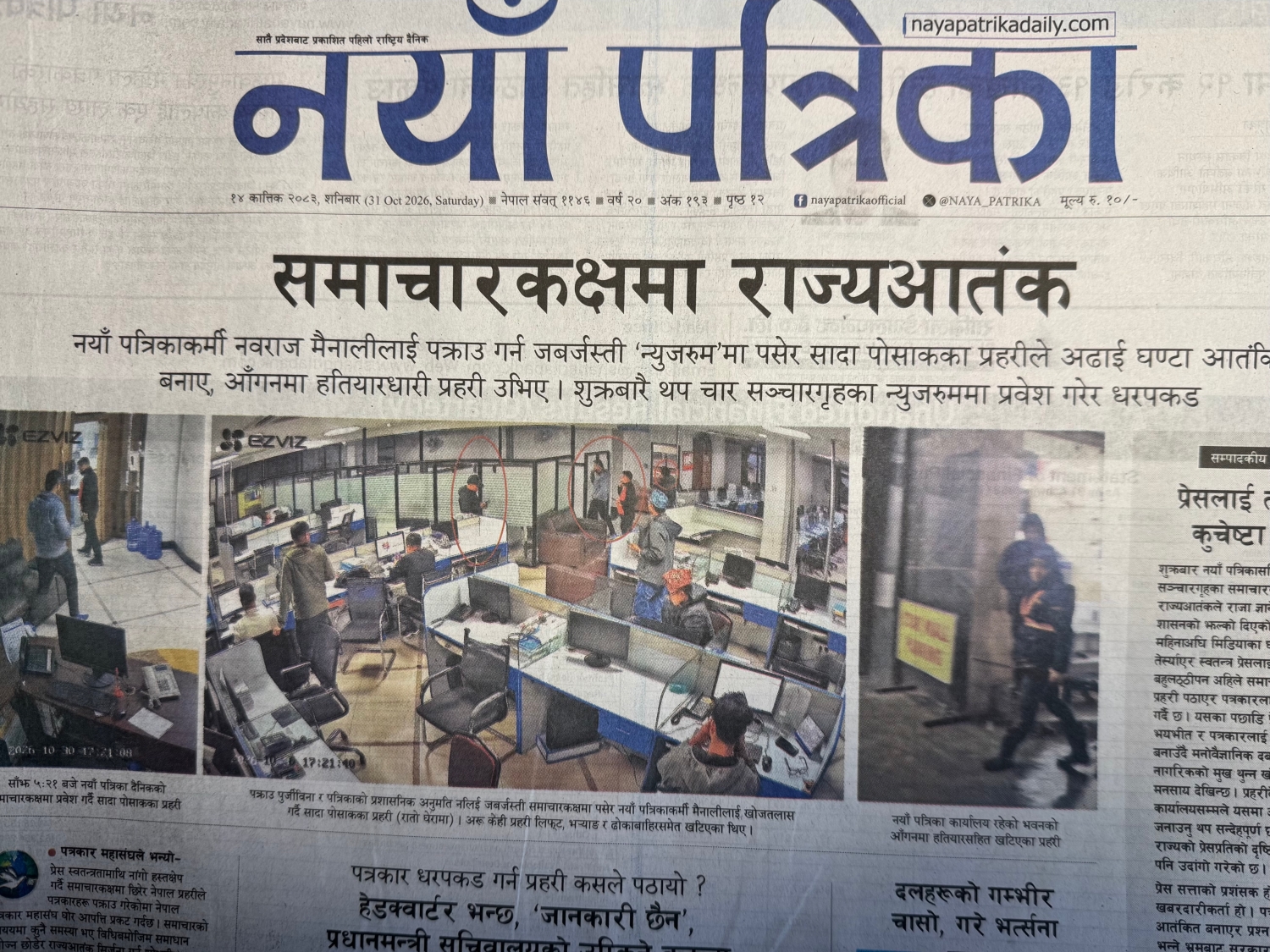
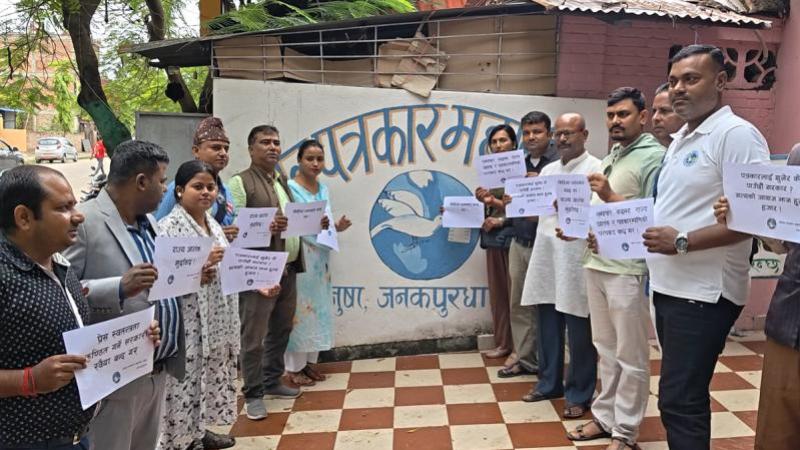
A local-media account says plainclothes officers entered Kathmandu newsrooms on 30 October and security officials detained Dhiraj Basnet, Shobhraj Baral and Bishwamani Subedi for several hours. It also reports police sought other journalists and says Nepal Police described the detentions as routine questioning. The PMO press adviser denied prior knowledge, while Nepal Police said it acted on advisers’ orders. Separate, undated reporting describes journalists protesting in Janakpurdham and the Federation of Nepali Journalists organising further actions. The only supplied claims about anti-corruption demonstrations in Kathmandu are undated social-media posts; they do not establish the reported casualty toll, protest leadership or use of lethal force.
Change from previous assessment
The prior brief had only social-media references to anti-corruption protests in Kathmandu and did not establish journalist detentions. This brief adds local-media reporting that three named journalists were detained and released on 30 October, reports police activity at other newsrooms, and describes journalist protests and planned Federation actions. It also adds conflicting accounts from the PMO press adviser and Nepal Police about authorisation. The reported death and injury toll, Gen-Z leadership and lethal police action remain unverified.
Key judgments
- Nepal Police or security officials detained three named journalists in Kathmandu on 30 October and released them that evening, according to one local-media account. That account names DNA Khabar editor-in-chief Dhiraj Basnet, Motive News editor Shobhraj Baral and Nepal Press reporter Bishwamani Subedi, and reports that police called the detentions routine questioning. (Confidence: medium · REPORTED)
- I&W: Within 0-14 days, the three journalists or their outlets publish accounts confirming their custody and release on 30 October. (0-14 days)
- I&W: Within 0-14 days, one of the named journalists or outlets provides a documented account showing that no custody occurred on 30 October. (0-14 days)
- It is likely that at least some of the 30 October police activity was connected to journalists’ reporting. Officers reportedly sought Naya Patrika journalist Nawaraj Mainali after his coverage of a leaked WhatsApp conversation involving a power broker and a Supreme Court justice; a separate report says Subedi’s detention followed a Cyber Bureau letter after Nepal Press published a report about Inspector General Karki. These links come from one local-media account and are not independently corroborated. (Confidence: low · ASSESSED)
- I&W: Within 0-14 days, Nepal Police or the Cyber Bureau releases a written notice naming either report as grounds for seeking or detaining a journalist. (0-14 days)
- I&W: Within 0-14 days, the named outlets or journalists provide documented grounds for the police actions that identify an unrelated matter. (0-14 days)
- Responsibility for authorising the journalist detentions remains unresolved. Prime Minister Balendra Shah’s press adviser Deepa Dahal said the PM, his secretariat and the PMO had no prior knowledge and that the PM ordered the journalists’ release; Nepal Police said it had acted on advisers’ orders. (Confidence: low · REPORTED)
- I&W: Within 0-14 days, the PMO or Nepal Police publishes an order, written account or named chain of authorisation that resolves who instructed officers to detain the journalists. (0-14 days)
- I&W: Within 0-14 days, a named adviser or officer publicly confirms or directly disputes the police account of acting on advisers’ orders. (0-14 days)
- Journalists’ opposition to police actions has been reported in Janakpurdham, and the Federation of Nepali Journalists has announced phased protests and further activity by district chapters. The reports do not provide dates or independently verified participation figures, so the extent and current pace of this response remain unclear. (Confidence: low · REPORTED)
- I&W: Within 1-3 months, the Federation of Nepali Journalists publishes dates and locations for further actions, with district chapters or local outlets confirming events in Janakpurdham or elsewhere. (1-3 months)
- I&W: Within 1-3 months, the Federation of Nepali Journalists announces that planned actions have been cancelled or suspended, with no district chapter confirming demonstrations. (1-3 months)
- The supplied record does not establish that 19 people were killed, more than 300 were injured, Gen-Z protesters led the demonstrations, or Nepal Police used lethal force. The only supplied claims specifically describing anti-corruption protests in Kathmandu are undated social-media posts; they provide no casualty account or description of police action. (Confidence: low · ASSESSED)
- I&W: Within 0-14 days, named hospitals, Nepal Police or multiple independent local-media outlets publish compatible casualty figures tied to specific protest locations and dates. (0-14 days)
- I&W: Within 0-14 days, independently verifiable reporting identifies the protest organisers and documents the circumstances of any deaths or injuries. (0-14 days)
Outlook & scenarios
Federation-led protests continue without verified wider unrest (50%)
The Federation of Nepali Journalists and its district chapters proceed with phased actions focused on the detentions and press freedom. Protests remain primarily journalist-led, with no verified evidence in the reporting of a wider anti-corruption mobilisation.
The detention dispute is contained through clarification (25%)
The PMO and Nepal Police clarify the chain of authorisation, while the journalists’ release and any explanation of the Cyber Bureau’s role reduce the immediate dispute. Federation actions continue but do not spread beyond the press-freedom issue.
Further police action prompts broader demonstrations (20%)
Renewed searches of newsrooms or further journalist detentions prompt additional Federation actions and draw wider public support. This outcome would be more likely if the competing accounts of authorisation remain unresolved.
Low-probability, high-impact convergence (5%)
Journalist-led actions converge with anti-corruption demonstrations in Kathmandu, producing a broader confrontation with police. The supplied reporting does not establish that this convergence is under way; severe injuries or deaths in such a confrontation would sharply raise the stakes.
Recommendations
- Treat the reported figures of 19 deaths and more than 300 injuries, Gen-Z leadership and lethal police action as unverified. Do not repeat them as established facts until casualty figures and protest leadership are corroborated by named hospitals, Nepal Police and independent local reporting.
- Verify the custody timeline and stated grounds directly with DNA Khabar, Motive News, Nepal Press and the three named journalists. Seek the Cyber Bureau letter or other written notice concerning Bishwamani Subedi and clarify why officers sought Nawaraj Mainali.
- Request a documented account from the PMO and Nepal Police explaining who authorised the detentions. Distinguish the PMO’s stated lack of prior knowledge from the police account that officers acted on advisers’ orders.
- Track Federation of Nepali Journalists announcements and confirm the dates, locations and participation of any actions in Janakpurdham and other districts. Keep reporting on journalist protests separate from reporting on anti-corruption demonstrations unless organisers or independently verified evidence establish a connection.
Confidence & uncertainty
Overall confidence is low because the new details about the Kathmandu journalist detentions come primarily from one local-media account, while the protest claims are limited to undated social-media posts and do not substantiate casualties, Gen-Z leadership or police use of lethal force. The PMO and Nepal Police accounts conflict on whether advisers authorised the detentions. Reporting on journalist protests outside Kathmandu lacks dates and independently verified participation figures.
Alternative analysis (red cell)
The available reporting may indicate that police actions followed or referenced particular news reports, but it does not demonstrate that the detentions were intended to suppress that reporting. Claims 936a9cef-dcc4-45e4-96e3-a72224ecd47a and 84386680-165b-4470-a3ec-f82524fc6bce are D2 and derive from the same uncorroborated local-media account. A more defensible assessment is that a reporting-related motive is alleged but remains unsubstantiated.
Intelligence gaps
- [EEI 1.1 · UNCOVERED] Protest-related deaths, injuries, arrests, curfews, road closures, and property damage by location and 24-hour period. Recommended collection: local media/social media
- [EEI 1.3 · UNCOVERED] Evidence of protesters acquiring weapons, attacking police or military sites, setting up barricades, or coordinating sustained occupations. Recommended collection: social media/local reporting
- [EEI 2.1 · UNCOVERED] Deployment changes involving Nepal Police, Armed Police Force, or military units, including reinforcements, checkpoints, crowd-control equipment, and rules of engagement. Recommended collection: official statements/local media
- [EEI 2.2 · PARTIAL] New curfews, internet or communications restrictions, emergency decrees, arrests of organizers, or restrictions on political assembly. Recommended collection: government notices/telecom reporting
- [EEI 2.3 · UNCOVERED] Government investigations, prosecutions, dismissals, or public apologies concerning deaths and alleged excessive use of force. Recommended collection: official statements/court records
- [EEI 2.4 · UNCOVERED] Resignations, cabinet changes, parliamentary actions, coalition defections, or succession demands triggered by the protests. Recommended collection: parliamentary and political reporting
- [EEI 3.2 · PARTIAL] Published protest demands concerning corruption, luxury hotels, accountability for deaths, elections, or government resignation, and changes in their wording over time. Recommended collection: protester statements/social media
- [EEI 3.3 · UNCOVERED] Meetings or mediation efforts involving government officials, protest representatives, opposition parties, civil-society organizations, or religious leaders. Recommended collection: political and local media
- [EEI 3.4 · PARTIAL] Attendance levels, geographic reach, strike participation, and protest activity after government concessions, force reductions, or leadership changes. Recommended collection: local media/social media
- [EEI 4.1 · UNCOVERED] Hospital caseloads, shortages of medical supplies, reported missing persons, displacement, and verified civilian casualty figures. Recommended collection: health authorities/humanitarian reporting
- [EEI 4.2 · UNCOVERED] Closure of airports, border crossings, schools, businesses, banks, hotels, or major transport routes due to unrest. Recommended collection: transport and business reporting
- [EEI 4.3 · UNCOVERED] Changes in tourism bookings, foreign-departure advisories, remittance channels, market indicators, or war-risk and political-risk insurance pricing. Recommended collection: financial/travel reporting
- [EEI 4.4 · UNCOVERED] Public statements, sanctions warnings, aid conditions, or diplomatic démarches from India, China, the United States, the United Nations, or other external actors. Recommended collection: diplomatic statements
Red cell review: PARTIAL DISSENT
TLP:CLEAR