TLP:CLEAR · Disclosure is not limited.
Nepal protest casualty claims remain unverified
Time window: Last 7 days · Audience: General analyst · Type: Situation report · DTG: 2026-10-16 06:05Z · Overall confidence: LOW
BLUF
The supplied evidence does not verify the reported toll of at least 19 deaths and more than 300 injuries, or the claim that security forces used lethal force. Treat those details as unconfirmed while seeking independent, location-specific reporting.
Executive summary
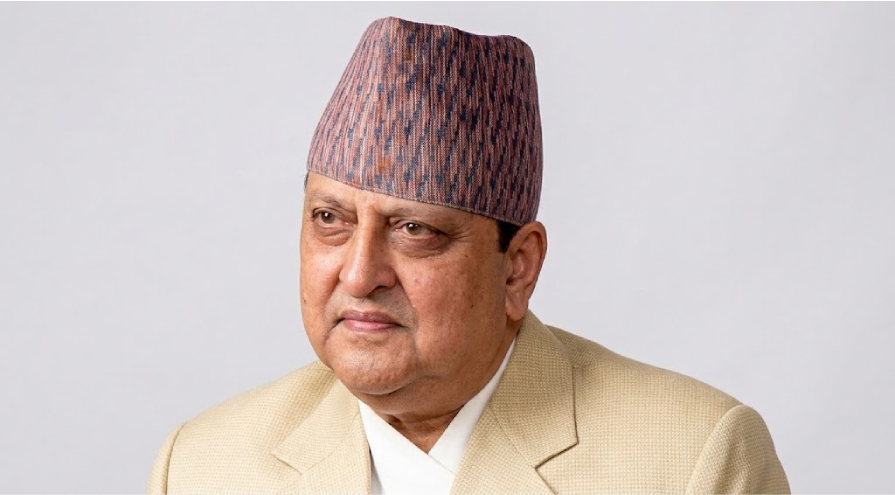
The evidence provided contains no incident-level reporting to establish the protest death toll, injury count, dates, locations or security-force actions. A 7 October Atlantic Council commentary mentions youth unrest in Nepal, Sri Lanka and Bangladesh but gives no detail on casualties or links between events. On 16 October, Review Nepal reported former King Gyanendra Shah's calls for political stability, youth responsibility and flood recovery, including in the Bhotekoshi and Budhi Gandaki areas. NASA FIRMS thermal detections are not evidence of protest-related fires or casualties: the feed reports heat signatures, not their cause.
Key judgments
- The claim that Nepal's Gen-Z anti-corruption protests killed at least 19 people and injured more than 300 in two days remains unverified in the supplied evidence; this gap does not establish that the account is false. (Confidence: low · ASSESSED)
- I&W: Confirmation: Nepal Police, named hospitals or two independent Nepal news outlets publish dated, location-specific tallies supporting at least 19 deaths and more than 300 injuries. (0-14 days)
- I&W: Break: an original reporting outlet or primary record corrects the death or injury figures below the stated totals, or disputes that the reported incidents occurred. (0-14 days)
- The 16 October Review Nepal account documents former King Gyanendra Shah's calls for political stability and flood recovery, but does not document a position on the alleged protests or use of force. It also reports his call for youth to take responsibility for Nepal's future and his concern about flooding in the Bhotekoshi and Budhi Gandaki areas. (Confidence: low · REPORTED)
- I&W: Confirm: an independently published transcript or second Nepal outlet reports the same remarks and their context. (0-14 days)
- I&W: Break: Gyanendra Shah or Review Nepal issues a correction showing that the remarks were misquoted or misattributed. (0-14 days)
- Regional contagion is unestablished. An Atlantic Council commentary published on 7 October 2026 mentions recent youth unrest in Nepal, Sri Lanka and Bangladesh, but provides no evidence of shared organisers or cross-border coordination. (Confidence: low · ASSESSED)
- I&W: Confirm: independently sourced reporting documents distinct local demands and no shared organiser or coordination mechanism across Kathmandu, Colombo and Dhaka. (1-3 months)
- I&W: Break: attributable statements or verified communications from named organisers in at least two of Kathmandu, Colombo and Dhaka document a coordinated campaign. (1-3 months)
- NASA FIRMS thermal data do not corroborate the reported protest casualties or establish protest-related fires. The feed recorded 46 detections in a South Asia bounding box from 12 to 15 October, with zero high-confidence detections; NASA cautions that thermal readings record heat, not cause. (Confidence: medium · ASSESSED)
- I&W: Confirm: geospatial review finds no time-and-location match between the detections and independently verified protest incidents. (0-14 days)
- I&W: Break: an independently verified incident report matches one or more detections to a named protest site and date. (0-14 days)
Outlook & scenarios
The evidence gap persists (50%)
There is a roughly even chance that, over the next two weeks, available reporting remains too sparse to verify the casualty figures, locations or security-force actions. The reported toll should remain unconfirmed unless independent evidence emerges.
Independent reporting confirms the reported toll (25%)
It is unlikely that the account will be confirmed in full by independent sources. If dated reporting from Nepal outlets, hospitals or official records supports the stated death and injury totals, confidence in the crisis account would rise and the assessment should be updated.
The reported figures are revised (20%)
It is unlikely that all reported details will prove accurate. An original outlet or primary record could revise the totals, dates or circumstances, requiring separate assessment of each element rather than treating the account as a single claim.
Low-probability political realignment (5%)
It is very unlikely, on the evidence available, that Gyanendra Shah's call for political stability and youth responsibility becomes a rallying point for protest mobilisation. If organisers publicly adopt his message, the political framing of the unrest would warrant reassessment; the supplied evidence does not show that alignment.
Recommendations
- Keep the reported death and injury totals, protest locations and descriptions of security-force actions labelled unconfirmed in situation reporting until independently corroborated.
- Build a verification log that records each alleged incident's date, location, named source, casualty figure and whether the figure refers to deaths, injuries or hospital admissions. Seek corroboration from Nepal Police, named hospitals, primary records and independent Nepal news outlets.
- Check the 16 October Review Nepal account against an original statement from Gyanendra Shah or a second outlet. Do not attribute a position on the protests or use of force to him unless a source documents it.
- Do not use NASA FIRMS thermal detections as evidence of protest fires or casualties. Reassess their relevance only if a detection matches a named incident by location and date and independent reporting confirms the incident.
- Track whether organisers in Nepal, Sri Lanka or Bangladesh make attributable statements about shared coordination. Keep regional unrest separate from claims of a cross-border campaign unless such links are documented.
Confidence & uncertainty
Overall confidence is low because the five usable sources do not independently corroborate the central casualty and lethal-force claims. The Nepal-specific account of Gyanendra Shah's remarks comes from one local-media report, while the regional youth-unrest claim comes from one think-tank commentary. NASA FIRMS is an official source for thermal detections, but its data do not identify cause or establish a link to the alleged protests. The main uncertainties are whether the reported events occurred as described, where they occurred and whether the casualty figures are accurate.
Alternative analysis (red cell)
The source record supports a more limited interpretation than judgments 1 and 2 imply. Claims, and bcfd6ff4-0323-4065-baf7-18f2730c16ad show Shah discussing political instability, youth, and floods, but do not demonstrate that protests or force were absent from the underlying account. Similarly, dc5b04e0-049b-4559-8543-60859b40add9 indicates geographically dispersed youth unrest; coordination remains unproven, but the evidence is insufficient to characterize regional contagion as unestablished rather than unresolved.
Cited sources
[1] Review Nepal · Former King Urges Swift Flood Recovery, Political Stability and Economic Self-Reliance (D) · 16 October 2026 · sha256:e888333e0721 [2] Atlantic Council · South Asian governments should look east for opportunities for young workers (C) · 7 October 2026 · sha256:c3a93b0d9b0e [3] NASA FIRMS (NASA/LANCE, Fire Information for Resource Management System) · NASA FIRMS thermal detections — South Asia (5d) (A) · sha256:95ccb66628fe
Source content hashes were computed at collection time; the cited text is preserved unmodified for the life of this product.
Red cell review: PARTIAL DISSENT
TLP:CLEAR