TLP:CLEAR · Disclosure is not limited.
Niger: Mutiny Complicates the Jihadist Security Crisis
Time window: Last 1 day · Audience: General analyst · Type: Situation report · DTG: 2026-08-29 19:06Z · Overall confidence: LOW
BLUF
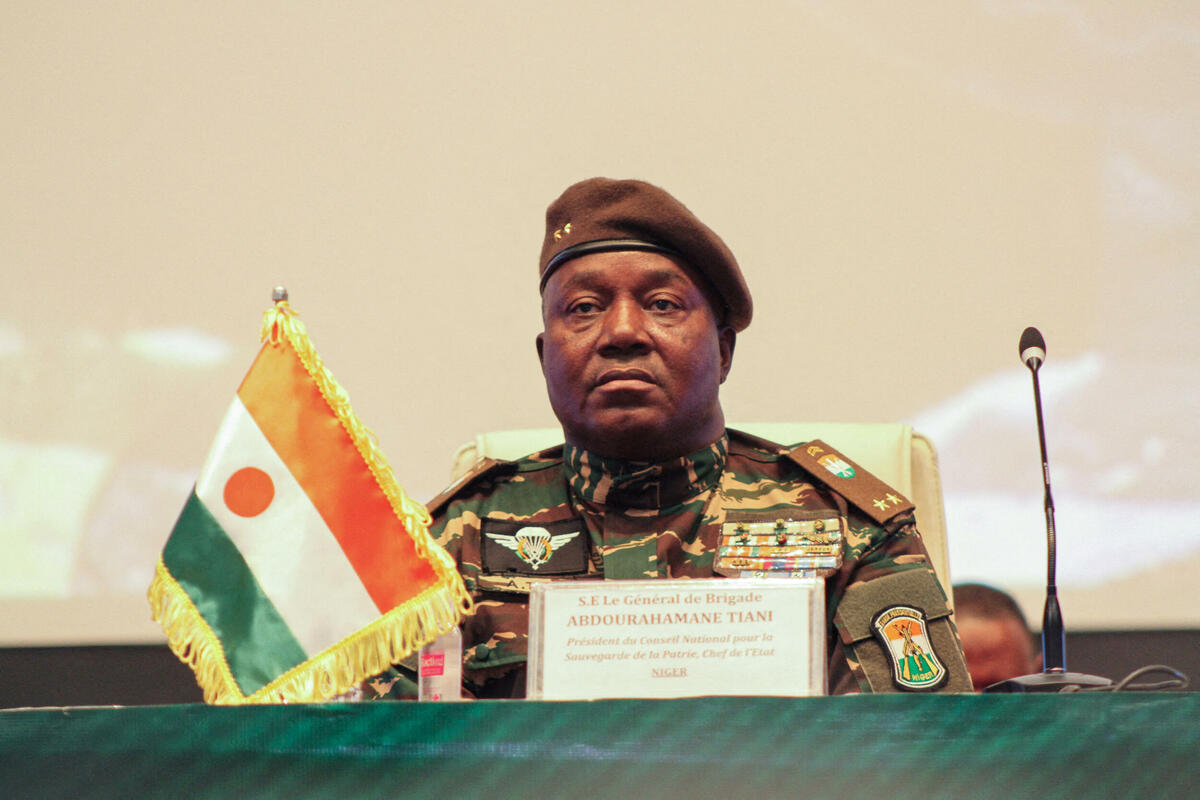
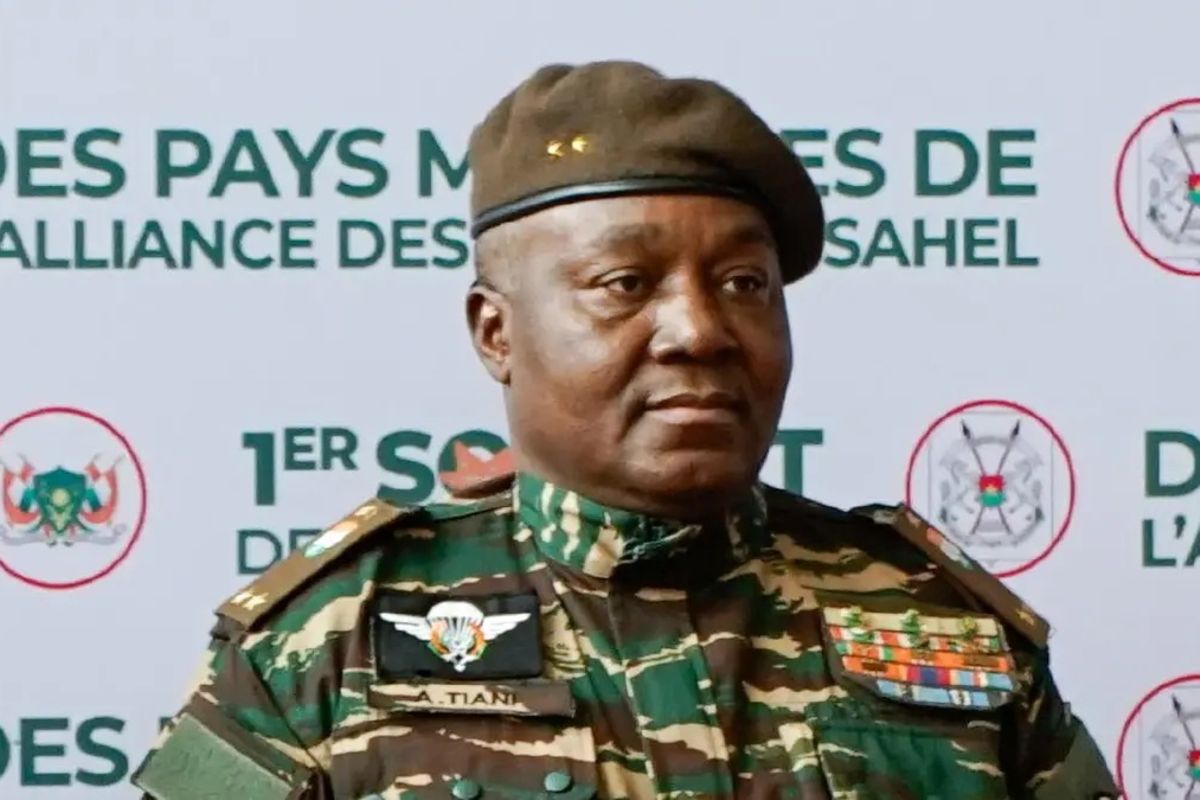
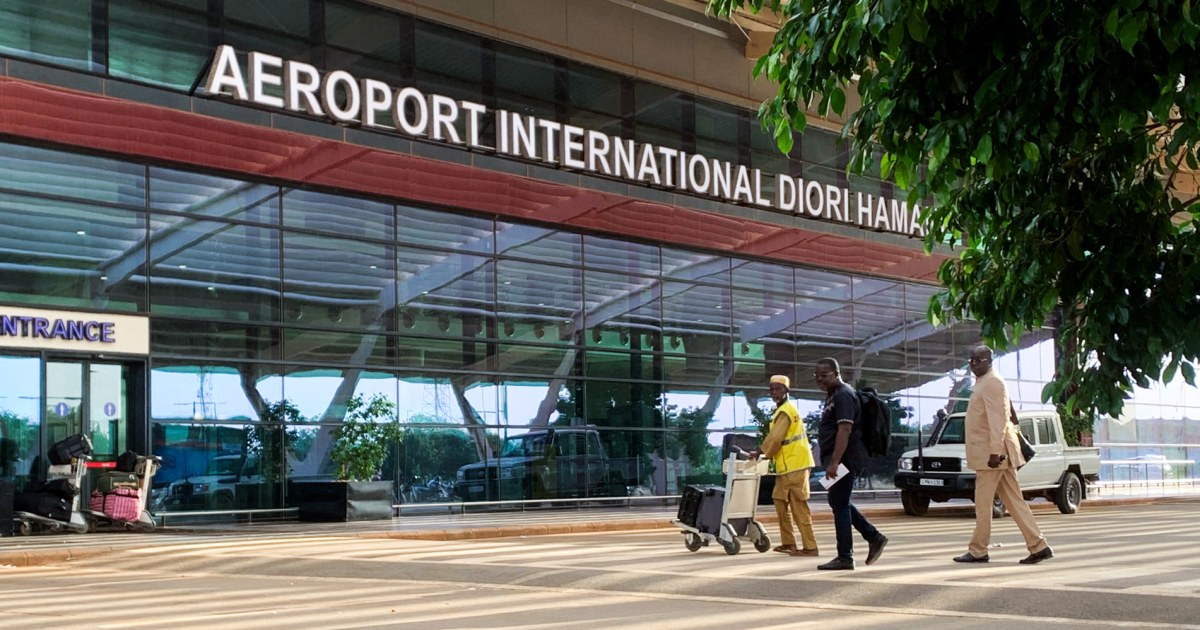
It is likely that mutinous soldiers attacked Niamey airport and the presidency on 29 August 2026, while loyalist troops secured the presidential palace but had not clearly regained the airport. The incident is best treated as an internal military challenge to General Abdourahamane Tiani, separate from the documented pressure from the regional Islamic State affiliate, and does not establish a coordinated jihadist surge across West Africa.
Executive summary
On 29 August 2026, sustained gunfire and explosions were reported around Niamey airport and the presidency. Several major-media accounts attributed the assault to mutinous or rebel soldiers, including troops from Ouallam, Tera and Dosso. Niger's government mobilised security forces and reported progressively retaking targeted sites. Loyalist troops had secured the presidential palace by 0900 GMT, but the airport remained contested and mutineers were still reportedly present. The attack directly challenges General Abdourahamane Tiani's rule as Niger continues to face pressure from the regional Islamic State affiliate in southwestern areas.
Change from previous assessment
This brief replaces the prior medium-confidence assessment that JNIM attacked Niamey airport and the adjoining military complex. New reporting instead attributes the 29 August attack to mutinous or rebel soldiers, identifies possible participation by troops from Ouallam, Tera and Dosso, and separates the reported security of the presidential palace from the continued contest around the airport. Confidence in the wider jihadist-surge assessment remains low, while the internal military challenge to General Abdourahamane Tiani is a new lead judgement.
Key judgments
- It is very likely that mutinous soldiers attacked Niamey's airport and presidency on 29 August 2026, and likely that soldiers from Ouallam, Tera and Dosso participated. This is a reported judgement with medium confidence. Several major-media accounts support the attack, but the reporting uses both mutinous and rebel terminology and does not independently establish the allegiance of the units from those towns. (Confidence: medium · REPORTED)
- I&W: Confirm: Niger's government or independent reporting names the attacking units and links them to Ouallam, Tera or Dosso. Break: a subsequent investigation attributes the assault to an al-Qaeda or Islamic State affiliate. (0-14 days)
- I&W: Confirm: further reporting documents sustained fighting involving the same soldiers at Niamey airport or the presidency. Break: reporting shows the incident was a brief, isolated exchange without continued mutineer activity. (0-14 days)
- It is likely that government-loyal forces secured Niger's presidential palace by 0900 GMT on 29 August but had not fully regained Niamey airport at that time. This is an assessed judgement with medium confidence because reports agree on palace control but conflict with reports that mutineers remained at the airport and that the airport area was still contested. (Confidence: medium · ASSESSED)
- I&W: Confirm: independent reporting after 0900 GMT verifies loyalist control of the presidential palace and continued mutineer presence or contest at the airport. Break: same-day independent reporting places both sites under the control of one force. (0-14 days)
- I&W: Confirm: Niger's defence ministry issues a time-stamped statement documenting the airport's return to government control. Break: security sources continue to report fighting or mutineer control at the airport after 48 hours. (0-14 days)
- It is likely that General Abdourahamane Tiani's government will tighten internal military control after the 29 August attack while maintaining its shift away from Western partners and deeper ties with Russia. This is an assessed judgement with low confidence. Security-force mobilisation is directly reported, but the approved claims do not show what political or command decisions Tiani will take after the assault. (Confidence: low · ASSESSED)
- I&W: Confirm: Tiani's government announces arrests, command changes or new security decrees linked to the attack. Break: the government announces a negotiated settlement with the mutineers or restores a Western security partnership. (0-14 days)
- I&W: Confirm: Niger publicly reaffirms security cooperation with Russia while presenting domestic mobilisation as the response to the attack. Break: Niger announces a formal reversal of its policy distance from Western partners. (1-3 months)
- It is likely that jihadist violence will remain an active pressure on Niger's forces in southwestern areas, particularly around Ouallam, Tera and Dosso, where troops reportedly sustained heavy casualties in battles with the regional Islamic State affiliate. This is an assessed judgement with low confidence because the supporting reports are repeated but not independently corroborated, and the earlier reporting on al-Qaeda and Islamic State attacks in Niger is low confidence. (Confidence: low · ASSESSED)
- I&W: Confirm: new reporting documents attacks, clashes or military casualties involving the regional Islamic State affiliate in Ouallam, Tera or Dosso. Break: independent reporting finds no continuing clashes in those areas and instead attributes the reported violence to the Niamey mutiny. (1-3 months)
- I&W: Confirm: Niger deploys forces from the affected southwestern towns to counter the regional Islamic State affiliate after the Niamey attack. Break: those units remain focused on the capital and no related jihadist activity is reported in the southwest. (0-14 days)
- It is unlikely that the approved reporting establishes that the 29 August Niamey attack was conducted by an al-Qaeda or Islamic State affiliate, or that it forms part of a coordinated jihadist surge across West Africa. This is an assessed judgement with low confidence because it relies partly on the absence of corroborated cross-theatre reporting and the current attribution to mutinous or rebel soldiers could change. (Confidence: low · ASSESSED)
- I&W: Confirm: an official Nigerien investigation or independent reporting identifies an al-Qaeda or Islamic State affiliate as responsible for the Niamey attack. Break: official attribution remains with mutinous soldiers and no linked attacks are reported in other West African theatres. (0-14 days)
- I&W: Confirm: a dated series of attacks in Niger and neighbouring West African states shows common operational planning or claims of responsibility. Break: reporting continues to show separate incidents without evidence of coordination. (1-3 months)
Outlook & scenarios
Mutiny contained and government control restored (55%)
Over the next 0-14 days, loyalist troops regain Niamey airport, the mutineers are detained or dispersed, and General Abdourahamane Tiani remains in power. The government then refocuses forces on the regional Islamic State affiliate in the Ouallam, Tera and Dosso area. Jihadist pressure remains, but the Niamey attack does not spread into a wider military rupture.
Prolonged contest over Niamey security sites (25%)
Over the next 0-14 days, loyalist control of the presidential palace coexists with continued contest around the airport or other state sites. Mutineers from southwestern garrisons resist detention, forcing the government to keep forces in the capital and reducing its capacity to counter the regional Islamic State affiliate.
Jihadist exploitation of the internal crisis (15%)
Over the next 1-3 months, the government remains focused on consolidating control in Niamey while attacks by the regional Islamic State affiliate increase pressure on troops around Ouallam, Tera and Dosso. The overlap between internal military disruption and jihadist activity produces a wider security deterioration without evidence of operational coordination between the two threats.
Leadership rupture in Niger (5%)
As a low-probability, high-impact outcome, mutineers retain enough control of Niamey sites to challenge General Abdourahamane Tiani's government, seize state television again or trigger defections from additional garrisons. The result would be a leadership crisis that sharply diverts Niger's forces from the regional Islamic State affiliate.
Recommendations
- Maintain separate analytic tracks for the Niamey mutiny and jihadist activity involving al-Qaeda or Islamic State affiliates. Do not use the 29 August attack as evidence of a coordinated West African jihadist campaign unless attribution and cross-theatre links are independently established.
- Prioritise collection on control of Niamey airport, the presidential palace, Base 101 and state television. Seek time-stamped reporting from at least two independent sources and distinguish official claims from direct observation.
- Track the movements and allegiance of troops associated with Ouallam, Tera and Dosso over the next 14 days. Compare their presence in Niamey with new clashes or casualties involving the regional Islamic State affiliate.
- Monitor official actions by General Abdourahamane Tiani's government, including arrests, command changes, security decrees and statements on Russia or Western partners. Treat any reported policy shift as provisional until supported by a formal announcement or subsequent implementation.
- Retain the regional surge judgement at low confidence. Require a dated incident series across more than one West African theatre, with named perpetrators or consistent claims of responsibility, before raising confidence.
Confidence & uncertainty
Overall confidence is low because the Niamey attack is supported by several major-media accounts, including Reuters, but the reporting does not resolve control of the airport or the allegiance of all participating units. The broader jihadist assessment rests on repeated but not independent reporting about the regional Islamic State affiliate and on low-confidence reporting about earlier al-Qaeda and Islamic State attacks. Conflicting terminology, unresolved timelines and limited corroboration constrain confidence in both attribution and regional implications.
Intelligence gaps
- [EEI 1.1 · PARTIAL] Recent jihadist attack incidents in the last 72 hours: exact locations (GPS or nearest town), date/time, target type (market, military base, convoy, village, border post), weapon systems used, and reported casualty counts. Recommended collection: open source/social_media
- [EEI 1.2 · UNCOVERED] Observed jihadist force movements and posture within 100 km of major towns or critical infrastructure: convoy sightings, checkpoints established/removed, concentrations of fighters, and annotated route preparations. Recommended collection: aerial ISR/imagery
- [EEI 1.4 · UNCOVERED] Humanitarian indicators of imminent threat to civilians: sudden internal displacement flows or mass movements within 72 hours, shelter/IDP site openings, and major road closures affecting civilian evacuation routes. Recommended collection: humanitarian/NGO
- [EEI 2.1 · UNCOVERED] Reports or imagery confirming weapons and materiel holdings: number and types of heavy weapons observed or seized (mortars, artillery, technicals, IED caches, MANPADS), locations of caches, and recent rearmament deliveries. Recommended collection: imagery/HUMINT
- [EEI 2.2 · UNCOVERED] Active recruitment and propaganda indicators: new recruitment messages/accounts, numbers of claimed/new recruits by region, youth/ethnic group targeting, and physical recruitment events or forced conscriptions. Recommended collection: social_media/HUMINT
- [EEI 2.3 · UNCOVERED] Cross-border operational indicators: seizures or sightings of convoys crossing borders, capture/abandonment of border posts, patterns of fighters moving between neighboring countries, and use of transnational smuggling routes. Recommended collection: border_patrol/satellite
- [EEI 2.4 · UNCOVERED] Financing and logistics flows that sustain operations: recent seizures of cash/drugs/minerals, transactions or remittances linked to identified networks, and commercial transport companies or ports repeatedly used for shipments to insurgent-held areas. Recommended collection: financial/customs
- [EEI 3.1 · PARTIAL] Force posture and sustainment: foreign and host-nation troop deployments (unit types, strength estimates, bases used), changes in airbase activity (sortie rates, aircraft types, times), and frequency of logistics convoys or resupply flights. Recommended collection: diplomatic/military_reporting/satellite
- [EEI 3.2 · PARTIAL] Combat effectiveness indicators from recent engagements: verified casualty and equipment loss counts for state forces and jihadist units, territory regained or lost after operations, and number of operations meeting objectives versus failures. Recommended collection: open source/military_reports
- [EEI 3.3 · UNCOVERED] Critical sustainment vulnerabilities: reported ammunition/fuel shortages, road/bridge interdictions affecting supply lines, strikes on logistics hubs, and closure rates of key supply routes. Recommended collection: logistics/imagery
- [EEI 3.4 · PARTIAL] Political and legal decisions influencing operations: government decrees (states of emergency, mobilization orders), approved cross-border operations or foreign troop agreements, and public statements altering rules of engagement. Recommended collection: diplomatic/government
Cited sources
[1] devdiscourse.com · Mutinous soldiers attack airport, presidency in Niger capital (B) · sha256:def157585c55 [2] thecitizen.co.tz · Mutinous soldiers attack airport, presidency in Niger capital (B) · sha256:bea164417532 [3] timeslive.co.za · Mutinous soldiers attack airport, presidency in Niger capital, sources say (A) · sha256:19386cedab89 [4] Reuters · Shooting and explosions in Niger's capital: Sources say it was an attack by rebel soldiers (A) · sha256:8d89677c8e29 [5] Reuters · Shooting and explosions in Niger's capital: Sources say it was an attack by rebel soldiers (A) · sha256:57595402bd8f [6] NBC News · Mutinous soldiers attack airport, presidency in Niger capital (A) · sha256:fbc766155202 [7] m.economictimes.com · Mutinous soldiers attack airport, presidency in Niger capital, sources say (B) · sha256:f58617966bd9
Source content hashes were computed at collection time; the cited text is preserved unmodified for the life of this product.
Red cell review: CONCUR WITH COMMENT
TLP:CLEAR