TLP:CLEAR · Disclosure is not limited.
Niger Mutiny Compounds West Africa’s Jihadist Security Crisis
Time window: Last 1 day · Audience: General analyst · Type: Situation report · DTG: 2026-08-29 17:07Z · Overall confidence: LOW
BLUF
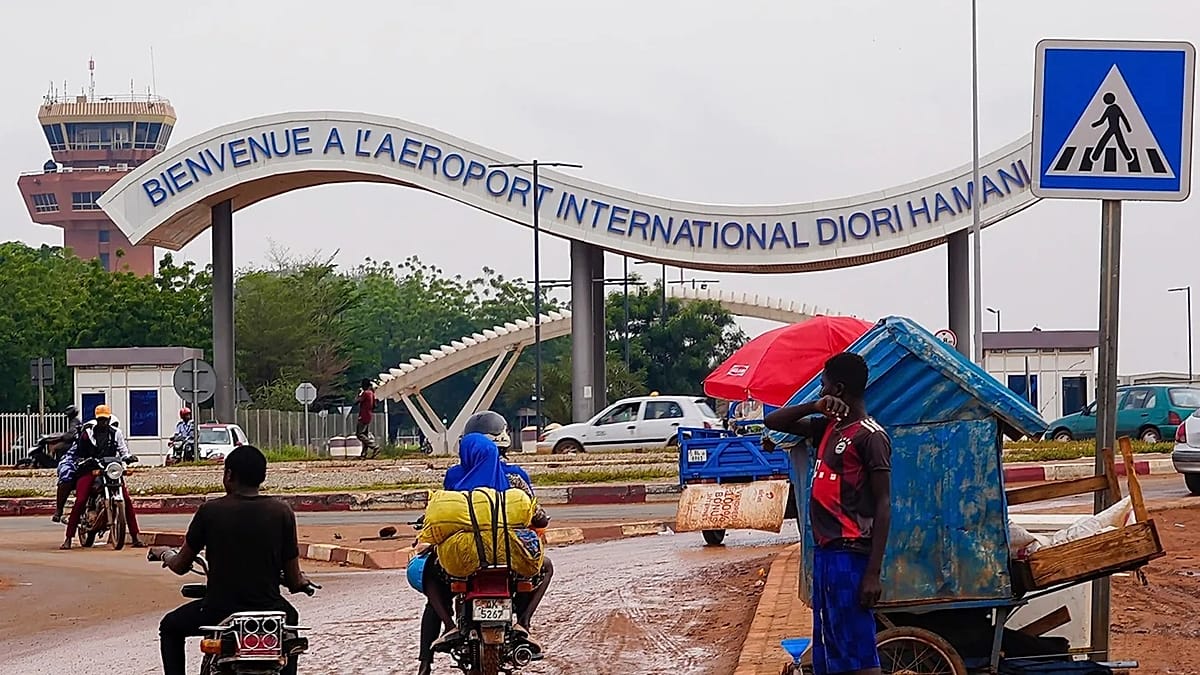
A reported mutiny by Nigerien soldiers in Niamey on 29 August targeted Base 101, the international airport and the presidential palace. Loyalist troops appeared to have secured the palace by 0900 GMT, but mutineers reportedly remained at the airport. The incident shifts the immediate risk picture from persistent jihadist violence alone to an overlapping internal military and jihadist security crisis.
Executive summary
Reporting from Niamey describes heavy gunfire and explosions at Base 101, attacks near the airport and presidency, and an attempted advance by mutinous soldiers from within the armed forces. Nigerien authorities said security forces were mobilising and gradually retaking the targeted sites, while residents and security sources reported continuing mutineer presence at the airport. The incident follows persistent jihadist attacks in Niger and reporting that the Islamic State in the Sahel and JNIM remain active in Burkina Faso and Mali. Niger’s shift away from Western partners and the departure of Niger, Burkina Faso and Mali from ECOWAS constrain the broader security context. The supplied reporting does not establish that the Niamey mutiny was a coordinated jihadist operation.
Change from previous assessment
Compared with the 28 August brief, this update adds a new reported internal military attack in Niamey on 29 August 2026 and raises the immediate risk in Niger from primarily jihadist pressure to a dual internal military and jihadist security crisis. It adds a judgement on the vulnerability of General Abdourahamane Tiani’s government to further military tension and lowers confidence in any assessment that treats the Niger threat as solely jihadist. The prior Nigeria assessment is not revised because this collection provides no corroborated new Nigeria jihadist incident. Initial assessment of the current Niamey mutiny.
Key judgments
- A mutiny by Nigerien soldiers in Niamey is very likely to have targeted Base 101 at the international airport and the presidential palace on 29 August 2026. The Niger government said security forces had mobilised, the defence ministry said forces were retaking targeted sites, and loyalist troops appeared to have secured the palace by 0900 GMT, although security sources still placed mutineers at the airport. This is a reported judgement with medium confidence. Multiple major-media reports corroborate the gunfire and locations, but the collection conflicts over the incident date, the identity of the attackers and the extent of government control. One separate record places a similar airport and presidency attack on 30 January 2026. (Confidence: medium · REPORTED)
- I&W: CONFIRM: Niger’s defence ministry or multiple independent reports state that loyalist forces have retaken Base 101 and the international airport, with no further fighting at the presidential palace. (0-14 days)
- I&W: BREAK: New verified reporting places mutineers in control of, or contesting, the presidential palace or Base 101 after 0900 GMT, or records renewed gunfire at either site. (0-14 days)
- Niger is likely to face renewed internal military tension in Niamey over the next 0-14 days. The reported attempt by soldiers to detain comrades at Base 101, the involvement of troops from Ouallam, Tera and Dosso, and the opening of fire on sensitive sites indicate that the episode involved more than an isolated disturbance. This is an assessed judgement with low confidence because the collection does not establish the size, leadership or wider support of the mutiny. (Confidence: low · ASSESSED)
- I&W: CONFIRM: Nigerien authorities announce arrests, dismissals or deployments involving soldiers from Ouallam, Tera or Dosso, or report renewed clashes at Base 101 or the presidential palace. (0-14 days)
- I&W: BREAK: Niger’s defence ministry confirms that the airport, Base 101 and the presidential palace are under loyalist control and reports no further clashes for 14 consecutive days. (0-14 days)
- Jihadist violence in Niger is likely to continue over the next 1-3 months and remain a concurrent security pressure while Nigerien forces manage the Niamey mutiny. Reporting states that jihadist attacks have persisted despite military rulers’ security pledges, that troops in southwest Niger have sustained heavy casualties against the regional Islamic State affiliate, and that EIS and JNIM remain active in Burkina Faso and Mali. This is an assessed judgement with medium confidence. The reporting is consistent across several major-media claims, but it provides no dated 2026 incident tally sufficient to measure the scale of any increase. (Confidence: medium · ASSESSED)
- I&W: CONFIRM: Nigerien, Burkinabe or Malian authorities, or multiple major-media reports, attribute a new attack on an airport, military base or troop convoy to EIS or JNIM. (0-14 days)
- I&W: BREAK: Credible security reporting records no EIS or JNIM attack in Niger, Burkina Faso or Mali during a sustained 30-day period and reports that the groups have ceased operations in those states. (1-3 months)
- It is unlikely that the 29 August violence in Niamey was part of a coordinated jihadist operation spanning West Africa. The available reporting attributes the attack to mutinous soldiers, including troops from Ouallam, Tera and Dosso, and describes an internal attempt to detain soldiers at Base 101. Separate reporting identifies persistent jihadist attacks in Niger and EIS and JNIM activity in Burkina Faso and Mali, but no supplied claim links those groups to the Niamey mutiny. This is an assessed judgement with low confidence because attribution remains contested and the collection contains no independent operational account of the attackers’ command relationships. (Confidence: low · ASSESSED)
- I&W: CONFIRM: The 14-day watch window produces no EIS or JNIM claim related to Niamey, while Nigerien authorities continue to identify mutinous soldiers as the perpetrators. (0-14 days)
- I&W: BREAK: EIS or JNIM claims responsibility for the Niamey attack with supporting evidence, or matching attacks occur in Niger, Burkina Faso and Mali with an identifiable operational link. (0-14 days)
Outlook & scenarios
Contained mutiny, persistent jihadist pressure (55%)
Loyalist troops consolidate control of the presidential palace, Base 101 and the international airport. The Nigerien government contains the mutiny, but EIS and JNIM continue attacks in Niger, Burkina Faso and Mali while security forces focus on restoring internal control.
Prolonged internal contest in Niamey (25%)
Mutineers retain access to parts of the airport or Base 101, prompting further arrests, road closures and disruptions to official broadcasting. The contest remains centred on Nigerien military factions rather than becoming an overt jihadist operation.
Jihadist exploitation of the security distraction (30%)
EIS or JNIM conducts a new attack in Niger while Nigerien forces remain occupied with the Niamey mutiny. Concurrent attacks in Burkina Faso or Mali would reinforce the assessment that jihadist groups are exploiting pressure across the three states.
Leadership crisis in Niger (10%)
An unlikely but high-impact outcome is a wider challenge to General Abdourahamane Tiani’s rule, driven by further military defections or a sustained loss of control over state institutions in Niamey. This would deepen uncertainty over Niger’s security posture and its existing shift away from Western partners.
Recommendations
- Prioritise 0-14 day collection on control of Base 101, the international airport, the presidential palace and the official television headquarters. Require timestamped imagery, Nigerien government statements and independent local reporting before revising the control assessment.
- Maintain separate attribution tracks for Nigerien mutineers and EIS or JNIM. Do not classify the Niamey attack as jihadist without a credible claim of responsibility or independent evidence linking the attackers to either group.
- Establish a daily watchlist for EIS and JNIM activity in Niger, Burkina Faso and Mali. Flag attacks on airports or military bases, attacks on troop convoys, and evidence of simultaneous operations across more than one state.
- Keep a separate timeline for the 29 August 2026 Niamey mutiny and earlier reported attacks on the airport and military base. Reconcile the conflicting January and August dates before using the incidents to calculate an attack trend.
- Track announcements by Nigerien authorities concerning arrests, dismissals or deployments involving soldiers from Ouallam, Tera and Dosso. These developments would provide the clearest near-term evidence of whether the mutiny has wider military support.
- Assess regional response options against Niger’s withdrawal from ECOWAS and its shift towards Russia. Treat any claim of improved regional security coordination as unconfirmed until supported by specific actions involving Niger, Burkina Faso or Mali.
Confidence & uncertainty
Overall confidence is low. The 29 August Niamey incident is reported by several major-media sources, but many records appear to repeat the same initial reporting. The collection contains unresolved conflicts over the attack date, the identity of the attackers and the extent of government control. Evidence for continued jihadist pressure is credible but mainly contextual, with limited dated 2026 incident data. The distinction between the internal mutiny and jihadist activity therefore remains less certain than the occurrence of gunfire and clashes at the reported sites.
Intelligence gaps
- [EEI 1.1 · UNCOVERED] Intercepted or captured operational messages, orders, or timelines indicating planned attacks, named targets, or attack windows (dates/times) for specific towns, facilities, or convoys. Recommended collection: SIGINT
- [EEI 1.2 · PARTIAL] Observed movement of armed groups, armed convoys, or weapons caches toward or within 20-100 km of named population centers, military bases, border crossing points, or major road/rail routes. Recommended collection: IMINT
- [EEI 1.3 · PARTIAL] Recent local reporting, social‑media posts, or detainee/source statements claiming operational readiness, recruitment of attack teams, or calls for immediate attacks against specific targets. Recommended collection: OSINT
- [EEI 2.1 · UNCOVERED] Estimated numbers of fighters (by group) present in defined districts/regions and recent trends (increasing, stable, decreasing) based on ground reports, detainee statements, or biometric registration. Recommended collection: HUMINT
- [EEI 2.2 · UNCOVERED] Identification and geolocation of training camps, safe havens, or arms depots, including imagery of training activity, firing ranges, or stockpiled weapons and explosives. Recommended collection: IMINT
- [EEI 2.3 · UNCOVERED] Seizures, battlefield recoveries, or credible reports describing types and quantities of weapons and munitions in use (e.g., RPGs, mortars, MANPADS, vehicle‑borne IED components) and recent changes in lethality. Recommended collection: LAW_ENFORCEMENT
- [EEI 2.4 · UNCOVERED] Reports of foreign fighter arrivals/departures, external trainers or advisors present, or documented external technical assistance (IED construction, communications encryption) to named groups. Recommended collection: SIGINT
- [EEI 3.1 · UNCOVERED] Documented instances and amounts of extortion/taxation on towns, markets, transporters, or humanitarian agencies, including receipts, lists of taxed goods, and affected road segments. Recommended collection: HUMINT
- [EEI 3.2 · UNCOVERED] Seizures or interdictions showing volumes and origins/destinations of trafficked commodities used for revenue (gold, drugs, charcoal, timber), and intercepted communications detailing smuggling routes or buyers. Recommended collection: LAW_ENFORCEMENT
- [EEI 3.3 · UNCOVERED] Financial intelligence on suspicious cross‑border transfers, known money‑courier movements, or identified donor networks linked to named groups, including remittance patterns and intermediary accounts. Recommended collection: FININT
- [EEI 4.2 · UNCOVERED] Evidence of improved or degraded cross‑border security cooperation: joint patrols, information‑sharing agreements, troop movements across borders, or closing/opening of border crossings. Recommended collection: HUMINT
- [EEI 4.3 · UNCOVERED] Humanitarian indicators: numbers of newly displaced persons by location, reported access denials to aid organizations, closures of clinics/schools, and routes experiencing mass civilian flight. Recommended collection: UN/HUMANITARIAN
- [EEI 4.4 · UNCOVERED] Documented incidents of security‑force abuses or communal reprisals (dates, locations, victims), and reports of local grievances exploited by jihadist recruiters. Recommended collection: LAW_ENFORCEMENT
Cited sources
[1] devdiscourse.com · Mutinous soldiers attack airport, presidency in Niger capital (B) · sha256:def157585c55 [2] swissinfo.ch · المجلس العسكري في نيامي يعلن “استعادة السيطرة” على الوضع بعد هجوم متمردين (A) · sha256:17e9591c867b [3] devdiscourse.com · Mutinous soldiers attack airport, presidency in Niger capital, sources say (B) · sha256:8eec152841e2 [4] Euronews · إطلاق نار كثيف في نيامي واشتباكات قرب القصر الرئاسي (A) · sha256:def8a775df26 [5] jpost.com · Mutinous soldiers attack airport, presidency in Niger capital, sources say (B) · sha256:b2193badcc7d [6] africanews.com · Niger's military 'gradually regaining control' after mutiny at military base (A) · sha256:66c254364250 [7] AFP · Gunfire heard near military base in Niger capital: residents to AFP (A) · sha256:4af664fe555e [8] africanews.com · Reports of gunfire near military base in Niger's capital (B) · sha256:5a76129dc42f
Source content hashes were computed at collection time; the cited text is preserved unmodified for the life of this product.
TLP:CLEAR