TLP:CLEAR · Disclosure is not limited.
Nigeria-Centred Jihadist Violence Intensifies
Time window: Last 1 day · Audience: General analyst · Type: Situation report · DTG: 2026-08-25 15:37Z · Overall confidence: LOW
BLUF
Nigeria is the centre of the latest reported jihadist-linked violence, with attacks and mass abductions reported across Niger State, Borno, Adamawa, Kwara and Plateau between 17 and 23 August. A near-term increase in violence in Nigeria is likely, but conflicting abduction figures, disputed attribution and the absence of evidence linking the incidents to a wider regional campaign keep overall confidence low.
Executive summary
Recent reporting indicates a concentrated deterioration in Nigeria rather than a confirmed West Africa-wide surge. Suspected Boko Haram fighters reportedly killed eight residents in Gaya-Dlang, Adamawa State, on 17 August; Islamist jihadists reportedly abducted 60 to 80 people in Borgu County, Niger State, on 22 August; gunmen reportedly abducted as many as 600 worshippers in Dekera village on 19 August; and suspected ISWAP terrorists attacked Juhuhi Village, Borno State, on 23 August. Nigerian forces have repelled attacks, reported at least 47 militants killed and rescued captives, while preparing a clearance and search-and-rescue operation in Kainji Lake National Park. The scale of the abductions and the identity of the perpetrators remain unresolved.
Change from previous assessment
Since the 24 August prior brief, new reporting adds a more current sequence of attacks and abductions from 17 to 23 August, including the Dekera mosque abduction, the Borgu County abductions, the Gaya-Dlang killings and the Juhuhi attack. The assessment is now more confident that violence is increasing in several Nigerian states, although confidence in a region-wide West Africa surge remains low and unchanged. The current brief adds a specific judgement on the unresolved scale of the Dekera abduction and retains the prior assessment that available evidence does not establish a coordinated regional campaign.
Key judgments
- A near-term increase in jihadist-linked violence is likely to remain concentrated in Nigeria, especially Niger State, Borno and Adamawa, with related abductions reported in Kwara and disputed casualties in Plateau, rather than constitute a confirmed West Africa-wide surge. Reporting records suspected Boko Haram fighters killing eight residents around Gaya-Dlang in Adamawa on 17 August, Islamist jihadists abducting 60 to 80 people in Borgu County on 22 August, an abduction of as many as 600 worshippers in Dekera on 19 August, and a suspected ISWAP attack in Juhuhi on 23 August. The 60 to 80 and up-to-600 figures, as well as the attribution of the abductors, conflict. Confidence is therefore medium rather than high. (Confidence: medium · ASSESSED)
- I&W: Confirm: within 0-14 days, Nigerian authorities or independent major-media reporting document new attacks or abductions in at least two of Niger State, Borno, Adamawa, Kwara or Plateau, with a consistent casualty count or named perpetrator. (0-14 days)
- I&W: Break: within 1-3 months, authorities establish that the Dekera, Borgu, Juhuhi and Gaya-Dlang incidents were isolated or misattributed and no comparable incident is reported elsewhere in Nigeria. (1-3 months)
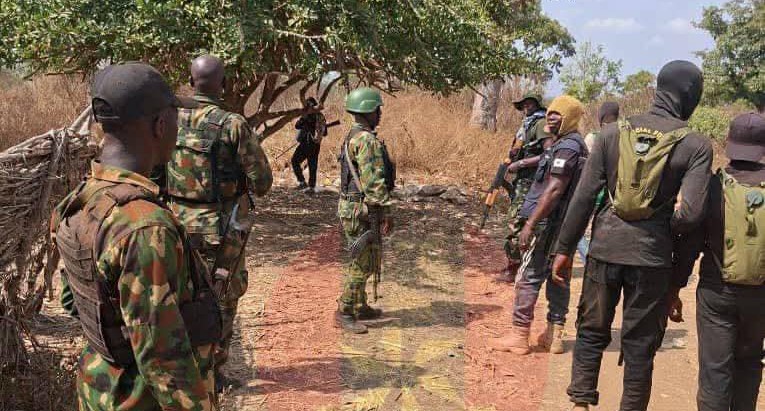
- Nigerian security forces are likely to disrupt individual attacks in the next 1-3 months, but are unlikely to deliver a verified nationwide reduction in violence. They repelled attacks in Dekara on 21 August and Juhuhi on 23 August, while the Nigerian military reported at least 47 militants killed, including 38 in Borno airstrikes, eight in the Timbuktu Triangle and one suspect during a rescue in Benue. The Nigerian Army moved Operation Enduring Peace's tactical headquarters from Jos to Mangu on 18 August, Operation FANSAN YAMMA rescued 14 people from Madaci Forest in Katsina on 18 August, and security authorities prepared a clearance and search-and-rescue operation in Kainji Lake National Park. Confidence is medium because the reporting establishes active operations, not sustained effect, and much of the operational detail comes from local-media reporting. (Confidence: medium · ASSESSED)
- I&W: Confirm: within 0-14 days, Nigerian authorities announce the start of the Kainji Lake National Park operation and report specific recoveries, arrests or cleared areas. (0-14 days)
- I&W: Break: within 1-3 months, new mass abductions continue in the named states despite Nigerian military operations, with no reported reduction in attack frequency or geographic spread. (1-3 months)
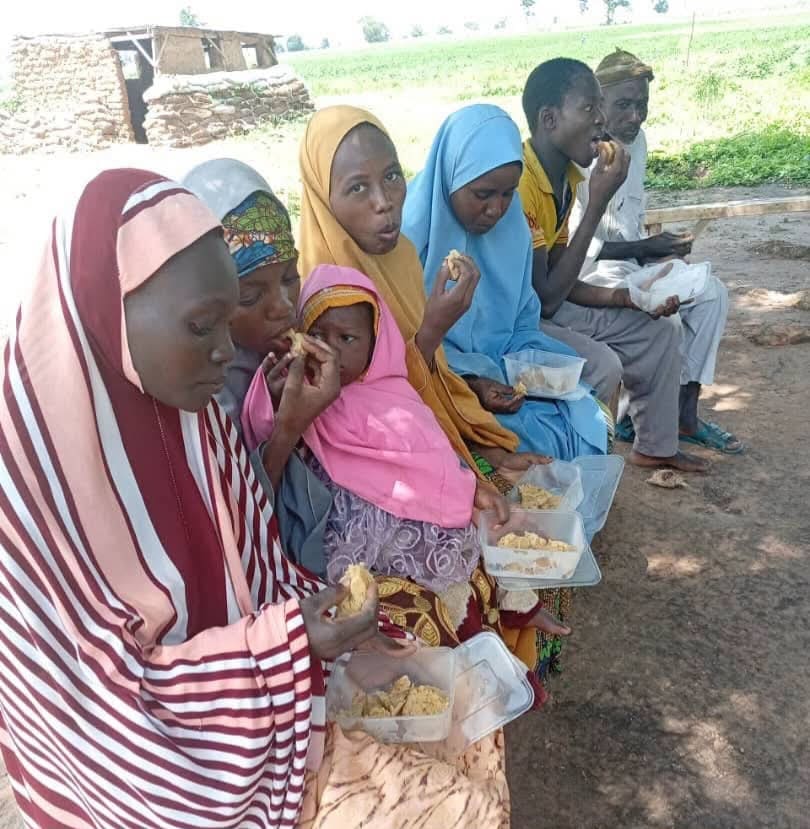
- The Dekera mass abduction is likely to remain the principal immediate humanitarian risk in the current reporting, but its scale and attribution are unlikely to be settled without further corroboration. Major-media reporting says gunmen abducted as many as 600 worshippers during Friday prayers on 19 August; residents described simultaneous raids, the Niger State information commissioner said a rescue operation was under way, and Amnesty International urged the release of the worshippers. Separate reporting attributes a 60 to 80-person abduction in Borgu County to Islamist jihadists, while police confirmed an abduction in Kwara State involving unknown abductors. The collection does not reconcile the conflicting figures or attributions. Confidence is low. (Confidence: low · ASSESSED)
- I&W: Confirm: within 0-14 days, Nigerian authorities publish an enumerated list of the Dekera victims, release verified footage of the abducted worshippers or report a rescue operation tied specifically to the mosque attack. (0-14 days)
- I&W: Break: within 0-14 days, Nigerian authorities revise the Dekera figure to a substantially lower number, establish that the 60 to 80-person Borgu incident was separate, or deny that worshippers were abducted in Dekera. (0-14 days)
- A coordinated jihadist offensive spanning West Africa is unlikely in the next 1-3 months. Current reporting identifies incidents in Adamawa, Niger State, Borno, Kwara and Plateau, but does not identify a common command, cross-border movement or common operational plan. It names suspected Boko Haram fighters in Adamawa and suspected ISWAP terrorists in Borno, while other attackers remain unidentified. Confidence is low because this is an absence-of-evidence judgement based on a collection dominated by reporting on Nigeria, not proof that attacks elsewhere are not occurring. (Confidence: low · ASSESSED)
- I&W: Confirm: within 1-3 months, Boko Haram or ISWAP claims attacks in two or more West African states and the claims contain consistent operational or messaging links. (1-3 months)
- I&W: Break: within 1-3 months, further reporting remains confined to Nigeria and attributes incidents to separate actors operating in separate Nigerian locations. (1-3 months)
Outlook & scenarios
Persistent Nigerian attack cycle (55%)
This scenario is likely. Armed groups continue raids and abductions across Niger State, Borno, Adamawa, Kwara and Plateau. Nigerian forces conduct local repulses, rescues and targeted operations, but the Kainji Lake National Park operation does not produce a verified nationwide reduction in violence.
Localised security containment (30%)
This scenario is unlikely. The Nigerian Army sustains pressure through Operation Enduring Peace, Operation FANSAN YAMMA and the Kainji Lake operation. Attacks decline in the named locations, although isolated abductions and attacks continue.
Cross-border jihadist diffusion (15%)
This scenario is very unlikely but high impact. Suspected Boko Haram and ISWAP attacks become linked through public claims, movement or operational planning involving Nigeria and a second West African state. This would invalidate the current Nigeria-centred assessment and indicate a wider regional campaign.
Recommendations
- Prioritise a 24-72 hour reconciliation of the Dekera and Dekara place names, the up-to-600 and 60 to 80 abduction figures, and responsibility attribution. Treat the up-to-600 figure as unresolved for analytic baselines until Nigerian authorities or independent reporting provide a reconciled count.
- Maintain daily collection on Dekera, Borgu County, Juhuhi Village, Gaya-Dlang, Ifelodun Local Council Area and Plateau State. Record attack dates, casualty totals, abduction totals, perpetrator claims and any evidence of movement between locations.
- Track Nigerian security activity at Mangu, Madaci Forest, Juhuhi and Kainji Lake National Park. Record whether the Kainji operation begins, the units involved, recoveries, arrests and any subsequent attacks in the same areas.
- Do not label the situation a West Africa-wide jihadist surge unless reporting identifies a named group operating in at least two West African states and provides evidence of a common operational or messaging link.
- Prioritise humanitarian reporting on the Dekera worshippers, the 14 people rescued from Madaci Forest and the 10 women and 24 children who surrendered from the Dukumba enclave. Separate confirmed rescues from official intentions and media estimates.
Confidence & uncertainty
Confidence is low because the strongest current reporting is concentrated on Nigeria, while much of the attack and military-operation detail comes from local media. Major-media reporting supports the Dekera abduction and the Dekara response, but the collection contains conflicting figures of up to 600 and 60 to 80 abductees, inconsistent attribution between Islamist jihadists and unknown abductors, and no independent evidence of a coordinated campaign beyond Nigeria. The effectiveness of Nigerian operations also remains unverified.
Intelligence gaps
- [EEI 1.1 · UNCOVERED] Intercepted or captured operational messages, orders, or timelines indicating planned attacks, named targets, or attack windows (dates/times) for specific towns, facilities, or convoys. Recommended collection: SIGINT
- [EEI 1.2 · UNCOVERED] Observed movement of armed groups, armed convoys, or weapons caches toward or within 20-100 km of named population centers, military bases, border crossing points, or major road/rail routes. Recommended collection: IMINT
- [EEI 1.3 · PARTIAL] Recent local reporting, social‑media posts, or detainee/source statements claiming operational readiness, recruitment of attack teams, or calls for immediate attacks against specific targets. Recommended collection: OSINT
- [EEI 2.1 · UNCOVERED] Estimated numbers of fighters (by group) present in defined districts/regions and recent trends (increasing, stable, decreasing) based on ground reports, detainee statements, or biometric registration. Recommended collection: HUMINT
- [EEI 2.2 · UNCOVERED] Identification and geolocation of training camps, safe havens, or arms depots, including imagery of training activity, firing ranges, or stockpiled weapons and explosives. Recommended collection: IMINT
- [EEI 2.3 · PARTIAL] Seizures, battlefield recoveries, or credible reports describing types and quantities of weapons and munitions in use (e.g., RPGs, mortars, MANPADS, vehicle‑borne IED components) and recent changes in lethality. Recommended collection: LAW_ENFORCEMENT
- [EEI 2.4 · UNCOVERED] Reports of foreign fighter arrivals/departures, external trainers or advisors present, or documented external technical assistance (IED construction, communications encryption) to named groups. Recommended collection: SIGINT
- [EEI 3.1 · UNCOVERED] Documented instances and amounts of extortion/taxation on towns, markets, transporters, or humanitarian agencies, including receipts, lists of taxed goods, and affected road segments. Recommended collection: HUMINT
- [EEI 3.2 · UNCOVERED] Seizures or interdictions showing volumes and origins/destinations of trafficked commodities used for revenue (gold, drugs, charcoal, timber), and intercepted communications detailing smuggling routes or buyers. Recommended collection: LAW_ENFORCEMENT
- [EEI 3.3 · UNCOVERED] Financial intelligence on suspicious cross‑border transfers, known money‑courier movements, or identified donor networks linked to named groups, including remittance patterns and intermediary accounts. Recommended collection: FININT
- [EEI 4.1 · PARTIAL] Changes in government/security force posture: troop deployments/withdrawals by unit and location, declared states of emergency, curfews, checkpoints established or removed, and equipment transfers/arrivals. Recommended collection: OSINT
- [EEI 4.2 · UNCOVERED] Evidence of improved or degraded cross‑border security cooperation: joint patrols, information‑sharing agreements, troop movements across borders, or closing/opening of border crossings. Recommended collection: HUMINT
- [EEI 4.3 · PARTIAL] Humanitarian indicators: numbers of newly displaced persons by location, reported access denials to aid organizations, closures of clinics/schools, and routes experiencing mass civilian flight. Recommended collection: UN/HUMANITARIAN
- [EEI 4.4 · UNCOVERED] Documented incidents of security‑force abuses or communal reprisals (dates, locations, victims), and reports of local grievances exploited by jihadist recruiters. Recommended collection: LAW_ENFORCEMENT
Cited sources
[1] Truth Nigeria · THE WEEK: Rural Villages, Mosques, Palaces Raided as Military Battles Rising Militant Attacks - Truth Nigeria (D) · sha256:57d929cca797 [2] Al Jazeera · Kidnappers release video showing hundreds abducted from Nigerian mosque (A) · sha256:2f58335c95a3 [3] PRNigeria · Military Foils Terrorist Attacks in Niger, Borno, Launch Clearance Operations - PRNigeria News (A) · sha256:1b4d24a12393
Source content hashes were computed at collection time; the cited text is preserved unmodified for the life of this product.
TLP:CLEAR