TLP:CLEAR · Disclosure is not limited.
Persian Gulf: Blockade Enforcement and Maritime Incidents Raise Tensions
Time window: Last 1 day · Audience: General analyst · Type: Situation report · DTG: 2026-11-28 14:40Z · Overall confidence: HIGH
BLUF
US forces disabled the Palau-flagged M/V Pacific Archer in the Gulf of Oman on 26 November, while the IRGC says it fired a warning shot at a US F-16 near Hengam Island the following day; the latter report remains unconfirmed by the US. Attribution of the Kuwait drone deaths and recent vessel attacks remains unresolved. A further direct US-Iran military exchange within 14 days remains roughly even chance, with low confidence.
Executive summary
CENTCOM says US forces used precision munitions to disable the M/V Pacific Archer after it left Bandar Abbas and ignored blockade warnings; its civilian crew was unharmed. Maritime-security reporting describes at least eight vessels struck by unidentified projectiles in the Strait of Hormuz over ten days, while Iranian accounts report six mine-hit tankers and two tankers catching fire near Oman on 26 November. The accounts do not establish a single incident count or cause. Two Italian Rheinmetall technicians died in a drone incident at a Kuwait military site on 26 November. Italy's foreign minister says shrapnel from an intercepted drone caused their deaths; Iran denies responsibility. The US is enforcing a naval blockade, and IRGC Aerospace Force commander Majid Mousavi has vowed to break it. Vortexa data show commercial transits continued through 19 November, although transit and insurance costs are reported near wartime highs.
Change from previous assessment
Since the 27 November brief, reporting provides more detail on the Pacific Archer: CENTCOM says US aircraft disabled it with precision munitions after it left Bandar Abbas, and says its crew was unharmed. The IRGC's reported F-16 warning shot is now dated to 27 November, but remains unconfirmed by the US. Reporting also presents a wider and unreconciled set of vessel-attack figures. The Kuwait deaths remain confirmed in reporting, while attribution remains unresolved and Tajani's account specifies shrapnel from an intercepted drone. The prior 14-day forecast has not matured, and no settled outcome is available to score. Risk drivers have increased, but the direct-exchange likelihood remains roughly even chance because the F-16 account is unconfirmed.
Key judgments
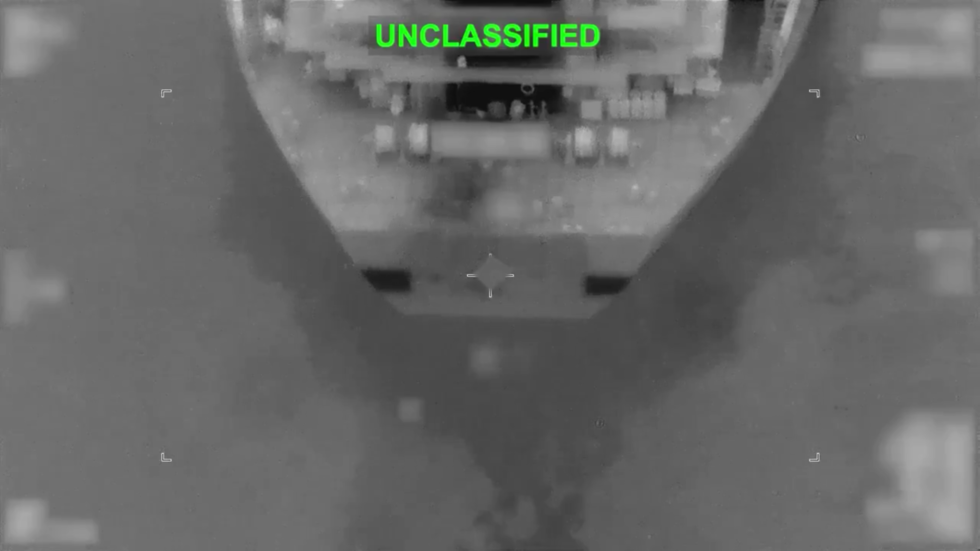
- US forces disabled the Palau-flagged M/V Pacific Archer in the Gulf of Oman on 26 November, striking its stern with precision munitions and disabling its propulsion. CENTCOM says the vessel had departed Bandar Abbas and ignored multiple warnings; the civilian crew was unharmed. Multiple media and maritime-trade reports carry the account, but the operational details derive principally from CENTCOM. Confidence is medium. (Confidence: medium · REPORTED)
- I&W: Confirmation: CENTCOM releases additional operational details, including the vessel's position or warning timeline. Horizon: 0-14 days. (0-14 days)
- I&W: Break: a later CENTCOM statement or independent vessel record shows the Pacific Archer was not disabled by US forces on 26 November. Horizon: 0-14 days. (0-14 days)
- Responsibility for the deaths of two Italian Rheinmetall technicians in Kuwait remains unresolved. Antonio Saccoccio, 65, and Emanuele Lo Russo, 36, died after a drone incident at a military site on 26 November. Italy's foreign minister, Antonio Tajani, says shrapnel from an intercepted drone struck the Skyguard air-defence system's detection antennae; Iranian officials deny responsibility. The available reporting does not identify the drone's operator or provide forensic findings. Confidence is medium because the deaths are reported by major media, but attribution remains disputed. (Confidence: medium · ASSESSED)
- I&W: Break: Kuwait or Italy publishes forensic findings that identify the drone operator. Horizon: 0-30 days. (0-30 days)
- I&W: Confirmation: Kuwait and Italy publish no attribution findings, or state that the operator remains unidentified. Horizon: 0-14 days. (0-14 days)
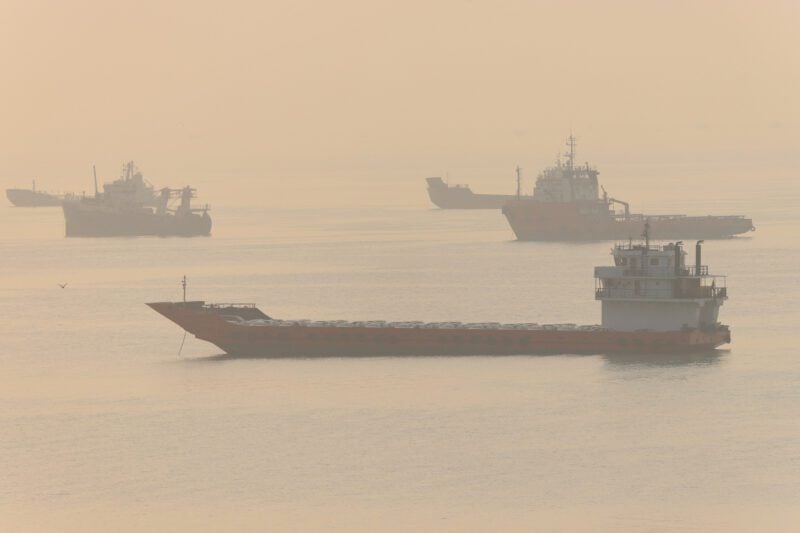
- Recent vessel-attack reports in the Strait of Hormuz and off Oman cannot yet be reconciled. Maritime-security reporting counts at least eight vessels struck by unidentified projectiles over ten days; Iranian reporting says six tankers hit naval mines, and the IRGC says two tankers caught fire near the Omani coast on 26 November. The reports differ in count and mechanism and do not establish a common incident set or responsible actor. Confidence is low because the mine accounts rely on Iranian statements without independent verification. (Confidence: low · REPORTED)
- I&W: Confirmation: UKMTO or Omani authorities publish named vessels, incident dates and damage assessments that clarify the count and cause. Horizon: 0-14 days. (0-14 days)
- I&W: Break: official incident notices establish that the reported tanker fires were unrelated to mine or projectile strikes. Horizon: 0-14 days. (0-14 days)
- The United States is enforcing a naval blockade of Iranian ports and the Strait of Hormuz approaches, and IRGC Aerospace Force commander Majid Mousavi has publicly vowed to break it. The Pacific Archer interdiction is a concrete enforcement action. Claims that Iran closed the Strait and that a summer memorandum gave Tehran control leave the broader question of control contested. Confidence is medium: enforcement activity and Iranian statements are directly reported, but accounts of authority over the waterway conflict. (Confidence: medium · ASSESSED)
- I&W: Confirmation: CENTCOM reports another vessel disabled or redirected after attempting to pass the blockade. Horizon: 0-14 days. (0-14 days)
- I&W: Break: the US announces that it has suspended blockade enforcement, or a vessel departing an Iranian port completes a documented passage without interception. Horizon: 0-14 days. (0-14 days)
- Commercial traffic through the Strait of Hormuz continued in November despite attacks and elevated costs. Vortexa's seven-day moving average for ships carrying crude, fuels and LNG stayed above 26 through 19 November; October counts were below 25 on at least two-thirds of days. Transit and insurance costs are reported near wartime highs, and Vortexa cautions that interference, spoofing and dark transits can affect its tally. Confidence is medium because the data indicate continued traffic but have stated monitoring limits. (Confidence: medium · REPORTED)
- I&W: Confirmation: Vortexa's next published seven-day average remains above 26 crude, fuel and LNG vessels per day. Horizon: 0-14 days. (0-14 days)
- I&W: Break: Vortexa reports fewer than 20 such vessels per day for seven consecutive days. Horizon: 0-14 days. (0-14 days)
- A further direct US-Iran military exchange within 14 days remains roughly even chance. The IRGC Air Force says it fired a warning shot at a US F-16 near Hengam Island on 27 November, and Mousavi has warned of Iranian action in the air and at sea. The US has not commented on the F-16 report. The Pacific Archer was a commercial vessel, so its disabling does not itself establish a direct exchange with Iranian forces. Confidence is low because the strongest recent signal of a close encounter rests on an unconfirmed Iranian account. (Confidence: low · ASSESSED)
- I&W: Confirmation: the US confirms the Hengam Island F-16 incident, or reports a direct exchange between US and Iranian forces. Horizon: 0-14 days. (0-14 days)
- I&W: Break: the US denies the F-16 account and no direct US-Iran military incident is reported during the 14-day period. Horizon: 0-14 days. (0-14 days)
Outlook & scenarios
Blockade enforcement continues without a direct exchange (45%)
Over the next 14 days, US forces continue warning, redirecting or disabling vessels attempting to breach the blockade. Iran maintains its public threats but does not engage US forces directly. Commercial traffic continues, with elevated costs and disputed reports of vessel damage.
Limited direct US-Iran exchange (45%)
Over the next 14 days, an encounter near Hengam Island or a new Iranian attempt to challenge the blockade produces direct fire between Iranian and US forces. The exchange remains limited, but the parties issue further military warnings and raise maritime risk.
Major maritime disruption without a sustained direct exchange (10%)
A mine or projectile incident causes confirmed damage or casualties among commercial vessels in the Strait of Hormuz or off Oman. Shipping operators reduce transits sharply, while responsibility remains disputed and neither side enters a sustained direct exchange.
Recommendations
- Keep separate reporting lines for confirmed events, official claims and assessed attribution. Do not assign responsibility for the Kuwait drone incident without published forensic findings.
- For the next update, reconcile vessel reports against UKMTO and Omani notices, recording vessel names, incident dates, locations, damage and casualties before combining counts.
- Track CENTCOM statements and vessel records for any further blockade interdictions, and record the warning timeline, vessel origin and location for each incident.
- Monitor for US confirmation or denial of the reported F-16 warning shot near Hengam Island, and treat it as unconfirmed until corroborated.
- Review Vortexa transit figures alongside its stated monitoring caveats, and track insurance and transit-cost reporting as indicators of commercial disruption.
Confidence & uncertainty
Overall confidence is high in the broad situation picture because major-media and specialist maritime reporting cover the Pacific Archer interdiction and the Kuwait fatalities, while Vortexa transit data and official energy-price data provide additional reference points. This confidence does not extend to attribution of the Kuwait attack, the mine claims or the reported F-16 incident. Those remain contested, incompletely verified or reliant on a single party's account.
Alternative analysis (red cell)
The available evidence does not support assigning a roughly even chance to another direct US-Iran military exchange. It shows one unconfirmed Iranian account of a warning shot and rhetorical threats, but no independently verified encounter or corroborated operational preparation. A lower probability, with substantial uncertainty, is more defensible on the cited record.
Intelligence gaps
- [EEI 1.1 · UNCOVERED] Concentrations or unusual movements of IRGC-Navy fast attack craft, small boat swarms, or escort vessels within 200 km of US/allied ships, including approach distances and formation changes. Recommended collection: maritime/AIS
- [EEI 1.2 · UNCOVERED] Detected pre-launch activity at coastal missile or rocket batteries (vehicle dispersal, fuel/warhead handling, radars powering up, transport erector launchers moving to firing positions). Recommended collection: imagery/signals
- [EEI 1.3 · UNCOVERED] Increased launch/arming/positioning of armed UAVs (MALE/loitering munitions) or tactical aircraft at Iranian coastal bases with sortie generation rates and munitions loadouts. Recommended collection: air/ADS-B/imagery
- [EEI 1.4 · UNCOVERED] Command-and-control indications of attack orders or elevated rules-of-engagement from IRGC/General Staff (intercepted communications, internal order messages, force-wide alert messages). Recommended collection: signals/human
- [EEI 2.2 · UNCOVERED] Issuance of formal orders, mobilization directives, travel restrictions, or official internal communications within IRGC/Armed Forces indicating escalation posture or stand-down. Recommended collection: human/diplomatic
- [EEI 2.3 · UNCOVERED] Directives, logistics movements, or communications from Iranian commanders to regional proxy militias (Houthis, Iraqi Shia militias, Lebanese groups) that change their threat posture or task them with specific operations. Recommended collection: signals/human
- [EEI 2.4 · PARTIAL] Changes in Iran's diplomatic exchanges with key states (offers of negotiation, warnings, or coordination with Russia/China) or requests for deconfliction with maritime/naval actors. Recommended collection: diplomatic
- [EEI 3.4 · UNCOVERED] Movements or posture changes of regional state navies/air forces (Saudi, UAE, Kuwait, Bahrain, UK) such as task group departures, airbase dispersals, or announced maritime patrols near choke points. Recommended collection: open-source/imagery
Red cell review: PARTIAL DISSENT
TLP:CLEAR