TLP:CLEAR · Disclosure is not limited.
Persian Gulf: Blockade Holds as Shipping Risk and Strike Signals Persist
Time window: Last 1 day · Audience: General analyst · Type: Situation report · DTG: 2026-11-12 06:55Z · Overall confidence: MEDIUM
BLUF
Commercial shipping in the Strait of Hormuz remains the immediate operational concern: IMO reporting records more than 130 incidents and at least 25 seafarer deaths, while a Reuters-verified tanker fire off Oman and conflicting IRGC Navy accounts point to continued danger but leave attribution unresolved. US forces say they are enforcing a blockade of Iranian ports while keeping the Strait open; reported direct-talk planning has not produced an agreed meeting. Iranian threats against US bases and reported Israeli preparations keep renewed strikes on the risk agenda, but current reporting does not establish an imminent attack decision.
Executive summary
The maritime threat remains acute. The Washington Institute for Near East Policy counted 37 ship attacks in October, and IMO reporting cited 133 incidents by 10 November in one account and 130 in another, with at least 25 seafarer deaths. Reuters verified footage and satellite imagery of the Navig8 tanker burning near Oman on 8 November; IRGC Navy accounts of three tankers being hit or catching fire give different dates. US Central Command says US forces are keeping the Strait open to commercial shipping while enforcing the blockade, and US forces reported disabling a St Kitts-flagged cargo vessel after it visited an Iranian port. Washington has reportedly considered direct talks led by JD Vance, but no meeting is agreed and Iranian officials deny that negotiations are under way. Iran has threatened US bases from West Asia to Europe if attacked, while Israeli media report preparations for a possible attack on Iran.
Change from previous assessment
Since the 11 November brief, reporting adds the Washington Institute for Near East Policy's October count of 37 ship attacks, updated IMO-related figures of 130 or 133 incidents and 25 seafarer deaths, and the Reuters-verified Navig8 tanker fire near Oman. The assessment that the blockade will continue is reinforced by US Central Command's statement that it is enforcing the blockade while keeping the Strait open, alongside a reported vessel interdiction. The prior judgement that a near-term agreement was unlikely is narrowed: reports now describe early-stage Vance talks and continuing intermediary contact, but no meeting is agreed and Iranian officials deny negotiations. This brief adds a low-confidence judgement on Israeli preparations and Iran's conditional threats against US bases.
Key judgments
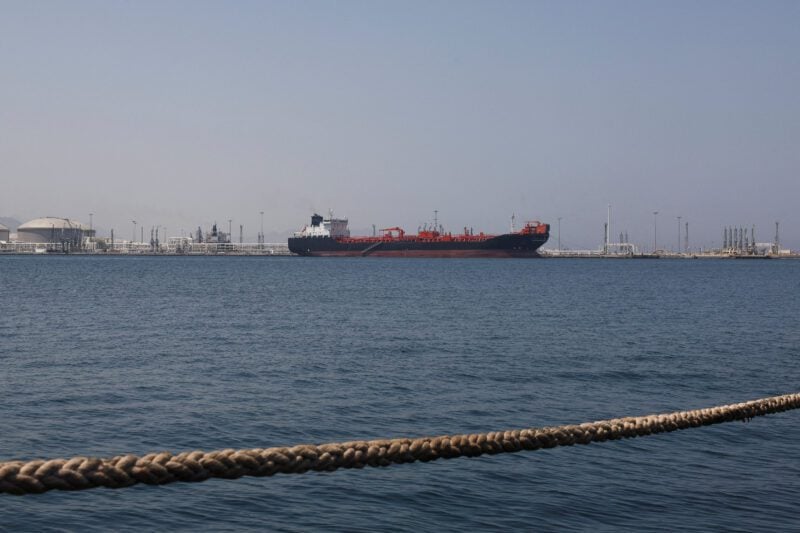
- Commercial shipping in the Strait of Hormuz and the Omani approaches is very likely to remain at high risk over the next 14 days. Reported: the Washington Institute for Near East Policy counted 37 ship attacks in October, its highest monthly total since the war began. IMO-related reporting gives 133 incidents confirmed as of 10 November in one account and 130 incidents in another, with at least 25 seafarer deaths. Reuters verified footage and satellite imagery of the Navig8 tanker on fire near Oman on 8 November; IRGC Navy reports that three tankers were hit or caught fire place that reported event on either 8 or 10 November. Assessment: the incident volume and verified tanker damage support continued danger, while the IRGC-reported event date and attacker attribution remain unresolved. (Confidence: medium · ASSESSED)
- I&W: UKMTO or the IMO records another named tanker strike or seafarer casualty in the Strait of Hormuz or the Omani approaches. (0-14 days)
- I&W: The IMO confirms no new incidents for 14 days and reports commercial vessels transiting the IMO-designated traffic separation scheme without attack. (0-14 days)
- US forces are very likely to continue enforcing the naval blockade of Iranian ports over the next 14 days while maintaining their stated effort to keep the Strait open to commercial shipping. Reported: US forces said they continued enforcing the blockade, and US Central Command said forces were working around the clock to keep the Strait open. US Central Command also reported that a US military aircraft disabled a St Kitts-flagged cargo vessel after it visited an Iranian port and tried to leave regional waters on 7 November. Assessment: the stated posture and reported interdiction support continuity, but the available reporting does not establish the blockade's day-to-day enforcement coverage. (Confidence: medium · ASSESSED)
- I&W: US Central Command reports another vessel interdiction or disablement linked to travel from an Iranian port. (0-14 days)
- I&W: US Central Command announces that blockade enforcement has been suspended or ended. (0-14 days)
- A direct meeting between JD Vance and Mohsen Rezaei within the next 14 days is unlikely, while indirect contacts are likely to continue. Reported: US media say Donald Trump authorised or did not oppose Vance's efforts to resume talks, and US officials describe discussions as being at an early stage. A wire-service report says no meeting has been agreed but discussions continue through intermediaries; Abbas Araghchi says no Vance-Rezaei meeting is planned, and Rezaei says no negotiations are under way. Tehran has also rejected a US proposal to transfer its 60 per cent enriched uranium stockpile abroad, while Rezaei says Iran will not allow enriched material to leave the country. Assessment: reported indirect contact is not evidence of an agreed meeting, and the competing public positions and disagreement over uranium terms point to a substantial negotiating gap. (Confidence: medium · ASSESSED)
- I&W: A named intermediary confirms a further US-Iran exchange while no date or participants are announced for a direct meeting. (0-14 days)
- I&W: The US and Iran announce a date, participants and venue for a Vance-Rezaei meeting. (0-14 days)
- Israel is likely to maintain heightened preparations for an attack on Iran over the next 14 days, but reporting does not establish an Israeli decision to strike. Israeli media reported that the security cabinet ordered increased preparations; accounts place the order on either 11 or 12 November. Gadi Eisenkot urged Benjamin Netanyahu not to deploy the military without a direct and immediate threat. Mohsen Rezaei has threatened US bases from West Asia to Europe if the US attacks Iran again. Assessment: the preparation order is thinly corroborated and its date is inconsistent; Rezaei's conditional threat is evidence of public signalling, not evidence that an attack is planned. (Confidence: low · ASSESSED)
- I&W: The Israeli security cabinet or IDF publicly confirms an operation order against Iran. (0-14 days)
- I&W: The Israeli security cabinet or IDF announces that preparations have been stood down and no strike order remains in effect. (0-14 days)
Outlook & scenarios
Blockade and indirect contact continue (45%)
US forces maintain the blockade and their stated effort to keep the Strait open. Intermediaries relay proposals, but no Vance-Rezaei meeting is agreed. Iran retains its public position that enriched nuclear material will remain in the country.
Maritime attrition persists (35%)
Tanker incidents and unsafe transit conditions continue to expose commercial crews to harm. IMO and UKMTO reporting adds to the incident record, while disputes over the dates and attribution of IRGC-reported tanker incidents remain unresolved.
A strike triggers retaliation (15%)
Israeli preparations lead to an attack on Iran, or the Qatar-mediated diplomatic track fails and the US resumes strikes. Iran follows through on its stated threat to target US bases from West Asia to Europe, raising the risk of further maritime disruption.
Wildcard: submarine cable disruption (5%)
A low-probability, high-impact cable incident disrupts routes in the Gulf of Oman. The warning rests on a thin report of October manoeuvres by IRGC-linked vessels near the Europe India Gateway, 2Africa and Transworld cable routes, alongside a conditional IRGC threat to destroy cables after a US or Israeli strike on Iran.
Recommendations
- Maintain a daily incident register for the Strait of Hormuz and Omani approaches. Record vessel name, position, date, reported damage, source and attribution separately; do not merge IRGC Navy accounts with independently verified incidents until dates and vessel identities align.
- Track IMO and UKMTO incident updates alongside US Central Command statements on blockade enforcement and commercial passage. Keep the reported interdiction of the St Kitts-flagged cargo vessel distinct from claims about the blockade's full operating coverage.
- Track direct-talk reporting separately from intermediary contacts. Record any confirmed participants, date and venue, and do not describe a Vance-Rezaei meeting as agreed until the US and Iran confirm those details.
- Treat the Israeli preparation report as a low-confidence warning indicator. Seek independent confirmation from the Israeli security cabinet or IDF before assessing that an attack decision has been made; distinguish Iran's conditional threats from evidence of operational intent.
- Retain the submarine-cable scenario as a low-probability wildcard. Seek independent corroboration of activity near the named Gulf of Oman cable routes before elevating its assessment.
Confidence & uncertainty
Official US statements, Reuters-verified imagery of the Navig8 tanker fire and IMO-related reporting support the core maritime picture. The incident count differs between 130 and 133, and the IRGC Navy's tanker reports give inconsistent dates and lack independent attribution. Reporting on US-Iran contacts is contested by Iranian officials, while the Israeli preparation order rests on thin reporting with a one-day date discrepancy. These corroborated events and unresolved gaps support medium overall confidence.
Intelligence gaps
- [EEI 1.1 · UNCOVERED] Concentrations or unusual movements of IRGC-Navy fast attack craft, small boat swarms, or escort vessels within 200 km of US/allied ships, including approach distances and formation changes. Recommended collection: maritime/AIS
- [EEI 1.2 · UNCOVERED] Detected pre-launch activity at coastal missile or rocket batteries (vehicle dispersal, fuel/warhead handling, radars powering up, transport erector launchers moving to firing positions). Recommended collection: imagery/signals
- [EEI 1.3 · UNCOVERED] Increased launch/arming/positioning of armed UAVs (MALE/loitering munitions) or tactical aircraft at Iranian coastal bases with sortie generation rates and munitions loadouts. Recommended collection: air/ADS-B/imagery
- [EEI 1.4 · UNCOVERED] Command-and-control indications of attack orders or elevated rules-of-engagement from IRGC/General Staff (intercepted communications, internal order messages, force-wide alert messages). Recommended collection: signals/human
- [EEI 2.2 · UNCOVERED] Issuance of formal orders, mobilization directives, travel restrictions, or official internal communications within IRGC/Armed Forces indicating escalation posture or stand-down. Recommended collection: human/diplomatic
- [EEI 2.3 · PARTIAL] Directives, logistics movements, or communications from Iranian commanders to regional proxy militias (Houthis, Iraqi Shia militias, Lebanese groups) that change their threat posture or task them with specific operations. Recommended collection: signals/human
- [EEI 3.2 · PARTIAL] Discovery or reporting of naval mines, unexploded ordnance, or damage to fixed maritime infrastructure (oil platforms, terminals, pipelines) with geolocated imagery or on-scene assessments. Recommended collection: imagery/open-source
- [EEI 3.3 · UNCOVERED] Commercial indicators of disruption: sudden increases in war-risk insurance premiums for Gulf transits, vessel re-routing decisions, port throughput reductions, or charter cancellations for Gulf shipments. Recommended collection: financial/commercial
- [EEI 3.4 · UNCOVERED] Movements or posture changes of regional state navies/air forces (Saudi, UAE, Kuwait, Bahrain, UK) such as task group departures, airbase dispersals, or announced maritime patrols near choke points. Recommended collection: open-source/imagery
Red cell review: CONCUR WITH COMMENT
TLP:CLEAR