TLP:CLEAR · Disclosure is not limited.
Persian Gulf: IRGC strikes on Bahrain and Kuwait, US retaliation, and a fragile stand‑down toward Qatar talks
Time window: Last 1 day · Audience: General analyst · Type: Situation report · DTG: 2026-06-29 08:42Z · Overall confidence: LOW
BLUF
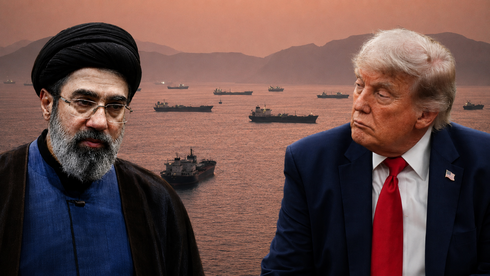
Iran’s Revolutionary Guard launched drone and missile attacks on US-linked targets in Kuwait and Bahrain, which Kuwait says it intercepted and Bahrain says caused building damage, while US officials say all inbound weapons were defeated. Washington and Tehran signalled a short-term stand‑down and agreed to meet in Qatar, but Iranian threats to halt talks and assertions of control over Hormuz keep the risk of renewed escalation high.
Executive summary
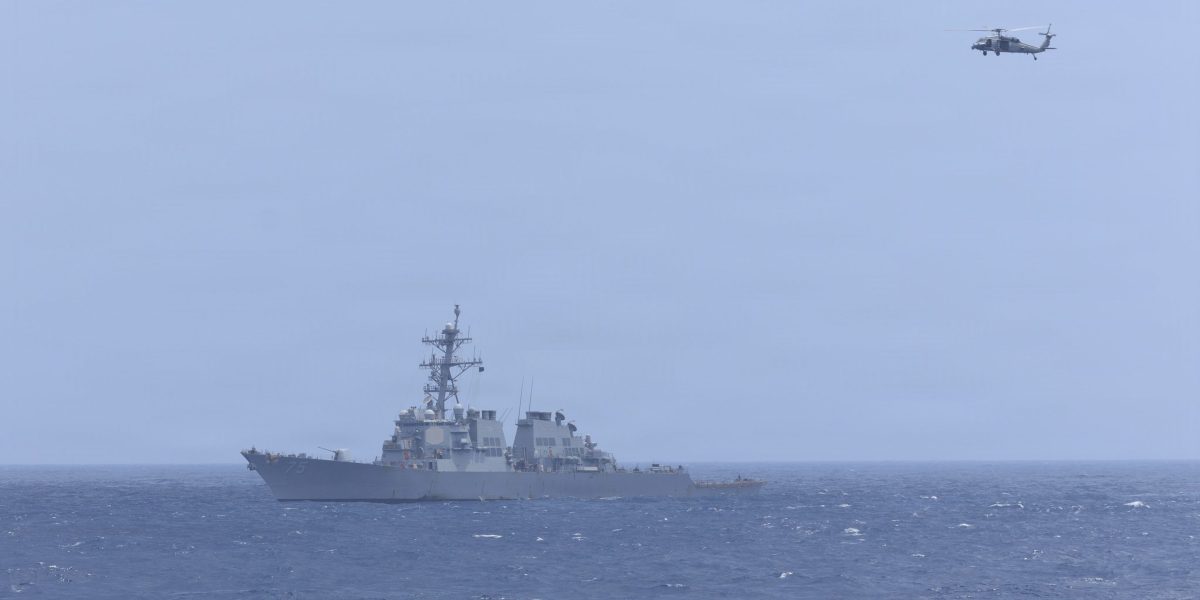
On 28 June, Iran’s Revolutionary Guard claimed responsibility for drone and missile attacks targeting the US Ali Al Salem Air Base in Kuwait and the US Fifth Fleet in Bahrain. Kuwait reported intercepting ballistic missiles and drones, and Bahrain reported an Iranian munition hitting a residential building near the international airport; US officials said all inbound weapons were shot down and no US facilities were hit. The United States had struck Iranian military infrastructure on 26 to 27 June after an Iranian one‑way drone hit a Panama‑flagged tanker in the Strait of Hormuz, with reporting pointing to targets on Qeshm Island and around Sirik. A US official said Washington and Tehran agreed to stand down and meet in Qatar on Tuesday, while Iranian leaders warned they would halt negotiations if US military action continued and restated claims that Tehran alone must govern Hormuz for the next 30 days. Oil exports through Hormuz have partly recovered and markets are watching whether that holds, but Iran’s markets slumped, with the Tehran Stock Exchange index down over 100,000 points and the rial weakening. A think tank estimate of roughly 150 THAAD rounds expended and US claims of successful shoot‑downs suggest high ballistic-missile-defence usage in theatre.
Change from previous assessment
Since the prior brief, public statements reported that Washington and Tehran agreed to a stand‑down and a meeting in Qatar, while the IRGC and Iranian officials threatened to halt talks if US strikes continued. Kuwait reported intercepts over its territory and Bahrain reported a residential building hit, while a US official said all inbound threats were defeated with no US facility damage. Iranian market stress became clearer with a 100,000‑point drop in the Tehran Stock Exchange and rial weakness. We added a judgment on missile‑defence magazine strain based on reported interceptor expenditure, and refined the maritime risk judgment to reflect Iran’s asserted sole‑management stance versus alternate routing promoted by Oman and the US Navy.
Key judgments
- It is very likely the Islamic Revolutionary Guard Corps launched coordinated drone and missile attacks on 28 June against the US Ali Al Salem Air Base in Kuwait and the US Fifth Fleet in Bahrain, with Kuwait intercepting multiple missiles and drones and Bahrain reporting an Iranian munition striking a residential building near the international airport, while US officials state all inbound weapons were defeated and no US facilities were hit. (Confidence: high · REPORTED)
- I&W: Kuwait and Bahrain publish detailed intercept and impact reports with debris attribution to specific Iranian systems and impact points in Muharraq. (0-14 days)
- I&W: Independent commercial satellite imagery shows blast damage at Ali Al Salem Air Base or US Fifth Fleet facilities in Bahrain, contradicting intercept narratives. (0-14 days)
- It is very likely US Central Command struck multiple Iranian military sites on 26 to 27 June in retaliation for aggression against commercial shipping, including the one‑way drone attack on a Panama‑flagged tanker, with reported targets on Qeshm Island and around Sirik. (Confidence: high · REPORTED)
- I&W: CENTCOM releases strike imagery or detailed coordinates confirming targets on Qeshm Island and around Sirik. (0-14 days)
- I&W: Open-source satellite imagery shows no new damage at reported target areas in Qeshm and Sirik. (0-14 days)
- A provisional stand‑down is likely in effect pending a US‑Iran meeting in Qatar on Tuesday, but the arrangement is fragile given IRGC threats to halt talks if US strikes continue and prior statements that the ceasefire is not final. (Confidence: medium · ASSESSED)
- I&W: US and Iranian delegations visibly arrive in Doha with press guidance and a jointly announced agenda. (0-7 days)
- I&W: Any acknowledged US or Iranian strike before or during the planned Qatar meeting window. (0-7 days)
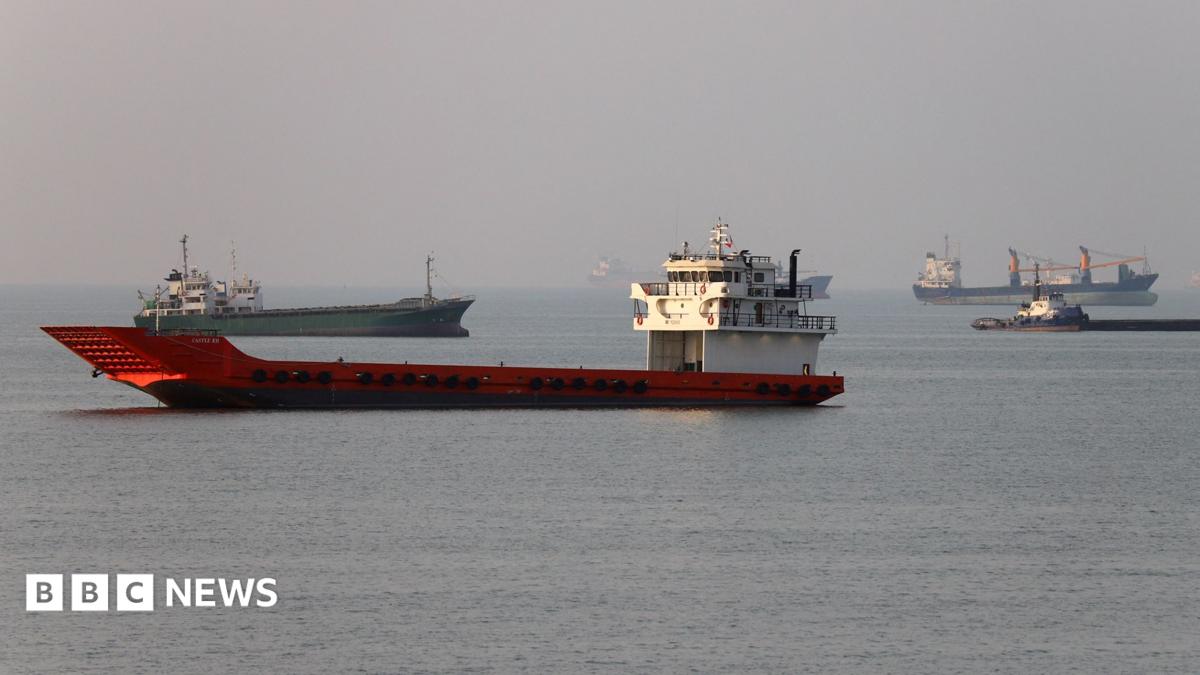
- Maritime risk around the Strait of Hormuz remains elevated despite a partial recovery in exports, as Iran signals intent to exercise sole management of the waterway and warns against bypassing its control, while Oman and the IMO promote an alternate lane and the US Navy signals the route is safe. (Confidence: medium · ASSESSED)
- I&W: Official Iranian Notices to Mariners or enforcement actions requiring pre‑filing of routes with military authorities and vessel compliance checks in Hormuz. (0-14 days)
- I&W: Sustained confirmation by US officials of free movement through Hormuz with daily transit counts trending upward toward pre‑war levels. (1-3 months)
- Iran’s financial markets have deteriorated following the exchanges, with the Tehran Stock Exchange main index dropping by over 100,000 points and the rial weakening to roughly 1.7 million per US dollar on the open market. (Confidence: high · REPORTED)
- I&W: Consecutive sessions with additional index losses exceeding 50,000 points or rial depreciation past 1.8 million per US dollar in Tehran’s open market. (0-14 days)
- I&W: Sustained rebound of the TSE main index and rial strengthening toward pre‑strike levels. (1-3 months)
- US ballistic‑missile‑defence magazine depth in theatre is likely under short‑term strain after heavy usage, given estimates of about 150 THAAD interceptors expended and official claims that all Iranian inbound weapons were defeated over Kuwait and Bahrain. (Confidence: medium · ASSESSED)
- I&W: DoD notifications of emergency THAAD resupply to CENTCOM or expedited contracting actions to replenish interceptor stocks. (1-3 months)
- I&W: Official clarification showing materially lower interceptor expenditure and replenishment already complete. (1-3 months)
Outlook & scenarios
Stand‑down holds and talks open in Doha (50%)
Both sides refrain from new strikes through the Qatar meeting window. Naval escorts and air defences remain alert, but incidents are limited to warnings and messaging. Tehran maintains rhetorical claims over Hormuz while allowing traffic to move, and export flows remain near three‑quarters of pre‑war levels as markets watch for durability.
Renewed salvo exchanges within days (40%)
IRGC resumes drone and missile launches on US‑linked targets in Kuwait and Bahrain, citing continued US action. US Central Command answers with additional strikes on IRGC infrastructure around Hormuz. Intercepts prevent large‑scale damage, but debris impacts and a higher operational tempo increase miscalculation risk and pressure missile‑defence stocks.
Coercive maritime control without open fire (30%)
Iran leans into its asserted sole‑management role for roughly 30 days, requiring route coordination with military authorities and warning against alternate lanes. Oman’s and the IMO’s routing is contested politically, not kinetically. Transits slow, insurance premia rise, and energy markets scrutinise whether the partial export recovery can last.
Wildcard: accidental mass‑casualty trigger (15%)
A misfire or debris fall causes fatalities in Manama or near Ali Al Salem, or an at‑sea incident injures crew on a merchant vessel. Domestic pressure in Washington or Tehran collapses the stand‑down, prompting a rapid escalation cycle and increased risk to Gulf energy infrastructure and shipping.
Recommendations
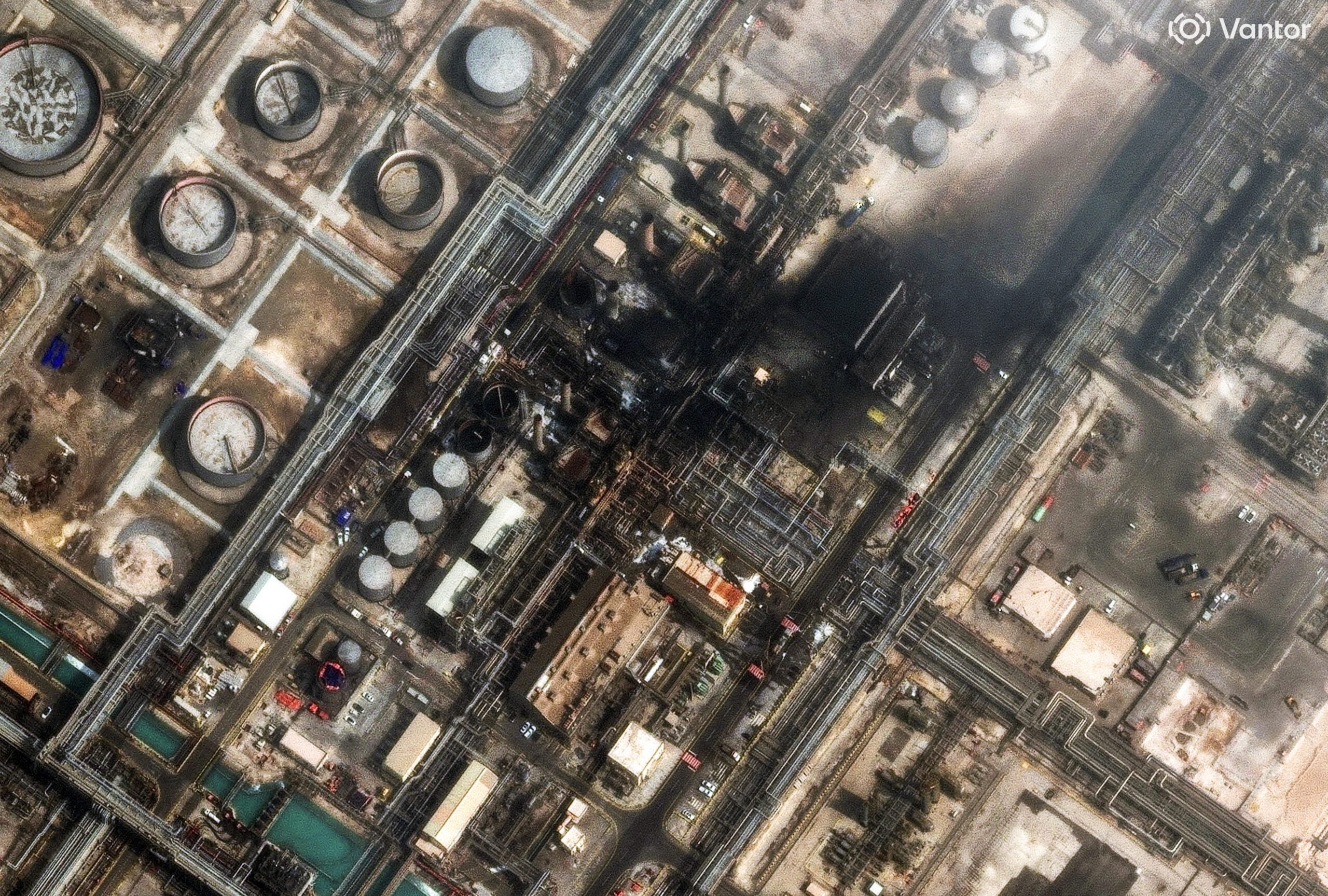
- Exploit commercial satellite imagery over Qeshm Island, Sirik, Ali Al Salem Air Base and US Fifth Fleet facilities in Bahrain for time‑series battle‑damage assessment and to reconcile conflicting impact claims.
- Establish a rolling collection plan against Bahraini Interior Ministry and Kuwaiti defence channels for intercept tallies, debris photos and geolocations to attribute munitions and assess defence effectiveness.
- Track travel and public schedules for Abbas Araghchi and senior US principals to confirm Doha attendance, and set media monitoring for on‑camera statements signalling the status of the stand‑down.
- Task maritime desk to fuse daily Kpler transit counts with Notices to Mariners and insurer advisories, and to map use of the Oman‑IMO lane versus Iranian‑directed routing.
- Monitor Iranian market indicators daily, including the Tehran Stock Exchange main index and street‑rate quotes near the 1.7 million rials per US dollar mark, to flag stress that may shape Tehran’s risk appetite.
- Coordinate with defence analysts to monitor THAAD and other missile‑defence inventory movements into CENTCOM AOR, watching procurement notices, airlift movements and unit rotations.
- Maintain a clean incident log separating the Ras Tanura helicopter crash from conflict activity to avoid false attribution in energy‑infrastructure risk assessments.
- Prepare branch plans for a rapid return to exchanges, including updated target reference sets around Hormuz and contact trees for immediate validation of any claimed strikes.
Confidence & uncertainty
Overall confidence is low because several critical elements rest on single‑source or anonymously attributed reporting with internal contradictions on timing and status of talks and shipping access. Claims about a stand‑down and a Qatar meeting conflict with other dated references; reporting on shipping conditions varies between free movement and partial closure; and detailed US strike parameters and interceptor expenditure rely on think tank or medium‑confidence sourcing. Core facts of Iranian attacks and US retaliation are well attested, but the precise damage, the durability of the pause and Iran’s operational posture in Hormuz remain uncertain.
Alternative analysis (red cell)
The dossier contains indicators of kinetic exchanges and diplomatic engagement, but much of the reporting depends on non-independent sources, low-admiralty estimates, and political messaging. Given gaps in ISR/BDA, forensic evidence, and official accounting (intercept tallies, geolocated strike BDA, and concrete ceasefire terms), stronger claims about coordination, attribution, magazine depletion, and a durable operational stand-down are premature. A cautious estimate is that incidents and talks occurred, but scale and effects remain uncertain pending independent technical corroboration.
Intelligence gaps
- [EEI 1.1 · PARTIAL] Concentrations or unusual movements of IRGC-Navy fast attack craft, small boat swarms, or escort vessels within 200 km of U.S./allied ships, including approach distances and formation changes. Recommended collection: maritime/AIS
- [EEI 1.2 · PARTIAL] Detected pre-launch activity at coastal missile or rocket batteries (vehicle dispersal, fuel/warhead handling, radars powering up, transport erector launchers moving to firing positions). Recommended collection: imagery/signals
- [EEI 1.3 · PARTIAL] Increased launch/arming/positioning of armed UAVs (MALE/loitering munitions) or tactical aircraft at Iranian coastal bases with sortie generation rates and munitions loadouts. Recommended collection: air/ADS-B/imagery
- [EEI 1.4 · PARTIAL] Command-and-control indications of attack orders or elevated rules-of-engagement from IRGC/General Staff (intercepted communications, internal order messages, force-wide alert messages). Recommended collection: signals/human
- [EEI 2.2 · PARTIAL] Issuance of formal orders, mobilization directives, travel restrictions, or official internal communications within IRGC/Armed Forces indicating escalation posture or stand-down. Recommended collection: human/diplomatic
- [EEI 2.3 · PARTIAL] Directives, logistics movements, or communications from Iranian commanders to regional proxy militias (Houthis, Iraqi Shia militias, Lebanese groups) that change their threat posture or task them with specific operations. Recommended collection: signals/human
- [EEI 3.1 · PARTIAL] Incidents involving commercial vessels within the Strait of Hormuz or Persian Gulf: attacks, boarding attempts, near-misses, AIS spoofing or deliberate AIS outages, including vessel IDs and locations. Recommended collection: maritime/AIS
- [EEI 3.2 · UNCOVERED] Discovery or reporting of naval mines, unexploded ordnance, or damage to fixed maritime infrastructure (oil platforms, terminals, pipelines) with geolocated imagery or on-scene assessments. Recommended collection: imagery/open-source
- [EEI 3.4 · PARTIAL] Movements or posture changes of regional state navies/air forces (Saudi, UAE, Kuwait, Bahrain, UK) such as task group departures, airbase dispersals, or announced maritime patrols near choke points. Recommended collection: open-source/imagery
Cited sources
[1] UALR Public Radio · U.S. and Iran exchange strikes, underscoring the fragility of the ceasefire (A) · sha256:6706129f6858 [2] houstonpublicmedia.org · U.S. and Iran exchange strikes, underscoring the fragility of the ceasefire (A) · sha256:bf755d3053bf [3] Al Jazeera · IRGC doubles down as Iran-US MoU jeopardised by Hormuz strikes (A) · sha256:ae8716bf1503 [4] HuffPost · Iran Attacks Bahrain And Kuwait Following U.S. Strikes And Threatens To Halt Talks (B) · sha256:138513bd54f2 [5] The Jerusalem Post · Why did Iran renew attacks on Gulf states, despite the Memorandum of Understanding? - analysis (B) · sha256:a7f262e56010 [6] dw.com · Axios: Иран и США вновь пообещали не атаковать друг друга (B) · sha256:e140b960bc85 [7] CNN · Analysis: New US-Iran clashes revealed fragility of truce — and why it may work | CNN Politics (A) · sha256:d415fb27646e [8] BBC · US says it has agreed to 'stand down' after exchange of strikes with Iran (A) · sha256:44dc608c292a [9] gcaptain.com · Aramco Helicopter Crash In Ras Tanura Kills All 14 On Board (B) · sha256:1fc704ced9cb [10] aljazeera.net · حرب السيطرة على مضيق هرمز. ما هدف الضربات الأمريكية وكيف ردت إيران؟ (A) · sha256:9bcd308a5ba8 [11] forbes.ru · Иран и США договорились прекратить обмен ударами в Персидском заливе (B) · sha256:5eb6b5657294 [12] Fortune · Iran is forcing the U.S. into an escalation trap as a 'shadow war' over the Strait of Hormuz heats up that could kill the tenuous ceasefire | Fortune (B) · sha256:7bf91514168a [13] ynetnews.com · Iran’s Hormuz gamble: Tehran fights to keep its most powerful bargaining chip (B) · sha256:d0a63d746fc1 [14] cryptobriefing.com · IRGC actions threaten Iran-US MoU after Hormuz strikes escalate tensions (B) · sha256:e7ec8c4be878 [15] defenseone.com · What is the Chinese military thinking about the Iran war? (C) · sha256:d7b1c07d380f
Source content hashes were computed at collection time; the cited text is preserved unmodified for the life of this product.
Red cell review: PARTIAL DISSENT
TLP:CLEAR