TLP:CLEAR · Disclosure is not limited.
Persian Gulf Maritime Attacks and Regional Escalation
Time window: Last 1 day · Audience: General analyst · Type: Situation report · DTG: 2026-10-14 12:36Z · Overall confidence: MEDIUM
BLUF
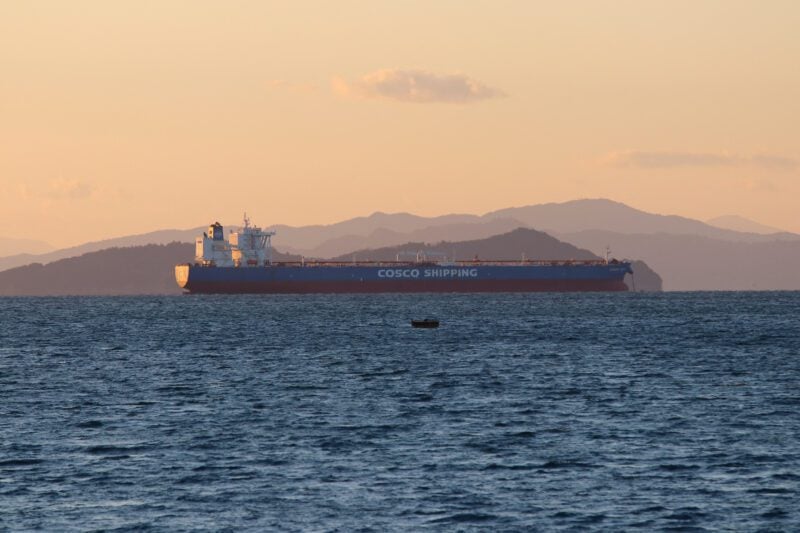
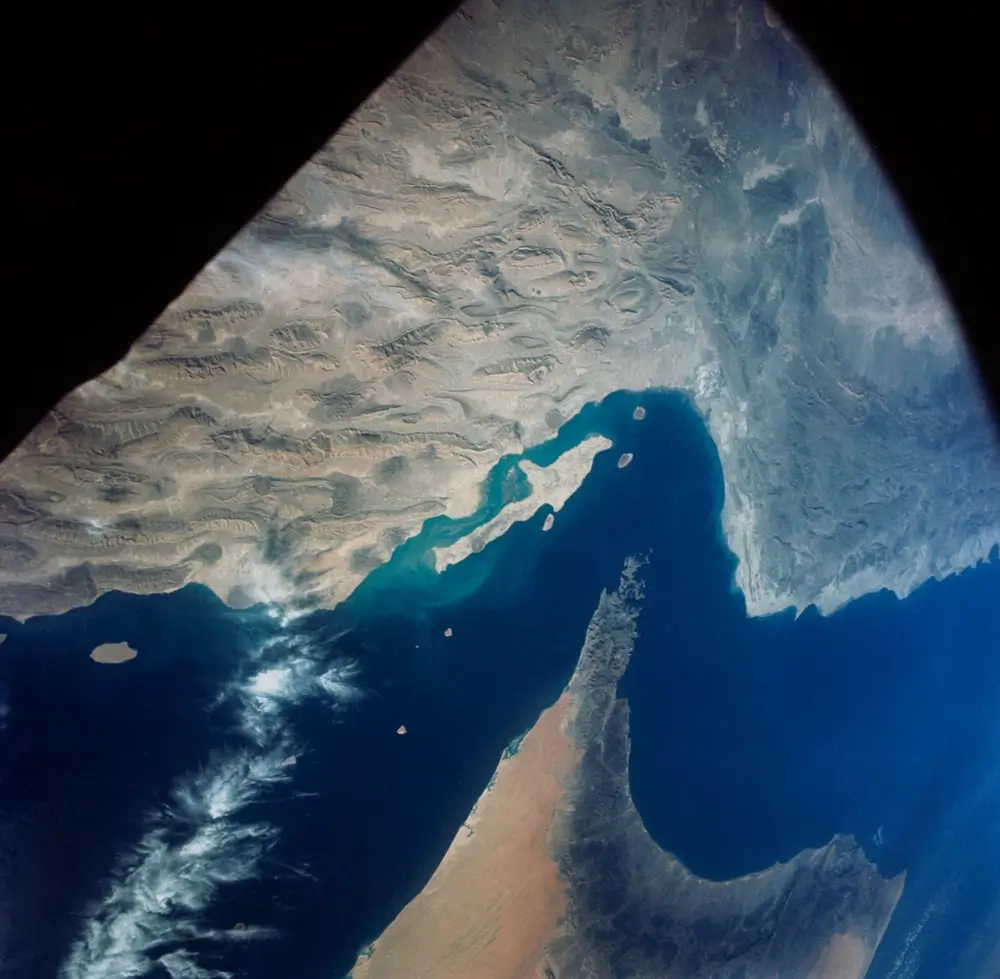
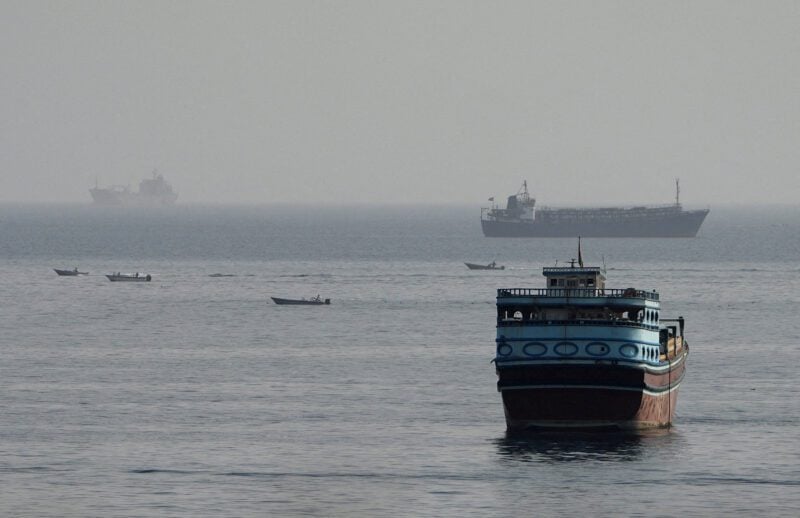
Further attacks on commercial shipping in and around the Strait of Hormuz are likely in the next 14 days. UKMTO reported a tanker and a container ship hit by unknown projectiles north of the Musandam Peninsula, while tanker tracking showed vessels turning away from Fujairah. The projectiles’ attribution remains unresolved, and reported Saudi-Houthi exchanges add a separate threat to regional infrastructure.
Executive summary
UKMTO reported attacks on a tanker and a container ship north of the Musandam Peninsula, both involving unknown projectiles. Two Iranian officials told Reuters that Iran had changed its methods and operational pace in attacks on merchant shipping. Separate tanker-tracking data showed at least 10 very large crude carriers and several Suezmax vessels stopping or reversing course near Fujairah. A single account from an unnamed US military official describes US forces confronting and destroying a sailboat used by IRGC observers, but the report is not independently corroborated. In Yemen and Saudi Arabia, reporting describes renewed coalition strikes, Houthi attacks and threats against Saudi airports and oil sites. Attribution and incident details remain uncertain in several accounts.
Change from previous assessment
The prior brief already judged further attacks on commercial shipping in and around the Strait of Hormuz likely, and this update retains that assessment. New reporting adds two UKMTO-reported ship attacks north of the Musandam Peninsula and Iranian officials’ account of changed attack methods and pace. A single-source report of US forces destroying a sailboat used by IRGC observers is added as a low-confidence watch item. Saudi-Houthi exchanges are also included as a separate regional escalation, not as evidence of direct US-Iran action.
Key judgments
- Further attacks on commercial shipping in and around the Strait of Hormuz are likely in the next 14 days. UKMTO reported a tanker and a container ship hit by unknown projectiles north of the Musandam Peninsula, and two Iranian officials told Reuters that Iran had changed its methods and operational pace. Attribution for the reported strikes is unresolved, and the highest weekly attack figures rely partly on social-media reporting. (Confidence: medium · ASSESSED)
- I&W: UKMTO issues a new notice of a projectile strike on a named commercial vessel in the Strait of Hormuz or near the Musandam Peninsula. (0-14 days)
- I&W: No further vessel attacks are reported by UKMTO for 14 consecutive days. (0-14 days)
- Tanker diversions around Fujairah are likely to persist over the next 14 days. Bloomberg tanker-tracking data showed at least 10 very large crude carriers and several Suezmax vessels stopping or reversing course near the port, while other reporting described empty supertankers turning away from the Persian Gulf. The tracking report is specific, but the available claims do not establish how long the diversions will continue. (Confidence: medium · ASSESSED)
- I&W: Updated tanker-tracking data shows further VLCC or Suezmax vessels stopping or reversing course on approach to Fujairah. (0-14 days)
- I&W: Tanker-tracking data shows vessels resuming approaches to Fujairah and ship-to-ship crude transfers there. (0-14 days)
- A further direct US-Iran maritime encounter in the next 14 days is roughly even chance. An unnamed US military official reported that IRGC observers on small boats were identifying potential targets, including US Navy vessels, and that US forces confronted and destroyed a sailboat. This forecast rests on a single-source account, so confidence is low. (Confidence: low · ASSESSED)
- I&W: US military or IRGC reporting confirms a second encounter involving a US Navy vessel and an IRGC boat in the Strait of Hormuz area. (0-14 days)
- I&W: US military or Iranian authorities clarify that the reported sailboat was not linked to IRGC activity. (0-14 days)
- Saudi-Houthi exchanges are likely to continue over the next seven days. The Saudi-led coalition has reported strikes in Yemen and an interception of a ballistic missile aimed at Riyadh; Houthi representatives have threatened further attacks on Saudi airports and oil sites. Some details rest on claims by the parties, and reporting on Riyadh airport casualties is inconsistent. (Confidence: medium · ASSESSED)
- I&W: The Saudi-led coalition reports another strike in Yemen, or Saudi authorities report another Houthi missile or drone attack on Riyadh, Dhahran or a named Saudi oil site. (0-7 days)
- I&W: Saudi and Houthi authorities report no new attacks for seven consecutive days. (0-7 days)
Outlook & scenarios
Continued maritime pressure (60%)
Commercial vessel attacks continue around the Strait of Hormuz, with attribution for individual strikes remaining disputed. Operators continue to divert some tankers from Fujairah, while Saudi-Houthi attacks and threats persist in parallel.
Temporary pause in ship attacks (25%)
No new vessel strikes are reported for a short period. Tanker operators remain cautious and diversions continue until tracking data shows vessels resuming approaches to Fujairah and crude transfers.
High-impact escalation (15%)
A strike on a US Navy vessel or a Houthi attack on a named Saudi oil site causes casualties or major damage. The incident prompts retaliatory action and compounds the disruption to Gulf shipping.
Recommendations
- In daily reporting, separate UKMTO incident notices from claims about who carried out an attack. Record each vessel’s reported position, damage and incident date, and reconcile conflicting attack totals before using them.
- Track tanker movements around Fujairah, including VLCC and Suezmax stops, reversals and ship-to-ship transfers. Flag whether diversions persist or vessels resume approaches.
- Treat the reported US encounter with an IRGC observer boat as uncorroborated until a second account or primary evidence emerges. Seek confirmation from US military and Iranian official reporting before describing it as an established exchange.
- Maintain a separate Saudi-Houthi incident timeline. Verify reported Riyadh casualties and the date of coalition strikes against original Saudi and Houthi statements before combining incidents.
Confidence & uncertainty
Overall confidence is medium. UKMTO reporting, Reuters accounts of Iranian officials and Bloomberg tanker-tracking data provide corroboration for the maritime picture, while Saudi-Houthi reporting includes statements from the parties and major-media accounts. Attribution for the latest vessel strikes remains unresolved; attack totals and Riyadh casualty figures conflict. The reported US encounter with an IRGC observer boat rests on a single unnamed official.
Intelligence gaps
- [EEI 1.1 · PARTIAL] Concentrations or unusual movements of IRGC-Navy fast attack craft, small boat swarms, or escort vessels within 200 km of US/allied ships, including approach distances and formation changes. Recommended collection: maritime/AIS
- [EEI 1.2 · UNCOVERED] Detected pre-launch activity at coastal missile or rocket batteries (vehicle dispersal, fuel/warhead handling, radars powering up, transport erector launchers moving to firing positions). Recommended collection: imagery/signals
- [EEI 1.3 · UNCOVERED] Increased launch/arming/positioning of armed UAVs (MALE/loitering munitions) or tactical aircraft at Iranian coastal bases with sortie generation rates and munitions loadouts. Recommended collection: air/ADS-B/imagery
- [EEI 1.4 · UNCOVERED] Command-and-control indications of attack orders or elevated rules-of-engagement from IRGC/General Staff (intercepted communications, internal order messages, force-wide alert messages). Recommended collection: signals/human
- [EEI 2.1 · UNCOVERED] Public statements or state-media broadcasts from Supreme Leader, President, Minister of Defense, or IRGC commanders indicating authorization, restraint, or conditions for retaliation. Recommended collection: open-source
- [EEI 2.2 · UNCOVERED] Issuance of formal orders, mobilization directives, travel restrictions, or official internal communications within IRGC/Armed Forces indicating escalation posture or stand-down. Recommended collection: human/diplomatic
- [EEI 2.3 · PARTIAL] Directives, logistics movements, or communications from Iranian commanders to regional proxy militias (Houthis, Iraqi Shia militias, Lebanese groups) that change their threat posture or task them with specific operations. Recommended collection: signals/human
- [EEI 2.4 · UNCOVERED] Changes in Iran's diplomatic exchanges with key states (offers of negotiation, warnings, or coordination with Russia/China) or requests for deconfliction with maritime/naval actors. Recommended collection: diplomatic
- [EEI 3.2 · PARTIAL] Discovery or reporting of naval mines, unexploded ordnance, or damage to fixed maritime infrastructure (oil platforms, terminals, pipelines) with geolocated imagery or on-scene assessments. Recommended collection: imagery/open-source
- [EEI 3.4 · PARTIAL] Movements or posture changes of regional state navies/air forces (Saudi, UAE, Kuwait, Bahrain, UK) such as task group departures, airbase dispersals, or announced maritime patrols near choke points. Recommended collection: open-source/imagery
Cited sources
[1] The Maritime Executive · Two More Ship Strikes Reported in the Strait of Hormuz (C) · sha256:3ccba7395f33 [2] Independent Arabia (independentarabia.com) · ترمب: سنلقن إيران درسا قاسيا.. لقد نفد صبرنا عليها (B) · sha256:075e59320ff2 [3] Israel Today (via Facebook page) · 🇮🇷➡️ Iranian regime attacks on vessels in the vicinity of the Strait of Hormuz have reached their highest rate since the outbreak of the war. Twelve commercial vessels were attacked between October 5 and 11 the highest weekly tally since the conflict began, surpassing the 11 vessels attacked during the first week of hostilities. Six vessels were targeted on October 11 alone including five tankers and a container ship within the Strait and near the holding area (anchorage) off the Omani port of Sohar. This surge in attacks coincides with a rise in Gulf exports of liquid cargoes, which are nearing pre-war levels. Furthermore, attacks are no longer confined to the Strait itself; over the past week, tankers have also been targeted off the coast of Qatar, east of Fujairah, and in holding areas off the UAE coast. Video - An oil tanker is burning today in the eastern Strait of Hormuz. The IRGC Navy published the footage after hitting it. | Israel Today (E) · sha256:aa89bab4adbd [4] gCaptain (republishing Bloomberg) · Supertankers Turn From Gulf Oil Transfer Hub Amid Iran’s Attacks (C) · 13 October 2026 · sha256:567c13e0856f [5] Reuters (republished by gCaptain) · Saudi Arabia Strikes Houthi Targets as Red Sea War Escalates (A) · 13 October 2026 · sha256:10baa4722e3c [6] BBC News · Houthi missile hits Aramco building after Saudi-led coalition hits Yemen fuel depot (A) · 13 October 2026 · sha256:bdbee7538264 [7] Adnkronos · Houthi, nuove minacce all'Arabia Saudita. I siti nel mirino e la denuncia: "Morti e feriti tra i civili per raid in Yemen" (B) · 14 October 2026 · sha256:6cb664d5e474 [8] Al Jazeera (aljazeera.net) · "فجر اليمن". معركة استعادة الدولة ومواجهة المشروع الإيراني (B) · 13 October 2026 · sha256:d42d7bf5aba5
Source content hashes were computed at collection time; the cited text is preserved unmodified for the life of this product.
Red cell review: CONCUR WITH COMMENT
TLP:CLEAR