TLP:CLEAR · Disclosure is not limited.
Persian Gulf: Maritime Attacks and US-Iran Tensions, 18 October 2026
Time window: Last 1 day · Audience: General analyst · Type: Situation report · DTG: 2026-10-18 13:37Z · Overall confidence: MEDIUM
BLUF
Commercial vessels continue to transit the Strait of Hormuz, but reported traffic remains well below pre-conflict levels and attack reporting is incomplete. The IRGC's claim that a supertanker struck a mine remains unverified; Iran's new defence minister has issued a warning to US forces, while evidence of a US decision to strike Iran remains weak and conflicting.
Executive summary
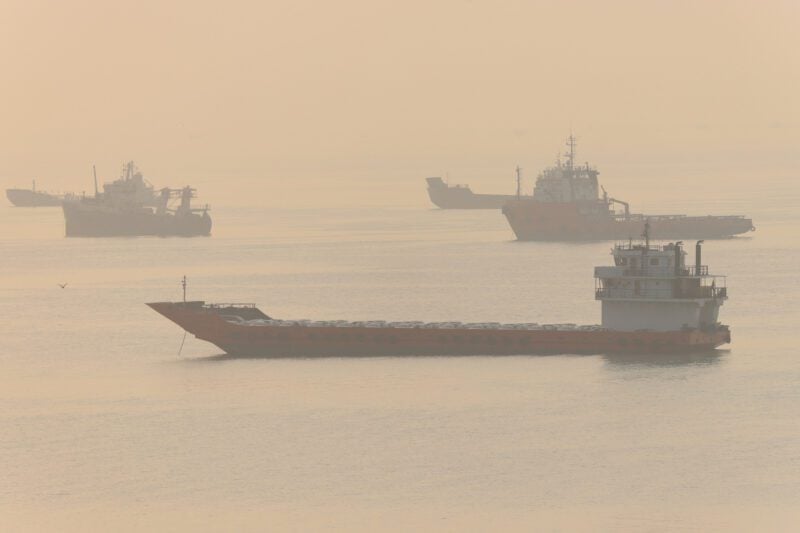
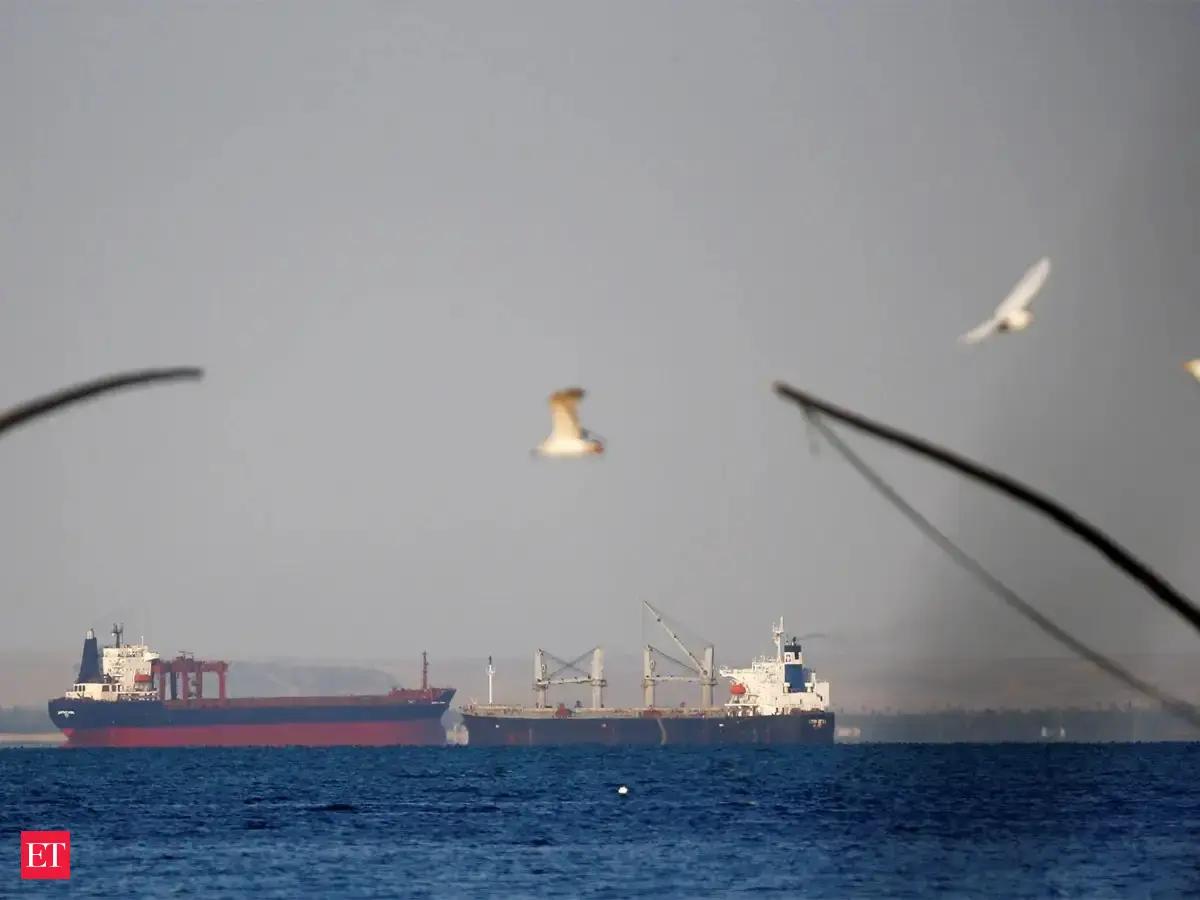
Reported: UKMTO recorded 12 attacks in its latest reporting period, including 10 in the Strait of Hormuz, and its 18 October review put the conflict-wide incident total at 135. UKMTO counted 254 transits in the seven days ending 14 October, about 70 per cent below pre-conflict levels; Adm Brad Cooper separately claimed 400 ships transited in seven days. The IRGC and Iranian media reported a tanker mine strike and fire, but accounts differ on whether one or two tankers were involved, and independent confirmation is absent. Iran's parliament approved Mehrdad Akhlaghi Ketabchi as defence minister on 18 October. Assessment: shipping continues, but the scale and security of traffic remain uncertain. The appointment and Akhlaghi's warning add to confrontational rhetoric, but the reports of US strike preparations conflict with a reported pledge by President Trump not to attack before the midterm elections.
Change from previous assessment
Since the 17 October brief, UKMTO's reported conflict-wide total of 135 incidents has added context, but the earlier picture of frequent attacks and sharply reduced traffic remains. New reporting confirms parliament's 18 October approval of Mehrdad Akhlaghi Ketabchi and adds his warning to US forces. Iranian accounts of the tanker mine incident remain unverified, with a new discrepancy over whether one or two tankers were involved. The judgement that a US strike in the next 14 days is unlikely remains low confidence because the conflicting reports of restraint and strike preparations are unresolved.
Key judgments
- Further attacks on commercial vessels in the Strait of Hormuz are likely in the next 14 days. UKMTO recorded 12 attacks in its latest reporting period, 10 inside the strait, and reported 135 incidents over the conflict; it also says most struck vessels do not report incidents to it. The pattern supports continued attack risk, but incomplete reporting and contested attribution limit confidence in the scale and perpetrators of attacks. (Confidence: medium · ASSESSED)
- I&W: A new UKMTO notice records an attack on a commercial vessel in the Strait of Hormuz, confirming continued attacks. (0-14 days)
- I&W: UKMTO records no new incidents for 14 consecutive days and independent maritime reporting identifies no vessel damage, breaking the assessment of continued attacks. (0-14 days)
- Commercial shipping is likely to continue transiting the Strait of Hormuz, although traffic remains reduced and its volume is unresolved. UKMTO counted 254 transits in the seven days ending 14 October, about 70 per cent below pre-conflict levels; Adm Brad Cooper claimed approximately 400 ships in a seven-day period, and CENTCOM said 97 per cent of vessels seeking transit passed safely. Iranian army chief Maj. Gen. Amir Hatami said the strait would remain closed, while Foreign Minister Abbas Araghchi's reported seven-day reopening proposal remained on the table. Conflicting figures, differing official statements and the low-reliability source for Araghchi's reported statement lower confidence. (Confidence: medium · ASSESSED)
- I&W: UKMTO's next seven-day report records commercial transits while still placing traffic well below its pre-conflict baseline, confirming reduced but continuing use. (0-14 days)
- I&W: UKMTO or another identifiable maritime authority reports zero commercial transits through the strait for 48 consecutive hours, breaking the assessment that shipping continues. (0-14 days)
- The IRGC's report that a supertanker carrying more than two million barrels struck a mine in the Strait of Hormuz remains unverified. The IRGC described one tanker, while footage attributed to the IRGC Navy was described as showing a second; Iranian media also reported an explosion and severe fire. There is no independent confirmation of the mine reports, and the accounts do not establish whether one or two tankers were involved. (Confidence: low · REPORTED)
- I&W: A vessel owner, flag-state authority or independent maritime organisation identifies the ship and confirms physical evidence consistent with mine damage, breaking the assessment that the claim is unverified. (0-14 days)
- I&W: No independent vessel identification or damage assessment appears in reporting from the vessel owner, flag-state authority or maritime organisations, confirming that the claim remains unverified. (0-14 days)
- A US strike on Iran in the next 14 days is unlikely, but confidence is low. The restraint case rests partly on a low-reliability social-media report of President Trump's pledge not to attack before the midterm elections. Social-media reports of prepared strike options conflict with that account, while a major-media report says the administration threatened Iranian nuclear and energy infrastructure this month. The available reporting does not establish that an attack has been authorised. (Confidence: low · ASSESSED)
- I&W: The White House or Pentagon announces authorisation of an operation against Iran, or a US strike on Iranian territory is reported, breaking the assessment that a strike is unlikely. (0-14 days)
- I&W: President Trump or the White House publicly reaffirms a commitment not to strike Iran before the midterm elections, supporting the restraint assessment. (0-14 days)
- Iran's appointment of Mehrdad Akhlaghi Ketabchi is likely to sustain Tehran's stated focus on expanding strategic weapons, particularly missiles and drones. Parliament approved the appointment on 18 October by 237 votes to 15, and Defence Ministry spokesman Brigadier General Reza Talaei-Nik said the nomination reflected a need to increase the quantity and quality of those weapons. Akhlaghi also warned the US president about the consequences of an attack. The appointment and statements are reported by major media, but they do not establish future production levels. (Confidence: medium · ASSESSED)
- I&W: Iran's Defence Ministry announces dated production or procurement targets for missiles or drones, confirming that the stated priority is being translated into a programme. (1-3 months)
- I&W: Akhlaghi or the Defence Ministry publicly states that missile and drone expansion is not a priority, breaking the assessment of continued emphasis. (1-3 months)
Outlook & scenarios
Continued attacks with the strait still in use (60%)
This is the likely course over the next 14 days. Commercial vessels continue to transit the Strait of Hormuz at reduced levels while UKMTO records further attacks. Incomplete incident reporting and the disagreement between UKMTO and Adm Cooper's transit figures keep the scale of activity uncertain.
Limited reopening following diplomatic engagement (25%)
This outcome is unlikely. Iran's reported seven-day reopening proposal remains on the table, and Russian Foreign Minister Sergey Lavrov and Kuwaiti Foreign Minister Jaber al-Sabah have called for de-escalation and a diplomatic resolution. Maj. Gen. Amir Hatami's statement that the strait would remain closed is a competing Iranian signal; a change in actual transit patterns would be needed to establish a reopening.
US-Iran escalation beyond maritime attacks (15%)
A US strike on Iran is unlikely, but this is a low-probability, high-impact scenario. Reports of US strike planning and Iranian warnings to US forces create escalation concerns, although the strike-planning reports are weakly sourced and the available reporting does not show an authorisation. A confirmed US strike or a verified mine-related casualty would materially worsen the situation.
Recommendations
- Maintain a single incident log for Strait of Hormuz attacks. Record the vessel, location, date, reported weapon, source and whether the owner, flag-state authority or an independent maritime organisation has confirmed the incident. Keep attribution separate from the reported event.
- Reconcile UKMTO's 254 transits with Adm Cooper's claim of approximately 400 by checking the reporting periods and transit definitions before using either figure as a measure of current traffic.
- Treat the IRGC tanker account as unverified until the vessel is identified and damage is independently assessed. Do not count the accounts of one tanker and a second tanker as two confirmed incidents.
- Monitor White House and Pentagon statements for an explicit strike authorisation, and distinguish formal decisions from reports of contingency planning or force deployments carried on social media.
- Track Iranian statements and actions separately: record any formal Defence Ministry missile or drone production targets and any operational change to the seven-day reopening proposal.
Confidence & uncertainty
Overall confidence is medium because UKMTO provides identifiable maritime incident and transit reporting, and major-media reporting quotes Iranian officials on the defence minister appointment and policy statements. The incident total is incomplete by UKMTO's own account, CENTCOM and UKMTO give conflicting transit figures, and the reported tanker mine strike lacks independent confirmation. US strike-intent reporting is particularly uncertain because social-media accounts conflict with a reported public pledge of restraint.
Alternative analysis (red cell)
A US strike in the next 14 days is better assessed as indeterminate rather than unlikely. Trump's reported pledge not to attack before the midterms is low reliability (d86b2ddb-59cb-46e0-a82c-f4e55c88e104), while multiple medium-reliability reports indicate that strike options were prepared (e9b04436-99a2-4cb8-ba03-93b931276d6a; a4448431-2ff8-4f2b-be80-c9c3becd6e46). Prior vetoes of plans (fd0c6b2b-1f36-4622-9d58-f8f1c68e429f) and the absence of evidence of authorization do not provide a sufficiently strong basis for a directional 'unlikely' judgment.
Intelligence gaps
- [EEI 1.1 · UNCOVERED] Concentrations or unusual movements of IRGC-Navy fast attack craft, small boat swarms, or escort vessels within 200 km of US/allied ships, including approach distances and formation changes. Recommended collection: maritime/AIS
- [EEI 1.2 · UNCOVERED] Detected pre-launch activity at coastal missile or rocket batteries (vehicle dispersal, fuel/warhead handling, radars powering up, transport erector launchers moving to firing positions). Recommended collection: imagery/signals
- [EEI 1.3 · UNCOVERED] Increased launch/arming/positioning of armed UAVs (MALE/loitering munitions) or tactical aircraft at Iranian coastal bases with sortie generation rates and munitions loadouts. Recommended collection: air/ADS-B/imagery
- [EEI 1.4 · UNCOVERED] Command-and-control indications of attack orders or elevated rules-of-engagement from IRGC/General Staff (intercepted communications, internal order messages, force-wide alert messages). Recommended collection: signals/human
- [EEI 2.2 · UNCOVERED] Issuance of formal orders, mobilization directives, travel restrictions, or official internal communications within IRGC/Armed Forces indicating escalation posture or stand-down. Recommended collection: human/diplomatic
- [EEI 2.3 · UNCOVERED] Directives, logistics movements, or communications from Iranian commanders to regional proxy militias (Houthis, Iraqi Shia militias, Lebanese groups) that change their threat posture or task them with specific operations. Recommended collection: signals/human
- [EEI 2.4 · PARTIAL] Changes in Iran's diplomatic exchanges with key states (offers of negotiation, warnings, or coordination with Russia/China) or requests for deconfliction with maritime/naval actors. Recommended collection: diplomatic
- [EEI 3.4 · UNCOVERED] Movements or posture changes of regional state navies/air forces (Saudi, UAE, Kuwait, Bahrain, UK) such as task group departures, airbase dispersals, or announced maritime patrols near choke points. Recommended collection: open-source/imagery
Red cell review: PARTIAL DISSENT
TLP:CLEAR