TLP:CLEAR · Disclosure is not limited.
Persian Gulf: Maritime Pressure and Strike Risk, 26 November 2026
Time window: Last 1 day · Audience: General analyst · Type: Situation report · DTG: 2026-11-26 14:14Z · Overall confidence: MEDIUM
BLUF
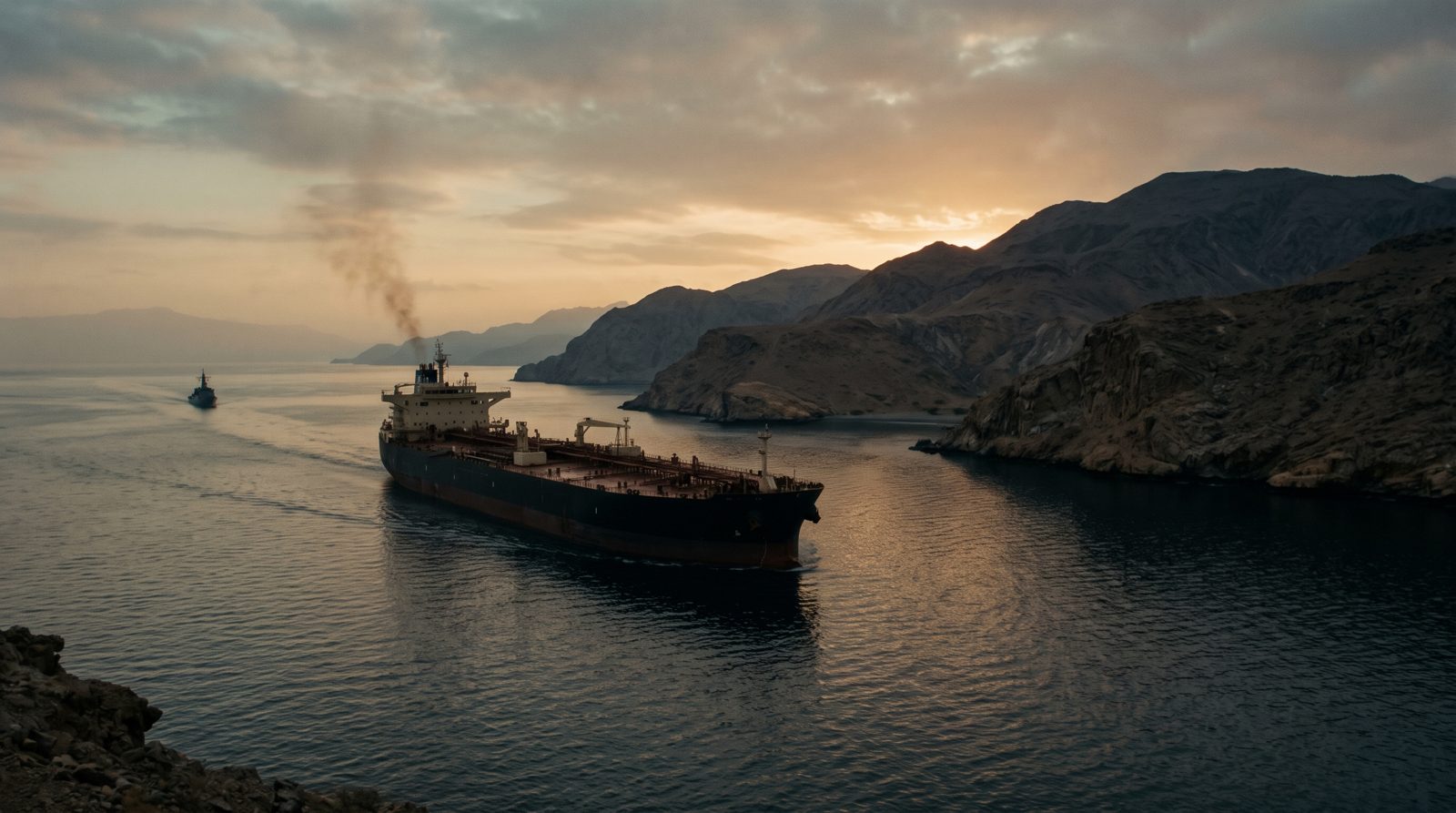
The Strait of Hormuz remains a high-risk chokepoint: UKMTO reported a new tanker strike on 26 November, while Iran’s conflicting mine claims leave the incident count and cause unresolved. Further attacks on commercial shipping are likely within 14 days; a further direct US-Iran strike exchange remains roughly even chance, with low confidence in that forecast.
Executive summary
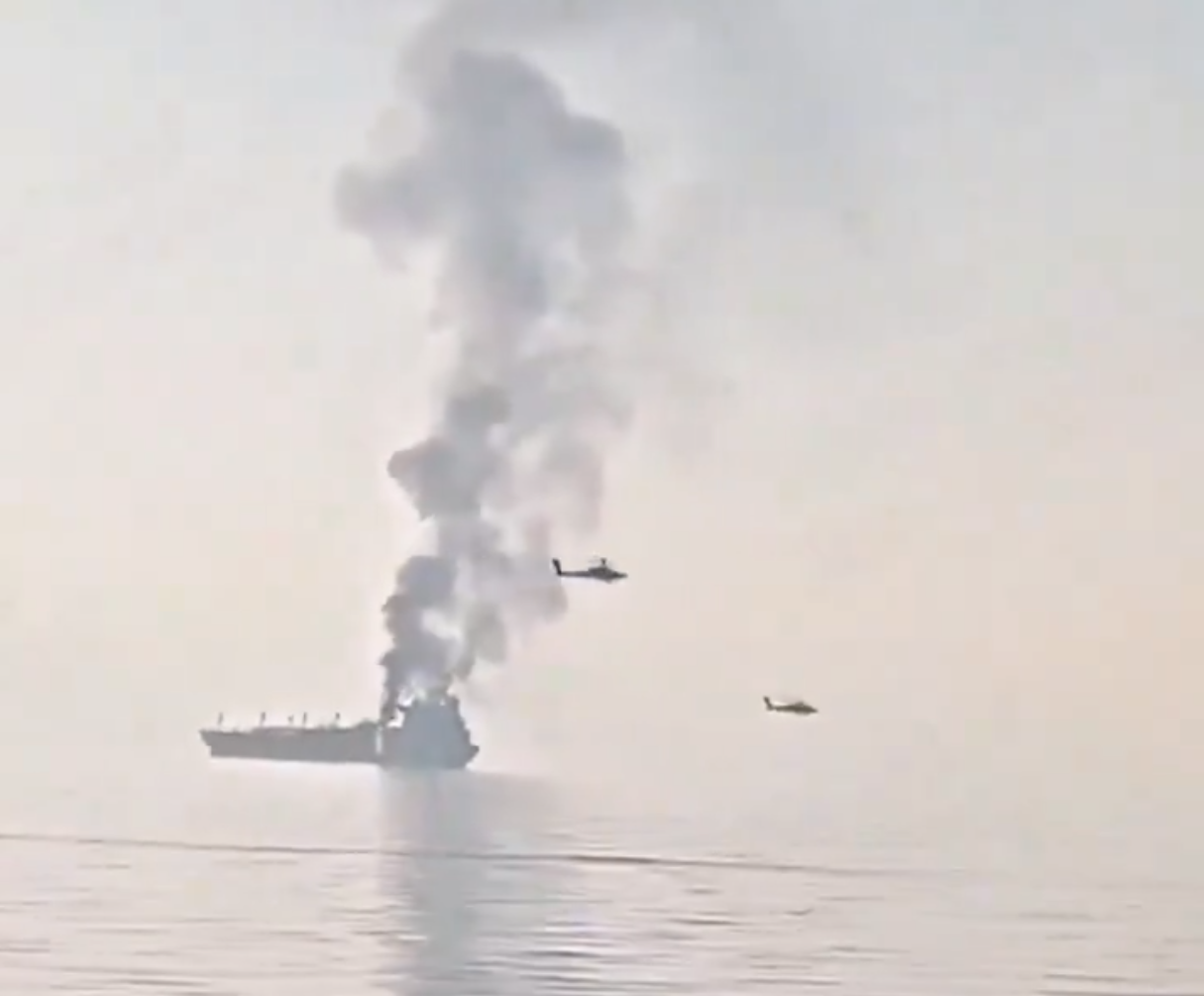
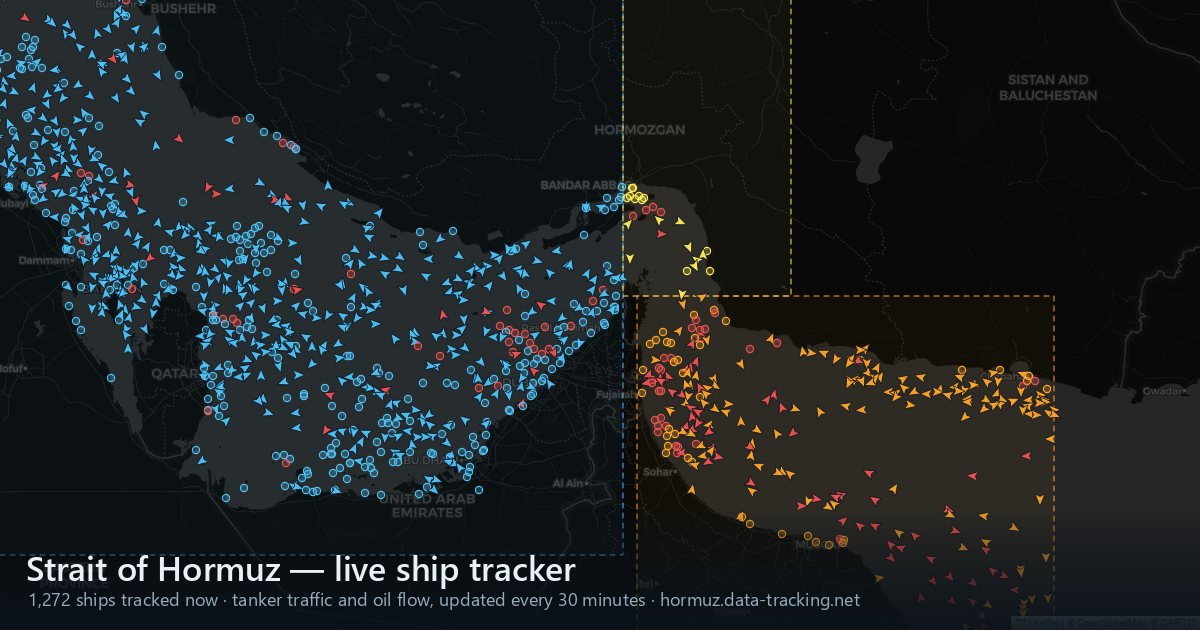
On 26 November, UKMTO reported that a tanker was struck by a projectile while transiting the Strait of Hormuz. Iran’s Navy and IRGC have described tanker fires as mine strikes, but their accounts differ on dates and numbers, and responsibility is not independently established. Reports of Strait traffic also conflict: one tracker counted 26 crossings in 24 hours, another put traffic below a tenth of the pre-crisis level, and straits.live said its AIS feed lacked fresh positions. The IMO and Swedish Club advise against non-essential passage. Tanker costs remain high, while Qatar’s November LNG shipments were about a quarter higher than October but still around half their pre-war level. The US blockade continues, Tehran’s stated conditions for talks differ across reports, and Israel has publicly said it is ready to act against Iran without US support.
Change from previous assessment
Since the 25 November brief, UKMTO has reported a tanker struck by a projectile on 26 November, adding a fresh incident report. Iran’s mine claims continue, but dates, vessel counts and stated causes remain inconsistent. New reporting that Israel is ready to strike without US support adds a separate escalation route. The prior call of a roughly even chance of a further direct US-Iran exchange and likely further shipping attacks is maintained; confidence in precise traffic levels is lower because the reported counts conflict and one AIS feed was stale. No settled prior forecast outcomes were supplied for calibration.
Key judgments
- UKMTO reported that a tanker was struck by a projectile in the Strait of Hormuz on 26 November; separate reports describe three tankers hit by projectiles on 24 November. Iran’s Navy and IRGC attribute tanker fires to mines, but reports differ on whether two or three tankers were involved and on the incident dates. The available reporting does not establish the cause or perpetrator. Confidence is low because the UKMTO alert is relayed through a blog and Iran’s state-linked accounts conflict on dates, numbers and causes. (Confidence: low · REPORTED)
- I&W: A vessel owner or UKMTO publishes a time- and location-specific confirmation of the 26 November impact, including the vessel’s identity or damage. (0-14 days)
- I&W: UKMTO retracts the impact report or clarifies that no physical strike occurred. (0-14 days)
- Further deliberate attacks on commercial shipping in the Strait of Hormuz are likely within 14 days. The Joint Maritime Information Center’s severe threat rating and warnings from the IMO and Swedish Club align with the recent UKMTO report and Iran’s threats to enforce its passage rules. Confidence is medium because the threat assessments converge, but the attackers and the causes of recent incidents remain unverified. (Confidence: medium · ASSESSED)
- I&W: UKMTO or a vessel owner confirms another attack, explosion or fire involving commercial shipping in the Strait of Hormuz. (0-14 days)
- I&W: No new verified vessel incident is reported and the Joint Maritime Information Center lowers its threat rating from severe. (0-14 days)
- Commercial traffic through the Strait of Hormuz remains substantially below its pre-crisis level, but the exact daily count is unresolved. A tracker reported 26 crossings in the 24 hours to 13:31 UTC on 26 November; another source put traffic below a tenth of the usual 85 vessels a day, while straits.live said its AIS collector lacked fresh positions. The one-transit figure for 22 November adds evidence of disruption but does not resolve the conflicting counts. Confidence is medium: several sources indicate restricted traffic, but their figures and collection methods do not align. (Confidence: medium · ASSESSED)
- I&W: IMF PortWatch records fewer than 20 commercial crossings a day for three consecutive days, with AIS positions available for comparison. (0-14 days)
- I&W: IMF PortWatch records more than 60 commercial crossings a day for three consecutive days. (0-14 days)
- A further direct US-Iran strike exchange within 14 days remains roughly even chance. Trump administration officials were reported to have revived discussions about killing senior Iranian leaders, and Jared Kushner said Donald Trump keeps his options open. Iran’s claims that its air defences destroyed US MQ-9 and LUCAS drones remain unverified in the available reporting. Israel’s stated readiness to strike without US support creates a separate escalation route, but does not establish a US decision to strike Iran. Confidence is low because the report of US discussions is single-source and the drone claims rely on Iranian or social-media reporting without US confirmation. (Confidence: low · ASSESSED)
- I&W: The US confirms a strike on an Iranian target, or Iran confirms an attack that damages a named US military asset or injures US personnel. (0-14 days)
- I&W: Washington and Tehran announce a halt to strikes and a scheduled negotiating meeting, alongside a stated pause in US blockade enforcement. (0-14 days)
- A negotiated US-Iran reset within 14 days is unlikely. Donald Trump has said the US blockade will continue until Tehran accepts his terms, including preventing Iran from acquiring a nuclear weapon; Mohammad Baqer Qalibaf has tied resumed talks to Iranian conditions that include lifting the blockade. Other reporting describes Iran linking sanctions relief to Strait of Hormuz access and a Lebanon ceasefire, while accounts also conflict over the June memorandum of understanding. Confidence is medium because the public positions are reported by major media and think-tank sources, but the stated Iranian preconditions and the memorandum’s meaning are contested. (Confidence: medium · ASSESSED)
- I&W: The White House announces a pause in blockade enforcement and Tehran confirms a date and agenda for renewed negotiations. (0-14 days)
- I&W: The White House reiterates that the blockade will continue and Qalibaf repeats that lifting it is a precondition for talks, with no meeting announced by 10 December. (0-14 days)
Outlook & scenarios
Maritime pressure continues without a direct US-Iran strike (40%)
Through 10 December, the US blockade and Iran’s demands for vessels to follow Iranian passage rules remain in force. Commercial traffic stays well below the pre-crisis rate and another vessel incident is reported, but Washington and Tehran avoid a confirmed strike on each other’s military assets.
Direct US-Iran strike exchange (45%)
A confirmed Iranian attack on a US asset, or a US decision to resume strikes, prompts direct retaliation. The reported US discussion of strikes against senior Iranian leaders sustains this pathway. Iran’s drone-downing claims remain unverified, and Israel’s separate readiness to act alone complicates attribution and escalation control.
Limited diplomatic de-escalation (5%)
Washington and Tehran resume talks and agree preliminary steps on maritime passage or a pause in hostilities. The nuclear dispute and the competing interpretations of the June memorandum remain unresolved.
Wildcard: Iranian convoy challenge and Gulf infrastructure retaliation (10%)
Iran attempts to move a loaded tanker convoy through US restrictions. A US Navy interception leads to Iranian retaliation against energy infrastructure in the UAE, Saudi Arabia or Qatar. This is a low-probability, high-impact scenario; the reported convoy preparations and threat rest on a single think-tank assessment, not confirmed orders or an observed convoy.
Recommendations
- Treat the reported tanker impacts, mine causes and drone shootdowns as unverified until corroborated. Cross-check UKMTO notices against vessel-owner or flag-state statements and available imagery before assigning responsibility.
- Reconcile Strait of Hormuz traffic using IMF PortWatch counts and restored AIS positions. Record each source’s time window and definition of a commercial transit, and do not present the conflicting 26-crossing and below-10-percent estimates as equivalent measures.
- Maintain a 14-day watchlist for confirmed US strikes, Iranian attacks causing damage to US assets, and changes to Israeli cabinet decisions or public home-front guidance. Keep the Israeli unilateral pathway distinct from a direct US-Iran exchange.
- Track US blockade statements alongside Qalibaf’s reported conditions and Iran’s other stated demands. Do not treat any one account of the June memorandum as authoritative while its provisions remain contested.
- Brief energy and maritime analysts on the difference between current disruption and partial adaptation: monitor VLCC day rates, Qatar’s LNG shipments against pre-war levels, and Strait oil-flow estimates without extrapolating from a single day.
Confidence & uncertainty
Overall confidence is medium. Multiple sources, including the Joint Maritime Information Center, the IMO, the Swedish Club and major-media reporting, support the assessment of severe maritime risk and continuing political tension. Confidence is lower on incident attribution, the precise tanker and transit counts, and the likelihood of a direct US-Iran exchange: mine and drone claims are not independently confirmed, traffic sources conflict, and the AIS feed was incomplete.
Alternative analysis (red cell)
The evidence indicates a high-risk and deteriorating environment, but it does not clearly distinguish deliberate attacks from other causes or establish the probability of a further attack within 14 days. US-Iran escalation remains possible, yet the cited reporting shows options and rhetoric rather than a confirmed US decision, while Israel's independent posture is a separate pathway. Diplomatic reset prospects appear impaired by incompatible public positions, but the contested memorandum and lack of reporting on private channels make a rapid negotiated shift difficult to exclude.
Intelligence gaps
- [EEI 1.1 · UNCOVERED] Concentrations or unusual movements of IRGC-Navy fast attack craft, small boat swarms, or escort vessels within 200 km of US/allied ships, including approach distances and formation changes. Recommended collection: maritime/AIS
- [EEI 1.2 · UNCOVERED] Detected pre-launch activity at coastal missile or rocket batteries (vehicle dispersal, fuel/warhead handling, radars powering up, transport erector launchers moving to firing positions). Recommended collection: imagery/signals
- [EEI 1.3 · PARTIAL] Increased launch/arming/positioning of armed UAVs (MALE/loitering munitions) or tactical aircraft at Iranian coastal bases with sortie generation rates and munitions loadouts. Recommended collection: air/ADS-B/imagery
- [EEI 1.4 · UNCOVERED] Command-and-control indications of attack orders or elevated rules-of-engagement from IRGC/General Staff (intercepted communications, internal order messages, force-wide alert messages). Recommended collection: signals/human
- [EEI 2.2 · PARTIAL] Issuance of formal orders, mobilization directives, travel restrictions, or official internal communications within IRGC/Armed Forces indicating escalation posture or stand-down. Recommended collection: human/diplomatic
- [EEI 2.3 · UNCOVERED] Directives, logistics movements, or communications from Iranian commanders to regional proxy militias (Houthis, Iraqi Shia militias, Lebanese groups) that change their threat posture or task them with specific operations. Recommended collection: signals/human
- [EEI 3.4 · UNCOVERED] Movements or posture changes of regional state navies/air forces (Saudi, UAE, Kuwait, Bahrain, UK) such as task group departures, airbase dispersals, or announced maritime patrols near choke points. Recommended collection: open-source/imagery
Red cell review: PARTIAL DISSENT
TLP:CLEAR