TLP:CLEAR · Disclosure is not limited.
Persian Gulf: New incidents sharpen Hormuz and Kuwait risks
Time window: Last 1 day · Audience: General analyst · Type: Situation report · DTG: 2026-11-27 14:43Z · Overall confidence: HIGH
BLUF
Two Italian technicians were killed in a drone incident at a Kuwaiti military site on 26 November; Kuwait and Italy blame Iran, while Tehran denies responsibility. The IRGC Navy has separately reported two mine-damaged tankers in the Strait of Hormuz and warning fire at a US F-16 near Hengam Island, but neither account is independently confirmed. A further direct US-Iran military exchange within 14 days remains roughly even chance, with low confidence.
Executive summary
On 26 November, two Italian technicians servicing Kuwait's Skyguard air defence system died after a drone incident at a military site; a Kuwaiti and a Pakistani national were also reported injured. Kuwait and Italy blame Iran, which denies responsibility and has offered a joint investigation. The IRGC Navy says two tankers struck mines north of Oman's Khosab port, including a supertanker carrying more than 2 million barrels of crude. The IRGC also says its air defences fired warning shots at a US F-16 near Hengam Island. The tanker and F-16 accounts lack independent confirmation in the available reporting. Vortexa data indicate that tanker traffic continued and increased in November, although transit costs and insurance fees were near wartime highs and the data provider cautioned that monitoring can be affected by interference and dark transits.
Change from previous assessment
Since the 26 November brief, reporting has added the deaths of two Italian technicians in Kuwait, the IRGC Navy's account of two tankers striking mines, and the IRGC's claim of warning fire at a US F-16 near Hengam Island. These developments raise concern about spillover and close military encounters, but attribution of the Kuwait attack and the tanker and F-16 accounts remain unresolved. Vortexa's November figures add evidence that commercial traffic continued and increased, qualifying the earlier picture of severe disruption while leaving the cost and security concerns intact. The prior forecast of further shipping attacks remains unscored because only about one day has elapsed in its 14-day window. The prior roughly even chance forecast of a further direct US-Iran exchange remains unchanged, with low confidence.
Key judgments
- Two Italian civilian technicians working on Kuwait's Skyguard air defence system died after the 26 November incident at a military site; a Kuwaiti and a Pakistani national were also reported injured. Major-media reporting identifies the deaths and injuries, though early Kuwaiti casualty accounts differed. Confidence is medium because the deaths are corroborated, while casualty reporting changed as the incident developed. (Confidence: medium · REPORTED)
- I&W: Kuwait or Italy publishes a final casualty account confirming the two deaths and identifying the other injured nationals. (0-14 days)
- I&W: A formal Kuwaiti or Italian correction withdraws the reported deaths or revises the identities of those killed. (0-14 days)
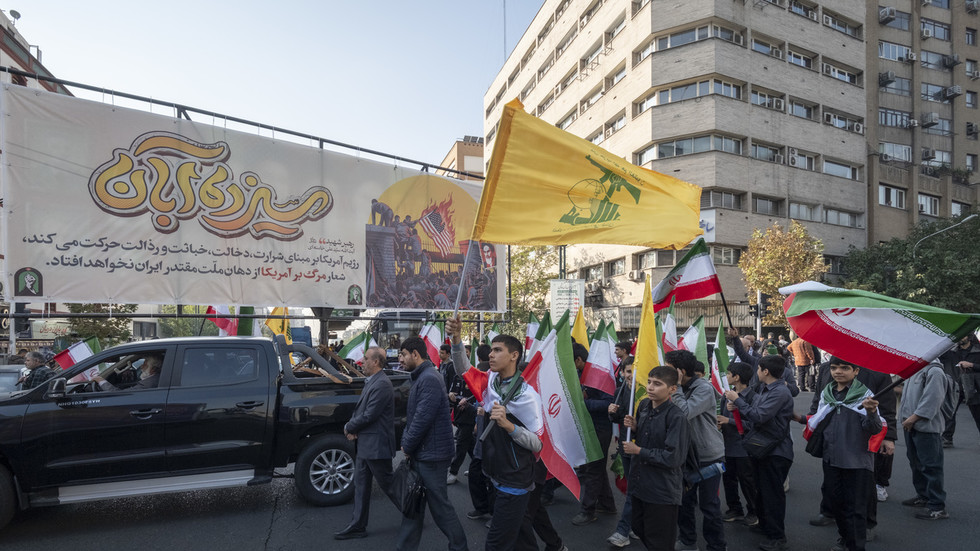
- Responsibility for the Kuwait attack remains unresolved. Kuwait and Italy blame Iran, and Italy's foreign minister said the drone was manufactured in Iran; Tehran denies involvement, calls the incident suspicious, and has offered a joint investigation. A drone's reported country of manufacture does not establish who operated it or ordered the attack. Confidence is low on attribution because the public accounts directly conflict and the available reporting does not provide independently verified forensic findings. (Confidence: low · REPORTED)
- I&W: A joint Kuwaiti-Iranian investigation or a separate Italian forensic report identifies the drone operator or establishes a link to Iranian state forces. (1-3 months)
- I&W: An investigation identifies a non-Iranian operator or finds no evidence linking the attack to Iranian state forces. (1-3 months)
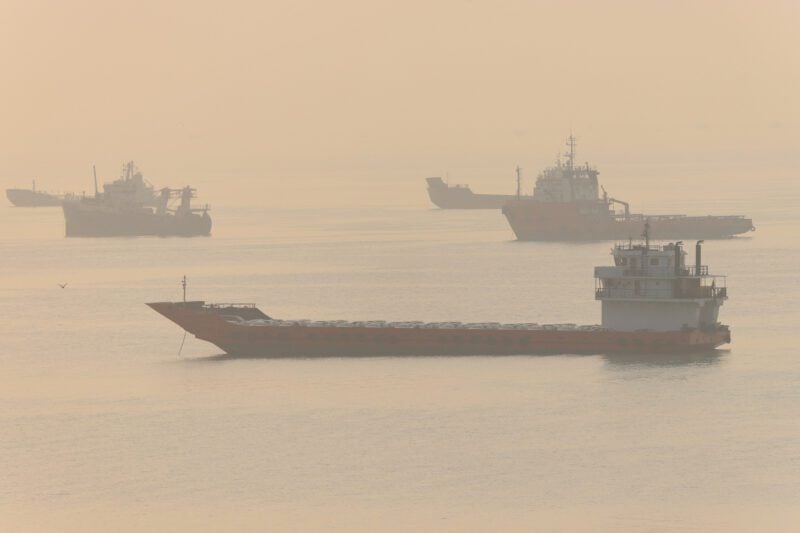
- The IRGC Navy reported that two tankers struck sea mines in the Strait of Hormuz north of Oman's Khosab port, and said one was carrying more than 2 million barrels of crude and continued burning after its crew abandoned it. The incident details and mine cause are not independently confirmed in the available reporting; repeated accounts appear to relay the IRGC statement. Confidence is low. (Confidence: low · REPORTED)
- I&W: A vessel operator, flag state, or maritime reporting body independently confirms two tanker casualties from mines north of Khosab. (0-14 days)
- I&W: A named operator or maritime investigation reports that the tankers were not damaged or that the damage was not caused by mines. (0-14 days)
- The IRGC says its air defences fired warning shots at a US F-16 near Hengam Island and that the aircraft turned away. The account remains unconfirmed by US authorities in the available reporting, and reports differ on whether the incident occurred on 26 or 27 November. Confidence is low because the operational details rely on Iranian claims and the date is inconsistent. (Confidence: low · REPORTED)
- I&W: US authorities confirm an F-16 encounter or warning fire near Hengam Island, with a date and mission account. (0-14 days)
- I&W: US authorities state that no warning-fire encounter occurred, or independently verified flight information places the F-16 elsewhere. (0-14 days)
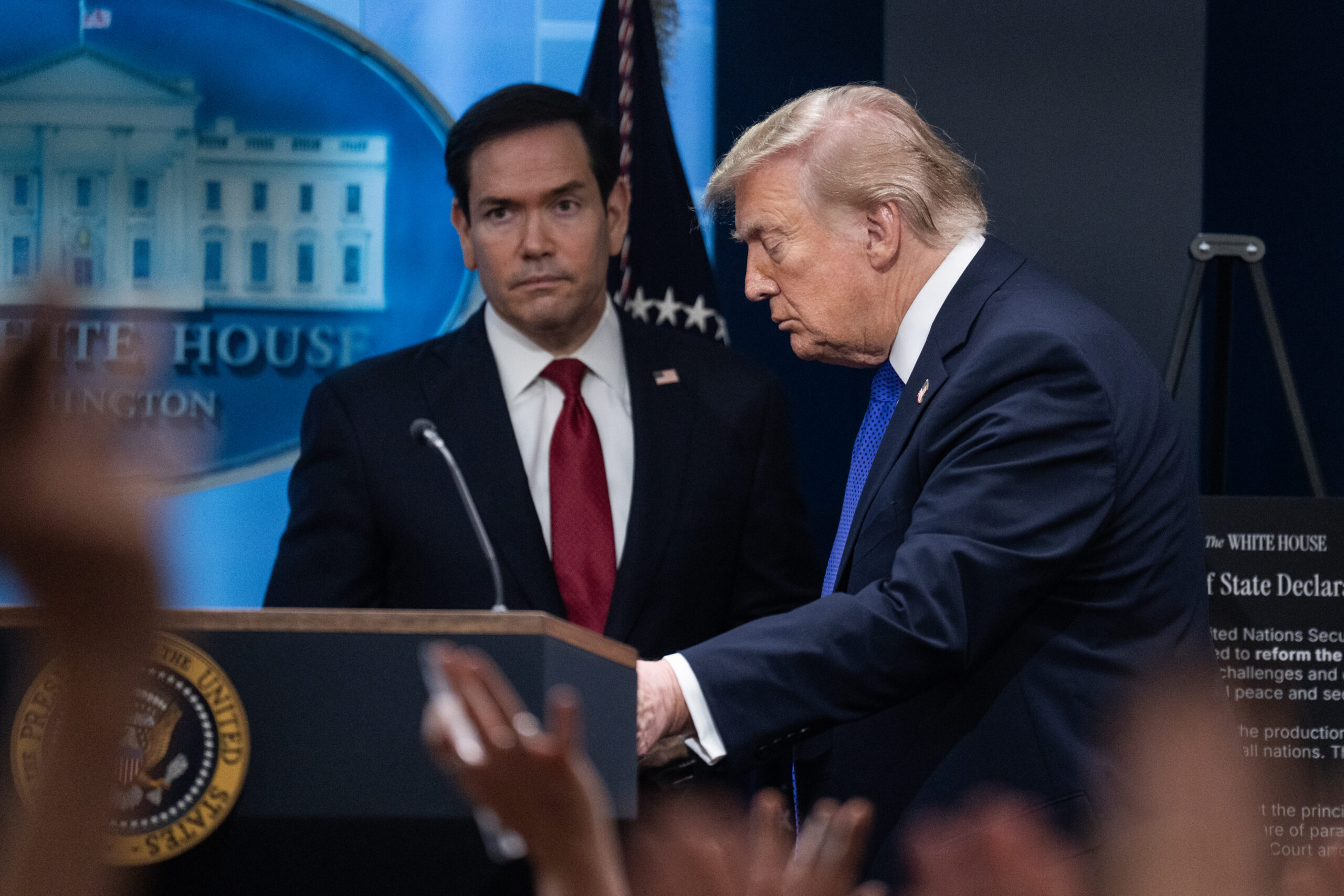
- A further direct US-Iran military exchange within 14 days remains roughly even chance. The US continues enforcing a Strait of Hormuz blockade, Iran has threatened to use all available means against it, and the IRGC's F-16 account, if accurate, signals a close military encounter. The reported F-16 incident is unconfirmed, and the available assessment also describes US restraint from open fighting since April. Confidence is low because the strongest recent operational signal rests on Iranian reporting without US confirmation. (Confidence: low · ASSESSED)
- I&W: US authorities confirm a new strike on an Iranian target, or Iran confirms a direct attack on US forces and independent reporting corroborates it. (0-14 days)
- I&W: The US announces a pause in blockade enforcement and no new direct US-Iran strike is reported during the 14-day period. (0-14 days)
- Commercial transit through the Strait of Hormuz is continuing, despite elevated costs and Iranian restrictions. Vortexa recorded a seven-day moving average above 26 ships carrying crude, fuels, and LNG through 19 November, compared with October, when counts were below 25 on at least two-thirds of days. Vortexa cautioned that interference, spoofing, and dark transits can affect its tally. Confidence is medium because the data show a trend but have stated monitoring limits. (Confidence: medium · REPORTED)
- I&W: Vortexa's next published seven-day average remains above 26 transits and independently reported vessel movements show continued passage. (0-14 days)
- I&W: Updated Vortexa data place the seven-day average below 25, or maritime notices report a sustained halt to commercial transits. (0-14 days)
Outlook & scenarios
Continued pressure without a confirmed direct exchange (45%)
The US continues enforcing the Strait of Hormuz blockade and Iran maintains restrictions on vessels it considers unauthorised. Shipping incidents and military warnings persist, but neither side confirms a new direct strike. Vortexa continues to record commercial traffic, with high transit and insurance costs.
A direct US-Iran encounter escalates (30%)
A US Navy enforcement action or an Iranian attempt to move vessels through a restricted route leads to a further encounter. If either side reports casualties or damage, the existing blockade and Iranian threat to use all available means raise the risk of a direct retaliatory strike.
The Kuwait investigation creates space for restraint (20%)
Kuwait, Iran, and Italy pursue the offered investigation into the drone incident. A joint or independently verified account clarifies responsibility, while the parties avoid treating the current accusations as established fact. The investigation does not by itself resolve the dispute over Hormuz or the US blockade.
Iran targets Gulf energy infrastructure (5%)
If the US Navy challenges an Iranian attempt to run the blockade, Iran carries out its stated threat to strike Gulf energy infrastructure. This low-probability, high-impact path would extend the confrontation beyond shipping and increase pressure on commercial transit.
Recommendations
- Keep the Kuwait attack's occurrence, casualty count, and attribution as separate assessment questions. Track the joint investigation offer, Italian forensic reporting, and any Kuwaiti findings before changing the attribution assessment.
- Seek independent confirmation of the reported tanker fires, including vessel names, operators, flag states, location, crew status, and the cause of damage. Do not treat repeated reporting of the IRGC statement as independent confirmation.
- Check the F-16 account against US official statements and independently verifiable flight or imagery evidence. Record the date discrepancy explicitly until the incident date is established.
- For the 14-day direct-exchange forecast, prioritise observable changes in US blockade enforcement, Iranian vessel movements, US air escort activity, and confirmed strikes. Do not raise confidence on the basis of uncorroborated Iranian operational claims alone.
- Use Vortexa's transit figures alongside independent vessel and maritime notices. Track insurance and shuttle costs separately from transit counts, and retain Vortexa's warning about interference and dark transits when reporting daily totals.
Confidence & uncertainty
Overall confidence is high for the core reported developments: major-media accounts corroborate the deaths of the two Italian technicians, and wire-service reporting conveys Vortexa's transit data and its monitoring caveat. Official statements establish that Kuwait and Italy blame Iran while Tehran denies responsibility, but they do not settle attribution. The tanker mine report and F-16 encounter remain weakly corroborated; repeated accounts trace back to Iranian claims, and the F-16 date is inconsistent.
Alternative analysis (red cell)
The available evidence indicates a coercive and potentially escalating maritime environment, but it does not establish that a further direct US-Iran exchange is as likely as not within 14 days. The strongest operational signal is an unconfirmed Iranian account with unresolved date discrepancies, while b31b8f57-0eb2-4fa0-ae82-61a53697d410 and 73f7b222-322b-4e75-909a-b8f0af0d8c1f provide evidence of restraint alongside the blockade and threats. The near-term likelihood is therefore indeterminate on this record rather than demonstrably even.
Intelligence gaps
- [EEI 1.1 · UNCOVERED] Concentrations or unusual movements of IRGC-Navy fast attack craft, small boat swarms, or escort vessels within 200 km of US/allied ships, including approach distances and formation changes. Recommended collection: maritime/AIS
- [EEI 1.2 · UNCOVERED] Detected pre-launch activity at coastal missile or rocket batteries (vehicle dispersal, fuel/warhead handling, radars powering up, transport erector launchers moving to firing positions). Recommended collection: imagery/signals
- [EEI 1.3 · UNCOVERED] Increased launch/arming/positioning of armed UAVs (MALE/loitering munitions) or tactical aircraft at Iranian coastal bases with sortie generation rates and munitions loadouts. Recommended collection: air/ADS-B/imagery
- [EEI 1.4 · UNCOVERED] Command-and-control indications of attack orders or elevated rules-of-engagement from IRGC/General Staff (intercepted communications, internal order messages, force-wide alert messages). Recommended collection: signals/human
- [EEI 2.2 · PARTIAL] Issuance of formal orders, mobilization directives, travel restrictions, or official internal communications within IRGC/Armed Forces indicating escalation posture or stand-down. Recommended collection: human/diplomatic
- [EEI 2.3 · UNCOVERED] Directives, logistics movements, or communications from Iranian commanders to regional proxy militias (Houthis, Iraqi Shia militias, Lebanese groups) that change their threat posture or task them with specific operations. Recommended collection: signals/human
- [EEI 3.1 · PARTIAL] Incidents involving commercial vessels within the Strait of Hormuz or Persian Gulf: attacks, boarding attempts, near-misses, AIS spoofing or deliberate AIS outages, including vessel IDs and locations. Recommended collection: maritime/AIS
- [EEI 3.2 · PARTIAL] Discovery or reporting of naval mines, unexploded ordnance, or damage to fixed maritime infrastructure (oil platforms, terminals, pipelines) with geolocated imagery or on-scene assessments. Recommended collection: imagery/open-source
- [EEI 3.3 · UNCOVERED] Commercial indicators of disruption: sudden increases in war-risk insurance premiums for Gulf transits, vessel re-routing decisions, port throughput reductions, or charter cancellations for Gulf shipments. Recommended collection: financial/commercial
- [EEI 3.4 · UNCOVERED] Movements or posture changes of regional state navies/air forces (Saudi, UAE, Kuwait, Bahrain, UK) such as task group departures, airbase dispersals, or announced maritime patrols near choke points. Recommended collection: open-source/imagery
Red cell review: PARTIAL DISSENT
TLP:CLEAR