TLP:CLEAR · Disclosure is not limited.
Persian Gulf: Shipping Attacks and Blockade Pressure Sustain Tensions
Time window: Last 1 day · Audience: General analyst · Type: Situation report · DTG: 2026-11-20 12:13Z · Overall confidence: MEDIUM
BLUF
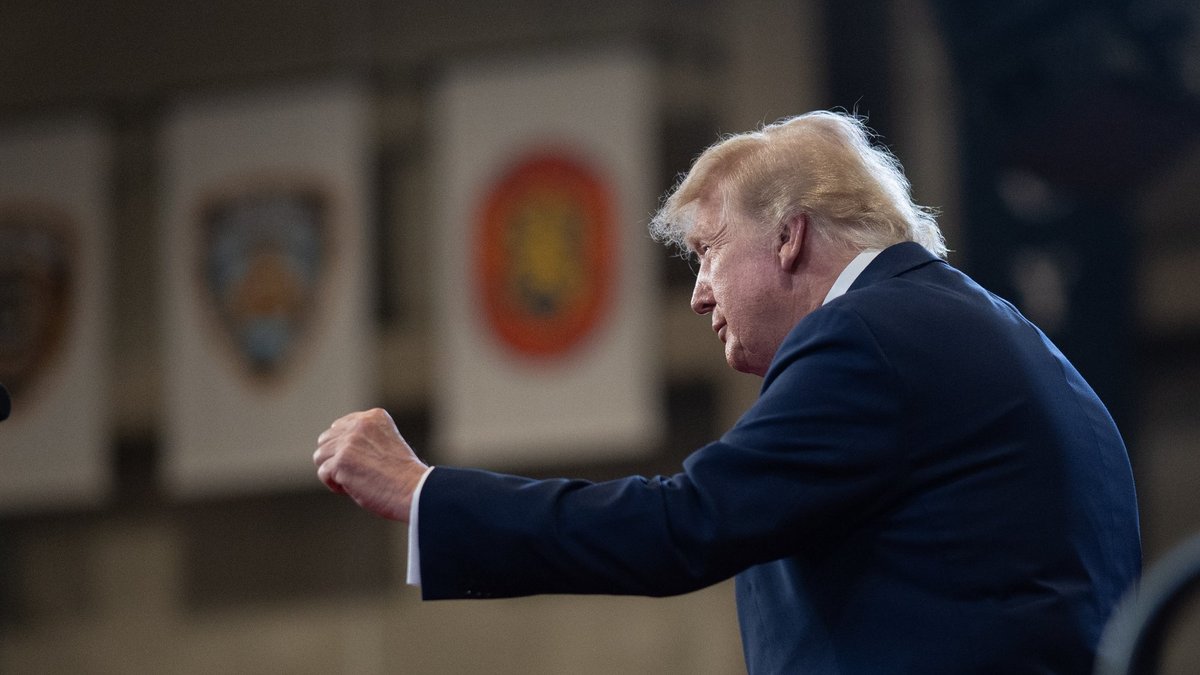
Shipping attacks and US blockade enforcement remain the clearest immediate risks in the Persian Gulf. Donald Trump has signalled that he will defer a decision on renewed strikes against Iran until after 1 January 2027, but recent reports of US and Iranian military activity do not indicate that hostilities have ceased.
Executive summary
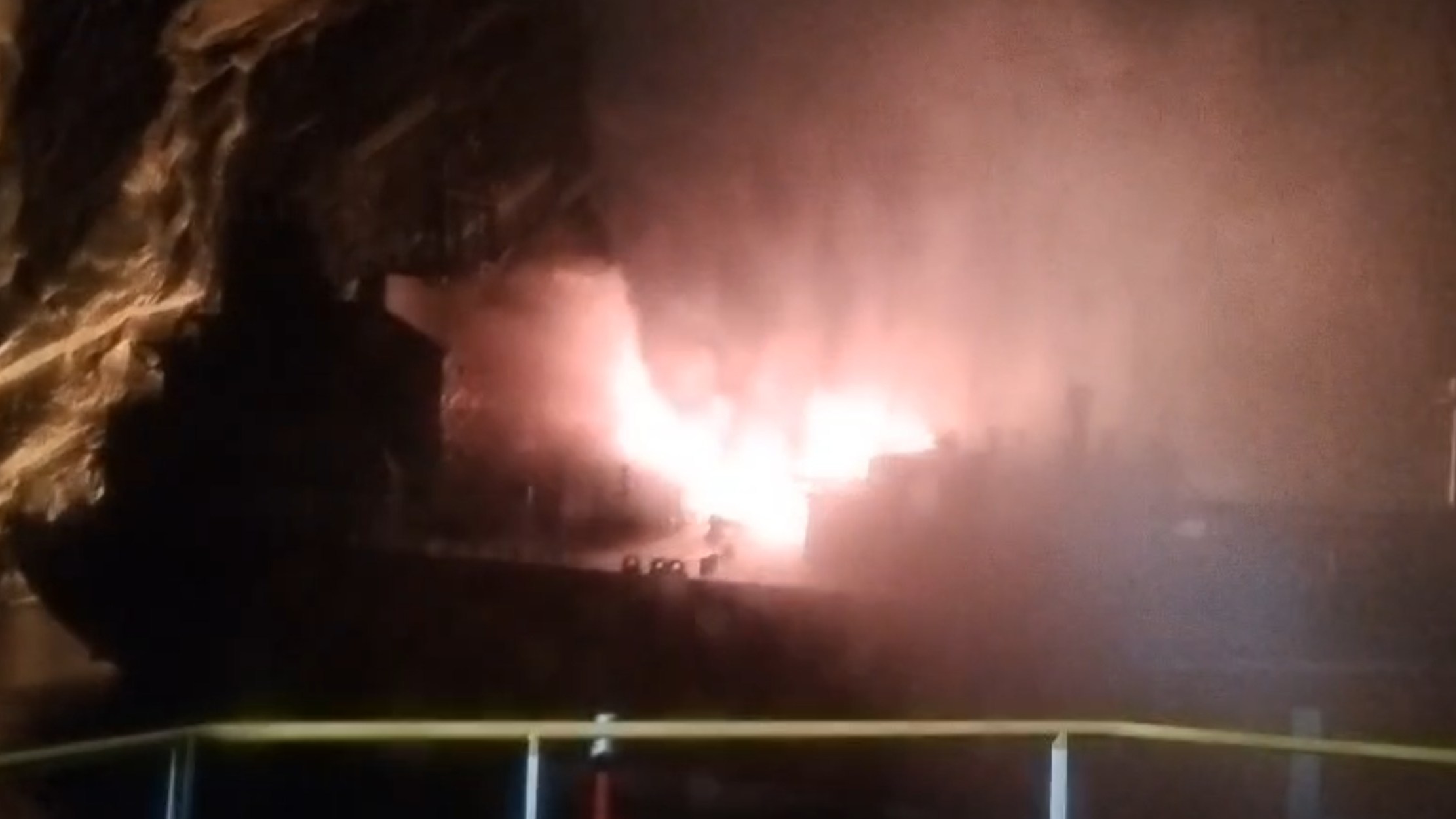
Maritime monitoring and industry reporting record repeated attacks in the Strait of Hormuz, including a reported 16 November drone strike on the LPG tanker Tara Gas. The US blockade adds a separate source of risk for commercial vessels, while reported CENTCOM figures on diverted and disabled ships are inconsistent in scope. The USS Theodore Roosevelt carrier group entered CENTCOM's area on 15 November as USS George Washington departed the Gulf region; reporting of a brief three-carrier overlap does not establish a sustained concentration. Separately, the IAEA-related reporting describes major gaps in verification of Iran's nuclear programme, including limited access at Isfahan and lost continuity of knowledge over Iran's high-enriched uranium stockpile.
Change from previous assessment
Since the 19 November prior brief, the shipping assessment is strengthened by the IMO figure of at least 130 vessel attacks and 25 seafarer deaths, and by added detail on the 16 November Tara Gas incident, including one missing crew member and two injured. The carrier handover is now supported by reporting of the USS Theodore Roosevelt group's entry into CENTCOM's area and USS George Washington's departure, although the duration of the reported three-carrier overlap remains unclear. Trump's stated plan to defer a decision on renewed strikes until after 1 January 2027 adds a near-term restraint signal, not evidence that hostilities have ended. A judgment on IAEA verification constraints is added based on reporting about Isfahan access and the loss of continuity of knowledge over Iran's high-enriched uranium stockpile. No prior judgment is retired.
Key judgments
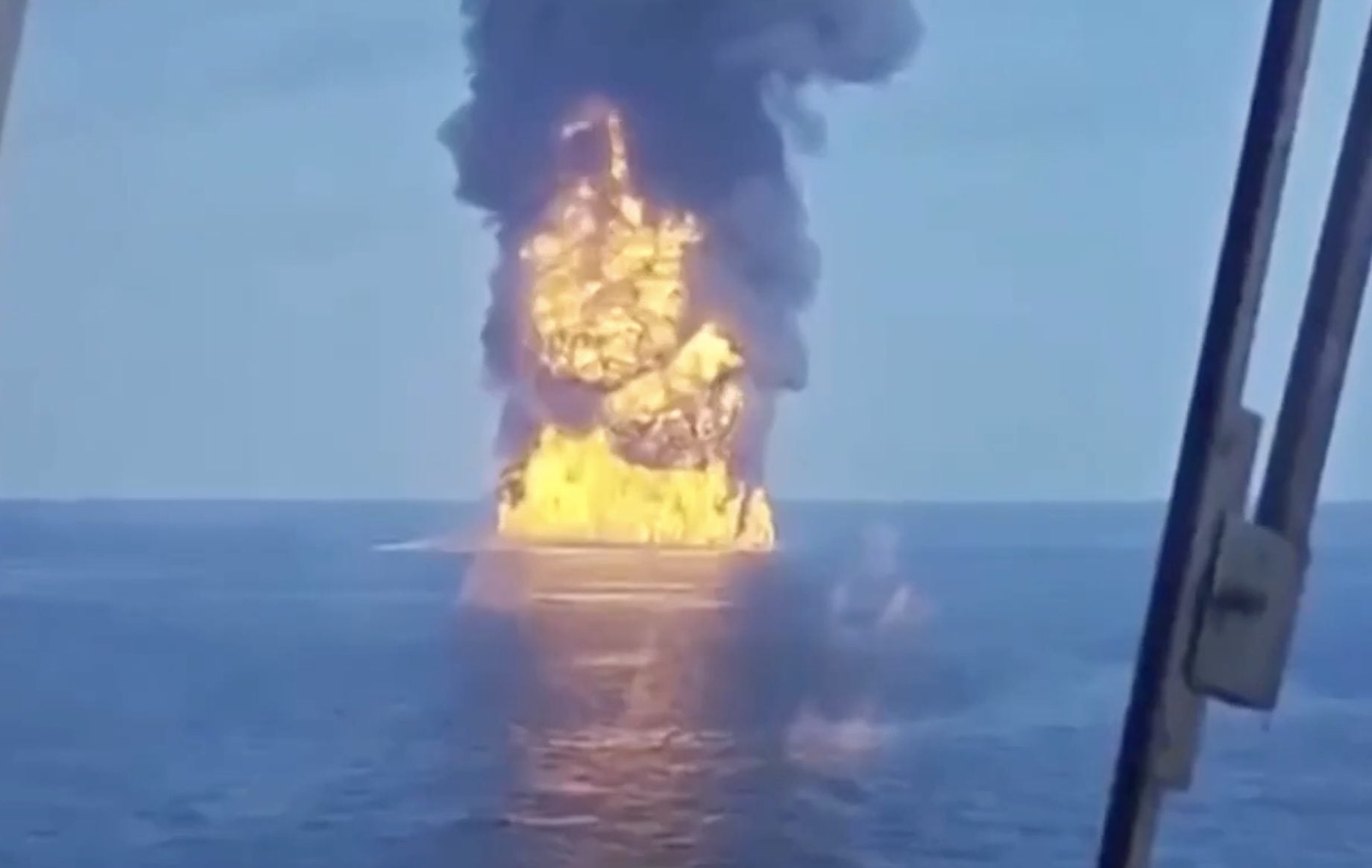
- Commercial shipping in the Strait of Hormuz is likely to face further attacks and disruption over the next 14 days. UKMTO reported about 14 incidents in November, while the IMO reported at least 130 vessel attacks and 25 seafarer deaths since the conflict began; the IMO also identified October as the worst month for shipping, with 35 vessels targeted. The Maritime Executive reported that an IRGC drone hit the Panama-flagged LPG tanker Tara Gas on 16 November, leaving one crew member missing and two injured. These counts cover different periods and measures, and UKMTO has warned that incidents are under-reported. The reported IRGC attribution for the Tara Gas strike is not independently corroborated in the supplied reporting. A separate, low-reliability social-media post attributes to Iran a threat to strike regional oil facilities if an Iranian tanker route is interfered with; the supplied claims provide no evidence of operational preparation. (Confidence: medium · ASSESSED)
- I&W: Confirm: UKMTO reports another attack on a vessel transiting the Strait of Hormuz. (0-14 days)
- I&W: Break: UKMTO records no attacks for 14 consecutive days and Kpler reports a sustained rise in transits above 13.4 million barrels per day. (0-14 days)
- US blockade enforcement is likely to continue producing vessel diversions and occasional disablements over the next month, increasing the risk of encounters at sea. CENTCOM said US forces had redirected 147 commercial vessels and disabled five merchant ships since the blockade resumed in July. Separate reporting attributes at least two dozen destroyed or disabled vessels to CENTCOM, but the scope and time period behind the larger figure are unresolved. CENTCOM also disabled the Panama-flagged bulker Ocean Molica in the Gulf of Oman on 10 October, and reported a disabled bulker on 7 November. MARAD reporting says commercial vessels face kinetic action from both sides, with threats extending to Gulf anchorages and the Gulf of Oman. (Confidence: medium · ASSESSED)
- I&W: Confirm: CENTCOM reports additional vessel diversions or disables during blockade enforcement. (0-30 days)
- I&W: Break: CENTCOM announces a pause in blockade enforcement and reports no new vessel diversions or disables during the following month. (0-30 days)
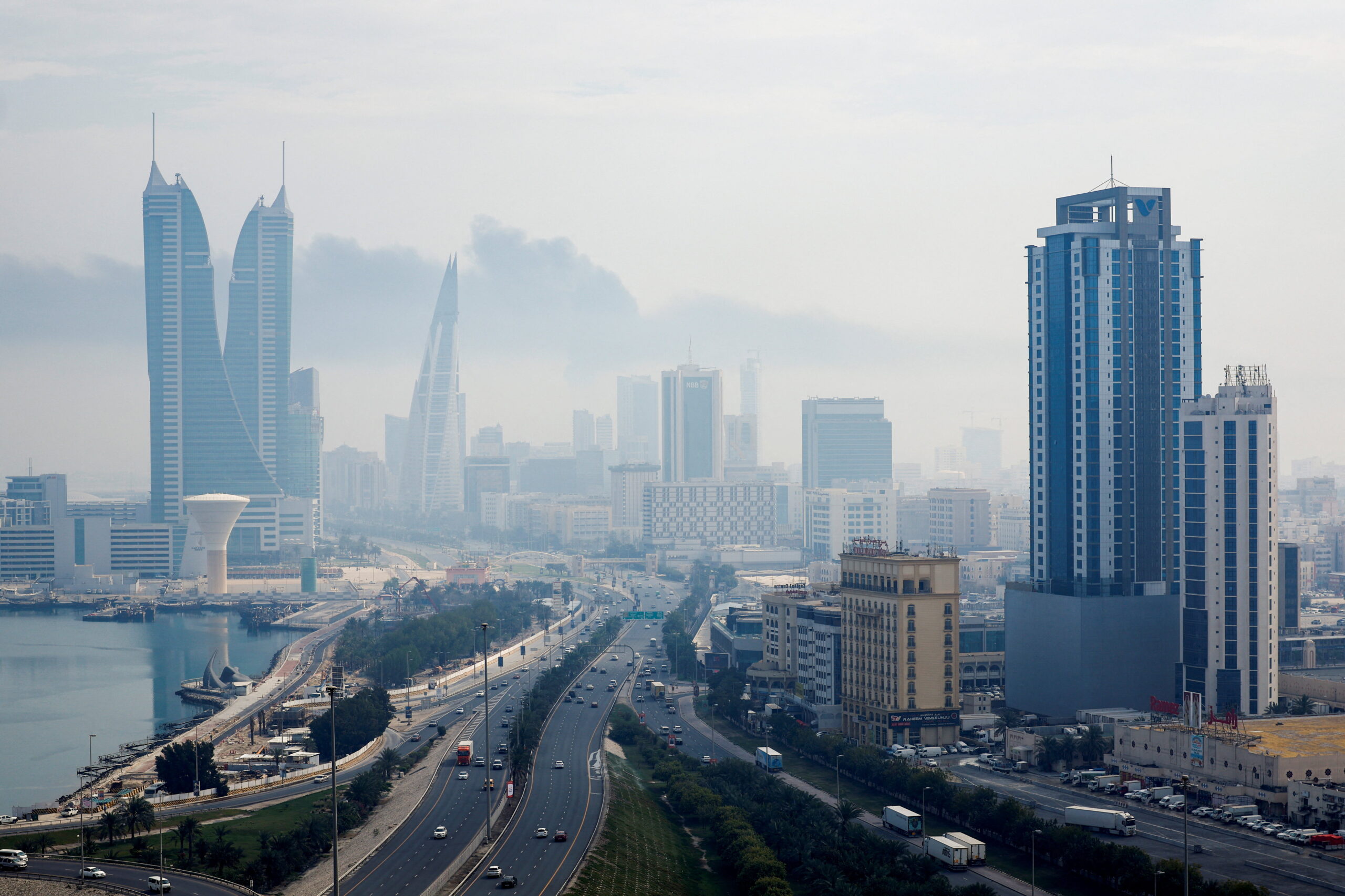
- US-Iran military exchanges are likely to continue over the next 14 days, but the supplied reporting does not establish a shift to sustained, wider combat. A trade publication reported that US warplanes struck an Iranian missile launch site on Qeshm Island during the week before 19 November. Bahrain reported intercepting several Iranian aerial attacks, and a think tank separately reported two Iranian drone attacks targeting a US military base in Bahrain. Trump signalled on 19 November that he would defer a decision on renewed strikes until next year; this is a delay in a decision, not a reported ceasefire. Social-media posts quote Iranian Foreign Minister Abbas Araghchi as ready to resume negotiations, but that reporting is weakly corroborated. (Confidence: medium · ASSESSED)
- I&W: Confirm: The US confirms another strike on Iranian territory, or Bahrain reports another Iranian attack on a named US facility. (0-14 days)
- I&W: Break: The US and Iran announce a ceasefire and no new US strikes or Iranian attacks on Bahrain are reported for 14 days. (0-14 days)
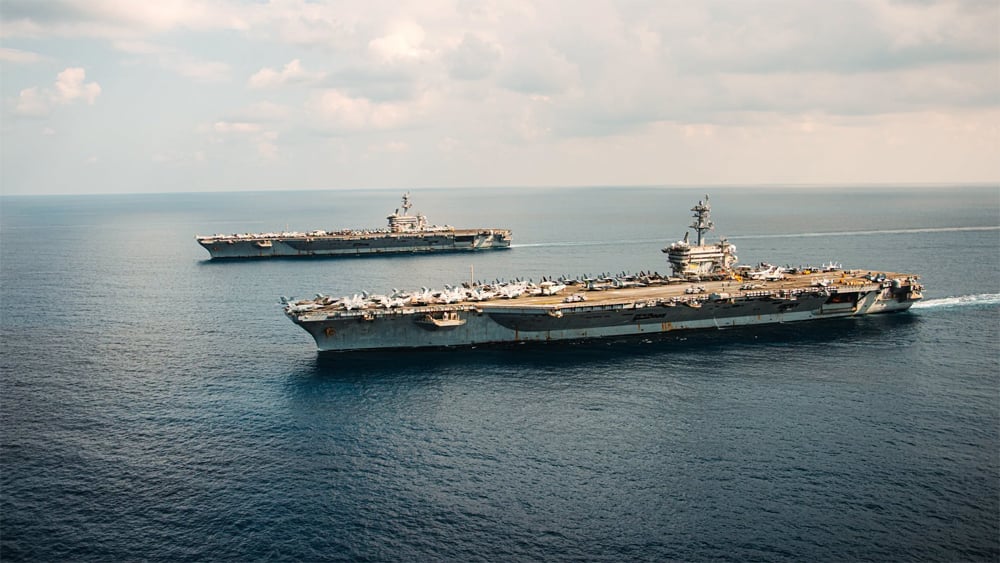
- The USS Theodore Roosevelt handover likely maintained a US carrier presence in CENTCOM's area, but the reports do not establish a sustained three-carrier deployment. The carrier group entered CENTCOM's area on 15 November, and the US Navy confirmed that USS George Washington departed the Gulf region after the arrival. Reporting describes three carriers in the region only briefly during the week; a Pacific Fleet spokesperson also confirmed that USS George Washington moved into the 7th Fleet region for Asia-Pacific operations. (Confidence: medium · ASSESSED)
- I&W: Confirm: The US Navy identifies USS Theodore Roosevelt or a replacement carrier strike group as remaining in CENTCOM's area. (0-30 days)
- I&W: Break: The US Navy announces USS Theodore Roosevelt's departure from CENTCOM's area and identifies no replacement carrier group. (0-30 days)
- IAEA verification of Iran's declared nuclear programme is likely to remain constrained over the next three months. The Quad statement reported the IAEA's concern about access to Iran's fourth declared enrichment plant in Isfahan and its inability to conclude that declared nuclear material had not been diverted. It also said the Agency had lost continuity of knowledge over Iran's previously verified high-enriched uranium stockpile for a year and a half; its only in-field verification activity in Iran since February 2026 has been at Bushehr. Iranian officials, in a low-reliability local-media account, say normal cooperation cannot resume until military aggression ends. The difference between that position and the reported limited verification at Bushehr leaves the extent of current access incompletely reconciled. (Confidence: medium · ASSESSED)
- I&W: Confirm: The next IAEA reporting again records no access to the Isfahan plant or no continuity of knowledge over Iran's high-enriched uranium stockpile. (1-3 months)
- I&W: Break: The IAEA reports access to the Isfahan plant and restored accounting continuity for the previously verified high-enriched uranium stockpile. (1-3 months)
Outlook & scenarios
Continued maritime pressure, no sustained expansion of strikes (55%)
This is the most likely course. Strait of Hormuz attacks and US blockade enforcement continue, while Washington defers a decision on renewed strikes. Commercial shipping remains exposed, but the reported events do not develop into sustained wider combat.
Temporary restraint and renewed diplomatic contact (25%)
An interim pause in direct US-Iran strikes is unlikely but remains plausible if Trump's delay creates room for talks and Tehran's reported readiness to negotiate reflects an official position. Maritime attacks and blockade enforcement continue during the pause.
Expanded exchanges and greater disruption to shipping (15%)
A wider exchange is unlikely. A further US strike or Iranian attack on a US installation prompts retaliation, adding to the risk faced by vessels near the Strait of Hormuz, the Gulf of Oman and Gulf anchorages.
High-impact wildcard: strike on regional oil infrastructure (5%)
A very unlikely but high-impact contingency is an Iranian strike on regional oil facilities after interference with an Iranian tanker route. The supplied warning rests on a single, low-reliability social-media report and is not evidence of operational preparation.
Recommendations
- Maintain separate incident logs for UKMTO reports and IMO vessel-targeting totals. Record date, location, vessel type, attribution and casualty status, and do not treat the figures as a single trend until their definitions are reconciled.
- Track CENTCOM statements on redirected, disabled and destroyed vessels separately. Seek clarification on whether the five-ship and at-least-two-dozen figures cover the same period and vessel categories; do not combine them before that scope is clear.
- Monitor US Navy announcements on USS Theodore Roosevelt and USS George Washington. Treat reports of three carriers in the region as a brief overlap unless the Navy confirms a continuing deployment.
- Review the next IAEA reporting for access to the Isfahan enrichment plant, verification beyond Bushehr and continuity of knowledge over Iran's high-enriched uranium stockpile. Separate verified inspection activity from Iranian statements about the conditions for cooperation.
- Treat the reported Iranian warning about regional oil facilities as an uncorroborated contingency, not as evidence of an imminent operation. Watch for confirmation through official statements or independently verified incidents.
Confidence & uncertainty
Overall confidence is medium. The assessment draws on maritime monitoring and IMO reporting, company statements, US Navy information relayed through trade reporting, and official statements about IAEA safeguards. Confidence is limited by under-reporting of shipping incidents, different measures and time periods in attack totals, unresolved CENTCOM vessel counts, and the single-source attribution of the Tara Gas strike to the IRGC. Some diplomatic and threat reporting rests on social-media or local-media accounts and is treated cautiously.
Alternative analysis (red cell)
The maritime reporting demonstrates substantial recent risk but does not establish that attacks or disruption will increase or even continue at the same tempo over the next 14 days. The underlying counts use different definitions and periods, and the contradiction between 91455aa0-075e-4ec4-849d-aacbd5d4b4b7 and ab1e85f9-7b41-43d9-9c36-917ad40f3874 leaves the trend direction uncertain. A more defensible reading is that commercial shipping will remain exposed to intermittent disruption, with the probability of further attacks unresolved rather than clearly likely.
Intelligence gaps
- [EEI 1.1 · UNCOVERED] Concentrations or unusual movements of IRGC-Navy fast attack craft, small boat swarms, or escort vessels within 200 km of US/allied ships, including approach distances and formation changes. Recommended collection: maritime/AIS
- [EEI 1.2 · UNCOVERED] Detected pre-launch activity at coastal missile or rocket batteries (vehicle dispersal, fuel/warhead handling, radars powering up, transport erector launchers moving to firing positions). Recommended collection: imagery/signals
- [EEI 1.3 · PARTIAL] Increased launch/arming/positioning of armed UAVs (MALE/loitering munitions) or tactical aircraft at Iranian coastal bases with sortie generation rates and munitions loadouts. Recommended collection: air/ADS-B/imagery
- [EEI 1.4 · PARTIAL] Command-and-control indications of attack orders or elevated rules-of-engagement from IRGC/General Staff (intercepted communications, internal order messages, force-wide alert messages). Recommended collection: signals/human
- [EEI 2.2 · UNCOVERED] Issuance of formal orders, mobilization directives, travel restrictions, or official internal communications within IRGC/Armed Forces indicating escalation posture or stand-down. Recommended collection: human/diplomatic
- [EEI 2.3 · UNCOVERED] Directives, logistics movements, or communications from Iranian commanders to regional proxy militias (Houthis, Iraqi Shia militias, Lebanese groups) that change their threat posture or task them with specific operations. Recommended collection: signals/human
- [EEI 2.4 · PARTIAL] Changes in Iran's diplomatic exchanges with key states (offers of negotiation, warnings, or coordination with Russia/China) or requests for deconfliction with maritime/naval actors. Recommended collection: diplomatic
- [EEI 3.2 · PARTIAL] Discovery or reporting of naval mines, unexploded ordnance, or damage to fixed maritime infrastructure (oil platforms, terminals, pipelines) with geolocated imagery or on-scene assessments. Recommended collection: imagery/open-source
- [EEI 3.4 · UNCOVERED] Movements or posture changes of regional state navies/air forces (Saudi, UAE, Kuwait, Bahrain, UK) such as task group departures, airbase dispersals, or announced maritime patrols near choke points. Recommended collection: open-source/imagery
Red cell review: PARTIAL DISSENT
TLP:CLEAR